


Grindelwald is what happens when a storybook Alpine village gets stitched into a seriously good ski area and then casually drops the Eiger into the background for extra drama. It’s got that rare mix of proper Swiss charm and genuinely useful skiing, so you get the postcard looks and a holiday that actually works on the ground.
This guide was written by Michelle Wheeler
Grindelwald ski resort at a glance
Grindelwald is the Jungfrau Region’s poster child: a proper Swiss mountain village (not a purpose-built ski dorm) sitting under the Eiger like it’s casually showing off.
You’re in the Bernese Oberland, and the skiing is really three flavours in one pass: the cruisy, big-view stuff over at Kleine Scheidegg–Männlichen (shared with Wengen), the playful/freestyle-friendly side at Grindelwald-First, and – if you’re up for a day trip – the higher, wilder Mürren-Schilthorn side.
Altitude-wise, Grindelwald village sits around 1,034m, with lift access across the area reaching up towards 2,970m at the Schilthorn viewpoint.
Season timing is typically late November/early December into April, but exact opening/closing depends on which sector you’re riding.
Transfers are refreshingly non-dramatic: you can arrive by train straight into town, and airport-to-resort by rail is genuinely one of Switzerland’s superpowers.
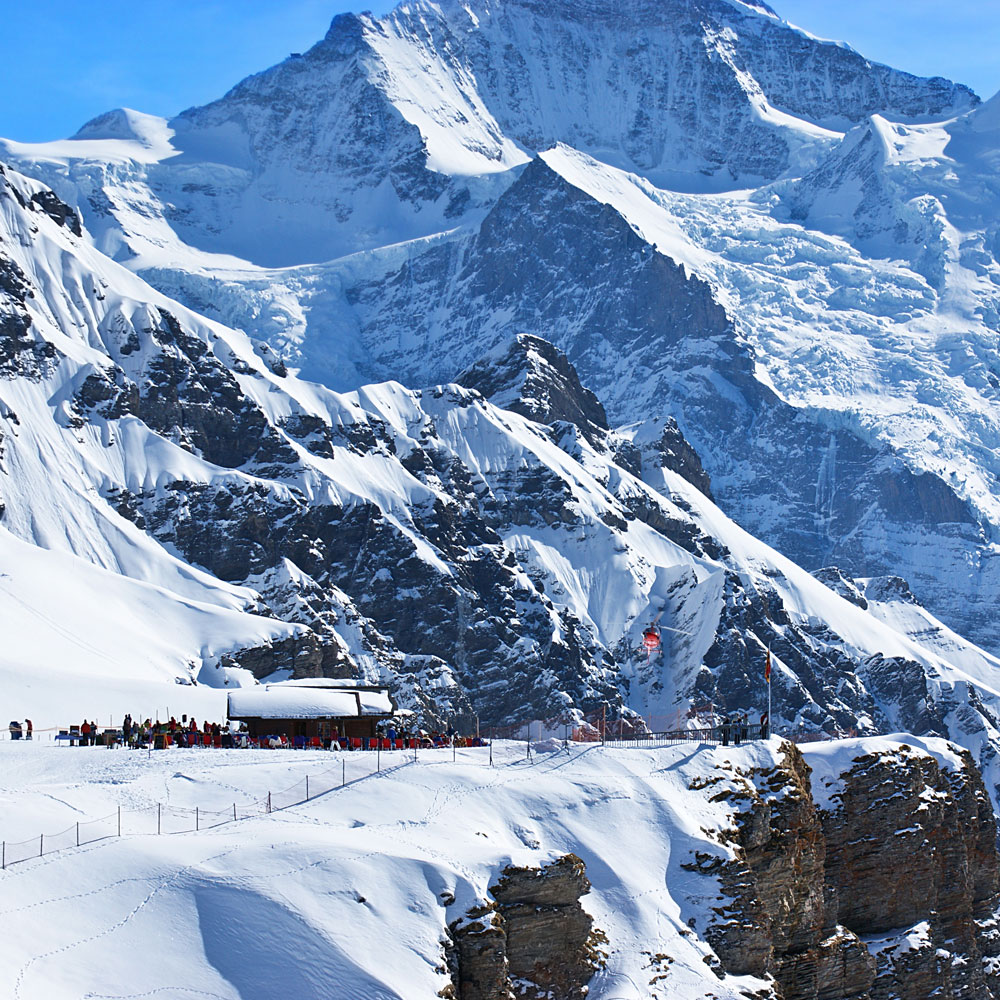
Altitude
1,034 m - 2,970 m
Pistes
211 km
Ski Season 26/27
21 Nov - 25 Apr
Transfer Time
180 - 240 mins
Number of pistes by difficulty
Resort Guide Quick Facts
(the stuff you actually care about)
Best for:
Intermediates who want long, scenic mileage days; snowboarders who appreciate gondolas and modern uplift; families who want a real village with a dedicated beginner arena; and anyone who likes their skiing with a side of “this can’t be real” scenery.
Ski area size:
With the Skipass Jungfrau Ski Region, you’re looking at about 211km of pistes served by 41 lifts, with the option to hop between Grindelwald-First, Grindelwald-Wengen (Kleine Scheidegg/Männlichen) and Mürren-Schilthorn depending on conditions and mood. Grindelwald-First alone is listed at 56km of pistes, which is plenty for a “local day” without ever leaving your home valley.
Altitude:
Grindelwald village is about 1,034m, the Grindelwald-First ski area runs up to about 2,168m (with snowpark features around 2,500m), and the wider area gives you access to high viewpoints like Piz Gloria at 2,970m.
Villages / bases (each has a different vibe):
Grindelwald is the biggest and most “alive” base (shops, bars, buses, trains, options). Wengen is smaller, car-free, and very postcard-pretty – more “early nights and fondue” than “late-night chaos”. Mürren is higher, quieter, and spectacularly perched, with a slightly more remote feel (in a lovely way). Lauterbrunnen is the valley base that’s brilliant for logistics and day trips, but it’s lower, so it’s more “commute to ski” than “step out into a lift line”.
Beginner friendliness:
This is sneakily strong for beginners because you’ve got the bodmiARENA right in the village – conveyor belt and platter lift, run by the Swiss Grindelwald Ski School – so you can build confidence without getting yeeted onto a big mountain as your first life choice. Then you’ve got progression-friendly “fun slope” terrain like the Lily Fun Slope once you’re ready to roam.
Ski season (published dates):
Grindelwald’s 2026/27 season opens in stages, with the Grindelwald-Wengen area scheduled from 21st November 2026 to 25th April 2027 and Grindelwald-First from 19th December 2026 to 29th March 2027. Check the official Jungfrau Ski Region calendar before booking at either end of the season.
You’ll love Grindelwald for…
Village charm
Scenic
Intermediates
| Our rating | |
|---|---|
| ★★★ | Beginner |
| ★★★★ | Intermediate |
| ★★★ | Advanced |
| ★★ | Off-Piste |
| ★★★ | Snowboarding |
| ★★★ | Snow Reliability |
| ★★★ | Extent |
| ★★★ | Apres-Ski |
| ★★★ | Mountain Restaurants |
| ★★★★★ | Scenery |
| ★★★★★ | Village Charm |
| ★★★ | Non-Skiers |
Best for snow: Late January - March
Late January to March - more base, colder temps, and the higher sectors tend to hold up best.
Best for value: Early January or March
Early January (after New Year), or March - good coverage, fewer peak-week prices, and less queue drama.
Best for families: Late January or March
Late January or March - still plenty of snow, but less “school holiday frenzy” energy in lift lines.
Avoid if possible: Christmas / New Year and February school holiday weeks
Christmas/New Year and February half-term weeks - prices spike and the popular access lifts get busier.
Tour Operators who go here



Looking to stay in Grindelwald?
What’s Grindelwald like?
Grindelwald feels like a real place first, ski base second – and that’s the charm.
You’ve got a proper main street, supermarkets, bakeries, hotels, apartments, and transport that actually works.
The mountains do that ridiculous Jungfrau Region thing where they look fake in photos, and then you arrive and realise the photos were… not exaggerating.
On snow, your days tend to split: some people stay “local” at First for playful laps and sunshine, others shoot straight up towards Kleine Scheidegg/Männlichen for long cruisers and the iconic views. And if you’re the type who likes collecting ski areas like Pokémon, the pass makes it realistic to sample Mürren-Schilthorn too.
Town layout
Grindelwald isn’t one tiny cluster; it’s more stretched out, with key spots like Grindelwald Dorf (the village centre), Grindelwald Grund/Terminal (the modern lift/train hub), and the First gondola base area connecting it all.
If you’re near the Terminal, you’re laughing for fast access towards Kleine Scheidegg/Männlichen via the Eiger Express links; if you’re nearer the village centre, you’re handy for restaurants, bars, and the Firstbahn.
Overall vibe
It’s Swiss-efficient but not sterile. The vibe is outdoorsy and upbeat – lots of families, plenty of confident intermediates, and a steady stream of people doing “one big scenic day” rather than hardcore dawn patrol every morning.
It’s not party-central in the way some big French resorts are, but it’s also not a monastery. Think cosy-lively: you can absolutely have a fun night, you just won’t be crawling home at 4am.
Après-ski
Après in Grindelwald is more “good bars and a few late options” than “table-dancing conveyor belt”.
You’ll find proper pubs, hotel bars that go surprisingly late, and a couple of places that lean into the party side, but the default is: ski, shower, drink, eat, repeat – happily.
The nice bit is that because the village is real, you’re not limited to two overpriced venues and a sad kebab.
Looking to stay in Grindelwald?
Who Grindelwald suits
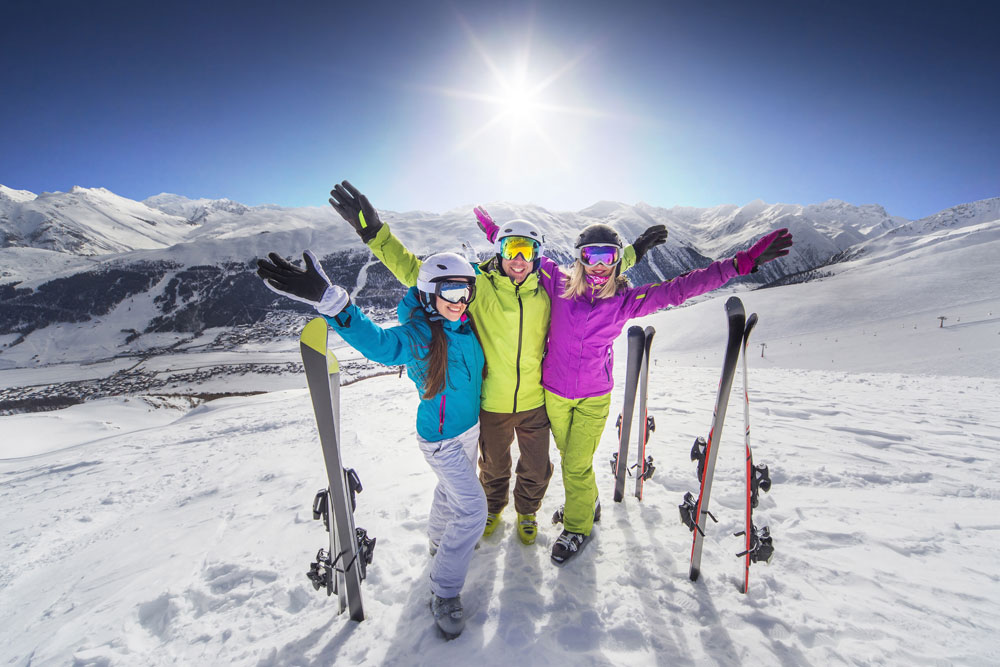
Intermediates (the sweet spot)
This is where Grindelwald shines. You can rack up big, confidence-boosting mileage over towards Kleine Scheidegg/Männlichen, then switch to Grindelwald-First when you want sunshine and a more relaxed lap rhythm.
The scenery is outrageous, and you can plan “lazy long lunches” without feeling like you’ve wasted the day because the uplift gets you back into the action quickly.
Stay tip:
- Grindelwald Terminal/Grund is a strong shout if you want fast access to the main cruising network.

Advanced skiers & snow-sure seekers
You’ve got plenty to entertain strong skiers, especially if you’re happy mixing steeper marked pistes with the bigger-mountain feel over at Mürren-Schilthorn.
The Lauberhorn race track is also a bucket-list flex once it’s open to the public (experienced skiers only). If you’re thinking off-piste, be sensible: avalanche risk is real, conditions change fast, and going with a local guide is the grown-up move.
Stay tip:
- Be near Grindelwald Terminal if you want quick hops to the steeper/serious terrain zones.

Snowboarders
Boarders generally have a good time here because the uplift leans modern (gondolas/cableways in the key access points), and you can choose sectors that suit your style.
Grindelwald-First in particular has that freestyle-friendly, “let’s go play” energy, plus the Lily features for messing around when you’re not chasing vertical.
Stay tip:
- Terminal/Grund is brilliant for quick access to the wider network; central Grindelwald is great if you want short walks to food and nightlife after riding.

Beginners (with a smart plan)
Start at bodmiARENA in the village (conveyor belt + platter lift, and it’s run by the Swiss Grindelwald Ski School), so you’re not battling big-mountain nerves on Day 1.
Once you’re linking turns, you’ve got progression-friendly terrain like the Lily Fun Slope to make things feel playful rather than terrifying.
Stay tip:
- Aim for central Grindelwald (walkable to bodmiARENA and village restaurants), or somewhere with an easy bus link so mornings aren’t a faff.

Families
Families love Grindelwald because it’s not just a ski hill – it’s a full winter village with loads to do if someone’s tired, ill, or suddenly “hates skiing actually”.
The bodmiARENA setup is ideal for kids learning, and the village logistics (shops, transport, easy day-trip options) take pressure off.
Stay tip:
- Central Grindelwald for maximum convenience, or Wengen if you want quieter evenings and don’t mind being a little more “rail-based” for getting about.

Freestyle / Terrain Parks
If you like parks, Grindelwald-First is the obvious playground: the area is pitched as a freestyle hub, and there are dedicated snowpark features plus fun-slope style terrain like the Lily Fun Slope.
There’s also a broader freestyle culture across the Jungfrau Ski Region (including features and lines aimed at different levels), so it’s not just “one sad rail and a dream”.
Stay tip:
- Central Grindelwald makes First laps easy; if you’re coming for park progression, being close to the First gondola base is a quiet little life hack.
Looking to stay in Grindelwald?
Where is Grindelwald?
Grindelwald sits in Switzerland’s Bernese Oberland, in the Jungfrau Region – basically the bit of the Alps that’s unfairly photogenic.
You’re in a valley above Interlaken, with rail links that connect you to neighbouring bases like Wengen and Lauterbrunnen (and onward to Mürren via the valley). Practically: it’s easy to arrive without a car, easy to do day trips, and easy to split your ski days between different sectors depending on weather and snow.
Looking to stay in Grindelwald?
Skiing in Grindelwald (ski area, terrain, lifts, snow)
Grindelwald is best thought of as a “base with options”.
You’ve got your local hill at First (playful, freestyle-friendly, great for a lighter day), and you’ve got the heavyweight scenic network over towards Kleine Scheidegg/Männlichen (the famous views, the long cruisers, the iconic access routes).
Then there’s Mürren-Schilthorn, which feels more serious and higher, and can be a brilliant choice when you want a different flavour – or when conditions suit that side better.


Terrain overview
The “main” Grindelwald ski day usually begins with a choice that shapes the rest of it: head to Grindelwald Terminal for the big Jungfrau Ski Region links towards Eigergletscher, Kleine Scheidegg, Männlichen and over towards Wengen, or go to the First gondola for a more self-contained day on the Grindelwald-First side.
Terminal is the power move if you want scale, faster access to the headline terrain, and that satisfying feeling that the whole mountain network is properly open to you. First is a different vibe: a bit more playful, a bit more relaxed, and often the better call if you want shorter laps, scenery, and less of a full-day route-planning mission.
Crowds tend to stack up where you’d expect: at Terminal first thing, around the Eiger Express access, and at the First gondola once the village has fully caffeinated itself. After that, people spread out pretty well, especially once skiers split between the Kleine Scheidegg side, the Männlichen side, and the First sector.
If you want quieter pistes, the usual Alpine advice applies: start early, know which lift you’re aiming for before leaving the hotel, and don’t burn your best snow time standing around discussing pastries.
Stay tip:
If you want the biggest terrain with the least morning faff, stay near Grindelwald Terminal or Grund; if you’ll mostly ski First, base yourself near the Firstbahn and save yourself the cross-village shuffle.
Lifts & getting around the mountain
Grindelwald’s lift system is one of those setups where the big access lifts do a lot of the heavy lifting, literally.
The key bit is getting from valley level up into the proper ski terrain quickly, and that’s where the high-capacity uplift from Terminal really earns its keep.
Once you’re up high, the network becomes a mix of gondolas, trains, chairs and surface lifts linking the different sectors across the Jungfrau region. It’s efficient when you keep moving, but like most famous Swiss resorts, it definitely has “everyone had the same idea” moments.
Peak queues are most noticeable first thing in the morning, then again late morning when people start relocating between sectors or drifting towards the obvious lunch spots.
The smartest strategy is not glamorous, but it works: start early, commit to a sector instead of zig-zagging all over the map, and ski through the classic 12:00 to 13:00 shuffle if you can.
A later lunch usually means quieter lifts, calmer restaurants, and less time spent being herded around with the scenic-day-trip crowd.
Stay tip:
Staying within easy walking distance of Terminal or the Firstbahn is a genuine upgrade in peak weeks; relying on buses or perfect timing every morning is how “relaxed ski holiday” turns into “why are we sprinting in ski boots?”
Snow reliability & season length
Grindelwald village sits relatively low, at around 1,034m, so it is not one of those resorts where you should expect postcard snowbanks outside your hotel door every single week of the season.
The good news is that the actual skiing is mostly much higher than the village itself, with the main sectors climbing well above 2,000m and access to proper high-Alpine terrain once you head up towards Eigergletscher and beyond.
In practical terms, Grindelwald often skis better than its village altitude makes people assume, but it still pays to think like a grown-up about timing.
January to March is usually the sweet spot if you want the best odds of solid coverage, more consistent winter conditions, and the widest choice of open runs.
Early season and late season can still be very good, but they are more “follow the best-open terrain” than “the whole map is equally in play.”
Weather matters too: wind, cloud, and flat light can affect the higher lifts and exposed slopes even when snowfall is fine. This is a proper mountain resort, not a snow globe with a guarantee.
Stay tip:
If you’re travelling at the edges of the season, stay somewhere with easy access to Terminal or rail links so you can pivot quickly to the best-open sector instead of getting stuck loyally waiting for one area to improve.

Grindelwald has loads of terrain that looks inviting the second there’s fresh snow: bowls, ungroomed-looking edges, tempting side hits, and all the classic “it’s just over there” Alpine bait.
Add in the dramatic scenery and bigger-mountain feel around the Jungfrau region, and it is very easy for confident skiers and snowboarders to talk themselves into treating side-country like a casual extension of the piste. That is, in technical safety terms, a terrible hobby.
This is the Alps: avalanche risk is real, terrain traps are real, and “someone else has done a track” is not a rescue plan.
If you want to go beyond marked runs, do it properly. Hire a qualified local guide, carry the right kit, and treat route choice and weather like serious business rather than part of the content strategy for your holiday photos.
Wind loading, temperature swings and visibility changes can all alter conditions quickly, especially after storms or warm spells. Even short detours off-piste need judgment here, not just confidence.
Stay tip:
If freeride days are part of the dream, stay somewhere that makes early departures easy; the people skiing fresh lines are rarely the ones still deciding between toast and cereal at 10:15.
Beginners & improvers
For complete beginners, Grindelwald is at its best when you don’t rush the process. The bodmiARENA in the village is the ideal starting point: easy-access learning terrain, beginner uplift, and an environment that feels controlled rather than chaotic.
That matters more than people admit. Learning to ski is hard enough without also having advanced skiers slicing past you while you negotiate your relationship with gravity.
Once the basics start clicking, the next step is not “straight into the deepest part of the map,” but a gradual move onto mellow blue terrain in the wider ski area.
The really nice thing about Grindelwald is that progression can feel scenic rather than stressful. Once confidence builds, there are gentle runs higher up where beginners and improvers can get that proper mountain experience without being thrown into panic mode.
Features like fun slopes and playful piste sections also help keep things light. One practical warning: if visibility is poor up high, don’t force it just because the brochure says that’s where the views are. Learning is much easier when you can actually see the snow.
Stay tip:
Beginners and nervous improvers are usually happiest staying central in Grindelwald, close to bodmiARENA and village facilities, so the first few days feel simple rather than like a military logistics exercise.
Freestyle & “more than pistes”
Grindelwald-First is the part of the resort that leans hardest into the “skiing, but also extra fun nonsense” personality.
If you like playful terrain, side hits, progression-friendly features and a less formal feel than the big interlinked sectors, this is where the resort starts showing off a bit.
It suits skiers and snowboarders who enjoy messing around as much as mileage, and it also works well for groups where not everybody wants their day to be a heroic cross-area mission.
It feels a little more casual, a little more sessionable, and generally less about ticking off vertical metres at all costs.
This is also where Grindelwald’s broader adventure side comes through. The First Flyer gives the whole sector a bit of a “mountain playground” energy: the kind of thing you try once for the story, immediately yell through, and then spend the next ten minutes pretending you were completely relaxed throughout.
That mix of pistes, play features and add-on mountain experiences gives Grindelwald more range than a straight-laced traditional ski resort.
Stay tip:
If freestyle laps, playful skiing and First-based adventures are your priority, stay near the First gondola base so you can keep the day loose and avoid wasting energy commuting across the village.
Best Runs in Grindelwald (by ability)
For beginners:
Start with the bodmiARENA set-up in the village to get your confidence (and dignity) intact, then graduate onto playful progression terrain like the Lily Fun Slope once you’re ready for a “real mountain” day.
If you’re skiing with kids, the Lily features are a sneaky win because they feel like fun… while quietly improving balance and control. Treat these as your “repeat until relaxed” zones before you start chasing bigger views.
For intermediates:
For intermediates, it’s all about mixing mileage with moments. Use the wider network via Grindelwald-Wengen for those long, scenic cruisers, then pop back to First for a more playful rhythm (and the Lily areas if you want a chilled confidence lap).
If you want a “story run” for the pub later, keep an eye on when the Lauberhorn route is open to experienced skiers – parts of that area become a proper brag when conditions and timing line up.
For advanced:
The headline is the Lauberhorn race track – 4,480m of World Cup heritage, with iconic sections like Minschkante, Kernen S, and Russi-Sprung.
This is advanced-skiing territory: go in good visibility, don’t attempt it when you’re cooked, and keep your speed ego in check because it can bite. For bigger-mountain feel, the Mürren-Schilthorn side adds steeper energy and high-altitude confidence when snow is good.
Off-piste note:
There’s loads of tempting terrain beyond the marked runs, but avalanche safety is non-negotiable – go with a guide, carry kit, and don’t freestyle your way into a rescue situation.
Looking to stay in Grindelwald?
Looking for accommodation in Grindelwald
Grindelwald gives you a few genuinely different “holiday styles” depending on where you base yourself.
Stay central (Dorf) and you’re in the thick of village life: easy restaurants, bars, shops, and straightforward access to bodmiARENA if you’ve got beginners.
Stay near Grund/Terminal and you’re optimising for ski logistics: quicker access to the main network, less morning faff, and a more “ski-first” routine.
Then there’s the neighbouring bases: Wengen if you want quiet, car-free charm (and don’t mind being train-based), and Mürren if you want that higher, tucked-away alpine perch with quick access to the Schilthorn side.
If you’re coming from the UK and want the easiest week: pick Grindelwald itself unless you specifically want car-free village vibes. Being able to walk to dinner, nip to a supermarket, and not think too hard about “how do we get home after that last drink?” is underrated.
Quick chooser: which area is right for you?
- If you want easiest mornings and biggest ski days, stay by Grindelwald Terminal/Grund.
- If you want the best all-round holiday (ski + village life), stay Grindelwald Dorf/centre.
- If you want pretty, quiet, and car-free, go Wengen.
- If you want high, peaceful, and a slightly more “remote Alpine bubble”, go Mürren.
Village Comparison Table
| Area / Base | Altitude | Vibe | Best For | Nightlife | Beginner-Friendly | Access / Getting Around |
|---|---|---|---|---|---|---|
| Grindelwald Dorf (centre) | 1,034m | Lively village, lots of choice | First-timers, mixed groups, food/après | ★★★ | ★★★★ | Walkable + local buses/trains |
| Grindelwald Grund / Terminal | 950-1,050m | Ski-logistics hub | Keen skiers, early starts | ★★ | ★★★ | Direct access to main uplift/rail |
| Wengen | 1,274m | Car-free, pretty, quieter | Couples, families who want calm | ★★ | ★★★ | Cog railway access |
| Mürren | 1,650m | Perched, peaceful, scenic | Quiet stays, Schilthorn focus | ★★ | ★★★ | Cable car/train access |
| Lauterbrunnen | 800m | Valley base, practical | Budget/value + day-trips | ★★ | ★★ | Great rail connections |
(Star ratings are “relative vibe” rather than gospel)
Best Area for First-Timers
Central Grindelwald (Dorf/centre) is the easiest “arrive, exhale, holiday starts now” option.
It gives first-timers the least complicated version of a ski week, which is exactly what you want when everything already feels a bit new – lift passes, ski hire, lesson meeting points, restaurant bookings, buses, trains, weather apps, and the general business of figuring out where you’re meant to be in ski boots.
Staying in the middle of the village means you’re close to rental shops, supermarkets, cafés, and all the practical stuff that becomes weirdly important the second someone forgets gloves, needs snacks, or decides they absolutely must buy different goggles.
It is also the strongest base if your trip includes beginners or mixed-confidence skiers.
Getting to bodmiARENA is easy, which makes lesson mornings far less stressful, and being central means people can split up without the whole day turning into a military operation.
One person can head to ski school, someone else can go off towards First or Terminal, and you can all regroup later without anyone needing a whiteboard and three transport apps.
Grindelwald Dorf also feels properly atmospheric in a way that helps first-time visitors settle in – this is a real Alpine village with mountain views, shops, hotels, and enough life in it that the holiday still feels fun even when you’re not actually on the slopes.
Stay tip:
If this is your first Grindelwald trip, staying central is the safest bet – it keeps everything simple, walkable, and much less likely to trigger a group debate in ski boots at 8:42am.
Best Area for Ski-in Ski-out
Grindelwald is not one of those purpose-built resorts where nearly every hotel spits you straight onto a piste, so it is worth being honest here: true ski-in/ski-out is limited.
In most cases, what you are really choosing between is walk-to-lift convenience and how much morning faff you are willing to tolerate.
The most practical option is staying close to Grindelwald Terminal or Grund, where you are effectively ski-in/ski-out to the main uplift. In real holiday terms, that matters more than brochure wording. If you can get from breakfast to gondola without a bus timetable, a long uphill trudge, or a family argument, you are winning.
This area works particularly well if your priority is fast access to the wider Jungfrau Ski Region, especially the links towards Eigergletscher, Kleine Scheidegg and Männlichen.
It is less about chocolate-box village charm and more about efficiency, which can be a very attractive personality trait when everyone wants first lifts.
The big advantage is that your ski day starts properly sooner, and your end-of-day return tends to feel smoother too.
Just be slightly suspicious of properties that market themselves as ski-in/ski-out when what they really mean is “technically near a route, if you enjoy carrying skis uphill and redefining the word convenient.”
Stay tip:
For the smoothest ski mornings, look for accommodation around Terminal or Grund – in Grindelwald, being lift-close is usually more valuable than chasing a dreamy but slightly fictional ski-in/ski-out label.
Best Area for Nightlife
If your holiday maths includes “ski all day, then see where the night goes,” stay central in Grindelwald.
That is where the resort’s social life feels easiest and most spontaneous, because you are already within stumbling-or-at-least-brisk-walking distance of the bars and late-night spots.
Venues like Avocado Bar, Alpenblick Pub, Espressobar, and later-night options such as Mescalero Disco and The Seven Spirits Bar are all much easier to enjoy when you are not already calculating the last train, last bus, or how much a taxi is going to punish your optimism.
Central Grindelwald also suits groups where not everyone is on the same evening energy. Some people can head out for drinks, others can peel off after dinner, and nobody has to coordinate a full-scale expedition home.
That sounds minor until Night 3, when one person wants “just one more,” someone else is freezing, and somebody has suddenly become emotional about chips.
Staying in Grund or near Terminal can still work if nightlife is only a side quest, but if it matters properly, the centre wins because you can be flexible, spontaneous, and slightly less beholden to logistics.
Stay tip:
If bars, late dinners, and the option of a “this might become a night out” kind of evening matter to you, stay in central Grindelwald and keep the walk home short.
Best Area for Families
Families usually do best in central Grindelwald or on its quieter edges, where life is easy rather than impressive. You want short distances, straightforward food options, and the ability to get back to the room quickly without turning “we’re just popping back” into a full transport event.
This is especially true if you have younger children, first-week skiers, or a group where someone always reaches their limit about 90 minutes earlier than expected. In that scenario, central location stops lots of little inconveniences from piling up into one large parental eye twitch.
The biggest family advantage in Grindelwald is being close to bodmiARENA and beginner-friendly infrastructure. When ski school, early learning, or confidence-building sessions are part of the plan, shorter journeys make the whole holiday feel calmer.
You are not dragging tired children across the village in boots or trying to decode a bus schedule while holding a half-eaten waffle and one mitten.
Central Grindelwald also gives you easier access to supermarkets, casual restaurants and non-ski bits of the holiday, which matters because family ski weeks are never only about skiing.
If you want something a little quieter and more traffic-free, Wengen can also be lovely for families, but it works best if you are happy to commit to a bit more rail-based logistics.
Stay tip:
For the least stressful family setup, stay central in Grindelwald, especially if beginners or ski school are involved – shorter distances make everything feel more manageable, including the completely unexpected glove-related crisis.
Best Area for Budget Travellers
For budget-conscious travellers, the trick is accepting that in Switzerland, “cheap” is often really “better value if you’re sensible.”
In Grindelwald itself, that usually means looking beyond the most prime central addresses and considering places where you trade a little walkability for a better nightly rate.
Accommodation in quieter parts of the village, or anywhere that still gives you solid access to rail, bus, or Terminal, can work well if you are organised and not emotionally dependent on being 40 seconds from everything.
Grindelwald is expensive enough that shaving money off accommodation can make a real difference to the total trip cost.
You can also widen the search to places like Lauterbrunnen, which can sometimes offer better value while still keeping you connected to the ski area by train.
The main budget wins here are usually not glamorous ones: self-catering, choosing a property near transport rather than in the most photogenic spot, and not paying luxury-location prices for a hotel you only use to sleep and dry gloves.
It is also worth remembering that “budget” in Grindelwald is often more about controlling the extras than finding a magical bargain.
If you save on where you stay, plan lunches, and avoid paying top-end prices for views you could just go and stand in front of for free, the numbers become much more manageable.
Stay tip:
For better value, look at the less prime parts of Grindelwald or nearby Lauterbrunnen – being a few minutes from transport is often a much smarter budget trade than overpaying for a location you barely use.
Our Top Hotels

★★★★
- Village 1,034 m / opposite the First gondola
- Lifts - 1 min walk
- Pool + spa
The First gondola is directly opposite, so getting onto the mountain is painless.
The hotel itself is big, comfortable and very user-friendly, with enough going on to suit couples, families and mixed-ability groups.
The spa is a proper bonus centre keeps evenings simple too.
Why choose it? Because it makes the morning routine beautifully simple without feeling basic.

★★★★
- Village 1,034 m / edge of town with Eiger views
- Lifts - local bus / shuttle
- Pool + spa
You get a great combination of views, food and wellness. The hotel has that polished Swiss family-run confidence: not shouty, not blingy, just very well done.
The spa is genuinely useful after a big Jungfrau day, especially the outdoor whirlpool, and the dining options make it a strong pick for couples or food-led travellers.
Why choose it? Because it turns a ski week into a proper mountain hotel holiday.

★★★★
- Village 1,034 m / on Grindelwald’s main street
- Lifts - 6 mins walk to First gondola
- Wellness area
It feels modern and fun, you’re on the main street, so restaurants, bars, shops and bus links are easy, and the First gondola is a quick walk.
The wellness setup gives you a proper reset after skiing, while the food and lounge spaces keep evenings lively. It’s especially good for people who want flexibility.
Why choose it? Because it’s central, stylish and easy to recommend to almost anyone.

★★★
- Village 1,034 m / near Grindelwald centre
- Lifts - bus stop 150 m
Straightforward value: simple rooms, useful location and the kind of views that make the price feel friendlier.
This is not a luxury hotel; it’s a proper, practical B&B-style base – comfortable, clean, with mountain character rather than pools, spa rituals and mood lighting.
The bus stop is close and the centre is walkable for food and evening bits.
Why choose it? Because it keeps you in Grindelwald without mugging your holiday budget.
Tour Operators who go here
Looking to stay in Grindelwald?
Après ski, restaurants & winter activities
Grindelwald’s biggest flex isn’t just the skiing – it’s that you get a full, proper winter holiday even if you take a day off snow.
Food is varied (for a mountain town), après exists without swallowing the whole place, and there’s a long list of non-ski activities that aren’t just “walk around a shop and pretend you’re not bored”.
The vibe is: ski hard if you want, take it easy if you want, and either way you’ve got scenery that makes every coffee stop feel cinematic.
Après here is layered. Early afternoon is more “terrace drink with a view” than full chaos.
Later on, it shifts into pub energy and hotel bars, with a couple of places that do proper late nights if you’re determined.
Food-wise, you’ve got everything from cosy Swiss classics to hotel restaurants that go a bit more elevated – just accept that Switzerland prices are Switzerland prices, and plan accordingly.
The smart way to do Grindelwald is to build a routine: sort your morning logistics (where you’re starting), have a lunch strategy (so you’re not queueing hungry), and know how you’re getting home after dinner.
That’s the difference between “dream week” and “why are we always stressed at 9am?”

Let’s be clear: Grindelwald is not a megaclub, boots-on-tables-until-breakfast resort – but it does après in a way that really suits a proper Swiss mountain village. The best version often starts on or just off the slopes, not at 1am.
For that classic “one drink before we head down” moment, Schürlibar is the obvious shout at the bottom of the Mettlen valley run. Up on the mountain, places like the First Mountain Restaurant and Kleine Scheidegg Mountain Restaurant are more about sunny terraces, regional food and scenic lingering than full chaos, which is very much part of Grindelwald’s charm.
Back in the village, the evening scene has more range than people expect. Avocado Bar is a strong all-rounder for pre-dinner drinks, Alpenblick Pub is warm, lively and unfussy, and Espressobar works well if you want atmosphere without going too formal. If your group wants something sleeker, The Seven Spirits Bar is the more cocktail-forward option.
For a proper late one, Mescalero Disco is the main name to know, with dancing and themed nights through the season. The best strategy is simple: do one mountain stop properly, pick one village bar that fits the mood, and only commit to Mescalero if the night is still going strong.
And if some of your group are more “quiet drink and bed” than “disco until bad decisions,” Grindelwald handles that split very well too. Just note: if you’re staying out towards Terminal or Grund, think about the journey home before the final round.
Mountain‑top Moments
Mountain food in Grindelwald is all about big views, warm dining rooms, and properly comforting lunches.
On the First side, First Mountain Restaurant is the headline stop by the gondola station, with regional dishes and a big sun terrace at around 2,200m. Further down, Berggasthaus Waldspitz is the more rustic, cosy-hut option, while Alpinhotel Bort near the middle station is an easy, comfortable choice for a relaxed lunch without much detour.
Over on the Kleine Scheidegg side, lunch feels like more of an event because the scenery is so outrageous. Kleine Scheidegg Mountain Restaurant is the classic “stop, stare, eat” pick, with Swiss dishes like Röstizza®, the Scheidegg-Burger and Jungfrau bratwurst served against the backdrop of the Eiger, Mönch and Jungfrau.
If you fancy a novelty detour, the 360° Restaurant Piz Gloria on the Schilthorn side is the Bond-famous revolving option – dramatic, slightly ridiculous, and very memorable.
The smart move is not just choosing where to eat, but when. Restaurants get busiest between 12:00 and 13:30, so an earlier or later lunch usually means quieter slopes and a calmer table hunt. And if the weather is good, places like First Mountain Restaurant, Waldspitz, Bort or Kleine Scheidegg are worth lingering at a little longer – in Grindelwald, a long lunch with a view is sometimes half the point.

In the village, Grindelwald gives you a genuinely useful spread of evening options: cosy Swiss comfort food, stylish hotel dining, and a few places that feel like a proper night out rather than just “we need feeding.”
Barry’s Restaurant, Bar & Lounge is one of the best-known easy wins, with a warm, lively feel and a menu that leans into crowd-pleasers and house specials like the “Eiger Rock” dry-aged entrecôte, Barry’s Napf, and fondue chinoise.
BaseCamp is a strong casual-but-good option if you want something sociable and relaxed, with regional cooking and one of Grindelwald’s prettiest terraces, while ASPEN Restaurant is where you go when you want things to feel a bit more polished, with classic dishes given a more creative twist and that slightly smug “yes, we did mean to book somewhere nice” energy.
If you want the full Swiss dinner moment, hotel restaurants are where Grindelwald really starts showing off.
1868-Stübli at the Parkhotel Schoenegg is built for fondue evenings and has direct access to a panoramic terrace, so it works brilliantly for a cosy, planned-feeling dinner.
The Fondue-Stübli at the Romantik Hotel Schweizerhof is another excellent shout if you want to go all-in on Alpine classics, with cheese fondue or raclette served with views towards the Eiger north face.
And if your group wants something more “special occasion” than “cheese and wine until we stop making sensible decisions,” the Schweizerhof’s Schmitte is the fancier play, using seasonal and regional Swiss products with a more refined approach.
Best strategy? Mix it up: do one proper treat night, one fondue night, and a couple of simpler dinners, especially if you’re self-catering part of the week. In Grindelwald, the food is good enough that even your low-key nights can still feel like a win.
Grindelwald is dangerously good at rest days.
You’ve got the headline attractions like the First Cliff Walk for an easy “big views, low effort” hit, plus winter walking routes and scenic trips that make non-skiers feel like they’ve still had a proper Alps experience.
If you want something more “activity”, the First area has adrenaline options like First Flyer and First Glider (yes, you will scream), and in the wider region you can do epic sledging – Big Pintenfritz is the kind of name that already tells you it’s going to be a day.
If you like gentler vibes: winter hikes, viewpoint trips, and taking the train up for photos that make your mates back home irrationally annoyed.
And if the weather is grim? Lean into village life: cafés, shops, spa/day wellness at your accommodation (if it has it), or a day trip down to Interlaken for a change of scene.
Grindelwald gives you options – use them.

Getting home safely & easily
Getting back to your accommodation in Grindelwald is mostly about whether you’re central or out towards Terminal/Grund.
The village is walkable in chunks, and there are local buses that make life easier – especially when you’re carrying gear or you’ve done the classic “just one drink” lie.
If you’re staying in Grindelwald and have a Guest Card, local bus use can be included/free depending on the scheme and your stay details, so it’s worth checking what your accommodation provides when you arrive.
If you’re based in Wengen or Mürren, your “getting home” is rail/cable-car based – very doable, just don’t ignore last connections if you’re out late.
Taxi pricing varies a lot (and can be eye-watering), so if you’re planning regular late nights, staying central is the cheapest “transport hack” you can make.

Ski schools & learning zones
Grindelwald is a good place to learn because the infrastructure is set up for it, not awkwardly bolted on as an afterthought.
The big win is being able to start in the village on controlled terrain, then progress upward in stages. That’s ideal for UK skiers who maybe haven’t been for a few years, or anyone who wants to rebuild confidence without doing the full “white-knuckle survival skiing” thing.
If you’re booking lessons in peak weeks (Christmas, New Year, February), don’t leave it late – lesson slots and preferred start times go quickly.
And if you’re a mixed group, it’s often worth doing at least one private lesson early in the week: you level up faster, waste fewer days, and everyone argues less about what “easy” means.

The standout beginner zone in Grindelwald is bodmiARENA, and honestly, it is exactly the kind of setup you want when learning to ski or snowboard still feels a bit like voluntary chaos.
It sits right in the village, which already makes life easier, and it is run by the Swiss Ski School Grindelwald, so it feels purpose-built for proper first steps rather than like beginners have just been politely shoved to the side of a bigger ski operation.
You have a conveyor belt, a platter lift, wide learner-friendly space, and a calm environment where people can focus on stopping, turning, balance and confidence without feeling like they are in the way of faster skiers.
That village-level position is a big deal in real-life holiday terms. It means first-timers, children, and nervous returners can start somewhere controlled and manageable before graduating to the wider mountain.
If you have not skied for years, or your previous ski memory is mostly “cold knees and confusion,” bodmiARENA is a very forgiving place to reset.
Once the basics begin to click, Grindelwald has some nice progression options too. Rather than going straight from nursery slope to “good luck up there,” the resort gives you a gentler path into more playful learning terrain, including things like the Lily Fun Slope, which helps build confidence through rollers, turns and features that feel fun rather than exam-like.
It is basically sneaky coaching disguised as a good time, which is often the best kind.
If lessons are going to be a major part of your trip, staying in the right part of Grindelwald makes a bigger difference than people think.
For families, beginners, or anyone doing multiple mornings of ski school, the smartest move is usually to stay central in the village, where getting to lesson meeting points feels simple rather than like a daily tactical exercise.
When you can walk to bodmiARENA, pop back easily if someone needs a break, and sort ski hire, snacks or forgotten gloves, the whole holiday immediately becomes calmer.
This matters even more with children, because ski school mornings have a way of becoming stressful over the tiniest things. One missing mitten, one boot complaint, one child suddenly deciding they no longer believe in skiing, and your beautifully timed morning can unravel fast.
Staying central reduces the number of moving parts. It also helps if different people in the group are on different schedules.
If you stay out towards Grund or Terminal, it can still work very well, especially if your main priority is quicker access to the bigger Jungfrau ski network, but you do need to build in more buffer time and treat connections with a bit of respect during busy weeks.
For village-based lessons, getting there is usually very straightforward: most people will either walk or use the local bus if their hotel is a little further out.
That simplicity is part of what makes Grindelwald such a comfortable resort for beginners.
The complication tends to come when lesson meeting points are on the mountain rather than down in the village. At that point, the golden rule is simple: do not wing it. Check exactly where the lesson starts, which lift or train you need, how long it takes to get there, and whether everyone in your group is actually capable of reaching that point without drama.
This is especially important in the Jungfrau Region, because while the system is very good, it is still a mountain network, not an airport terminal.
Weather can slow things down, lift queues can stack up at obvious times, and there is always the classic holiday problem of someone confidently saying “it’s probably this way” while leading the group somewhere completely unhelpful.
If you are the sort of person who gets anxious about timing, doing a quick dry run the day before is not overthinking – it is just smart. And on lesson day itself, arriving 10 to 15 minutes early is absolutely worth it.
In a resort like Grindelwald, that small margin can be the difference between a relaxed start and beginning the morning slightly sweaty, mildly confused, and trying to spot an instructor while carrying too much equipment.
Looking to stay in Grindelwald?

Lift passes, costs & budgeting
For most Grindelwald ski holidays, the main choice is refreshingly straightforward: buy the Jungfrau Ski Region pass and you get access across the three big ski areas of Grindelwald-Wengen, Grindelwald-First and Mürren-Schilthorn.
That gives you around 211km of pistes, so a six or seven day pass is already a proper regional ski ticket rather than something that keeps you tied to the slopes immediately above Grindelwald.
Where the budgeting gets more interesting is the calendar. Adults pay a slightly higher tariff during the busiest Christmas/New Year and February periods, while children and youth have fixed published rates.
Families should also pay attention to Saturdays, because up to three children aged 6–15 can ski free when one adult buys a qualifying day or afternoon ticket.
Which ski pass should you buy in Grindelwald?
Think of it like this: skiing for several days? Buy the Jungfrau Ski Region pass. Only skiing one short day? Compare the half-day ticket. Travelling with children? Saturday can completely change the family maths.
Option A - Jungfrau Ski Region Pass (main pass)
What it is: The main pass covering Grindelwald-Wengen, Grindelwald-First and Mürren-Schilthorn, with around 211km of pistes across the wider Jungfrau Ski Region.
Best for: Most week-long holidays, intermediates, mixed groups and anyone who wants the freedom to ski different areas rather than staying on one mountain all week.
For 2026/27, an adult six day pass costs CHF 424 during peak dates. Seven days costs CHF 473.
That means a normal week already gives you access well beyond Grindelwald itself, including Wengen and Mürren, so there is no need to buy separate area tickets each day.
Plain English: This is the “one pass, whole Jungfrau ski week, stop thinking about tickets” option.
Option B - Half-day and short-stay tickets
What it is: Half day, one day and two day versions of the same Jungfrau Ski Region pass.
Best for: Arrival and departure days, short breaks, mixed-weather days and anyone who genuinely won’t be skiing all day.
The 2026/27 adult half-day price is CHF 62 outside peak periods or CHF 65 during peak dates, compared with CHF 79 or CHF 83 for the full day.
One useful detail: even during otherwise lower-priced periods, weekend day and half-day tickets are charged at the higher tariff.
Plain English: This is the “we want a few proper hours on snow without paying for a full day we won’t use” option.
Option C - Beginner-area / learning-friendly options
- Best for: True beginners, first-day skiers, nervous returners, and anyone spending most of their time at bodmiARENA.
- What you’ll actually use it for: Learning the basics, building confidence, doing a couple of hours with ski school, and keeping costs sensible.
- Why you’ll like it: Because it matches what you are actually doing, rather than what you imagine a “proper ski holiday” should look like.
- Beginner-friendly angle: This is often the smartest move for the first day or two. Start small, keep the expectations realistic, and upgrade once you are genuinely ready to use more of the mountain.
- Heads-up: Do not buy the full-area pass out of pride if you are realistically going to spend most of the day on beginner terrain.
Plain English: This is the “let’s be honest, I’m learning and I don’t need the mega-pass yet” option – ideal for keeping beginner days sensible, calm, and cheaper.
Grindelwald lift pass prices 2026/27
Here are the published headline prices for Grindelwald Winter 2025/26 (prices shown in CHF):
| Skipass Jungfrau Ski Region (main pass) | Adult | Child | Youth |
|---|---|---|---|
| Half day | CHF 65 | CHF 30 | CHF 36 |
| 1 day | CHF 83 | CHF 38 | CHF 45 |
| 6 days | CHF 424 | CHF 183 | CHF 247 |
| 7 days | CHF 473 | CHF 204 | CHF 271 |
Saturday kids ski free
On Saturdays, when an adult buys a qualifying day or afternoon pass at the normal list price, up to three children aged 6–15 can receive their tickets free.
The offer can be booked online as well as at Jungfrau Ski Region stations. It does not apply to multi-day tickets, season passes or other promotional products.
The Jungfraujoch is not simply another ski lift
Ski-pass holders can buy a separate Jungfraujoch Top Ticket for the sightseeing journey, so treat that as an additional holiday cost rather than assuming it is part of your six-day skiing.
Ski Demon tip: For a family doing just Saturday and Sunday, price the days separately before automatically buying a two day pass. The free Saturday children’s tickets can make the supposedly less sophisticated option considerably cheaper.
Deposits, insurance, and when to buy
Here’s how to do Grindelwald like someone who hates queues and hates wasting money:
KeyCard: If you have a physical SBB SwissPass, your Jungfrau ski pass can be loaded directly onto it. Otherwise, select a new KeyCard when buying online and collect it from one of the Jungfrau ticket machines or sales points using your booking QR code.
Insurance: Ski-pass refunds are limited when skiing is interrupted by illness, injury or other personal circumstances, so check the cancellation protection offered when booking and make sure your winter sports travel insurance covers the things you actually need.
When to buy: The Jungfrau Ski Region doesn’t use the sort of aggressive dynamic pricing where buying months early is essential. The main thing is knowing whether your dates fall into the normal or peak adult tariff, then buying online in advance to avoid wasting ski-morning time at the ticket office.
For most week-long Grindelwald holidays, the six or seven day Jungfrau Ski Region pass is the straightforward choice. The real savings come from using half-day tickets when appropriate, checking what beginners actually need, and making the most of the excellent Saturday children’s offer.
Looking to stay in Grindelwald?
Common Grindelwald Ski Holiday Mistakes
Grindelwald is easy to enjoy, but its spread-out village, distinct ski areas and transport-based layout mean a few common mistakes can make your holiday more complicated.
Staying “near the lift” without checking which lift
Grindelwald has multiple key bases, and being perfectly placed for the wrong start point can add daily faff. Figure out whether your routine will revolve around Terminal access or the First gondola, then pick accommodation that matches – your future self will thank you every morning.
Treating the whole area like one samey hill
Conditions vary by sector – visibility, wind, snow quality – so the smart play is to be flexible. If it’s flat-light up high, ski where you can actually see. If one access point is rammed, start somewhere else. The pass is built for roaming; use it.
Doing lunch at exactly 12:15 every day
That’s when everyone else also decides they’re hungry, and suddenly your “quick stop” becomes a 90-minute queue-and-wait saga.
Eat earlier or later, and you’ll ski more, spend less time in crowds, and be less grumpy. Revolutionary.
Beginners going too big too soon
Start at bodmiARENA, progress properly, then graduate. The mountain will still be there on Day 3.
The quickest way to ruin a week is forcing someone onto terrain they’re not ready for, then spending the rest of the trip managing fear instead of building confidence.
Thinking off-piste is “just beside the piste so it’s fine”
It’s not fine by default. Avalanche risk is real, and “near” terrain can still be serious terrain.
If you want to go beyond marked runs, do it with a guide and proper kit – don’t make your holiday the reason a rescue helicopter has to go to work.
Getting to Grindelwald
Getting to Grindelwald is straightforward, with several airport options and excellent rail connections via Interlaken Ost. Whether you’re flying, driving or arriving by train, here’s everything you need to know before you travel.
1) Fly + road transfer
(the “land, connect, and let Switzerland do the heavy lifting” option)
For flying, Zurich, Basel and Geneva are the obvious airport choices, then it’s a clean onward journey into the Jungfrau Region.
As a sensible guide:
- Zurich Airport → Grindelwald: roughly 3 hours
- Basel Airport → Grindelwald: roughly 3 hours overall, including about 15 minutes from the airport to Basel station
- Geneva Airport → Grindelwald: roughly 4 hours
Real-world tip: If you’re flying into Zurich or Geneva, SBB offers a luggage service that can send suitcases and ski bags on to your hotel or apartment – which is extremely appealing.
2) Train + bus
(the “Switzerland is annoyingly good at trains” choice)
This is the classic Grindelwald move, and for a lot of visitors it’s genuinely the easiest option.
Most routes funnel neatly through Interlaken Ost, then continue on the Bernese Oberland Railway up to Grindelwald.
Typical timings look like this:
- Interlaken Ost → Grindelwald: roughly 35 minutes by train
- Grindelwald station → Firstbahn: roughly 10 minutes on foot
- Grindelwald Terminal → Eigergletscher: roughly 15 minutes on the Eiger Express
Real-world tip: If you’re coming by train with lots of luggage, staying near Grindelwald station, Terminal, or somewhere with a very short bus hop is worth more than it sounds.
3) Driving to Grindelwald
(flexible, but don’t pretend parking is the end of the admin)
Driving to Grindelwald is fairly straightforward by Swiss mountain standards. You reach the Jungfrau Region by car from Basel, Zurich or Geneva via Bern, or from Lucerne via the Brünig Pass.
Once you arrive: there are park and rides along with public transport, so you don’t have to drive all the way in.
Time-wise, a sensible guide is:
- Zurich → Grindelwald: roughly 1 hour 50 minutes – 2 hours
- Basel → Grindelwald: roughly 1 hour 50 minutes – 2 hours
- Geneva → Grindelwald: roughly 2 hours 30 minutes
Real-world tip: Check what your hotel means by “parking available” before you book. In alpine-resort language, that can mean anything from “right outside the front door” to “technically yes, but enjoy your 8-minute luggage march in snow.”
Getting around once you’re there (easy… with one tiny “ski boots” reality check)
Walking (your default setting - if you’re staying central)
Grindelwald is definitely walkable, and if you’re staying in the Dorf/centre you can do a lot of the week on foot: lifts, ski hire, shops, bars, cafés, dinner. It feels like a proper village rather than a purpose-built ski station, which is lovely… but it also means distances can feel a bit more noticeable once you’re carrying skis, or wearing boots.
Local buses (your secret weapon for saving legs, time, and family morale)
Because Grindelwald is spread out enough to make “it’s only a short walk” occasionally feel like a lie, the local buses are genuinely useful. They are especially handy if you’re staying a little further from your main lift base. It is also worth checking what your accommodation includes, because with a Guest Card, local transport perks can apply.
Trains + taxis (for hopping between bases)
In Grindelwald, trains are not some charming tourist extra - they are part of normal life. That means hopping between bases or linking into the wider valley is realistic, and if you’re near the station or Terminal, rail can be one of the easiest ways to move around. Late-night taxis do exist, but they are more “useful when needed” than “abundant and carefree.”
Ready to make your piste dreams a reality?
Whether you’re scouting dreamy hotels, comparing the best tour operators or looking for fresh ski inspiration, we’re here to help you turn ideas into an actual holiday.
Take the next step by browsing hotels in this resort, choosing a trusted ski tour operator or signing up to our newsletter for destination ideas, practical advice and the latest tips delivered straight to your inbox. From finding the right place to stay to choosing the best way to book, we’ve got plenty to help you plan with confidence. Pick your next move and let the adventure begin.
Looking for more inspiration?
Sign up to our free newsletter

Ready to book your stay?
Take a look at our hotel guide and see what suits your requirements and budget
Tour operators
For more from our tour operators click the logos above
Grindelwald FAQs
Whether you’re visiting Grindelwald for the first time or heading back for another trip, these FAQs should help answer the most common questions before you book and before you travel.
Is Grindelwald snow-sure enough for a 2026/27 trip?
Grindelwald village is low-ish (about 1,034m), so don’t judge conditions by what you see outside your hotel. The skiing sits much higher, with sectors up above 2,000m and access towards 3,000m viewpoints in the wider area.
The safest snow window is usually late January to March, while early/late season becomes more “choose the best sector that’s open” than “everything is perfect”. If snow certainty is your number-one priority, plan to be flexible and don’t lock yourself into one tiny routine.
Do I need a car in Grindelwald?
No – and for many people it’s actively easier without one. The area is built around public transport, with rail links via Interlaken Ost and local buses helping connect the village.
A car can be handy if you like full independence, but then you’re dealing with winter roads, parking, and the “don’t drink if you’re driving” limitation. If you’re coming from the UK and want the smoothest experience, train-based travel is a legit power move here.
Where should first-timers stay?
Most first-timers should stay central in Grindelwald (Dorf/centre). You get the easiest access to food, shops, rental, and the general village vibe – and it’s especially helpful if you’ve got beginners who might need shorter sessions or quick breaks.
If your priority is maximum ski mileage and early starts, Terminal/Grund can be brilliant, but for first trips the “all-round holiday convenience” of central usually wins.
Is Grindelwald good for beginners?
Yes, if you start in the right place. The bodmiARENA beginner area in the village is genuinely built for learning, with the right kind of uplift and a controlled environment. That’s ideal for nervous adults and kids alike.
Once you’ve got the basics, you can progress to more open terrain and use features like the Lily Fun Slope to improve without it feeling like hard work. The main mistake is going too big too fast – don’t.
What’s the best strategy to avoid queues?
Be boring. Start early, ski through lunch (or eat late), and avoid arriving at the main access points at the exact same time as everyone else. If you’re staying near the lift base you’ll use most, you’ll naturally beat some of the rush.
And if it’s peak week, accept that the first 30 minutes can be busy – then it usually spreads out as people disperse across sectors. Planning beats complaining (sadly).
Is the Lauberhorn run suitable for everyone?
No – treat it with respect. The Lauberhorn is a famous World Cup downhill course and is described as open to experienced skiers once available. That’s not marketing fluff; it’s a real warning.
If you’re not confidently skiing steep reds/blacks in control, save it for another day (or another trip). If you do it, pick good visibility, go when you’re fresh, and don’t get sucked into speed ego.
Should I stay in Grindelwald or Wengen?
It depends what kind of week you want. Grindelwald is the more practical, flexible base: better for choice, easier for mixed groups, handy for beginners using bodmiARENA, and generally stronger if you like having shops, bars, transport options and more than one way to structure the day.
Wengen, on the other hand, is prettier, quieter, traffic-free and brilliantly atmospheric – the sort of place that makes you feel like you’re properly in the Alps rather than just near them.
For most first-timers, families and mixed-ability groups, Grindelwald is the easier all-rounder. For couples, repeat visitors, or people who value charm over pure convenience, Wengen can be a very smug little choice.
Any tricks to avoid overpaying?
Two big ones: don’t buy “bigger than your week” (if you’ve got lessons/rest days, match your pass to reality), and check for offers like children skiing free on Saturdays under certain conditions.
Also, watch peak dates – high-season tariffs can nudge prices up – so if you’re flexible, shifting travel by a week can make a noticeable difference. And finally: staying central can reduce taxi spend, which is an underrated budget leak.
What should snowboarders watch out for?
Mainly: route choice and energy management. Stick to sectors that keep uplift smooth (gondolas/cableways are your friend), and don’t plan your day around a single long “we’ll see” traverse if you hate unstrapping.
Grindelwald-First is a strong snowboard day because it leans freestyle-friendly and playful, so you can lap and experiment without feeling like you’re constantly fighting the mountain.
What’s a perfect “first-time week” plan?
Day 1: keep it local, get your bearings, don’t chase the whole map. Day 2–3: build mileage towards Grindelwald-Wengen/Kleine Scheidegg for the iconic views and long cruisers.
Day 4: a lighter day at Grindelwald-First – playful laps, park features if you like, and maybe one “adventure” activity. Day 5: pick the best conditions sector (don’t be stubborn). Day 6–7: repeat your favourites, and if you’ve got the legs, consider a Schilthorn-side day for a different vibe. Flexibility is the real secret sauce.