


Tignes is what you book when you’d like to stop stressing about snow and start stressing about whether your thighs will let you do “one last lap.” It’s high, properly big, and refreshingly no-nonsense: glacier insurance when conditions are spicy, long cruisy days when they’re perfect, then a lake-view wander home feeling quietly smug about your life choices.
This guide was written by Michelle Wheeler
Tignes ski resort at a glance
Tignes sits high in the French Tarentaise (Savoie), and it skis like it knows it: big, bold, altitude-heavy, and built for people who want reliable conditions and loads of terrain options.
It links with Val d’Isère as the Tignes–Val d’Isère ski area (the old “Espace Killy” name still gets used a lot), giving you roughly 300km of pistes and a properly “go anywhere” feel for a week-long trip.
Most of the action happens across the higher villages (around 2,100–2,150m) with lower, more traditional bases down the mountain (notably Les Brévières at about 1,550m). It typically runs from late November into early May in a good winter.
Getting here is very “standard French mega-resort”: fly to the big Alpine airports then transfer, or train to Bourg-Saint-Maurice and bus up. The train-to-bus hop is about an hour on the Bourg-Saint-Maurice → Tignes line in typical conditions.

Altitude
1,550 m - 3,456 m
Pistes
300 km
Ski Season 26/27
21 Nov - 2 May
Transfer Time
60-180 mins
Number of pistes by difficulty
Quick facts (the stuff you actually care about)
Best for:
People who prioritise snow reliability, mileage, and variety over “chocolate-box village charm”. Intermediates do insanely well here (the pistes are wide and confidence-boosting), snowboarders like the modern uplift and park set-up, and advanced skiers get serious blacks plus freeride potential. If you’re the kind of group that argues every morning about what to do, Tignes is basically designed to stop that fight.
Ski area size:
The full Tignes–Val d’Isère domain covers around 300km, served by 74 lifts, with two glaciers in the wider area and a huge spread of piste grades. Tignes-only is smaller at around 150km, which is still plenty for most people unless you’re determined to “ski the map” like it’s a personal mission.
Altitude:
You’re dealing with proper height here: villages range from about 1,550m up to 2,150m, and the Grand Motte lift-access takes you up to about 3,456m (with the glacier peak higher). Translation: good snow chances, but also bring goggles for flat light days because treeline isn’t always your friend.
Villages / bases (each has a different vibe):
Think of Tignes as a cluster rather than a single town. Le Lac is the central hub feeling (lifts + shops + easy logistics), Val Claret is higher and more “sporty/party”, Lavachet is quieter and practical, Tignes 1800/Les Boisses is a calmer, slightly more tucked-away base, and Les Brévières is the more traditional, lower village with a different atmosphere (and better tree cover when visibility is grim).
Beginner friendliness:
There are dedicated beginner zones and nursery areas, plus multiple free beginner lifts across the villages, which is huge for confidence-building without burning cash on day one. The key is choosing the right base and not accidentally “progressing” onto a windy ridge at the wrong moment.
Ski season (published dates):
Tignes’ 2026/27 winter season is scheduled to run from 21st November 2026 to 2nd May 2027. The Tignes ski area opens progressively from 21st November, with the linked slopes to Val d’Isère scheduled to open from 28th November, subject to snow conditions. Check the official Tignes opening dates before booking right at either end.
You’ll love Tignes for…
Extensive area
Snow sure
Intermediates
| Our rating | |
|---|---|
| ★★★ | Beginner |
| ★★★★★ | Intermediate |
| ★★★★★ | Advanced |
| ★★★★★ | Off-Piste |
| ★★★★★ | Snowboarding |
| ★★★★★ | Snow Reliability |
| ★★★ | Extent |
| ★★★ | Apres-Ski |
| ★★★ | Mountain Restaurants |
| ★★★ | Scenery |
| ★★ | Village Charm |
| ★★★ | Non-Skiers |
Best for snow: January - March
January to March is the safest bet, but Tignes’ altitude keeps December and April surprisingly solid in many winters.
Best for value: Early December and late April
Early December and late April often come with cheaper passes and quieter slopes (with more limited lift openings).
Best for families: January (outside school holidays)
January (outside school holidays) is the sweet spot - good snow, calmer vibe, and less “queue wrestling”.
Avoid if possible: UK half-term and peak New Year weeks
UK half-term and peak New Year weeks - same great skiing, but you’ll pay more and wait more.
Tour Operators who go here







Looking to stay in Tignes?
What’s Tignes like?
Tignes is unapologetically a ski-first resort. It’s high, functional, and built to get you onto the mountain fast – so if your dream is “pretty old streets and a church bell”, you might not fall in love at first sight.
But if your dream is “reliable snow + huge terrain + a week where everyone gets what they want”, it’s an absolute weapon of a choice.
It also has that specific high-altitude personality: big views, big weather, big days. When conditions are good, you feel like you’re skiing inside a postcard. When the cloud drops, you’ll be grateful you picked a base with easy tree-lined escapes nearby (hello Les Brévières / lower routes) and that you packed decent lenses.
Town layout
Tignes is split into multiple villages spread along the mountain road, and you’ll feel that every day in a good way: you can pick the village that matches your trip style rather than being stuck with one “town centre”.
Le Lac and Val Claret are the main operational hubs for lifts, lessons, and “morning routines”, while Lavachet sits close by as a quieter, often more affordable-feeling base.
Lower down, Tignes 1800/Les Boisses and Les Brévières have a more traditional vibe and can feel calmer at night.
Overall vibe
The vibe is sporty, international, and slightly chaotic in peak weeks – in a fun way, not a stressful way.
People come here to ski hard, do a big lunch, then do either après or “hot tub and bedtime” depending on age and stamina.
It’s also a very easy resort to run as a group trip because there are loads of accommodation styles (apartments, hotels, package options) and the free shuttle system keeps it feeling connected even though it’s spread out.
Après-ski
Tignes après ranges from “sun terrace beer and a burger” to “why is it 3am and why am I discussing philosophy with a DJ”.
Val Claret tends to be the livelier late-night zone, while Le Lac has plenty of classic après stops that still let you be in bed at a sensible hour (if you choose to be a responsible adult, which is optional).
The best bit is you can have a big atmosphere without committing to it every night – do two big sessions, then alternate with cosy dinners and early starts.
Looking to stay in Tignes?
Who Tignes suits
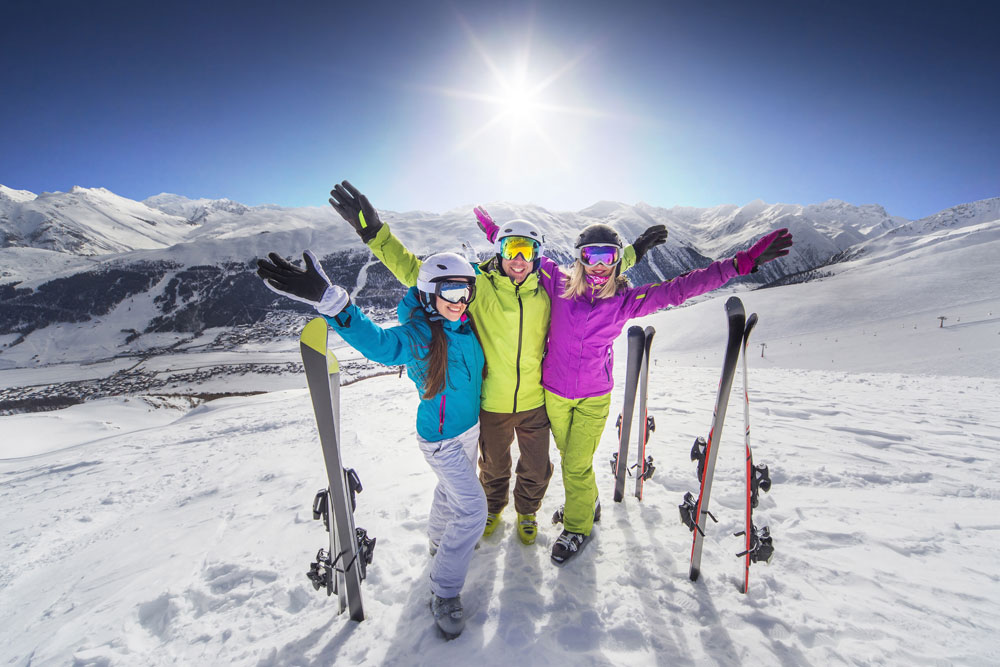
Intermediates (the sweet spot)
If you’re an intermediate, Tignes is basically a sweet shop with too much choice. You’ve got wide, cruisy blues and reds, long descents, and loads of ways to link areas without repeating the same two runs all week.
The famous red Double M is a proper “signature day” kind of run, and there’s plenty more in the mix once you start exploring.
Stay tip:
- Stay in Le Lac for central access to multiple sectors, or Val Claret if you want quick glacier laps and a more energetic feel.

Advanced skiers & snow-sure seekers
Advanced skiers and riders come to Tignes for steep blacks, “naturide” routes, and legit freeride terrain – plus lift access that makes big lines feel surprisingly reachable. The long black La Sache down to Les Brévières is the kind of run you remember for years.
Off-piste here is serious alpine terrain: if you’re heading beyond marked runs, go with a qualified local guide and carry avalanche kit.
Stay tip:
- Stay in Val Claret for fast access to higher terrain, or Les Brévières if you want that “big run home” finish.

Snowboarders
Snowboarders generally like Tignes because you’re not trapped on endless drag lifts, and the modern uplift helps reduce the soul-destroying “unclip and push” moments.
The park set-up is strong, and the wider area has plenty of routes that work well on a board – just plan your day to avoid flat traverses when you’re tired.
Stay tip:
- For the smoothest logistics, stay in Val Claret (easy access to park/glacier zones) or Le Lac (central and straightforward for mixed-ability groups).

Beginners (with a smart plan)
Beginners do best in Tignes when they treat it like a “zones and progression” resort, not a “let’s ski everywhere immediately” resort.
There are beginner areas, nursery slopes, and multiple free lifts across villages, which makes those first wobbly days much cheaper and less intimidating.
Stay tip:
- Stay in Le Lac or Val Claret if you want the easiest lesson logistics and lots of nearby gentle terrain, and aim for mountain restaurants that are easy to reach without scary run choices.

Families
Families should think “ease + routine + options for non-ski moments”. Le Lac is often the most convenient all-round base for getting to lessons, grabbing food, and not turning every day into a logistical puzzle. The presence of beginner areas and free lifts in multiple villages is a huge win with kids, because it means you can do short, low-pressure sessions.
Stay tip:
- Stay in Le Lac for maximum walkability and flexible day planning, or consider Tignes 1800 / Les Boisses if you want a calmer base and don’t mind using the shuttle.

Freestyle / Terrain Parks
Freestyle in Tignes is properly legit: there’s a snowpark area accessed via the Grattalu chair, with a halfpipe and an airbag set-up that’s designed for progression as well as showing off.
The vibe is “train here, improve here”, with coaching options through schools and private instructors if you want to level up fast.
Stay tip:
- Stay in Val Claret if park time is a daily priority – it keeps your mornings easy and your legs fresher for actual riding.
Looking to stay in Tignes?
Where is Tignes?
Tignes is in the French Alps, in the Tarentaise Valley in Savoie, and it sits above the valley towns you’ll use for trains and transfers (Bourg-Saint-Maurice is the big rail gateway).
It’s next-door linked with Val d’Isère as one big ski domain, so it’s common to ski across between the two in a single day if you’ve got the full-area pass. For planning, treat it like a multi-village resort: your base choice matters because it changes your daily routine – especially for lessons, nightlife, and “how easy is it to get home when everyone’s tired”.
Looking to stay in Tignes?
Skiing in Tignes (ski area, terrain, lifts, snow)
Tignes skiing is all about choice: high glacier laps, wide confidence-building pistes, long village descents, and pockets of steeper, more technical terrain when you want it.
The wider Tignes–Val d’Isère area is marketed at 300km of slopes, and the piste map shows a big spread of difficulties – so you can build days around your mood (cruise, challenge, explore, repeat).
The practical trick is learning the “shape” of the mountain quickly: where the busy lift bases are (and when), which sectors give you good visibility on flat-light days, and where your best escape routes are for getting home without drama. If you do that, Tignes stops being “big and intimidating” and becomes “big and convenient”.


Terrain overview
Tignes looks massive on a map, but it’s basically a handful of “home zones” you’ll keep orbiting depending on weather, snow and mood. Up high, the Grande Motte glacier side is your altitude safety blanket: when it’s dumping (or when everywhere else is getting scraped), that’s where you go to keep things wintry.
Val Claret is the launchpad for a lot of this, and it’s also where the day can start to feel like a choose-your-own-adventure book: glacier laps, links over towards Val d’Isère, or a quick pivot into the Palet side for park days.
Then you’ve got the Palet sector as the freestyle/freeride “playground corner” of the resort – it’s where progression lives, but it also has that tempting, open alpine feel where you’ll spot lines and start negotiating with yourself.
Finally, the lower sectors towards Tignes 1800 / Les Boisses and Les Brévières are your long-run, leg-burn, “ahh I can see again” territory. They can feel calmer, and in bad light they’re often a better shout than the big open bowls higher up.
Stay tip:
If you want the easiest “choose any direction” start each morning, base yourself in Le Lac.
Lifts & getting around the mountain
Tignes is built to move people around properly – not in a “shuffle from chairlift to chairlift all day” way, but in a “you can actually go places without it feeling like a logistics project” way.
The lift network is generally modern, fast and high-capacity across the wider area, which is why you can hop between sectors pretty smoothly once you’ve got your bearings. Most days you’ll naturally start from the big hub bases around Le Lac and Val Claret, then use a handful of repeat-player lifts to unlock the rest of the mountain.
Think of the key lifts as your mountain “junctions.” Palafour and Chaudannes are classic launchpads from Le Lac – great for getting warmed up and spreading out before you commit to bigger missions. Over in Val Claret, Tichot and the lifts around that side are your quick-access engines for higher terrain and for linking into different sectors without much faff.
When you want to gain altitude fast – especially if you’re eyeing glacier laps – the Perce-Neige funicular is the express route that gets you up the mountain efficiently (and saves your legs from a slow, step-by-step climb).
The big win in Tignes is that it’s laid out in a way that makes “sector days” easy. You can pick a vibe – glacier/altitude, park day, long descents to the lower villages – and the lift system lets you commit to it, rather than constantly fighting your way back to the same bottleneck.
The only real skill you need is timing your links. The best habit is moving between zones before late afternoon, so you’re not doing a tired end-of-day route-planning puzzle when everyone’s just trying to get home.
Practical navigation move: treat Le Lac and Val Claret as your anchor points, and plan your day like a loop. Go high or far earlier while energy (and visibility) is better, then gradually work your way back towards your base area so the end of the day feels like a glide home, not a “how did we end up here?” moment.
Stay tip:
If you hate morning queues with a passion, stay close enough to walk to a main lift base early – Val Claret is great for that.
Snow reliability & season length
Snow reliability is one of Tignes’ big flexes – and it’s not just marketing fluff. With village bases sitting roughly 1,550–2,150m and uplift reaching around 3,456m, you’re basically stacking the deck in your favour for most of the winter. Add the glacier into the mix and you’ve got that reassuring “snow insurance” feeling: even when lower resorts are playing the slush lottery, Tignes is often still properly wintery up high.
The trade-off is that you’re in big, high, often above-treeline terrain, so visibility and wind matter more than they do in tree-heavy resorts. When the weather rolls in, flat light can turn simple pistes into a white-on-white puzzle, and strong wind can impact the higher lifts (especially glacier access).
Practical gear tip: pack at least one decent low-light lens and don’t be shy about swapping it in – it’s the difference between “this is fine” and “why am I suddenly skiing by vibes alone?”
Season-wise, you’re usually happiest in mid-winter (Jan–Mar) if you want the best odds on cold snow and full terrain. Early season can be excellent higher up, but expect the resort to open progressively and lean on snowmaking lower down. Late season is often glorious for sunshine and long days – just plan for the spring pattern: firmer mornings, softer afternoons, and timing your favourite runs before they turn into mashed potatoes.
The real-world move is having a bad-visibility plan ready: lower runs, more sheltered sectors, maybe a longer lunch, and an earlier finish rather than forcing a “hero day” in a whiteout.
Stay tip:
If you’re nervous about whiteouts, staying nearer the routes down toward Les Brévières can feel more forgiving.

Tignes has a proper freeride culture – the kind where you’ll see people scanning faces, chatting about conditions on chairlifts, and eyeing up “just over there” terrain before you’ve even finished your first coffee.
There’s loads of tempting off-piste access from the lift system, plus bigger alpine zones where you can string together serious descents. It’s also the kind of place where tracks appear quickly after snowfall… which can give a very false sense of “oh it must be fine then.”
This is high-alpine terrain and avalanche risk is real. If you want to do it properly (and actually enjoy it rather than stress-sweat your way down), the smart play is a qualified local guide for your off-piste days, or an off-piste course where you learn the decision-making, not just the turns. You’ll also get the insider benefit: guides know where snow holds, where wind loads, and which “easy looking” bits have nasty terrain traps.
Minimum kit expectations are still the basics – transceiver, shovel, probe – and the not-optional part is knowing how to use them under pressure.
Stay tip:
If off-piste is a major priority, base in Val Claret for fast access to higher freeride zones.
Beginners & improvers
Beginners can absolutely do Tignes – you just have to approach it like a resort you grow into, not one you conquer on day one.
Think “micro-wins”: start in the dedicated nursery areas and use the free beginner uplift to build confidence without the pressure of committing to long exits or busy intersections. Once you can stop reliably, turn both ways, and manage speed without panic-braking, you can graduate onto gentle greens and forgiving blues that let you practise properly.
The main thing to watch in Tignes is that it’s a big, high mountain resort, so conditions can feel more “alpine” than a sheltered, tree-lined beginner haven.
Some blue runs can ski like reds when they’re scraped or busy, and late afternoon home runs can feel hectic if you’re tired. So plan your day around confidence: finish with something you know you can ski happily, and don’t let “we should ski back” turn into a wobbly, stressy survival mission.
Improvers do best by choosing a sector and milking it. Lap the same few blues until you’re linking turns smoothly, then step up one grade – not five. And if you’re skiing with stronger mates, set a rule: one “stretch run” per day, then back to comfort. You’ll learn faster and fight less.
Stay tip:
If lessons are your main focus, stay in Le Lac so your mornings are calm and you’re not busing in ski boots.
Freestyle & “more than pistes”
Tignes has legit freestyle credentials – not just a token row of kickers, but a proper setup that caters to progression and people who already know what they’re doing.
The main snowpark action is around the Palet area (via Grattalu access), which makes it easy to build park time into a normal ski day rather than making it a full expedition. You’ve got features that are genuinely friendly for first-timers, plus bigger lines that keep confident riders entertained.
The halfpipe is a standout for anyone who’s into that rhythm-and-flow feeling, and the airbag is one of those sneaky game-changers: suddenly tricks that lived in your head as “maybe one day” become “fine, I’ll try it” .
Practical park tip: hit it earlier in the day if you can; as traffic builds and temperatures shift, features can get scraped, firm, or chopped up, and the park stops feeling like a playground and starts feeling like a worksite.
Beyond freestyle, the glacier access adds that “high-altitude bonus level” vibe – great when conditions elsewhere are mixed, and also just a fun way to get big-mountain mileage with a bit of drama in the scenery. Even if you’re not a park person, the Palet side can still be worth visiting for variety, views, and a different feel to the day.
Stay tip:
If you want park laps to be effortless, stay in Val Claret.
Best Runs in Tignes (by ability)
For beginners:
For beginners, think “gentle zones first, then confidence routes.” The green areas like Borsat, Grand Pré, Fontaine Froide, and Marmotte are designed for exactly that: wide, controlled slopes where you can practise turns without feeling rushed.
Once you’re ready for a little more movement, runs like Almes (green) and mellow blues like Anémone are good stepping stones – especially if you time them for quieter parts of the day.
For intermediates:
Intermediates should 100% put Double M on the hit list – it’s a signature Tignes red for a reason, and it’s the kind of run that makes you feel like you’ve “arrived” as a skier.
Add Aiguille Percée (red) for scenery and that satisfying “big mountain” feel, then mix in cruisy blues like Corniche, Grattalu, Genepy, and Combe as your reliable mileage-makers when you want flow over stress.
For advanced:
If you want a proper Tignes badge of honour, La Sache is the one: a long, serious black that drops toward Les Brévières, and it can be anything from glorious to leg-melting depending on conditions.
Trolles is another classic “commit and focus” choice, and the steeper couloir terrain (often around Les Tufs) is where you switch from “advanced” to “expert mindset” fast.
Off-piste note:
Tignes freeride is not a casual add-on. If you’re leaving marked runs – whether you’re eyeing classics like the Vallons (Vallée) de la Sache, heading for a big link-up like Tour du Charvet, or getting tempted by steeper lines such as Les Tufs and Mickey’s Ears couloirs – go with a qualified guide, carry proper kit, and treat avalanche bulletins like they matter… because they do.
Looking to stay in Tignes?
Looking for accommodation in Tignes
Tignes accommodation choice is less about “which is the prettiest village” and more about “what kind of trip are we actually having?”
If you want convenience – lifts, lessons, shops, food, and the ability to pivot plans when the weather changes – Le Lac is the most all-round base, with Val Claret a close second if you prioritise altitude and a more energetic feel.
If you’re here for quieter evenings, a slightly calmer base, or better value, then Lavachet (close to Le Lac but more residential) and Tignes 1800 / Les Boisses (tucked away, often calmer) are strong picks.
Les Brévières is the “different flavour” option: lower, more traditional-feeling, and a great place to end the day if you like the idea of skiing home on a long descent.
The free shuttle system stitches it all together, so you’re rarely “stuck” anywhere – your main difference is how easy your mornings and late nights feel.
If you’re a first-timer to Tignes, you generally want to bias toward ease (Le Lac / Val Claret). If you’re a repeat visitor or a confident planner, you can optimise for vibe and budget and rely on shuttles to fill the gaps.
Quick chooser: which area is right for you?
- If your group wants maximum flexibility – ski school logistics, easy supermarket runs, and the least daily faff – go Le Lac.
- If you want to wake up high, chase first lifts, and have the liveliest evenings close by, choose Val Claret.
- If you want quieter nights and decent value while staying near the action, Lavachet is the sensible sleeper pick.
- If you want a calmer base that feels slightly more “villagey” and you don’t mind a shuttle link, Tignes 1800 / Les Boisses works well.
- And if you want charm, trees, and the “big run home” feeling, Les Brévières is your move.
Village Comparison Table
| Area / Base | Altitude | Vibe | Best For | Nightlife | Beginner-Friendly | Access / Getting Around |
|---|---|---|---|---|---|---|
| Le Lac | 2,100m | Central, practical | First-timers, mixed groups | ★★★★ | ★★★★ | Walkable core + shuttles |
| Val Claret | 2,100-2,150m | Sporty, lively | Park riders, altitude lovers | ★★★★★ | ★★★ | Walkable to lifts + shuttles |
| Lavachet | 2,100m | Quiet-ish, residential | Better value near centre | ★★ | ★★★ | Short shuttle / walk to Le Lac |
| Tignes 1800 / Les Boisses | 1,800m | Calmer, tucked away | Budget, families who want quiet | ★★ | ★★★ | Shuttle dependent, ski links |
| Les Brévières | 1,550m | More traditional feel | Charm + tree-ish feel | ★★★ | ★★★ | Shuttle + ski links |
(Star ratings are “relative vibe” rather than gospel)
Best Area for First-Timers
Le Lac is the least stressful “learn the resort” base because it sits right in the operational heart of Tignes: you’ve got easy access to the main lift network, a proper village-centre feel (by Tignes standards), and the simplest day-to-day routine for lessons, meeting points, ski hire, and regrouping when someone in the group has disappeared to “just do one more run.”
It’s also the easiest place to find your rhythm early in the week: you can start small, build confidence, and still feel like you’re properly in the resort rather than commuting to it.
Where Le Lac really wins is mixed-group flexibility. Half the group can be on an early chairlift mission while the other half do a slow coffee, a gentle warm-up, or a lesson – and you can still meet up without it turning into a WhatsApp thriller.
Evenings are straightforward too: more choice for food, more “wander out for a drink” energy, and less reliance on shuttles when everyone’s tired and hungry.
If you’re only coming once and you want the safest bet, pick Le Lac and spend your energy skiing rather than navigating.
Stay tip:
If you’re booking accommodation, look for Le Lac accommodation that is actually walkable to the main lift base and meeting points – being a few minutes closer pays off every single morning.
Best Area for Ski-in Ski-out
For true ski-in/ski-out honesty, Val Claret and parts of Le Lac usually win – but Tignes is absolutely full of “200m to the lift” listings that still get marketed like you’ll clip in at reception.
The best way to judge it is brutally simple: you want accommodation that sits directly on a marked run back into your village, or genuinely next to the snowfront lifts – not just “nearby”.
Val Claret is the best shout if your priority is maximising ski time with minimal faff: you wake up high, you’re quickly into the higher terrain, and it’s easier to rack up mileage without thinking too hard.
Le Lac is the more balanced option: still plenty of ski convenience, but with better “town convenience” as well – handy if you like being able to nip out for food, supplies, or a post-ski wander without feeling like you’re stuck in a ski dormitory.
And for groups, ski-in/out isn’t just a luxury – it’s a daily energy saver. Less boot-stomping, fewer gear juggles, and fewer “where are we meeting?” debates at the end of the day.
Stay tip:
Trust the map, not the marketing. If it doesn’t clearly show a piste back to the building (or a lift right there), assume you’ll be walking in ski boots at least once a day.
Best Area for Nightlife
If nightlife matters, Val Claret is the obvious pick. It’s where the energy runs later, the crowd skews younger, and you can bounce between bars without feeling like you’re doing a logistics mission or negotiating a group shuttle.
The vibe is more “let’s see where the night goes” than “one quiet drink and bed,” and if your trip has even a hint of party DNA, Val Claret makes it easy.
The bonus is that you’re also high and close to big terrain, so you get “big ski days” and “big nights” from the same base – dangerous, but efficient.
The flip side: if you’re a light sleeper, or you’re travelling with people who genuinely mean it when they say “early night,” you may want to be slightly off the noisiest strip so you’re not listening to other people’s holiday decisions at 2am.
If you want après but not chaos, Le Lac is more flexible: you can still go out and have options, but it’s easier to opt out and retreat without feeling like you’re abandoning the fun.
Stay tip:
If you want nightlife and decent sleep, book Val Claret but pick accommodation a short walk away from the loudest bars – close enough to stumble home, far enough to avoid the soundtrack.
Best Area for Families
For families, Le Lac is the easiest base to run because it’s central, practical, and makes daily life simpler – less boot-stomping, less shuttle dependence, and more “pop back to the apartment if someone melts down” convenience.
It’s also the smoothest option for ski school logistics: meeting points are easier to reach, regrouping is simpler, and you don’t spend half the morning doing the “are we at the right place?” panic-walk with kids and poles.
That said, if your priority is quieter evenings and slightly calmer surroundings, Tignes 1800 / Les Boisses can be a really smart family choice.
It often feels more relaxed, you’re away from the late-night buzz, and it’s a bit easier to keep the trip in “family mode” rather than “everyone’s doing their own thing.”
The trade-off is that you’ll likely use the free shuttle more – especially for bigger dinner choice or if you want to dip into the main hubs – but it’s a fair swap if your crew values calm, routine, and early nights over being right in the centre of everything.
Stay tip:
If you’ve got younger kids, prioritise being close to ski school meeting points and a supermarket/bakery – those two things will quietly decide how smooth your week feels.
Best Area for Budget Travellers
Budget in Tignes usually means “pick slightly less central, use the shuttle, win on price.”
Lavachet is a strong shout because it’s close to Le Lac but often feels like the quieter, better-value neighbour – you’re near the action when you want it, but not paying the premium for being right on top of it.
It’s a practical base for people who care more about ski days than nightlife, and it can be a sweet spot for groups who want space without the full central price tag.
Tignes 1800 / Les Boisses can also be good value, especially if you’re happy that evenings are calmer and you’ll shuttle in for bigger nights or more choice.
The upside is you often get more “apartment for your money” – which matters if you’re a self-caterer, travelling with mates, or just don’t want to pay extra for being able to walk to a bar.
Either way, the key is making sure you’re not accidentally budgeting yourself into daily hassle: access to the shuttle route (or a genuinely manageable walk to lifts) is what keeps “cheap and cheerful” from becoming “cheap and exhausting.”
Stay tip:
When booking budget digs, choose location over a fancy interior – saving money is great, but saving 20 minutes of daily faff is even better.
Our Top Hotels

★★★★
- Village quiet edge of town
- Lifts - 5 mins walk
- Pool + spa
The hotel has a warm, alpine look and a more old-school mountain feel than some of Tignes’ slicker options.
You are not slap-bang in the centre, but that helps keep things quieter, and the walk to the lifts is manageable.
The indoor pool and sauna are a proper bonus, and being able to use the wider Montana wellness set-up adds a little extra value.
Why choose it? Gentler atmosphere, easy slope access, and a much calmer start to ski life.

★★★★★
- Village 200 m
- Lifts - 2 mins walk
- Pool + spa
It manages to feel slick and grown-up without losing the practical bit: you are still very close to the slopes and lifts.
Inside, it is modern and polished rather than rustic-chunky.
The spa set-up is a real feature, and the rooms and public spaces are made for people who enjoy hanging about the hotel as much as bombing around the mountain.
Why choose it? One of the smartest stays in Tignes if you want proper style with your ski week.

★★★
- Village on the main street
- Lifts - 150 m
- Wellness area
You are right in the middle of Le Lac with good access to the slopes, shops and resort life, without needing a heroic budget.
The rooms are on the simpler side, but the hotel feels well-positioned and functional in a good way.
The lake-facing terrace is a nice touch, and the spa area with sauna, steam room and hot tub gives you a little extra at the end of the day.
Why choose it? Central, easy, and a very dependable choice for a fuss-free week.

★★★
- Village on the main street
- Lifts - 1 min walk
- Wellness area
Location-wise, it is right in the heart of things and properly close to the lifts.
Le Diva has a more casual, upbeat feel than the quieter hotels, and the pub-bar side of things gives it a little character of its own.
You still get a wellness area with sauna and hammam, which is handy, but this is more about value and convenience than indulgence.
Why choose it? A lively, central pick that keeps things practical and sensible.
Tour Operators who go here
Looking to stay in Tignes?
Après ski, restaurants & winter activities
Tignes is one of those resorts where you can choose your own adventure every evening.
You can have big après on a terrace, go full nightclub, or do the wholesome version – sauna, dinner, early bed – without feeling like you’re “missing” the resort.
The food scene is better than people expect for a purpose-built high-altitude place: you’ve got proper mountain restaurants (including the famous high-altitude Panoramic experience) and genuinely good village dining, from Savoy classics to “thank god, something that isn’t cheese” options like Pan-Asian.
Non-ski activities are also a real strength here, especially if you’ve got mixed energy levels in the group.
Between things like ice diving, sledging experiences, spa/pool time, and “we just want to walk and take photos” options, you can build a rest day that still feels like a holiday, not a punishment.

Tignes après comes in layers. For classic outdoor terrace energy, Cocorico in Val Claret is a big name – live music, DJs, and that “just one drink” lie you tell yourself at 3pm.
If you want ski-in, ski-out vibes with a huge terrace, Loop Bar in Le Lac is a staple, and it’s literally built for that first beer straight off the run.
If you want something that straddles après and dinner, Le Couloir in Val Claret opens into happy hour mode and turns into a lively evening spot without needing a full venue change.
For “go on then, we’ll stay out”, Val Claret has late-night options like Melting Pot and Blue Girl, while Le Lac has Jack’s Club for the “I’m not done yet” crowd.
If you prefer a slightly calmer bar, places like Le Studio and Le Caveau give you a more “drink and chat” rhythm (still fun, just less feral).
The biggest pro tip: decide before you go out whether tonight is “big night” or “tomorrow is a big ski day”. Tignes happily enables both – your legs just need you to pick one.
Mountain‑top Moments
Mountain lunches in Tignes can be anything from a quick refuel to a full-on event.
The headline experience is Panoramic on the Grande Motte side – high altitude, huge views, and the kind of lunch you talk about later like you survived something glamorous.
If you want something more casual-but-still-fun, Le Palet is built for “easy slopeside canteen + lively atmosphere” days, and it’s directly part of that modern Tignes lunch culture.
For a proper on-the-piste stop that’s friendly and straightforward, La Toviere (at the top of the Tovière gondola) is the kind of place you can build into a route plan without fear. Le Bollin is another handy slopeside choice in Val Claret, and it even leans into the “make it an experience” thing with events like tobogganing evenings plus a Savoyard meal.
If you want a “mountain restaurant but make it different”, Lo Soli is a well-known altitude lunch spot, and if you’re skiing over to Val d’Isère on the full-area pass, places like L’Empreinte Avaline or La Peau de Vache give you more options for a bigger, bistro-style lunch.

Village food in Tignes is better than it strictly needs to be for a purpose-built ski resort – which is always a pleasing little plot twist.
If you want full-on Savoyard comfort done properly, La Chaumière leans into the classics in the best way: raw-milk raclette, tartiflette, and Savoyard fondue (including a truffle version if you’re feeling fancy) in a properly cosy, “yes we’re doing cheese and we’re proud of it” setting.
If you want that same alpine-lodge warmth but with a bit more “nice evening out” energy, La Table de Jeanne in Val Claret is a strong pick – think Beaufort fondue, raclette, and tartiflette, plus proper crowd-pleasers like French onion soup and the sort of desserts that make you suddenly find room again (hello tarte aux myrtilles sauvages).
For a special-occasion meal where you actually book ahead and pretend you’re a polished adult, Ursus is the big-ticket name – it’s a one-star MICHELIN spot, so expect modern French cooking, tasting-menu vibes, and the kind of meal that turns into “we’re still talking about that starter in April.”
And when you hit your personal cheese limit (rare, but it happens), Kodo in Le Lavachet is a genuinely refreshing mid-week reset: Izakaya-style Pan-Asian plates, gyozas, crispy chilli squid, Dan Dan noodles, Massaman or Thai green curry, and chicken katsu – plus proper cocktails to match.
For the “we want something easy, cosy, and reliably good” nights, Jam Bar in Le Lac is the comfort-food cheat code: pasta, panini, bruschetta, and proper Italian coffee/cappuccino – ideal when you want carbs without committing to another full fondue event.
If you’ve got a rest day (or a non-skier in the group), Tignes doesn’t leave you stranded in “guess we’ll just sit around and scroll” territory.
You can do properly unique stuff like ice diving / under-ice freediving in the lake, ice floating, snowshoe outings, and sledging-style experiences – the kind of things that feel like a story when you get home, not just “yeah we… had a coffee.” A lot of these can be booked through bigger activity outfits like Evolution 2, or via the resort/tourist info desks, which is handy if you want someone else to deal with the logistics while you focus on not falling over in moon boots.
For something more chill (or if the weather is doing that moody high-altitude thing where visibility disappears and everyone’s morale gets… delicate), Tignes has proper indoor reset options too: think pool/spa downtime and “warm up your bones” energy, plus the simple pleasures like a short scenic wander, a few photo spots, and the very satisfying ritual of hot chocolate with a view while the skiers come back looking mildly heroic.
If you’re travelling with kids, the golden formula is: one activity that feels like an adventure, and one that feels like a warm recovery. Trying to do three big things in a day is how you accidentally create a family mutiny (usually triggered by hunger, wet gloves, or both).

Getting home safely & easily
Tignes is set up so you don’t need a car once you’re in resort.
There are free shuttle buses linking the main villages, and the official resort info makes a point of keeping movement around Tignes easy throughout winter.
In practice, that means you can do dinner in Val Claret and still get home to Le Lac (or vice versa) without paying taxi money every night.
Taxi pricing isn’t always published in a neat “menu” (and it varies by time and conditions), so if you’re relying on taxis for late nights, treat it like a small logistics task: save a couple of local numbers, ask your accommodation what’s normal, and don’t wait until 2am to discover everyone else also wants a taxi.
For most people, the winning combo is shuttles for 90% of nights, taxis only when you’re shattered or it’s properly late.

Ski schools & learning zones
Tignes is a strong resort for lessons because it’s built around ski travel logistics: multiple villages, multiple beginner areas, and enough uplift that you’re not stuck repeating the same tiny slope all week.
Major ski schools like ESF operate across the villages (Le Lac, Val Claret, 1800, Brévières), and there are also alternative schools and providers like Evolution 2 if you want a different teaching style or off-piste progression options.
The biggest “lesson success” factor here is routine: where you stay, how long it takes to reach your meeting point in ski boots, whether you collect kit the day before, and whether you’ve planned the first morning like a calm adult rather than a chaotic raccoon.
Get those bits right and Tignes becomes incredibly smooth as a learning resort.

Beginner uplift is one of the underrated wins in Tignes, because the resort doesn’t just give you one tiny nursery slope and a pat on the head – it gives you multiple places to start sensibly, with free beginner lifts and dedicated learning zones that let you build confidence without immediately being flung into “busy blue run with traffic” territory.
In practical terms, that means you can do the early-days essentials – stopping, turning both ways, speed control – in areas designed for exactly that, then graduate onto longer greens and gentle blues without the horrible “well, guess we’re committed now” feeling.
The smart way to use Tignes is to pick your first two days of terrain intentionally, based on (a) your confidence level and (b) the weather.
Tignes is high and a lot of it is above treeline, so when visibility is poor, learning is harder – not because the slope is steeper, but because everything looks like a blank sheet of paper. On those days, keep it simple: stay in the learning zone, use short laps, and focus on rhythm.
When visibility is decent, that’s when you move up to greens/blues that still give you easy “escape routes” back to the same base area if it gets busy or you’re feeling cooked.
If you’re travelling with beginners, the best progression hack is to split the day: lessons in the morning, then free-ski practice in the afternoon on the same couple of runs your instructor used.
Yes, repetition feels “boring” to confident skiers – but to beginners it’s the difference between “I did it once” and “I can actually do it.”
In Tignes, that repetition is easy because you can stay close to the main hubs and keep laps short, controlled, and confidence-friendly instead of spending half the day just trying to get back to where you started.
Stay tip: If someone in your group is properly nervous, prioritise accommodation with easy access to the main beginner areas (Le Lac or Val Claret) – fewer transitions and fewer crowds makes learning feel ten times calmer.
If lessons are a core reason you’re booking Tignes, staying close to the main hubs isn’t just “nice” – it changes the entire week.
Le Lac and Val Claret are the easiest bases for lesson logistics because they’re generally closest to the main lift bases, meeting points, rental shops, and the gentle terrain you’ll use to progress. That means shorter mornings, less hauling gear across town, and more time actually skiing instead of doing the daily boot-stomp.
Le Lac is usually the best all-rounder if you want things simple and central: it’s the most “villagey” part of Tignes, and it’s easy to regroup, grab lunch, or duck back to your place if someone needs a break.
Val Claret is great if you want quick access to higher terrain as you improve – but for absolute beginners, the real win is still convenience: being able to roll out, meet your instructor, and start without a complicated chain of lifts or shuttles.
If you’re staying in a quieter base like Tignes 1800 / Les Boisses or Les Brévières, it can still work brilliantly – you just need to treat the shuttle as part of your routine rather than an afterthought. Aim to arrive early, keep your mornings organised, and don’t plan to cut it fine on day one.
On day one, aim to arrive 15–20 minutes early because rentals + boots + lift pass admin always takes longer than your optimistic brain thinks it will.
In Tignes, the easy win is collecting equipment the afternoon before lessons start – it turns the first morning from a logistical decathlon into a simple “grab skis, meet instructor, go.”
If you’re travelling with kids, add extra buffer, because there will always be at least one missing glove, one sudden toilet emergency, and one person who can’t remember how helmet straps work.
Use your village’s main snowfront as your anchor. In both Le Lac and Val Claret, lesson groups and meeting points tend to cluster around the obvious lift bases, and the layout is designed so instructors can gather people without them having to cross a maze of roads or chaos.
The practical move is to do a quick “reccy” walk the day before: find the meeting point signs, work out where the ski school desk is, and decide exactly where you’re going to stand. That way, the first lesson morning feels familiar instead of frantic.
And if you’re relying on shuttles from a quieter base, build in even more buffer. The buses are free and frequent, but winter mornings have a habit of throwing tiny surprises at your schedule – a slower pickup, a crowded bus, a kid meltdown, or a sudden “we need snacks NOW” moment.
You want to arrive calm, not breathless, because your first few runs always feel better when your heart rate isn’t already at après levels.
Looking to stay in Tignes?

Lift passes, costs & budgeting
The Tignes lift-pass decision is actually pretty simple once you strip the jargon away.
For shorter ski days and one-day skiing, you can buy a Tignes-only pass. But for a standard multi-day or week-long holiday, the main option is the Tignes–Val d’Isère pass, giving you access to the full linked ski area.
That means the choice isn’t really “local week or full-area week”. It’s more a case of Tignes-only for shorter skiing, then the full linked domain once you’re skiing for several days.
The other useful thing to know is that Tignes pricing changes by period. Early-opening and late-season prices are cheaper, while the main winter rates sit higher. So the smartest budgeting move is not just choosing the right pass, but checking the right date band too.
Which ski pass should you buy in Tignes?
Think of it like this: if you’re mostly skiing Tignes, keep it local. If you want the full linked playground, buy the bigger pass and enjoy the freedom.
Option A - Tignes pass (local area)
- What it is: The local Tignes-only pass, available for shorter skiing including four hour and one day tickets.
- Best for: Arrival days, short stays, beginners, improvers and anyone who only needs Tignes for the day rather than the full linked area.
- It’s a useful way to keep costs down when you don’t need Val d’Isère access, but it isn’t the standard option for a full ski week.
- One useful extra: if you buy a 1 day Tignes pass and then decide you do want the wider linked area, there is a same-day extension to Tignes–Val d’Isère for €13.
Plain English: This is the “we’re happy skiing Tignes” pass.
Option B - Tignes - Val d’Isère pass (full area)
What it is: The full-area pass covering the linked Tignes–Val d’Isère ski domain.
Best for: Stronger intermediates, confident mixed groups, full-week trips and anyone who wants maximum freedom.
This is the pass for people who want options. If visibility is better elsewhere, you can move. If one part of the area is busier, you can shift. And if your group likes the idea of full exploration days, this is the one that makes sense.
It is also the better-value choice for longer stays, especially because the pricing structure gives you those classic “extra day” style bonuses: 6 days = 7 days, and 7 days = 8 days.
Plain English: This is the “give me the whole playground” pass.
Option C - Beginner / first-days strategy
There is not really a big standalone “week-long beginner pass” here in the way some resorts do it.
So if you’re brand new, the money-saving move is simple: start with the smaller Tignes option, or even a shorter local ticket, and only step up once you know you’re ready to use more of the mountain.
That way, you’re not paying full linked-area money while you’re still doing confidence laps and lesson-zone repetitions.
Plain English: Don’t buy the massive pass on day one just because future-you might be amazing by Thursday.
Tignes lift pass prices 2026/27
Here are the published headline prices for Tignes Winter 2026/27 (prices shown in EUR):
| Tignes (local) Pass | Adult | Child / Senior |
|---|---|---|
| 4 hours | €63.00 | €51.00 |
| 1 day | €70.00 | €57.00 |
| Tignes - Val d’Isère (area) Pass | Adult | Child / Senior |
|---|---|---|
| Half day (afternoon) | €63.00 | €51.00 |
| 1 day | €78.00 | €63.00 |
| 6 days = 7 days | €468.00 | €378.00 |
| 7 days = 8 days | €546.00 | €441.00 |
Ski Demon tip: For a normal ski week, don’t waste time looking for a six day Tignes-only pass – the published 2026/27 multi-day option is Tignes–Val d’Isère. Use the Tignes-only ticket for shorter ski days, then go full area once you’re skiing for several days.
Deposits, insurance, and when to buy
Here’s how to do Tignes like someone who hates queues and hates wasting money:
Pass card: Tignes uses a reloadable hands-free card. Keep it safe, because losing it is more annoying than it needs to be.
Insurance: Carré Neige is offered as an add-on at checkout. Worth considering if your own winter sports insurance is patchy, but don’t assume you need to double-pay if you’re covered.
When to buy: buy online if you can. It is usually the easiest way to avoid first-morning queues, and if you’re travelling in the opening weeks or late spring, keep an eye on the official tariffs because those periods often come with cheaper prices than the core winter season.
Looking to stay in Tignes?
Common Tignes Ski Holiday Mistakes
Tignes is built for big ski days, but its separate villages, high-altitude conditions and vast linked ski area mean a few common mistakes can make your holiday harder than it needs to be.
Booking the “wrong village” for your actual trip
People pick Val Claret because it sounds exciting, then complain it’s lively. Or they pick Brévières for charm, then get annoyed they’re shuttling for nights out. Tignes is a multi-base resort – your base choice changes your daily mood.
Decide what matters most (lessons convenience, nightlife, quiet, budget), pick the village that matches, and let the mountain do the rest.
Treating day one like it’s day three
Altitude, cold, and French “ski-week energy” can make people go too hard immediately. Beginners get scared, intermediates get cocky, and suddenly someone’s icing a knee on day two. Start with a confidence-building route, do a long lunch, and keep the first day as a warm-up – your week will improve instantly.
Ignoring visibility reality
Tignes is high and a lot is above treeline, which is amazing… until it’s not. Flat light days happen. The mistake is forcing a “glacier mission” when you can’t see definition in the snow. Have a backup plan: lower routes, sheltered descents, shorter laps, and an earlier finish with something fun off the mountain.
Paying for the full domain but never actually exploring it
A Tignes–Val d’Isère pass gives you access to more than 300 km of linked pistes, so spending the whole week lapping the same couple of lifts near your apartment is a bit like buying a buffet ticket and only eating the bread rolls.
If you’ve paid for the full area, plan at least a couple of proper explore days and get over into Val d’Isère.
For a single local ski day, a cheaper Tignes-only pass is available – but for a typical ski week, make the most of the linked domain you’ve paid for.
Dabbling off-piste without the grown-up steps
Tignes freeride is tempting, but “tracked” doesn’t mean safe. The classic mistake is following someone else’s line because it looks fun, without kit, knowledge, or a plan. If you want off-piste, do it properly: guide, avalanche kit, and a mindset that turning around is a win, not a failure.
Getting to Tignes
Getting to Tignes is relatively straightforward, with several airport options and useful rail connections through Bourg-Saint-Maurice. Whether you’re flying, driving or travelling by train, here’s everything you need to know before setting off.
1) Fly + road transfer
(the “land, grab skis, go” option - and the most common)
For UK skiers, flying is the standard Tignes move: grab the best flight deal, then do the last leg by pre-booked shared coach or private transfer. Your usual airport shortlist is Geneva, Lyon, Grenoble, and Chambéry – with Chambéry often feeling the closest when schedules line up, and Geneva usually winning on flight choice.
After that, it’s a few hours up the Tarentaise valley, then the final climb up to the Tignes villages.
Rough transfer timings:
- Chambéry → Tignes: roughly 2 hours – 2 hours 45 minutes
- Grenoble → Tignes: roughly 2 hours 30 minutes – 3 hours 15 minutes
- Geneva → Tignes: roughly 3 – 4 hours
- Lyon → Tignes: roughly 3 – 4 hours
Snow, Saturday changeovers, and French school holidays can turn “easy” into “why are we still crawling?” – so if you’ve got any flexibility, avoiding the busiest arrival/departure windows is the single biggest quality-of-life upgrade.
Real-world tip: if you can, book a transfer that drops you as close as possible to your exact village/stop (Le Lac vs Val Claret vs 1800/Boisses/Brévières) – “Tignes” is not one place, and that last 10 minutes with bags in ski boots can be the bit that breaks morale.
2) Train + bus up from Bourg-Saint-Maurice
(the “sleeper-hit, less airport chaos” option)
Train is a genuinely good shout for Tignes if you want a calmer travel day and fewer airport queues, baggage scrums, and “will the transfer be delayed?” uncertainty.
Your rail gateway is Bourg-Saint-Maurice, then you hop on a bus (or taxi) up to resort. The bus run is straightforward and typically serves the main Tignes stops – including Le Lac and Val Claret – so you can land pretty close to where you’re staying without needing extra faff.
Rough timings:
- Bourg-Saint-Maurice → Tignes (bus): around 1 hour (very weather-dependent)
- Bourg-Saint-Maurice → Tignes (taxi/private): often 45–60 minutes, traffic dependent
The key with this option is connection planning: train delays happen, and mountain buses don’t run purely to suit your personal timetable. Build a bit of buffer so you’re not stood outside Bourg station in the dark doing the “are we sure this is the stop?” dance.
Real-world tip: aim for a train arrival that gives you at least 45–60 minutes before your preferred bus – it’s the difference between a smooth glide into resort and a last-minute sprint dragging skis like an overly ambitious pack mule.
3) Driving to Tignes
(flexible… with one small “mountain road + parking” reality check)
Driving from the UK is totally doable, especially for groups who want to bring more kit than airlines allow without paying baggage fees that feel like a prank.
The formula is simple: motorways to the Tarentaise valley, then the final climb up to Tignes. The last stretch is proper mountain road (usually via the N90 to Bourg-Saint-Maurice, then up towards resort), so winter driving rules apply: good tyres, chains in the boot, and patience when it’s snowing.
Rough driving timings once you’re in the Alps:
- From Geneva area → Tignes: roughly 3 – 4 hours
- From Lyon area → Tignes: roughly 3 – 4 hours
- From Grenoble area → Tignes: roughly 2 hours 30 minutes – 3 hours 15 minutes
- From Chambéry area → Tignes: roughly 2 – 2 hours 45 minutes
The big reality check is parking. Tignes isn’t a “pull up outside your chalet and forget the car exists” resort unless you’ve specifically booked accommodation with parking included.
Real-world tip: before you set off, sort where the car will live all week (accommodation parking or a designated car park) – because nothing says “welcome to holiday” like arriving at 7pm and having a family debate about parking while everyone’s hungry.
Getting around once you’re there (easy… with one tiny “ski boots” reality check)
Walking (your default setting - within your village)
In Le Lac and Val Claret especially, day-to-day life is pretty walkable: lifts, ski hire, supermarkets, bars - it’s all built around the main snowfront hubs. The only catch is that Tignes is a collection of separate bases (Le Lac, Val Claret, Lavachet, 1800/Boisses, Brévières), so “walkable” is usually walkable within your bit, not necessarily between them.
Free resort shuttles (your actual secret weapon)
The free shuttle network is what makes Tignes feel joined-up. It links the main villages, so you can stay somewhere quieter (hello, 1800/Boisses or Brévières) and still pop into Le Lac or Val Claret for lessons, lifts, dinner, or nightlife without needing a car. In practical terms: the shuttles do the heavy lifting, and you do the important work.
Taxis (backup plan for late nights or lazy legs)
Taxis exist, but this isn’t a city where you can just summon one instantly and know the price from an app. Think of them as Plan B - useful if you’ve missed the last shuttle, you’ve got tired kids, or you’re carrying shopping/kit and can’t face the boot-stomp. If you know you’ll want a taxi at a specific time (especially in busy weeks), booking ahead is the move.
Ready to make your piste dreams a reality?
Whether you’re scouting dreamy hotels, comparing the best tour operators or looking for fresh ski inspiration, we’re here to help you turn ideas into an actual holiday.
Take the next step by browsing hotels in this resort, choosing a trusted ski tour operator or signing up to our newsletter for destination ideas, practical advice and the latest tips delivered straight to your inbox. From finding the right place to stay to choosing the best way to book, we’ve got plenty to help you plan with confidence. Pick your next move and let the adventure begin.
Looking for more inspiration?
Sign up to our free newsletter

Ready to book your stay?
Take a look at our hotel guide and see what suits your requirements and budget
Tour operators
For more from our tour operators click the logos above
Tignes FAQs
Whether you’re visiting Tignes for the first time or heading back for another trip, these FAQs should help answer the most common questions before you book and before you travel.
Is Tignes good for beginners, really?
Yes – if you do it intelligently. Tignes has dedicated beginner areas and free beginner lifts across villages, which means you can learn without immediately paying full lift-pass prices while you’re still mastering stopping and turning.
The mistake is assuming the whole resort is beginner terrain – Tignes is big and high, so you need to stick to the right zones early on. Choose Le Lac or Val Claret for easier lesson logistics, start on the nursery slopes, then progress onto gentle greens/blues once you’re comfortable.
Do I need the full Tignes–Val d’Isère pass?
For a ski week, yes. The standard multi-day pass covers the full Tignes–Val d’Isère ski area, giving you access to more than 300 km of pistes across both resorts.
For 2026/27, the Tignes-only pass is available for shorter periods, including 4 hours and 1 day, rather than as the cheaper week-long alternative it might sound like.
If you’re a complete beginner, you may not need the full-area pass immediately, as Tignes has free beginner lifts where you can make your first turns. For a single day staying entirely within Tignes, the local pass can also make sense.
Once you’re skiing confidently for several days, though, the Tignes–Val d’Isère pass is the standard option – so make the most of it and get over to Val d’Isère rather than spending six days orbiting the same chairlift.
What’s the best village to stay in?
Le Lac is the safest all-round pick for first-timers because it’s central and practical. Val Claret is best if you want altitude access and nightlife nearby. Lavachet is quieter and often better value while staying close to Le Lac. Tignes 1800/Les Boisses and Les Brévières are calmer bases that rely more on the shuttle, with Brévières having a lower, more traditional feel. Pick based on your priorities: lessons convenience, nightlife, quiet, or budget.
Does Tignes get busy? How do we avoid queues?
It gets busy in peak weeks, yes – but it’s also built for volume. Start early, move sectors before mid-morning, eat lunch slightly off-peak, and avoid returning at the most obvious times if you can.
The biggest queues are usually at the main lift bases and key link points when everyone has the same idea. A simple hack: do your “famous run” early, then spend the middle of the day in a quieter sector while everyone else is queueing for the obvious lifts.
What’s the weather/visibility like at altitude?
Altitude is great for snow, but it can be brutal for visibility when cloud rolls in because so much terrain is above treeline. Pack the right lenses (a low-light one is non-negotiable), and have a bad-visibility plan: lower routes, more sheltered skiing, and shorter laps. If someone in your group is nervous, pick a base with easier access to lower descents (Brévières can feel more forgiving on stormy days).
Is La Sache worth doing?
If you’re an advanced skier with decent fitness, yes – it’s iconic. La Sache is long, serious, and can be leg-melting if it’s mogulled or icy, so timing and conditions matter.
Do it on a good visibility day, don’t leave it until the last run when you’re already tired, and treat it like an objective: hydrate, snack, commit. If you’re borderline-advanced, ski it with someone confident and be honest about taking breaks.
Can snowboarders get around easily?
Mostly yes. The lift infrastructure is modern enough that you’re not stuck on endless drag lifts, and the park access is strong – especially around Val Claret/Palet via Grattalu. The main thing snowboarders should watch is end-of-day route choice: avoid flat run-outs when you’re tired. If your group is mixed, plan meeting points that don’t require long traverses to reach.
Is the nightlife “wild” or just a bit lively?
Both, depending where you go. You can have terrace après at Cocorico, live-band energy at Loop Bar, then either call it a night or head into Val Claret’s late-night scene (Melting Pot, Blue Girl). If you want to keep it calmer, spots like Le Studio or Le Caveau give you a more relaxed drink without the full chaos.
What are the best non-ski things to do?
Tignes is unusually strong for non-skiers. Ice diving/under-ice experiences in the lake are the “this is so cool (and cold)” headline, and you’ve also got snowshoeing, sledging-style activities, and other adventure options through providers like Evolution 2.
If you want something lower effort, plan a proper long lunch, a spa/pool session, and a gentle walk – rest days work best when they still feel intentional, not like you’re just killing time.
Do I need extra insurance for skiing here?
You don’t have to buy resort insurance, but understand the risk: mountain rescue and medical costs can be expensive. “Carré Neige” is offered as an add-on. If you already have comprehensive ski travel insurance that covers piste rescue and off-piste, you may not need it – but check the wording, not just the marketing line.