


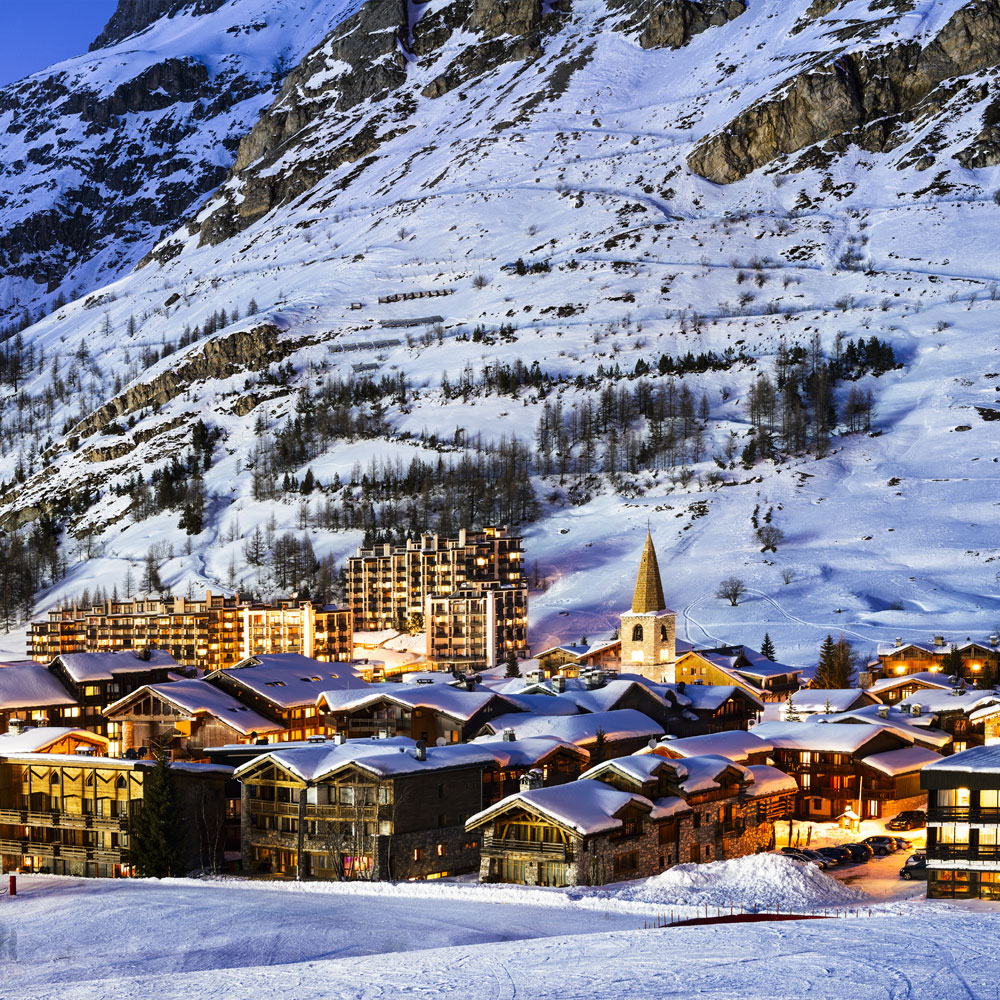
Val d’Isère sits at 1,850m with access to around 300km of linked pistes with Tignes, so the big-mountain credentials are very much real. It’s what happens when a ski resort decides to be annoyingly good at everything: serious skiing, a lively village, huge Alpine scenery and just enough glamour to make your salopettes feel slightly underdressed.
This guide was written by Michelle Wheeler
Val d'Isere ski resort at a glance
Val d’Isère ski resort sits high in the Haute Tarentaise in Savoie, right up near the Italian border, and links with Tignes to create one of the biggest and best-known ski areas in the Alps.
The village itself is at 1,850m, which already gives it a head start for snow, and the wider linked area reaches to around 3,450m, so this is one of those resorts where snow reliability is a genuine selling point rather than a bit of brochure poetry.
There are around 300km of pistes in the linked Tignes-Val d’isère ski area served by 76 ski lifts, with a properly modern, chair-and-gondola-heavy feel rather than a drag-lift marathon. If you only want the Val d’Isère side, that’s 150km of pistes.
Transfer-wise, Bourg-Saint-Maurice is the nearest rail gateway and the bus trip from the station is about 30 minutes. From airports, Geneva is the usual pick at roughly three hours in decent conditions, with Lyon and Chambéry also common choices.
Altitude
1,850 m - 3,450 m
Pistes
300 km
Ski Season 26/27
28 Nov - 2 May
Transfer Time
60-180 mins
Number of pistes by difficulty
Resort Guide Quick Facts
(the stuff you actually care about)
Best for:
Val d’Isère is especially good for confident intermediates who want mileage, advanced skiers and riders who want serious terrain, and mixed groups where not everyone wants the same ski day. It also suits families better than people often assume. Snowboarders generally get on well here too because the lift system is modern and the main routes are less drag-lift-heavy.
Ski area size:
The full Tignes and Val d’Isère area is around 300km, with 76 lifts across the linked domain. If you’re sticking to the Val d’Isère side only, the resort has 150km. That means you can ski a different style of day depending on weather, ability and mood: tree-lined and village-facing on one side, wide open and high-alpine on another, and proper journey skiing when you start linking sectors and dipping into Tignes.
Altitude:
The village is at 1,850m, and that matters. You’re not relying on one heroic snowy week to keep the whole thing functioning. The linked ski area spans roughly 1,900m of vertical, and reaches to around 3,450m in the wider domain, which is why Val d’Isère has such a strong reputation for early- and late-season skiing.
Villages / bases (each has a different vibe):
- Val d’Isère Centre has the most choice: shops, bars, ski school meeting points, the snow front and the most atmosphere.
- La Daille is the practical, often better-value base at the resort entrance, with excellent lift access and its own beginner area, but less charm.
- Le Fornet is prettier, quieter and more upmarket-feeling, with its own lift access and a calmer pace.
- Le Laisinant sits between the centre and Le Fornet and works well if you want somewhere a bit more peaceful without feeling marooned.
- Legettaz and the Joseray/Chatelard side suit people happy to trade a bit of convenience for a quieter chalet feel.
Beginner friendliness:
Val d’Isère is better for beginners than its expert reputation suggests. There are nursery areas in the village centre and in La Daille, there are free beginner lifts on the snow front and from La Daille, and the Solaise area is the real confidence-building zone once people are ready.
Ski season (published dates):
Val d’Isère’s 2026/27 ski season is scheduled to run from 28th November 2026 to 2nd May 2027. That gives you one of the longest winter seasons in the Alps, although opening dates remain subject to snow conditions. Check the official Val d’Isère opening dates before booking right at either end.
You’ll love Val d’Isere for…
Intermediates
Off piste
Advanced
| Our rating | |
|---|---|
| ★★★ | Beginner |
| ★★★★★ | Intermediate |
| ★★★★★ | Advanced |
| ★★★★★ | Off-Piste |
| ★★★★★ | Snowboarding |
| ★★★★★ | Snow Reliability |
| ★★★★★ | Extent |
| ★★★★ | Apres-Ski |
| ★★★ | Mountain Restaurants |
| ★★★★ | Scenery |
| ★★★ | Village Charm |
| ★★★ | Non-Skiers |
Best for snow: Late January – March
Late January to March is the sweet spot for good coverage, high-altitude reliability and a better chance of the whole linked area skiing well.
Best for value: Early December, January and late April
Early December, much of January, and late April into early May usually bring better prices than Christmas, February half term and Easter peaks.
Best for families: March
March is a lovely balance of longer days, strong snow at altitude and a less brutal weather lottery than early season.
Avoid if possible: French and UK school holiday peaks
French and UK school holiday peaks if you hate lift queues, pricier beds and that “why is every supermarket shelf emotional?” feeling.
Tour Operators who go here








Looking to stay in Val d'Isere?
What’s Val d'Isere like?
Val d’Isère resort has that rare thing a lot of big-name resorts pretend to have: genuine character.
It’s polished, yes, and expensive in places, definitely, but it still feels like a proper Alpine ski village rather than an entirely invented ski machine.
The church-tower centre, the stone-and-wood buildings and the long valley setting all help it feel more grounded than some giant linked resorts where every block looks like it was designed by a committee with a grudge against charm. On the mountain, it’s not shy. This is a resort with swagger.
The skiing can be huge, dramatic and occasionally humbling, especially if you get cocky about what counts as a “home run.” But it also has a playful side: family zones, beginner sectors, a proper snowpark, lively mountain lunches and après that ranges from “one crisp glass of something nice” to “how am I dancing in ski boots on a table at 4.30pm?”
Town layout
Val d’Isère stretches along the valley, the centre is where most things are: snow front, main meeting points, plenty of shops and bars, and quick access toward Solaise and Bellevarde.
La Daille sits at the entrance to resort and is much more functional-looking, but handy for lift access. Le Laisinant and Le Fornet run farther up-valley, quieter and more residential, with Le Fornet feeling the prettiest and most tucked-away.
Then you’ve got quieter pockets like Legettaz, Le Joseray and Le Chatelard. The good news is the free shuttles link all the villages.
Overall vibe
The vibe is confident, sporty, sociable and a bit glossy without being unbearable about it. There’s old-school Alpine prestige here, but it’s not as self-consciously polished as Courchevel.
You get a lot of serious skiers, British guests, and families who know what they’re doing, and a lot of groups who came for “great skiing” and somehow also ended up in Cocorico by 4pm.
It can absolutely do luxury, but it also does practical apartments, ski-week routines and quick coffees before first lift. That’s part of the appeal: it feels like a resort people actually use hard, not just one they pose in.
Après-ski
Val d’Isère après is not subtle. There are quieter corners if you want them, but the resort is famous for slope-side and snow-front energy. Then the day can roll onward to bars and late-night spots if your group has both stamina and questionable decision-making.
The nice thing is that it isn’t all one-note thumping chaos. You can still do wine bars, proper dinners and an early night if you’ve got legs planned for tomorrow. But if you want a resort where “just one drink” is treated as fantasy literature, Val d’Isère absolutely understands the assignment.
Looking to stay in Val d'Isere?
Who Val d'Isere suits
Intermediates (the sweet spot)
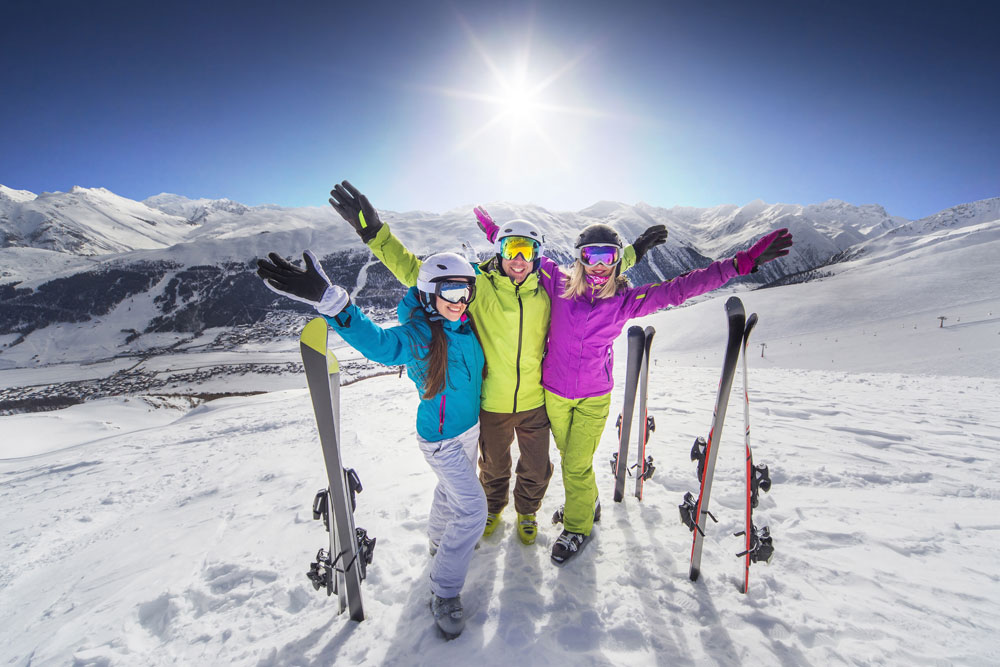
This is very much your playground. Intermediates get the most out of Val d’Isère because there’s enough terrain to keep things interesting for a full week without forcing you into survival skiing.
Solaise has confidence-building cruising, Bellevarde gives you bigger linked days, and sunny laps can be lovely when the weather behaves.
Stay tip:
- Staying in the centre keeps you flexible for whichever sector looks best that morning.

Advanced skiers & snow-sure seekers
Advanced skiers and riders are a huge part of Val d’Isère’s fan club. There’s challenging on-piste terrain, serious off-piste reputation, freeride culture and quick access toward steeper sectors and high-alpine lines.
This is absolutely a place where hiring a guide is sensible rather than overly cautious, because avalanche risk is real and the terrain can get spicy fast.
Stay tip:
- Stay in the centre or La Daille for the fastest access to Bellevarde-side adventures and easy links toward the wider domain.

Snowboarders
Boarders generally get a good deal here. The modern lifts are a help, the linked area is huge, and Val Park adds proper freestyle appeal.
You do still need to watch the odd flat spot and cat-track if you’re not carrying speed, especially late in the day when everyone’s legs are less cooperative.
Stay tip:
- La Daille is a strong base because lift access is excellent and you can get moving quickly without loads of village faff. Centre resort is the safer all-round pick if nightlife matters too.

Beginners (with a smart plan)
Val d’Isère works for beginners best when you stay smart.
The nursery areas in the village centre and La Daille are great for day one, the free lifts help keep costs down, and Solaise is the proper progression zone once you’re ready to move up.
Stay tip:
- For accommodation, the centre or La Daille are the best bets because lesson logistics are easier and you won’t resent the bus before you’ve even clipped in.

Families
Val d’Isère is much more family-friendly than its image suggests. The resort has the Famille Plus label, childcare options, family-focused services, activity centres and easy fun zones for children.
Stay tip:
- The centre is usually the easiest pick because you’re close to ski school meeting points, shops and the snow front, Legettaz can work well for quieter family stays if you’re happy to trade centrality for peace.
This is a good resort for families who want proper skiing for the grown-ups without sacrificing the small-human logistics.

Freestyle / Terrain Parks
Val Park is the headline here, set at 2,500m on the reverse side of Bellevarde in the Combe du Mont Blanc, with progression from green school lines to black expert features.
That’s a big plus if your group includes park riders of mixed confidence. There’s enough here to keep dedicated freestyle riders interested rather than feeling like the park was added as an afterthought.
Stay tip:
- La Daille is the handiest base for quick access, while the centre is better if you want park laps by day and actual village life by night.
Looking to stay in Val d'Isere?
Where is Val d'Isere?
Val d’Isère is in the Haute Tarentaise valley in Savoie, in the French Alps, close to the Italian border and linked directly to Tignes in the wider Tignes-Val d’isere ski area.
For travel planning, the key gateway is Bourg-Saint-Maurice, which is the nearest rail station and the usual onward bus/transfer point. In resort terms, Val stretches from La Daille at the entrance, through the centre, then on toward Le Laisinant and Le Fornet up-valley. That long, linear set-up matters because where you stay affects your morning routine more than the glossy resort photos suggest.
Looking to stay in Val d'Isere?
Skiing in Val d'Isere (ski area, terrain, lifts, snow)
The beauty of Val d’Isère is that it gives all ski levels options.
You can do a confidence-building Solaise day, a bigger Bellevarde-and-beyond day, a quieter Le Fornet day if the weather suits, or a full linked mission across into Tignes if your legs and route-planning skills are up for it. It’s not a mountain that rewards laziness.
The best days happen when you think about sun, wind, queues, ability and where you actually want to finish. Beginners can absolutely have a good week here, but it’s the intermediates and advanced crowd who really cash in on the scale. Riders get a good lift set-up, freeriders get a proper reputation-and-guide culture, and park laps are not an afterthought thanks to Val Park.


Terrain overview
Think of Val d’Isère as one resort with several very different ski personalities, which is a big part of why it works so well for mixed groups.
Solaise is the more forgiving, confidence-building side of the mountain, where beginners, improvers and families tend to feel most at ease. It is where the resort feels friendlier and less intimidating, especially first thing in the morning when everyone is still waking their legs up.
Bellevarde, by contrast, is where things get bigger, busier and more dramatic, with more of that classic “serious ski resort” energy and key links across toward Tignes.
La Daille is not just a satellite base that happens to exist; it is a genuinely practical launch pad for quick access onto Bellevarde and across the wider linked area.
Then farther up the valley, Le Fornet gives you a quieter, more scenic, more high-alpine-feeling ski day, with terrain that often feels a little more peaceful and a little less “main character energy” than the central fronts.
Val d’Isère usually works best when you choose a sector and actually commit to it, rather than spending half the morning zig-zagging indecisively between lift bases.
Stay tip:
Stay in Val d’Isère Centre if you want maximum flexibility between Solaise and Bellevarde, or choose La Daille if quick lift access matters more to you than village charm.
Lifts & getting around the mountain
Val d’Isère is one of those resorts where getting around the mountain is mostly about understanding the flow, not just reading the piste map and hoping for the best.
The resort is spread across a few key lift bases, and each one sets you up for a slightly different kind of day.
From the centre, the Solaise gondola is the obvious move for beginners, improvers and anyone wanting a gentler warm-up. The Olympique cable car lifts you straight onto Bellevarde, which is your main springboard for bigger terrain and the key links towards the ski area of Tignes.
Over in La Daille, the Funival funicular is the real weapon: fast, efficient, and one of the quickest ways to get high without wasting half your morning. Then at Le Fornet, the lift setup is more about accessing quieter, more scenic, more high-alpine skiing without the same central bustle.
That layout means Val d’Isère skis best when you think in sectors. If you start on Solaise, ski Solaise properly. If you head for Bellevarde and Tignes, commit to that side and make a day of it.
What slows people down here is not usually the mountain being badly linked, but people constantly dropping back into the centre, crossing between bases unnecessarily, or leaving major moves too late in the day.
The practical win is knowing which lift solves which problem: Solaise for progression skiing, Olympique for Bellevarde and Tignes links, Funival for fast access from La Daille, and Le Fornet for a quieter-feeling escape.
For families and less confident skiers, it also helps that Solaise gondola and Olympique cable car can be used to download, which makes getting home much less stressful when legs or confidence have gone a bit missing by 3pm.
Stay tip:
Stay near the lift you’ll use most – Centre for flexibility between Solaise and Bellevarde, La Daille for quick Tignes access, or Le Fornet if you want quieter skiing from the off.
Snow reliability & season length
Val d’Isère has one of those reputations that is not just marketing fluff – it really does earn its place on the snow-sure shortlist.
The village sits at 1,850m, which is already a strong start, and the linked ski area rises to around 3,450m, giving the resort a high-altitude backbone that helps conditions hold up through the heart of winter and often well into spring.
That altitude is a huge part of why people feel confident booking here when they want a proper ski week rather than a nervous relationship with weather apps. In simple terms: Val d’Isère has enough height to stay in the game when lower resorts start looking a bit apologetic.
That does not mean every run skis beautifully all season long, because mountains are still mountains, not a refrigerated showroom.
Snow quality changes with aspect, traffic and timing. Lower runs can get scraped back or slushy depending on the week, especially where lots of people funnel home at once.
Sunny slopes can soften dramatically by afternoon, while other faces stay chalkier and better preserved. January to March is the safest all-round sweet spot, especially if you want the best odds of strong coverage and reliable quality.
Early season can be very decent thanks to the altitude, but not every link or lower-level route is guaranteed to feel fully “open-everywhere” in the way optimistic holiday brains sometimes imagine.
Late season can still be excellent, but the trick is obvious: ski high, ski earlier, and do not expect every lower return to feel glorious at 3.30pm.
Stay tip:
If snow quality matters more to you than village prettiness, stay somewhere with easy access to the main lifts so you can get high quickly and make the most of the best conditions.

Off-piste is absolutely part of Val d’Isère’s identity, and that is one of the reasons advanced skiers and stronger riders rate it so highly.
This is not a resort where off-piste feels like an afterthought or a cheeky side option if the pistes get dull. It is woven into the culture of the place. You feel that in the atmosphere, in the type of skiers it attracts, and in the way people talk about terrain here.
But that is exactly why it deserves a properly grown-up safety section rather than the usual lazy “just be careful” paragraph.
Val d’Isère has serious mountain terrain, and the step-up from marked pistes to unpatrolled ground can be very real, very quickly.
After storms, in flat light, or when visibility turns patchy, terrain that looked playful over lunch can become a bad decision by mid-afternoon.
The resort points people toward avalanche information, live snow updates and safety guidance, and that is not just box-ticking. This is guide territory for a reason.
One of the classic holiday mistakes here is assuming that tracks mean safety or that confident-looking strangers know what they are doing. Sometimes they do. Sometimes they absolutely do not.
If off-piste is one of the reasons you are booking Val d’Isère, do it properly: hire a local guide, carry the right kit, and treat the mountain with the respect it demands.
Stay tip:
Stronger freeriders usually do best in Val d’Isère Centre or La Daille, where access to the resort’s more serious terrain is quicker and less faffy.
Beginners & improvers
Beginners can have a very good week in Val d’Isère, but this is not the kind of resort where you can ignore geography and hope for the best.
It is a big, high-profile place, and your experience improves massively if you stay in the right area and plan your ski days sensibly.
The best approach is to start in the village-centre or La Daille nursery areas, make good use of the beginner-friendly lifts, and then graduate onto Solaise, which is where the resort really starts showing its value for improvers. That is the side that tends to make learners feel like they are properly skiing in a major Alpine resort, rather than being trapped in a tiny beginner pen all week.
For improvers, Val d’Isère becomes much more appealing once you are ready to leave the nursery slopes behind and build mileage on terrain that feels like real mountain skiing without instantly turning into an ego crisis.
One important reality check, though: some of the lower pistes back toward accommodation zones are not especially lovely when your legs are cooked and your confidence is wobbling.
Plenty of people choose to download, and that is not failure – it is just good holiday management.
The win is having an excellent ski day, not forcing yourself down a run you are going to hate on principle. In Val d’Isère especially, a little pragmatism goes a long way.
Stay tip:
First-timers and nervous improvers are usually happiest in the centre of Val d’Isère or La Daille, where lesson mornings and end-of-day logistics feel manageable rather than weirdly stressful.
Freestyle & “more than pistes”
Val d’Isère is not just about steep faces, big-name terrain and people saying the words “serious skiing” in a meaningful tone. There is more range to it than that, and the freestyle setup is part of the reason.
Val Park is the main freestyle draw, and importantly it feels like a proper part of the resort rather than a token effort shoved off to one side so someone can technically say there is a park.
The fact it runs from green school level through to black expert is a big plus, because it means groups do not have to split entirely by ability. You can have one person trying their first tiny features while someone else is already turning up with park skis, a GoPro and strong views on line choice.
Beyond the park itself, Val d’Isère also does the broader “more than pistes” thing very well.
The size of the linked domain matters here. If you are the sort of skier or snowboarder who gets bored lapping the same chair and pretending it is variety, that is not likely to be your issue.
The bigger Tignes–Val d’Isère area gives the resort a sense of scale that keeps the week interesting, and that applies whether you are chasing park laps, freeride options, family zones or just the fun of exploring a huge ski area with proper linked-mountain energy.
Even for people who are not park-focused, there is enough variety here to stop the week feeling repetitive.
Stay tip:
Park-focused skiers and riders should seriously consider La Daille for convenience, unless nightlife is high on the priority list, in which case staying central makes more sense.
Best Runs in Val d'Isere (by ability)
For beginners:
For proper first-day confidence, Savonnette is the little hero run in Val d’Isère: central, green, easy to access, and much less intimidating.
The resort also has three free beginner lifts in the centre and La Daille – Savonnette ski tow, Village chairlift and Lanches ski tow – which makes those first few hours feel a lot less financially rude.
Once you’re ready to level up, head to Solaise for the gentle skiing around Madeleine, then graduate to easy-going cruisers like Club des Sports on Bellevarde when you want your first “ooh, I’m actually skiing Val d’Isère now” moment.
For intermediates:
Madeleine is a lovely confidence-builder because it lets you warm up without immediately being handed a drama. After that, Club des Sports is a great call if you like your skiing wide, sunny and flattering, while Saint-Jacques into Cugnaï gives you that brilliant “quietly excellent” Val feel – scenic, a bit less busy, and much more interesting.
Then there’s Germain Mattis, which adds a more natural, slightly more adventurous feel as it drops through the larch forest. It is a very good intermediate resort for people who enjoy covering ground, linking sectors and finishing the day feeling smug in a justified way.
For advanced:
The headline act is obviously the Face de Bellevarde – the big Olympic black, 3km long with an 850m vertical drop, and absolutely not interested in flattering anybody.
Then you’ve got L’Épaule du Charvet if you like bumps and punishment, Santons if you want something groomed but still serious in that couloir-style way, and Combe Martin if you fancy a quieter challenge away from the obvious show-off runs.
Over on Solaise, the Tunnel run and the TK3000 black are the sort of pistes that make your thighs write formal complaints, while The S is another mogul-heavy classic for people who earn their après.
Off-piste note:
Check out classic terrain like Vallon de l’Iseran, Gorges du Malpasset and Vallée perdue, and you should go with a mountain professional, check avalanche and weather info, and carry the right safety kit.
Looking to stay in Val d'Isere?
Looking to stay in Val d'Isere
Your Val d’Isère accommodation will really shape the week.
The centre is the easiest all-rounder because it gives you the best access to ski school meeting points, shops, bars, restaurants and the main snow-front routine. It’s the least stressful choice for first-timers, mixed groups and anyone who values being able to walk to dinner without turning it into a moon landing in ski boots.
La Daille is more practical and often better value, with excellent lift access and a beginner zone, but it feels more functional than romantic.
Le Fornet is lovely if you want a quieter, prettier base with a more tucked-away feel. Le Laisinant sits in a nice middle ground: calmer than the centre but not as far-flung-feeling as some people fear.
Then there are quieter residential pockets like Legettaz, Le Joseray and Le Chatelard, which can be brilliant for chalet stays, families and anyone who wants quieter nights without losing access completely, thanks to the free shuttles.
Quick chooser: which area is right for you?
- Want easy first trip logistics, plenty going on and walkable dinners? Stay central.
- Want fast lift access and decent value? La Daille.
- Want quieter, prettier and more upscale-feeling? Le Fornet.
- Want calm without feeling too remote? Le Laisinant.
- Want a family or chalet-style stay with less noise? Look at Legettaz, Le Joseray or Le Chatelard.
- The main trap is booking somewhere because it’s technically “Val d’Isère” without checking whether your daily routine involves a long bus ride, a drag through ski school chaos or a late-night trek home in the cold when your group has lost its sense of time and dignity.
Village Comparison Table
| Area / Base | Altitude | Vibe | Best For | Nightlife | Beginner-Friendly | Access / Getting Around |
|---|---|---|---|---|---|---|
| Val d’Isère Centre | 1,850m | Lively, classic, convenient | First-timers, mixed groups, nightlife | ★★★★★ | ★★★★ | Walkable to snow front, restaurants, bars, buses |
| La Daille | 1,850m approx | Practical, fast-mountain access | Value, keen skiers, riders | ★★ | ★★★★ | Excellent lift access, shuttle-linked |
| Le Fornet | 1,930m approx | Quiet, pretty, upscale feel | Couples, strong skiers, calm stays | ★ | ★★ | Lift access plus shuttle |
| Le Laisinant | 1,850m+ approx | Peaceful, residential | Families, quieter stays | ★★ | ★★★ | Shuttle plus its own access nearby |
| Legettaz / Joseray / Chatelard | 1,850m+ approx | Chalet-style, quieter | Families, groups, quieter nights | ★ | ★★★ | Shuttle-dependent but well linked |
(Star ratings are “relative vibe” rather than gospel)
Best Area for First-Timers
For a first trip to Val d’Isère, the Centre is usually the smartest choice by a mile.
It keeps the whole holiday feeling simpler, and that matters more here than in some smaller, more self-explanatory resorts.
You are close to the main snow front, the big lift bases, ski school meeting points, hire shops, supermarkets, cafés, and all the useful little things that suddenly become very important when someone in your group is cold, overwhelmed, missing a glove, or questioning the life choices that led them into ski boots before 9am.
In Val d’Isère specifically, staying central also gives you flexibility between the Solaise side, which is more beginner-friendly, and the Bellevarde side, where lessons, meeting points and resort flow can still matter even if you are not skiing hard yet.
It also helps that the centre makes the resort feel less intimidating.
Val d’Isère is not a tiny nursery-slope village where everything sits in one neat little cluster, so cutting down unnecessary walking, bus-taking and map-staring is a genuine win for first-timers.
La Daille can work well too, especially if you get a good-value apartment and like the idea of quick lift access, but for a first visit the centre tends to feel more forgiving and less likely to turn the first two days into a logistical improv performance.
Stay tip:
Stay in Val d’Isère Centre if this is your first trip, especially if you want easy ski school mornings, quick access to shops and restaurants, and the least stressful introduction to how the resort works.
Best Area for Ski-in Ski-out
If your dream ski holiday involves clipping in with minimal fuss and absolutely no uphill boot stomp before coffee, La Daille is the most practical answer in Val d’Isère.
It is one of the easiest bases for quick mountain access, with strong links onto the Bellevarde side and fast routes into the wider Tignes–Val d’Isère area.
If you are the sort of person who gets irrationally annoyed by losing twenty minutes to faffing around in town before you even reach a lift, La Daille makes a very strong case for itself.
It feels set up for people who actually want to ski first and pose prettily in the village later.
That said, Val d’Isère is one of those resorts where “ski-in ski-out” can mean anything from “genuinely on the piste” to “technically near a slope if you squint and accept a bit of marching.”
In the Centre, true ski-in/out is more patchy and very property-specific. You can absolutely find good access, but you need to check the exact location rather than trusting a breezy hotel description and one suspiciously flattering photo taken after fresh snow.
Legettaz can be a very good shout in the right spot, with some genuinely convenient slope-side accommodation and a quieter feel than the centre, but again, exact positioning matters.
In Val d’Isère, this is not the section where optimism should do the booking.
Stay tip:
Choose La Daille for the most consistently practical ski-in/ski-out-style access, or Legettaz if you want a more attractive slope-side setting and are happy to check the map properly before booking.
Best Area for Nightlife
For nightlife in Val d’Isère, the answer is the Centre, and honestly it is not even a close contest.
If part of the reason you booked Val is because you want the full package – skiing, après, dinner, a couple of “just one more” drinks and then the option to keep going if the mood takes you – staying central saves you a huge amount of end-of-day faff.
This is where the resort’s social energy lives. You are close to the snow-front après scene at Cocorico, within easy reach of bars and restaurants around the village, and much better placed for late-night spots like Doudoune when the evening decides it is not finished yet.
The real win is walkability. In a resort where nights out can go from civilised vin chaud to chaotic “why are we still wearing ski socks?” surprisingly fast, being able to walk home is gold dust.
You do not want to be trying to organise buses, taxis or heroic late-night trudges back to another base while someone in your group is suddenly obsessed with finding onion soup or a final beer.
La Daille is perfectly fine if you are mainly here to ski and are not bothered about rolling from après into late bars, but if nightlife is genuinely on your wishlist, central Val d’Isère makes the whole thing easier, livelier and much more likely to happen spontaneously.
Stay tip:
Stay in Val d’Isère Centre if you want proper walkable access to après, bars and late-night spots without the “shall we really bother going back out?” debate.
Best Area for Families
For families in Val d’Isère, the best area usually comes down to one question: do you want maximum convenience, or do you want a slightly quieter, more residential feel once the ski day is done?
For sheer practicality, the Centre is the strongest all-rounder. It keeps you close to ski school meeting points, shops, cafés, childcare-friendly essentials and the sorts of useful resort services that suddenly feel wildly important when travelling with children.
If somebody needs an early lunch, a toilet stop, warmer gloves, or a full emotional reset involving hot chocolate and chips, being central makes those little pivots much easier.
And on a family ski holiday, those pivots are not rare little surprises – they are the sport.
If you want a calmer base, Legettaz is often a really appealing option.
It can feel more residential, more chalet-like and a bit less noisy once younger kids are asleep, which parents tend to appreciate by around day three.
It also suits families who like the idea of being slightly removed from the busiest evening atmosphere while still staying within easy reach of the action.
Val d’Isère does have family-friendly services across the resort, but it is one of those places where daily logistics matter. With young children or nervous beginners, the prettiest location is not always the best one; the area that keeps mornings smooth usually wins in the end.
Stay tip:
Choose Val d’Isère Centre for the easiest family logistics, or Legettaz if you want a quieter, more relaxed base that still keeps the mountain reasonably accessible.
Best Area for Budget Travellers
Let’s be honest: Val d’Isère and the word “budget” are not exactly natural dance partners.
But if you are trying to keep costs from becoming fully unhinged, La Daille is usually the first area worth looking at.
It tends to be more practical than pretty, but that can work in your favour because you are often paying for useful lift access rather than pure postcard charm.
For skiers who care more about getting onto the mountain quickly than being surrounded by the cutest boutiques in the resort, that is a very fair trade.
You are well placed for first lifts, you have straightforward access into the wider ski area, and you can still get into the centre without too much drama when you want dinner, drinks or a bit more village atmosphere.
Parts of Le Laisinant can also be worth a look if you find a strong apartment deal and are happy to lean on the shuttle network a bit more. It is not the obvious flashy choice, but that is partly the point.
In Val d’Isère, value often comes from being slightly outside the most in-demand centre rather than expecting some magical hidden bargain district nobody else has worked out.
“Budget” here usually means less financially dramatic rather than genuinely cheap, but La Daille and Le Laisinant are the areas most likely to help you keep the numbers slightly less offensive while still actually enjoying the resort.
Stay tip:
Look at La Daille first for the best mix of lift convenience and relative value, and keep Le Laisinant on the shortlist if a good apartment deal matters more than being in the thick of the village.
Our Top Hotels

★★★★★
- Village: peaceful La Legettaz side
- Lifts - ski-in/out
- Pool + spa
It’s a five-star ski-in/ski-out residence with slopes for all abilities and the ski school nearby, it has big-spacious-apartments plus an indoor pool, hot tub, sauna and hammam setup.
The apartments are properly roomy, kitchens are handy if you don’t fancy every meal out, and the spa side softens the blow after a day on the slopes
Why choose it? One of the easiest family beginner bases if you want space, comfort and true slope access.

★★★★★
- Village: La Legettaz
- Lifts - ski-in/out style location on the domain
- Pool + spa + yoga
Here you have concierge touches, spa, pool and a high-end all-inclusive setup, and it also includes ski pass plus lessons in the package for seven-night stays.
The trade-off is that it’s less ’boutique village hotel’ and more polished all-inclusive machine. You pay for convenience and comfort here, and to be fair, you do get both.
Why choose it? Luxury for people who want the planning done, the skiing sorted and the evenings taken care of

★★★
- Village: on the main street
- Lifts: about 2 to 3 mins walk
- Sauna + steam room
Sitting right by the entrance to the main street and only a short walk from the slopes, it nails that sweet spot of convenience with character.
Inside, it leans warm and traditional, with wood, stone and a comfortable lounge-bar setup that feels spot on.
It is especially good for couples and grown-up groups who want to be in the thick of things without ending up in a soulless box.
Why choose it? A proper Val d’Isère hotel in a proper Val d’Isère spot.
★★★
- Village: La Daille
- Lifts: ski-in/out / roughly 100m to Funival area
Set in the peaceful La Daille district right by the foot of the slopes, it delivers a practical base.
You are not in the glossy central core, but you are in a very functional spot with excellent lift access and easy links into the wider ski area.
The apartments are self-catered and straightforward rather than glamorous, but that is where the savings are.
Why choose it? One of the best “spend less, still ski loads” bases in resort.
Tour Operators who go here
Looking to stay in Val d'Isere?
Après ski, restaurants & winter activities
Val d’Isère does resort life properly. Off the slopes, it has enough going on that non-ski time feels like part of the holiday rather than the gap between ski days.
Après ranges from full-volume terrace chaos to quieter drinks, and food runs from easy mountain comfort to genuinely high-end dining.
That balance is part of what makes the resort so enduringly popular: you can come here with serious skiers, first-timers, food people, party people and a couple of non-skiers, and nobody has to spend the whole week pretending they’re fine with someone else’s version of a good time.
The Aquasportif Centre covers the classic pool/spa/reset brief, while the wider winter activity scene includes snowshoeing, paragliding, ice climbing, fat biking, moonbikes, mini snowmobiles, sledging and more left-field mountain fun.
If you want a resort where rest days still feel like actual days out, not a punishment for tired legs, Val d’Isère has range.

If you want loud, Val d’Isère will not leave you underfed.
La Folie Douce is the big mountain name, with La Fruitière adding the more polished food-and-show side of that whole slope-side spectacle.
Back in town, Cocorico is one of the iconic snow-front après spots, the place where a neat “one drink after skiing” plan goes to die in broad daylight. It’s lively, open-air, boots-on, and exactly the sort of place where everybody looks like they’re having the same idea at once.
Then later, if your group still has life left in it, Doudoune is the obvious late-night name.
The centre is where you want to be if this is your scene; Le Fornet is not where you stay if you’re chasing messy 1am stories.
The nice thing is there’s still room for quieter bars and proper dinners in between, so you can do a grown-up evening or a chaotic one depending on mood.
But make no mistake: Val d’Isère is one of those resorts where après is part of the identity, not an optional extra bolted onto a ski map.
Mountain‑top Moments
Mountain lunches in Val d’Isère can go two ways, and both are valid.
There’s the practical “feed me, warm me, get me back out” option, and there’s the “we are making lunch part of the event” option.
Le Refuge de Solaise is a lovely shout if you want views, easy access and a more relaxed, scenic lunch stop.
La Fruitière is the glossier, more theatrical mountain-food move, especially if your group likes the whole La Folie Douce energy but also wants a proper sit-down.
La Peau de Vache is a classic for people who want hearty mountain food, grills and big views without pretending lunch is a side note.
The trick in Val is timing. If you leave lunch until the same exact moment as the rest of Western Europe, you may find yourself hovering hungrily like a tired gull.
A pro move is to eat a touch earlier or later, especially on busy weeks, then use the quieter piste window when everyone else is inside wrestling with melted cheese and bad timing.

Back in the village, Val d’Isère does a very nice line in “you came for the skiing, but suddenly dinner has become part of the event.” The range is the point here.
You can go full melted-cheese, elbows-on-table Alpine mode, you can do a polished tasting-menu night, or you can swerve off into Japanese fine dining and pretend this is all perfectly normal behaviour for a ski resort.
There is everything from Savoyard specialities and brasseries to more international options, which is handy when one person in the group wants fondue every night and another is already muttering that they need “something lighter.”
For the unapologetically mountain-food end of the week, Fondue Factory is still a strong shout. It is right in the village, and the menu is gloriously committed to the cause: Savoyarde fondue, Beaufort fondue, truffle half-and-half fondue, raclette, tartiflette, plus things like blueberry tart, Tarte des Sœurs Tatin and even a very extra Mont Blanc dessert with chestnut cream, meringue and chocolate sauce.
It is sociable, a bit theatrical, and exactly the sort of place where dinner turns into a long, happy, cheese-based evening if you let it.
If you want one properly big dinner, L’Atelier d’Edmond in Le Fornet is the obvious splurge: a two-Michelin-star restaurant in the current Guide and very much a destination meal rather than a casual “shall we just pop in?” situation.
La Table de l’Ours is another serious option, holding one Michelin star and serving more formal menu-led dining, while Koji gives Val d’Isère a swankier left turn with Japanese fine dining and dishes such as nigiri & sashimi moriawase, Osaka sushi, white miso soup and spicy seafood soup.
And if you want something that still feels local without going full ceremony, the Les Barmes de l’Ours restaurants are a useful middle ground: Le Coin Savoyard des Barmes focuses on cheese-led specialities, while La Rôtisserie des Barmes is more about French cooking, spit-roasted meats and a smart-but-not-stuffy evening. In peak weeks, book early.
Val d’Isère is one of those resorts where good ski days and good dinner tables are both in demand, and the nicest village spots do not stay mysteriously empty waiting for your 8.45pm epiphany.
For non-skiers, rest days and weather wobbles, Val d’Isère has a genuinely decent bench.
The Aquasportif Centre is the obvious indoor reset, and it’s one of those places that feels increasingly wise once your legs start speaking in capital letters.
Beyond that, the resort promotes snowshoeing, paragliding, speedriding, fat biking, moonbikes, ice climbing, biathlon, mini snowmobiles and family sledging on the Savonnette piste.
That’s a pretty varied list, which is handy when your group includes one adrenaline magpie, one spa person and one child who only wants to slide downhill on something silly.
There are also winter walks, scenic pedestrian lift options and enough cafés and village wandering to fill a slower day without it feeling like you’ve “wasted” a mountain holiday.
In plain English: if you need Val d’Isère to be more than just skiing, it can absolutely oblige.

Getting home safely & easily
Around the resort, the good news is the shuttle system is better than many first-timers expect, and in Val d’Isère that genuinely matters because the village stretches more than people often realise on a map.
The free winter bus routes link La Daille, the centre, Le Laisinant, Le Fornet, Le Manchet and Legettaz, which makes getting back to your accommodation much less of a production after skiing, dinner or a long après that somehow became everyone’s whole personality for the afternoon.
The town hall also lists night shuttle services in winter, with routes running well into the evening, which is especially handy when dinner drifts later than planned or nobody is remotely interested in a long walk home in the cold.
In real life, most people get around with a mix of walking, free buses and pre-booked taxis, depending on where they are staying and how much energy remains in their legs.
If you are based in the centre, a lot is walkable. If you are staying farther out in places like Le Fornet or La Daille, the shuttle network is what stops the resort feeling stretched. And when the weather turns foul, the road is icy, or ski boots have fully defeated the group, that is when taxis suddenly start looking like one of life’s better inventions.

Ski schools & learning zones
Val d’Isère is set up well for lessons, especially if you accept that “good for learning to ski” here means “well organised and better than the resort’s intimidating reputation suggests,” not “tiny bunny slope village.”
The resort has dedicated beginner areas, progression terrain, family infrastructure, and a good spread of ski schools and guides.
Families get extra reassurance from the Famille Plus set-up and the range of childcare/day-care options.
For stronger skiers, guiding is a big part of the culture too, because Val d’Isère’s off-piste terrain is a genuine reason people come here in the first place.
It’s one of those resorts where both ends of the ability scale are catered for, but through different kinds of structure: small-area repetition and easy uplift for learners, bigger mountain access and proper local knowledge for experts.

In Val d’Isère, most beginners start either on the village snow front or over in La Daille, and that is genuinely useful because it gives day one a softer landing.
The resort’s family and beginner setup is built around secure learning spaces rather than flinging people straight onto intimidating open pistes, with the Jardin des Neiges on the snow front for younger children and easy-access beginner areas designed to keep those first slides feeling manageable rather than mildly traumatic.
The centre also has three free beginner lifts – the Savonnette ski tow, Village chairlift and Lanches ski tow – which is a lovely detail because it lets first-timers practise without immediately burning through money or confidence.
Once the basics start clicking, Solaise is the big next step and the part of Val d’Isère that really starts to feel rewarding for learners and improvers.
This is where the resort’s easier skiing opens up, with more space, gentler terrain and a much better sense that you are skiing in a proper major resort rather than just circling a nursery slope for days.
For families, Valkids at the top of Solaise adds another confidence-friendly layer, with fun modules and child-focused learning in a sunny, dedicated area.
And one of the genuinely handy Val d’Isère details is that the Solaise gondola and Olympique cable car can both be used to come back down into the village centre, which beginners and families often end up absolutely loving by late afternoon, when nobody is in the mood for one final “character-building” slope.
If lessons are the priority in Val d’Isère, staying central or in La Daille is usually the smartest call.
This is not the week to get seduced by a gorgeous quiet corner of the resort if it turns every morning into a booted logistics exercise.
The centre keeps you close to the snow front, the main lesson infrastructure, rental shops, cafés and the general safety net of being near the resort’s busiest, most practical zone.
That matters because beginner ski weeks are rarely just about skiing. They are also about forgotten gloves, last-minute loo stops, coffee runs, slight panics, and needing everything to feel as straightforward as possible before 9.30am. In Val d’Isère, the centre gives you the best odds of that.
La Daille is the other solid option because it has its own beginner-friendly setup and very practical lift access, which can work brilliantly for people who want a slightly more functional base with fast mountain access.
It tends to feel a bit more “let’s get on with it” than postcard-pretty, but that can actually be a bonus on a learning holiday.
Le Fornet, by contrast, is lovely and scenic, but it makes less sense for nervous first-timers or families with lesson-heavy mornings because it is simply not the easiest place to start from every day.
In a resort as spread out as Val d’Isère, the less transport, trudging and timetable-decoding you have to do in ski boots, the smoother the learning week usually goes.
The smart Val d’Isère move is to do a dry run on arrival day. Walk past the snow front, check where your likely ski school meeting point is, clock the route from your accommodation, and work out where ski hire, lift pass collection and coffee all sit in relation to each other.
It sounds painfully sensible, which is exactly why it works.
The village is not impossibly complicated, but it is busy enough in the mornings that trying to decode it live – while carrying skis, zipping coats, adjusting helmets and talking someone through their first ski boots of the week – is an avoidable little drama.
If you have children in tow, this matters even more, because ski school mornings have a way of shrinking time very quickly.
If you are staying outside the centre, check the shuttle or village transport plan the night before and build in more time than your optimistic holiday brain thinks you need.
Val d’Isère’s links around the village are good, but “good” is not the same as “magically arrives the second you realise you are late.”
Aiming to arrive about 15 minutes early is the right sort of energy here, especially if rentals still need collecting or children need handing over calmly rather than launched toward an instructor mid-meltdown.
Val d’Isère does a strong job for learners, but it rewards people who make the mornings easy on themselves. That is usually the difference between a ski school day that starts smoothly and one that starts with everybody sweating before the first snowplough.
Looking to stay in Val d'Isere?

Lift passes, costs & budgeting
Val d’Isère offers short-duration local passes alongside the full Tignes–Val d’Isère ski pass, which covers the complete 300km linked domain.
For four hour and one day skiing, the Val d’Isère-only pass can be a useful lower-cost option. For longer stays, the standard multi-day choice is the Tignes–Val d’Isère pass, giving full access across both resorts.
Beginners can also make use of three free lifts in Val d’Isère (Savonnette drag lift and the village chairlift on the snowfront, Lanches drag lift at La Daille), so complete first-timers may not need to buy a full ski pass straight away.
Which ski pass should you buy in Val d'Isere?
Think of it like this: skiing for a few hours or just one day? Local works. Here for a proper ski week? The full Tignes–Val d’Isère pass is the one you’ll be looking at.
Option A – Val d’Isère Pass
What it is: A short-duration pass covering the Val d’Isère side only, including areas such as Solaise, Bellevarde, La Daille and Le Fornet.
Best for: Day skiers, shorter sessions, cautious returners and people who specifically want to stay on the Val d’Isère side.
For the main 2026/27 winter period, the local pass costs €63 for four consecutive hours or €70 for one day for adults.
It’s useful, but it isn’t really a week-long alternative to the full area pass. There is no standard published six-day Val d’Isère-only pass for 2026/27.
Plain English: This is the “I only need Val d’Isère today” pass.
Option B - Tignes–Val d’Isère Pass
What it is: The full-area pass covering the linked 300km Tignes–Val d’Isère domain.
Best for: Normal ski weeks, confident intermediates, advanced skiers, snowboarders and mixed groups who want the freedom to explore properly.
For 2026/27, an adult pass costs €78 for one day and €468 for six days – with one particularly useful bonus: 6 days gives you 7 days of skiing. Buy 7 days and you get 8.
That makes the full-area pass straightforward for a standard ski week because you can move between Val d’Isère and Tignes without having to think about extra charges .
Plain English: This is the “we’re here for the whole ski area” pass.
Val d’Isère lift pass prices 2026/27
Here are the published headline prices for Val d’Isere Winter 2026/27 (prices shown in EUR):
| Val d’Isère Pass | Adult | Child / Senior |
|---|---|---|
| 4 consecutive hours | €63.00 | €51.00 |
| 1 day | €70.00 | €57.00 |
| Tignes–Val d’Isère Pass * | Adult | Child / Senior |
|---|---|---|
| Afternoon from 12:45 | €63.00 | €51.00 |
| 1 day | €78.00 | €63.00 |
| 6 days = 7 days | €468.00 | €378.00 |
| 7 days = 8 days | €546.00 | €441.00 |
* includes entries to the Val d’Isère Aquasportif Centre swimming pool. A 2–5 day pass includes one entry, 6–10 days includes two entries, and 11–15 days includes four.
Family discount – definitely worth checking
Val d’Isère has a substantial family offer for longer Tignes–Val d’Isère passes.
Buy four or more passes of the same duration, from six days upwards, including at least two adults aged 19 – 64 and two children aged 8 – 18, and the total booking receives a €330 discount.
All the passes need to be bought together in one payment.
Ski Demon tip: This is not one of those discounts that saves enough for half a hot chocolate. If your family qualifies, €330 is worth checking before anybody starts buying passes separately.
Deposits, insurance, and when to buy
Here’s how to do Val d’Isere like someone who hates queues and hates wasting money:
Pass card: The reusable hands-free ski-pass card is free. Lose it, however, and there’s a €10 administration charge to replace it.
Insurance: Carré Neige costs €3.50 per person per day for 1 – 7 days, or €28 for 8 – 15 days. Check what your existing winter sports insurance covers before automatically adding it.
When to buy: Buying online and reloading an existing card is the easiest way to avoid ticket-office queues. Also check the family offer and the cheaper early/late-season tariffs before paying the standard headline rate.
Also don’t spend time searching for a 6 day Val d’Isère-only pass. For a normal week, the multi-day product is Tignes–Val d’Isère.
Looking to stay in Val d'Isere?
Common Val d'Isere Ski Holiday Mistakes
Val d’Isère packs a lot into one resort, but its demanding terrain, sprawling ski area, premium prices and lively après scene mean the wrong choices can quickly add cost, fatigue or unnecessary faff to your holiday.
Assuming Val d’Isère is only for experts and then planning badly if you’re a beginner
It absolutely can work for newer skiers, but only if you stay in the right place, use the proper learning zones and accept that downloading at the end of the day is sometimes the smart play.
Booking a beautiful quiet base miles from lesson logistics, then wondering why everyone’s stressed by 8.45am, is an avoidable own goal.
Treating the ski area like it’s smaller than it is
The linked domain is huge, which is great until you leave a return journey too late, get caught out by weather, or realise you’re much farther from your base than your tired legs would prefer.
Val d’Isère rewards route planning. “We’ll just see where we end up” is fun until it becomes a 3.45pm navigation problem.
Underestimating how much your accommodation in Val d’Isère matters
“Val d’Isère” on the booking page can mean very different daily routines. Centre, La Daille, Le Fornet and the quieter outlying hamlets all feel different in practice.
A deal that looks brilliant on price can be less brilliant after four days of awkward buses, uphill walks and missing the exact bit of resort life you actually cared about.
Assuming snow-sure means every run is dreamy all day
The altitude is excellent, but conditions still vary with sun, wind, traffic and aspect. Lower slopes can get scraped or slushy, and “late spring skiing” only stays magical if you ski high and time your day properly. Val’s snow reliability is real; it just isn’t magic.
Treating off-piste like an extension of the piste map
Val d’Isère’s freeride reputation is part of the fun, but it’s also why people need to keep their heads on. Avalanche forecast, guide, proper kit, no solo heroics.
Following a bunch of tracks into terrain you don’t understand is not adventure, it’s borrowed confidence with consequences.
Getting to Val d'Isere
Travelling to Val d’Isère is relatively straightforward, with several airport options and rail connections through Bourg-Saint-Maurice. Whether you’re flying, driving or travelling by train, here’s everything you need to know before heading into the resort.
1) Fly + road transfer
(the “land, throw bag on coach - and the one most people use)
For most UK travellers, this is the obvious play. Geneva is the classic airport choice, with Lyon also very common, while Chambéry can be nicely convenient if the flights line up.
From there, it is usually a pre-booked shared transfer, private transfer or airport coach into resort.
As a sensible guide:
- Geneva Airport → Val d’Isère: roughly 3 hours by road.
- Lyon Airport → Val d’Isère: roughly 3 hours by road.
- Chambéry Airport → Val d’Isère: roughly 2 hours by road.
- Grenoble Airport → Val d’Isère: roughly 2 hours 30 minutes by road.
Real-world tip: if you are arriving on a Saturday in peak season, build in some mental slack. Val d’Isère itself warns about dense holiday traffic on Saturdays, so a “three-hour transfer” can drift into something longer.
2) Train to Bourg-Saint-Maurice + bus/taxi up
(the “less airport chaos, more civilised Alpine arrival” choice)
If you want the cleaner, more car-free-feeling route, Bourg-Saint-Maurice is the key station. It is the main rail gateway for Val d’Isère, and the onward bus is the easiest and cheapest option from there.
Regular shuttles run throughout the day, and this is one of those transfers that is refreshingly straightforward by ski-resort standards.
It is a strong option for people who like train travel, want to dodge airport faff, or just do not fancy a full road journey from Geneva after already travelling half the day.
Typical timings look like this:
- Bourg-Saint-Maurice station → Val d’Isère by bus: roughly 30 minutes.
- Bourg-Saint-Maurice station → Val d’Isère by road: roughly 40 minutes.
Real-world tip: check whether your coach or bus drops at La Daille bus station or nearer the centre, then book accommodation with that in mind.
3) Driving to Val d'Isere
(flexible and gear-friendly - but very much a “respect the mountain road” situation)
Driving gives you maximum freedom. In practice, you drive up the Tarentaise valley via Albertville and Bourg-Saint-Maurice, then continue the final climb to resort. Snow chains can be compulsory on snow-covered sections when signs are up.
Time-wise:
- Bourg-Saint-Maurice → Val d’Isère: around 40 minutes.
- Albertville → Val d’Isère: around 1 hour 20 minutes.
- Chambéry → Val d’Isère: around 2 hours.
- Lyon → Val d’Isère: around 3 hours.
- Geneva → Val d’Isère: around 3 hours.
Winter parking in Val d’Isère is paid, and you need to book in advance.
Real-world tip: driving is brilliant for arrival and departure. In Val d’Isère, the smart move is usually to park once and leave the car alone.
Getting around once you’re there (easy… with one tiny “ski boots” reality check)
Walking (your default setting - if you’re central)
Val d’Isère can look compact in the brochure, then reveals a bit more sprawl once you’re actually in ski boots. If you’re staying in the Centre, walking is still your default setting. You can get to the main lifts, ski hire, shops, bars and dinner spots pretty easily, and for day-to-day resort life it feels straightforward.
Free shuttle buses (secret weapon for tired legs and outer areas)
The free shuttle network links La Daille, the Centre, Le Laisinant, Le Fornet, Le Manchet and Legettaz, so if you’re not staying right in the middle, you are not sentenced to a long daily boot march. It is especially useful at the start and end of the ski day, when everyone is carrying too much gear, or moving too slowly.
Night shuttles + taxis (for dinner plans and bad weather)
Val d’Isère runs night shuttles in winter, which is very good news when après turns into dinner and dinner turns into “how is it this late already?” Staying in places like Le Fornet or La Daille is much more workable than it might look. And when the weather is foul, or the road is icy, taxis are the practical backup.
Ready to make your piste dreams a reality?
Whether you’re scouting dreamy hotels, comparing the best tour operators or looking for fresh ski inspiration, we’re here to help you turn ideas into an actual holiday.
Take the next step by browsing hotels in this resort, choosing a trusted ski tour operator or signing up to our newsletter for destination ideas, practical advice and the latest tips delivered straight to your inbox. From finding the right place to stay to choosing the best way to book, we’ve got plenty to help you plan with confidence. Pick your next move and let the adventure begin.
Looking for more inspiration?
Sign up to our free newsletter

Ready to book your stay?
Take a look at our hotel guide and see what suits your requirements and budget
Tour operators
For more from our tour operators click the logos above
Val d'Isere FAQs
Whether you’re visiting Val d’Isere for the first time or heading back for another trip, these FAQs should help answer the most common questions before you book and before you travel.
Is Val d’Isère good for beginners?
Yes, with a small asterisk. It’s good for beginners if you plan it properly, not if you just rock up and hope the resort’s expert reputation will somehow be “character building.”
The nursery areas in the village and La Daille, the free lifts, and the progression terrain on Solaise make it much more beginner-friendly than people assume.
The bit to watch is accommodation location and end-of-day route choices. Some lower runs are not the confidence boost you want when you’re tired, so downloading is sometimes the correct and dignified move.
Is Val d’Isère worth it for intermediates?
Very much yes. In fact, intermediates are probably the biggest winners here. You’ve got the scale of the linked area, a lot of varied cruising, lovely scenery, and enough terrain to keep a full week interesting without turning every day into an exam. The key is not skiing reactively.
Pick sectors based on weather and confidence, start early, and don’t leave your return until the mountain is busy and your legs are cooked. Done right, this is a brilliant resort for mileage and variety.
Is Val d’Isère expensive?
It can be, yes. This is not pretending to be a bargain resort.
Passes, accommodation and eating out can all climb quickly, especially in peak school-holiday periods and in the most central or prettiest areas.
But there are ways to soften the blow: La Daille often offers better-value accommodation, late-season rates are cheaper than main winter ones, and you don’t always need the biggest pass on day one if you’re learning. So the honest answer is “yes, but not hopelessly so if you book smart.”
Should I stay in the centre or La Daille?
Choose the centre if you want the easiest all-round holiday: bars, restaurants, ski school, shops and atmosphere on your doorstep.
Choose La Daille if you care more about value and fast lift access than central village charm. Neither choice is “wrong”; they just suit different trip styles.
Centre is usually better for first-timers and nightlife. La Daille is often stronger for keen skiers who want fast mornings and don’t mind leaning a bit more on buses or shuttles when they want the full village buzz.
Do I need the full Tignes–Val d’Isère pass?
For most week-long skiers, yes. Multi-day passes cover the full Tignes–Val d’Isère ski area, giving you access to more than 300 km of pistes across both resorts – a massive part of the appeal of skiing here.
If you’re a complete beginner, you may not need to pay for the full area immediately, as free beginner lifts are available for those making their first turns. If you’re only skiing for one day and plan to stay entirely on the Val d’Isère side, a local Val d’Isère pass can make sense.
For everyone else, buy the full-area pass and use it. This is one of those occasions where spending six days orbiting the same couple of lifts while Tignes sits just over the hill feels like a bit of a missed opportunity.
Is Val d’Isère good for families?
Yes, more than its image suggests. The resort has the Famille Plus label, childcare/day-care options, family services and learning infrastructure that make it much easier with children than the “serious skier” reputation might imply.
It’s especially good for families where the adults also want a proper ski holiday, not just a child-friendly compromise. The biggest win is staying somewhere that keeps the daily routine easy, because in ski resorts, family happiness is often just logistics in a puffer jacket.
What’s the nightlife actually like?
Lively, famous, and definitely not limited to one sticky bar with a Bluetooth speaker.
La Folie Douce does the big on-mountain spectacle thing, Cocorico is a major snow-front après name, and Doudoune is the obvious late-night clubbing move.
But it’s not all maximum volume. You can still do quieter drinks, decent wine and proper dinners if your group isn’t trying to recreate a student ski trip with better jackets. The centre is the place to stay if nightlife is part of the brief.
What are the best non-ski things to do in Val d’Isère?
Aquasportif is the obvious rest-day classic, but Val d’Isère actually has a decent off-ski menu beyond that.
The resort promotes snowshoeing, paragliding, fat biking, moonbikes, biathlon, ice climbing, mini snowmobiles and family sledging, which means you can tailor a non-ski day to the energy level of the group.
If you’ve got non-skiers with you, that variety matters. It means they can actually have a mountain holiday rather than just spectating other people’s ski stories over coffee.
Is it easy to get around resort without a car?
Yes. This is one of the reassuring bits. The resort’s free shuttle network links the main hamlets and bases, and the centre is walkable if you stay near it. That means you can happily do Val d’Isère without a car once you arrive.
The only catch is not assuming every accommodation listing that says “Val d’Isère” is equally central. A five-minute walk on paper can feel longer in ski boots, in the dark, while carrying groceries and questioning your life choices.
When is the best time to go?
For the safest all-round conditions, late January to March is hard to beat. For better value, look at early December, much of January, or late April into early May when the official late-season pricing kicks in.
For families, March is often a lovely compromise: decent snow, a bit more daylight and fewer early-season variables. The main thing to avoid, unless school-holiday chaos is your natural habitat, is the peak holiday crush when prices and queues both get punchier.