


Serre Chevalier is that rare “big ski area” that doesn’t feel like a ski factory: a sunny Southern Alps valley with four proper bases, loads of tree-lined pistes for moody-weather days, and enough variety that you can just… move sectors and dodge the chaos. You can spend the morning cruising, then finish the day with Briançon’s proper-town vibe - or go full wellness gremlin and soak it all off in Monêtier’s thermal baths.
This guide was written by Michelle Wheeler
Serre Chevalier ski resort at a glance
Serre Chevalier is in France’s sunny Southern Alps (Hautes-Alpes), stretched along a proper valley with four main resort bases: Briancon, Chantemerle, Villeneuve/La Salle-les-Alpes, and Le Monêtier-les-Bains.
It’s big-big (about 250km of pistes) and it skis like a “choose your own adventure” resort: cruising through larch forests one minute, popping up to high, wide bowls the next.
Altitude-wise, you’re roughly 1,200m at the lowest base and up to about 2,800m lift-served, with a typical season running early December to mid/late April.
The ski lift system is fairly modern and chairlift-heavy (with gondolas where it matters), so you’re not spending your holiday doing drag-lift yoga unless you choose to.
Transfers are also refreshingly non-dramatic: Turin is about 2 hours, Grenoble – 2.5 hours, Lyon – 3 hours (plus Briançon has rail options if you’re feeling virtuous).
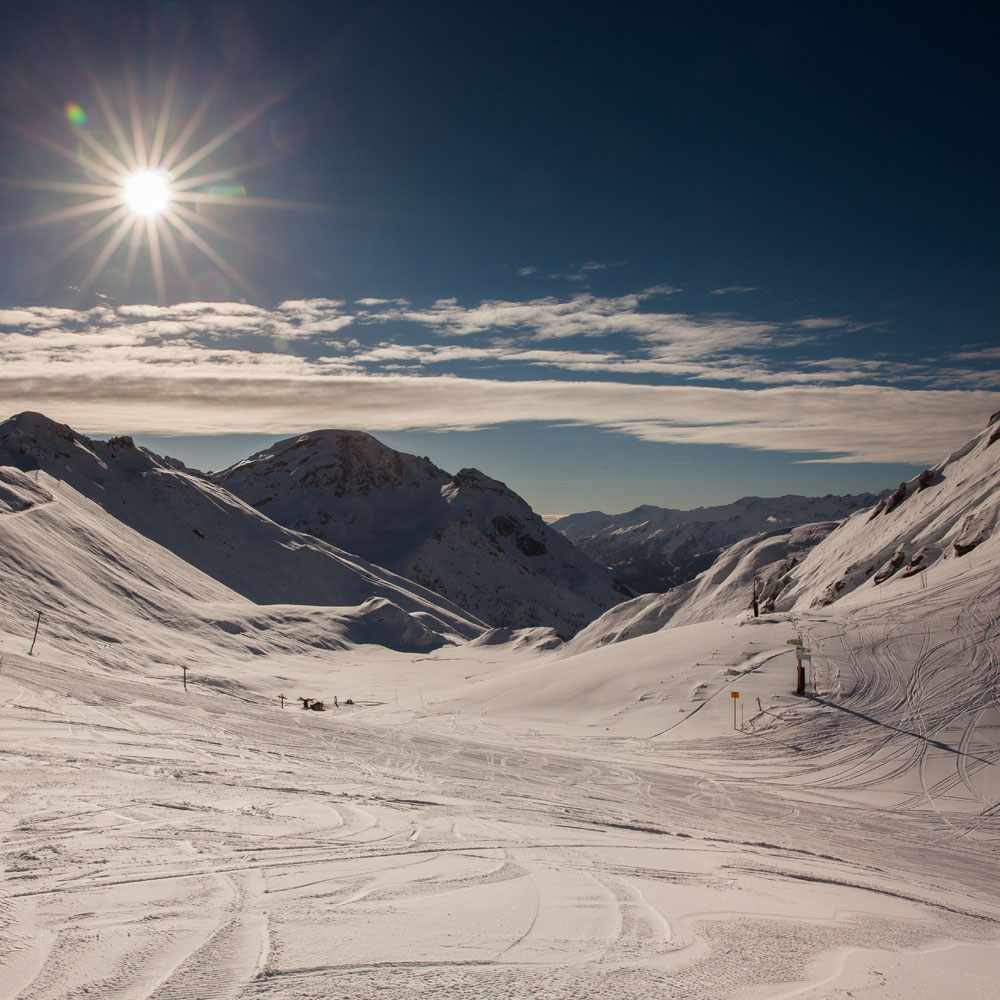
Altitude
1,200 m - 2,800 m
Pistes
250 km
Ski Season 26/27
5 Dec - 18 Apr
Transfer Time
120-180 mins
Number of pistes by difficulty
Resort Guide Quick Facts
(the stuff you actually care about)
Best for:
Intermediate skiers and mixed-ability groups who want a proper week of exploring without feeling trapped on the same three blues. Also great if you like tree skiing and you want a resort with real-life town energy (Briançon) rather than a purpose-built bubble.
Ski area size:
It’s not just “big on paper” – the domain sprawls across multiple mountains and ridgelines, so it feels like a mini road-trip on skis. You’ve got famous high points like Pic de l’Yret and L’Eychauda, and the resort’s shape means different weather and snow conditions can exist in different corners on the same day.
Altitude:
The altitude is roughly 1,200m–2,800m, with a good chunk of skiing sitting comfortably above mid-mountain. Early season can be a bit “pick the right sector and trust the snowmaking”, while mid-winter is usually the sweet spot for consistent coverage. Late season tends to be best if you’re happy chasing altitude and skiing earlier in the day before spring snow turns playful.
Villages / bases (each has a different vibe):
Briançon is the proper town option – historic, lived-in, lots going on beyond skiing. Chantemerle is a classic “ski base village” feel with good lift access and a social-but-not-chaotic vibe. Villeneuve/La Salle-les-Alpes is the sweet spot for many UK skiers: great access, lots of apartments, and lively après options. Le Monêtier is the quieter, more “mountain village + spa” end – ideal if your perfect evening involves thermal baths and an early night that you actually stick to.
Beginner friendliness:
It’s quietly strong for beginners because each base has learning areas, and there are specific beginner zones (including Serre Ratier, plus learning options around Villeneuve and Monêtier). The big win is progression: once you’ve got your snowplough dignity back, there are longer gentle runs to build confidence without immediately being fired onto a motorway-red.
Ski season (published dates):
Serre Chevalier’s 2026/27 ski season is scheduled to run continuously from 5th December 2026 to 18th April 2027. That gives you a long early-December-to-mid-April window, although opening dates remain subject to snow conditions. Check the official Serre Chevalier opening dates before booking right at either end.
You’ll love Serre Chevalier for…
Snow sure
Off piste
Intermediates
| Our rating | |
|---|---|
| ★★★★ | Beginner |
| ★★★★★ | Intermediate |
| ★★★★ | Advanced |
| ★★★★ | Off-Piste |
| ★★★★ | Snowboarding |
| ★★★★ | Snow Reliability |
| ★★★★ | Extent |
| ★★★ | Apres-Ski |
| ★★★ | Mountain Restaurants |
| ★★★★ | Scenery |
| ★★★ | Village Charm |
| ★★★ | Non-Skiers |
Best for snow: Mid-January to early March
Mid-January to early March for the most reliable coverage and the best chance of soft chalky snow.
Best for value: Early January and late March
Early January (after New Year) and late March - quieter, cheaper packages, and still plenty of piste open.
Best for families: Late January or late March
Late January (outside half-term) or late March for sunnier days and less queue chaos.
Avoid if possible: UK half-term weeks
UK half-term weeks - same great skiing, but you’ll pay more and queue more.
Tour Operators who go here







Looking to stay in Serre Chevalier?
What’s Serre Chevalier like?
Serre Chevalier is a valley resort that feels genuinely French (in a good way), with multiple bases that each have their own personality.
You’re not booking a single “village experience” – you’re choosing which version of Serre Chevalier you want: lively, quiet, historic, or ultra-convenient.
It’s also one of the best “low-stress big resorts” going: huge terrain, lots of cruisy confidence-building pistes, and enough variety that a week doesn’t feel samey. And because it’s in the Southern Alps, you often get those bluebird days where you’re squinting at the sun thinking, “Is this… legal in winter?”
Town layout
Think of Serre Chevalier as four mini resort bases linked by lifts on the mountain and a road in the valley.
Briançon sits at one end with a proper town centre and a historic old town; Chantemerle and Villeneuve/La Salle-les-Alpes are the “most people picture this when you say ski village” bases; and Le Monêtier is at the far end, feeling more like a mountain village that happens to have excellent skiing attached.
Practically, this matters because your morning routine changes depending on where you stay.
Overall vibe
The vibe is “serious skiing, zero pretence.” It’s not trying to be glossy, and that’s part of the charm. You’ll see everyone from local families to big UK groups to quietly feral off-piste enthusiasts hunting pockets in the trees.
The pistes are well-loved, the mountain restaurants range from quick-and-cheery to “we’re absolutely having tartiflette because it’s France,” and the town options mean non-skiers don’t feel like they’re stuck in a chalet staring at a radiator.
Also: because the domain is spread out, you can choose your energy level. It’s a resort that rewards choosing the right base for you, not just the cheapest deal.
Après-ski
Après here is lively-but-not-insane: more “happy hour, live music, a few cheeky rounds” than “table-dancing until 4am in ski boots.”
Villeneuve is the main après hub, with places like La Grotte, Mojo, Le Frog, and Le Per et Noelle doing the heavy lifting for atmosphere.
Chantemerle has great slope-side options like The Station (yes, that one right by the Luc Alphand black run), while Monêtier is smaller and cosier (think Bar Alpen vibes).
Briançon’s old town bars (like Le Choose) are great if you want your drinks with a side of medieval streets.
Looking to stay in Serre Chevalier?
Who Serre Chevalier suits
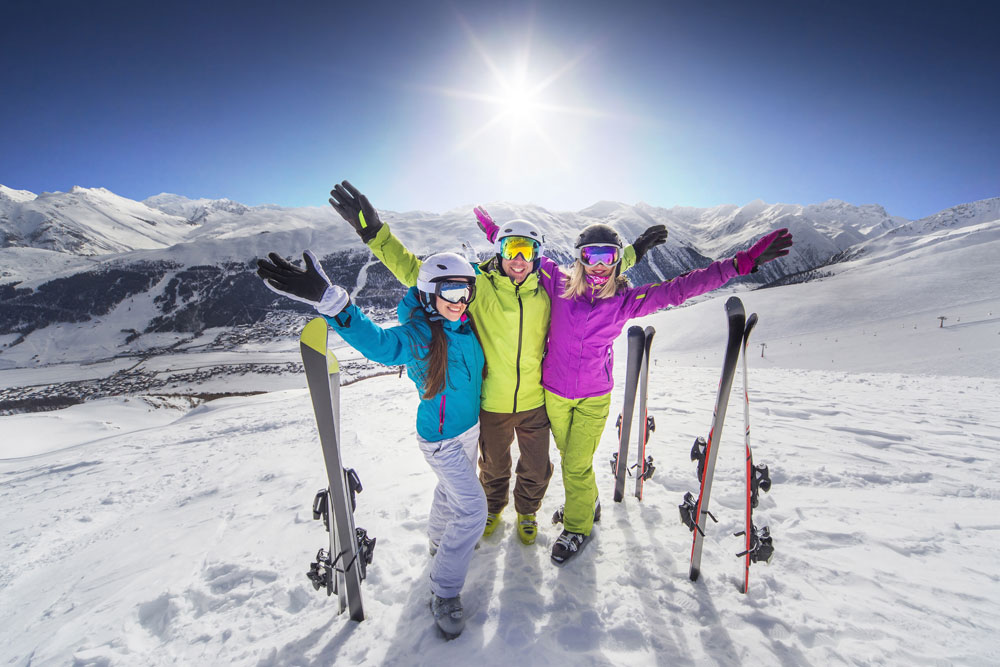
Intermediates (the sweet spot)
This is an intermediate playground: cruisy blues and confidence reds for days, plus proper long runs so you can feel like you’ve travelled rather than lapped the same chair.
Head up towards Pic de l’Yret and L’Eychauda for variety and views, and use the valley-sprawl to dodge crowds by moving sectors when the ski-school swarms appear.
Stay tip:
- Villeneuve/La Salle-les-Alpes is the all-round easiest base for exploring both directions without faff, especially if you like a lively end-of-day drink.

Advanced skiers & snow-sure seekers
There’s plenty to keep strong skiers interested: steep blacks like Luc Alphand and Casse du Bœuf, plus serious terrain and bowls in the high sector areas (and some legendary “don’t mess about” routes like Tabuc down towards Monêtier). Off-piste skiing here can be the real deal – get a guide if you’re not 100% confident with local snowpack, and treat avalanche info like essential reading, not optional admin.
Stay tip:
- Villeneuve is great for quick access into big terrain, while Monêtier suits experts who want quieter slopes and easier access to that end of the domain.

Snowboarders
Serre Chevalier is generally snowboard-friendly because it’s chairlift-heavy, and you’ve got gondolas where you want them – fewer drag-lift marathons than older French resorts. The main watch-out: if you blindly follow a linking route late in the day, you can end up with a bit of gentle shuffling. The fix is easy: plan your “home run” earlier, keep an eye on which sector you’re in, and don’t leave the traverse-y bits until your legs are cooked.
Stay tip:
- Villeneuve is the easiest for getting around without feeling trapped, and it’s got the most convenient mix of lifts + accommodation options.

Beginners (with a smart plan)
Better than people expect – especially if you stay somewhere with easy access to learning areas like Chantemerle/Serre Ratier or the more beginner-friendly zones around Villeneuve and Monêtier. The big win is progression: Serre Chevalier has longer gentle options (like the Grande Alpe greens) so you can practise without feeling like you’re in a tiny fenced-off nursery forever.
Stay tip:
- Villeneuve is brilliantly convenient for ski school logistics, while Chantemerle is great if you want to be close to those beginner zones and still have a bit of buzz.

Families
Serre Chevalier works really well for families because it’s flexible: you can pick a base that suits how you actually holiday, and there are fantastic ski schools all along the valley (including ESF) so lessons are easy to organise. Plus, because the resort is so spread out, you can dodge the worst queues by skipping the “everyone does this at 10:30” lifts and heading somewhere a bit less obvious instead.
Stay tip:
- Want convenience and lots of apartments? Villeneuve/La Salle-les-Alpes is the “easy mode” choice. Want quieter evenings and a treat-yourself spa factor? Monêtier is brilliant (and the thermal baths are a genuine crowd-pleaser).

Freestyle / Terrain Parks
Serre Chevalier has a proper freestyle setup rather than a sad little box in the corner. There’s a snowpark that’s split into multiple areas for different levels, plus progression features (so you don’t have to send a massive kicker on day two and immediately meet your chiropractor).
If your crew includes park-lappers and “I’ll try it once” beginners, it’s the kind of place where everyone can get what they want without the whole day becoming a committee meeting.
Stay tip:
- Villeneuve tends to be the easiest launchpad for park sessions and social evenings.
Looking to stay in Serre Chevalier?
Where is Serre Chevalier?
Serre Chevalier sits in the Hautes-Alpes in south-east France, in the valley around Briançon and the Guisane river corridor.
It’s close enough to Italy that Turin is a genuinely useful airport option, and the area feels a bit sunnier and more “wide open” than the deeper, darker north-facing valleys you get elsewhere in the Alps. For planning, think of it as “a valley with multiple bases” rather than one compact resort: you’ll pick your base (Briançon/Chantemerle/Villeneuve/Monêtier), then ski a linked domain that spreads across several mountains above the valley. That’s why choosing the right area to stay matters more here than in a single-station resort.
Looking to stay in Serre Chevalier?
Skiing in Serre Chevalier (ski area, terrain, lifts, snow)
Skiing in Serre Chevalier is all about range: tree-lined cruisers, open high bowls, rolling confidence-building pistes, and steeper challenges when you want them.
The resort’s spread means conditions can vary by sector (sunny vs shaded, wind-exposed vs sheltered), which is actually a huge advantage if you plan your day like a local: chase the best snow, dodge the crowds, and don’t commit to “we’ll just ski wherever” unless you enjoy accidental treks.
A big part of the fun is moving between bases: start in one sector, roam, then finish somewhere that suits your end-of-day goals (après, spa, or home-before-the-kids-melt-down).
And because there are multiple lift bases, you can often avoid the worst pinch points by starting your day in the “less obvious” place.


Terrain overview
Serre Chevalier is basically a “valley-of-four-bases” setup, with the ski domain linking Briançon (up via the Prorel gondola), Chantemerle (via Ratier), Villeneuve/La Salle-les-Alpes (via Aravet), and Le Monêtier (served by lifts including Bachas). The nice bit is you’re not locked into one personality: you can start in the sector that suits your day (or your crew’s mood), then ski across once you’re warmed up.
Up high, the skiing fans out around the big ridges and viewpoints – especially around Pic de l’Yret and L’Eychauda – and each side has its own “feel.” Some zones are more tree-protected and forgiving, while others open up into that bigger, more alpine vibe where it feels like the mountains have turned the volume up.
It’s the kind of area where a two-minute look at the map in the morning actually pays off, because choosing the right sector early can mean you spend your day skiing… rather than standing in a queue wondering where everyone came from.
Crowds build where you’d expect: the most convenient mid-valley bases at classic start times, plus the obvious pinch points when everyone’s trying to funnel into the same “best link” at once. The good news is the quiet zones are usually just a sector-change away – if you move early, avoid the lunch-hour bottlenecks, and don’t all migrate to the same lift at the same moment like you’re being herded by an invisible ski-school whistle.
Stay tip:
If you want maximum easy exploration, base yourself in Villeneuve/La Salle-les-Alpes so you can roam both directions without overthinking it.
Lifts & getting around the mountain
You’re looking at roughly 59 lifts, with a chairlift-heavy mix (plus gondolas and drags), which helps keep the flow pretty decent for a resort this size – you’re not relying on one single “mega lift” to do all the heavy lifting.
Because the domain is spread out, the lifts aren’t just about getting you uphill; they’re your navigation system between bases and sectors, so it’s worth thinking in “routes” rather than just “runs.”
Queues are most noticeable at the obvious “main start” lifts and during peak French holiday weeks, especially first thing and when people are trying to get home late afternoon.
Your best strategy is boring-but-deadly-effective: start earlier, ski away from the base between 9:30–11:00, eat lunch slightly earlier or later than the masses, and don’t finish your day by arriving at the busiest download point at exactly 4pm.
One of the most underrated Serre Chevalier hacks: if one base looks rammed, don’t force it. Start in a different sector, get your first couple of lifts done calmly, then link across once the initial rush has dissolved.
It’s also brilliant for mixed groups – you can agree a rough “sector for the morning” plan, then meet somewhere central without anyone having to do a panicked last-run sprint to make it back.
Stay tip:
If you hate morning queues with a passion, stay walk-close to the Aravet area in Villeneuve so you’re not adding ski buses and stress to the first lift.
Snow reliability & season length
Altitude sits around 1,200m–2,800m, so Serre Chevalier tends to ski best mid-winter, when you’ve got colder temps and consistent coverage across the domain. Early season can be more “follow the best-covered pistes” than “go anywhere you fancy,” and late season is when the smart money goes on early starts and higher-altitude laps before the sun gets ideas.
Because it’s in the Southern Alps, you can get those glorious sunny spells that make everything feel like a postcard – amazing for morale, but it does mean some slopes can soften quickly, especially in spring.
The good news is the resort’s layout gives you options: if one area is getting slushy and busy, you can often find a colder pocket, better texture, or more sheltered snow by changing sector rather than stubbornly lapping the same sunny run until it turns to mash.
So yes, snowfall totals matter… but what matters more is where you’ll actually be skiing each day: tree-protected zones for stormy/flat-light days, higher alpine zones when you want the best preserved snow, and a bit of aspect-awareness in spring so you’re not surprised when your “perfect lunch run” turns into a slow-motion ski soup.
Stay tip:
For the best “snow flexibility,” pick Chantemerle or Villeneuve so you can pivot quickly to different aspects and sectors.

There’s plenty of temptation off the side: bowls, tree lines, and steeper natural terrain that draws freeriders – especially around the higher sectors where the terrain opens up and the “just one more line” voice in your head gets louder. You can also find that classic Serre Chevalier combo of trees + playful features, which is brilliant on visibility days because you’ve still got definition and shelter.
But here’s the sensible bit: Serre Chevalier’s off-piste isn’t a theme park. Terrain changes quickly, conditions can vary a lot between aspects, and it’s very easy to get lured into something that looks friendly from above and gets more “uh oh” the further you go. If you don’t know the terrain, hire a local guide for day one – you’ll get safer lines, better snow, and you’ll avoid the classic “we followed tracks and now we’re cliffed out” situation.
Do the grown-up stuff: check avalanche bulletins, carry proper kit if you’re leaving marked runs, and don’t treat a sunny day like a safety guarantee. Tracks aren’t proof of safety – they’re just proof that someone else made the same decision earlier (which is not the comfort you want it to be).
Stay tip:
If off-piste is a big reason you’re coming, consider staying in Monêtier (quieter access to that end of the domain) or Villeneuve (fast into the big terrain).
Beginners & improvers
Beginners are well served with learning areas across the valley, including strong beginner zones like Serre Ratier, plus solid options around Villeneuve and Monêtier. The big win for families and first-timers is that you can often find a learning zone that matches your comfort level without feeling like you’ve been dumped onto a busy motorway of skiers.
The best beginner-friendly feature here is progression. You’re not stuck on a tiny nursery loop forever – there are longer, gentler pistes (like Grande Alpe) where you can practise turns and speed control without the panic of sudden steepness. That “I did a real run!” feeling comes quicker, which is honestly half the battle.
Improvers also get a lot out of the variety: you can pick mellow blues when confidence is wobbly, then step it up gradually without needing to change resort.
Practical warning though: because the resort is spread out, it’s very possible to have a lovely day… and then accidentally ski somewhere you can’t comfortably get back from late in the afternoon when legs are tired.
Keep an eye on signage, don’t leave the “how do we get home?” question until the last run, and ask instructors which routes are the easiest for returning to your base without a surprise steep pitch.
Stay tip:
For the smoothest ski-school mornings, stay in Villeneuve (easy logistics + lots of accommodation close to lifts).
Freestyle & “more than pistes”
The freestyle scene is legit: there’s a snowpark setup split into multiple areas with a dedicated lift and a proper progression vibe, so you can lap features without feeling like you’ve wandered into the X Games by mistake.
That’s great news if you’ve got teenagers (or grown adults) who want park time – it keeps the sessioning efficient, and you’re not constantly hiking or side-slipping your way back into position.
Beyond the park, Serre Chevalier is also great for “more than just pistes” even if you stay on marked runs. There are loads of places where the terrain feels playful – tree-skiing vibes, natural rollers, little side hits, and quieter snow once you’re away from the base areas.
It’s ideal for groups where not everyone skis the same way: one half can hunt for side hits and little adventures, the other half can cruise blues and reds, and you can still meet for lunch without needing a logistical spreadsheet and a group chat meltdown.
If you plan it right, you can build days that keep everyone happy: park laps in the morning while snow is firmer, cruising and exploring through the middle of the day, then finishing somewhere more sheltered as the afternoon crowds (and tired legs) start to stack up.
Stay tip:
If park time matters, base in Villeneuve/La Salle-les-Alpes for the easiest lap-and-link routines.
Best Runs in Serre Chevalier (by ability)
For beginners:
If you’re finding your ski legs, aim for longer gentle pistes like Grande Alpe – it’s exactly the kind of run that helps you practise without feeling herded around a nursery pen.
Pair that with confidence-building greens and easy blues in the beginner-friendly areas (especially around Serre Ratier) so you can build mileage, not just survive one scary descent.
For intermediates:
Intermediates should put Cucumelle on the hit list (it’s a well-known run choice in the resort), and explore pistes like Fangeas and the Vallons de Cucumelle area for that “endless options” feeling.
The joy here is linking sectors: do a couple of long cruisers, hop a lift, repeat, and suddenly it’s 3pm and you’ve somehow skied half the valley.
For advanced:
For steeper bragging rights, there’s Luc Alphand and Casse du Bœuf for proper black-run focus, and routes like Tabuc if you want something that feels more serious and memorable.
Pick your moment (good visibility, good snow), and don’t be shy about doing a warm-up lap first – Serre Chevalier’s steeper lines are best enjoyed when your legs aren’t still in “hotel breakfast mode.”
Off-piste note:
If you’re dropping into Serre Chevalier’s freeride terrain (the bowls/trees off ridges like Pic de l’Yret or L’Eychauda) rather than sticking to marked runs, treat a local guide and avalanche awareness as part of the holiday cost – you’ll find better snow and keep the trip from turning into an emergency story.
Looking to stay in Serre Chevalier?
Looking for accommodation in Serre Chevalier
Serre Chevalier is one of those resorts where your base choice quietly decides whether you have a smooth, smug holiday or a “why are we always on a bus?” week.
The valley has four main bases, and they’re genuinely different. Briançon is the big-town option: proper supermarkets, shops, history, and that lived-in feel – great if you like doing more than skiing. Chantemerle feels like the classic ski-base village: lift access, a compact centre, and a nice balance of calm and social.
Villeneuve/La Salle-les-Alpes is the convenience king: loads of apartments, great lift access, and the most consistent après energy. Le Monêtier is the quiet, mountainy end with a strong “spa + early night” appeal (and it’s brilliant if you want your holiday to lower your blood pressure).
Quick chooser: which area is right for you?
- If it’s your first time and you want maximum ease, pick Villeneuve – it’s the most plug-and-play base for lifts, ski lessons, and evenings.
- If you want a proper town with atmosphere (and non-skiers who won’t get bored), go Briançon.
- If you want a classic ski village and good access without feeling too busy, Chantemerle is a great middle ground.
- If your dream holiday includes thermal baths, quiet dinners, and skiing without crowds, Monêtier is your happy place.
- And if your group is mixed, Villeneuve usually keeps the peace because it’s easiest for everyone to do their own thing and meet up later.
Village Comparison Table
| Area / Base | Altitude | Vibe | Best For | Nightlife | Beginner-Friendly | Access / Getting Around |
|---|---|---|---|---|---|---|
| Briançon | 1,200m | Real town + historic old town | Culture, shops, non-skiers | ★★★ | ★★★ | Prorel gondola access; free ski buses along valley |
| Chantemerle (Saint-Chaffrey) | 1,350m | Classic ski-base village | Balanced weeks, good access | ★★★ | ★★★★ | Ratier gondola; easy links |
| Villeneuve / La Salle-les-Alpes | 1,400m | Lively, convenient, sociable | Groups, intermediates, “easy mode” | ★★★★ | ★★★★ | Aravet gondola; central valley |
| Le Monêtier-les-Bains | 1,500m | Quieter, spa, mountain village | Calm stays, wellness, experts | ★★ | ★★★ | Bachas area access; farther valley end |
(Star ratings are “relative vibe” rather than gospel)
Best Area for First-Timers
Villeneuve/La Salle-les-Alpes is the safest first-timer pick because it’s just… easy.
You’ve got loads of accommodation (apartments, hotels, the whole menu), quick lift access, and enough bars/restaurants that evenings have a bit of buzz without turning into a full send.
It’s also weirdly brilliant for “learning logistics”: ski school meet-ups are straightforward, you’re not doing a daily tactical briefing to get everyone to the right lift, and meeting mates for lunch doesn’t require a 45-minute ski safari and a prayer.
It’s the kind of base where your week stays friction-free even if your group is mixed – some learning, some cruising, someone mysteriously “just popping into the park for a bit,” and everyone still ends up in roughly the same orbit.
If you’re the type who gets holiday rage when things feel inefficient, Villeneuve is your antidote: fewer moving parts, fewer wrong turns, more actual skiing.
Stay tip:
Aim to stay genuinely close to the Aravet lift base (not “10 minutes… uphill… in ski boots”) so your mornings don’t start with a sweaty march and a small family mutiny.
Best Area for Ski-in Ski-out
If you want genuine “clip in and go” convenience, look hardest at Chantemerle and Villeneuve – they’re the bases where being close to the main lifts can actually translate into fast access and minimal faff.
In Chantemerle, being near the Ratier gondola is the jackpot; in Villeneuve it’s all about being near Aravet. Nail that, and you’ll spend more time skiing and less time doing the awkward boot-walk shuffle while carrying helmets, snacks, and someone else’s gloves.
Honesty moment: “ski-in/ski-out” here (as in most French resorts) often means “very close to the lift” rather than stepping off your balcony onto a piste like you’re in a Bond film.
The move is to ignore marketing labels and prioritise what actually matters: distance to the gondola, how flat the route is (flat matters more than you think), and whether the last run home is realistic for your weakest skier when it’s icy and everyone’s tired.
Stay tip:
Before you book, check the property location against the lift base on a map and look for words like “Ratier” or “Aravet” – if it’s vague about which lift it’s near, assume it’s not the near one.
Best Area for Nightlife
Villeneuve/La Salle-les-Alpes wins for nightlife because it has the most concentrated après options and the easiest “wander from one place to the next” flow.
It’s lively without needing a mega-club scene, and it does that classic ski resort trick where you start with “one drink,” then suddenly it’s midnight and you’re debating whether chips count as dinner.
Places like La Grotte and Mojo are the kind of venues that make that happen with alarming efficiency.
Chantemerle has good options too – especially slope-side spots like The Station that feel properly après-y – but Villeneuve is the most reliable if nightlife is genuinely part of your booking decision.
It’s also easier if your group splits: some can call it early without needing a taxi mission, and the “late-ish” crowd can still get home without turning it into an expedition.
Stay tip:
Stay close enough to walk home easily, but not directly above the loudest bar – “great nightlife” hits different when it’s vibrating through your pillow at 1am.
Best Area for Families
For families, it’s a toss-up between Villeneuve (for convenience and apartment choice) and Monêtier (for calm and the spa factor).
Villeneuve is usually the least stressful for small kids because mornings are simpler: more accommodation near the action, fewer “how do we get everyone to the lift?” moments, and a generally easier rhythm when you’re juggling lessons, snack breaks, and the surprise emotional dip that sometimes arrives at 3:30pm.
Monêtier, though, is a proper secret weapon if your holiday includes non-ski afternoons. It’s quieter, more laid-back, and the thermal baths are genuinely family-friendly in that “we’ve done enough now, let’s float around and reset” way.
It’s also a great base if you like a calmer evening vibe – less temptation to overbook your itinerary, more chance of everyone actually getting some sleep.
If you’re travelling with teens, Villeneuve tends to work brilliantly because it gives them a bit of independence (they can meet friends, grab food, mooch around) without you feeling like you’ve unleashed them into a full party resort.
Stay tip:
Pick accommodation based on lesson meeting point distance, not just “nice apartment” – being able to get to ski school in five minutes can be the difference between a smooth week and a daily boot-and-tears situation.
Best Area for Budget Travellers
Briançon often gives you the best value because it’s a real town with more accommodation variety and less “ski village premium.”
You can self-cater properly (big supermarkets, real shops, normal-life pricing), and you’ve still got direct access up via the Prorel gondola, so you’re not sacrificing skiing to save money.
It’s a smart setup for people who’d rather spend cash on good food, lift passes, and maybe a cheeky long lunch than on the “we put some reclaimed wood on the wall so it’s expensive now” vibe.
The trade-off is atmosphere: you’re choosing town life over ski-village cosiness and doorstep après.
But that can actually be a plus – more restaurant choice, more space, and a bit more breathing room in busy weeks.
If your priority is value and practicality (and you don’t mind that your evenings feel more “mountain town” than “après parade”), Briançon is a very solid call.
Stay tip:
Try to stay within easy reach of the Prorel lift (or a simple bus/shuttle link to it) so the money you saved on accommodation doesn’t get spent on daily transport faff.
Our Top Hotels

★★★★
- Village in the heart of Chantemerle
- Lifts - around 4 mins walk
- Wellness area
Cristal Lodge is compact, polished and nicely done, which gives it a more personal feel than some of the chunkier resort hotels.
Most rooms look mountain-facing, and the small wellness setup is exactly the sort of thing you appreciate after a day of wobbling, surviving, then finally linking a few turns properly.
Why choose it? Because it gives you beginner-friendly access without feeling remotely beginner-basic.

★★★★
- Village in La Salle-les-Alpes
- Lifts - ski-in/out
- Pool + spa
The win is that classic Club Med ‘everything just works’ setup. Lessons, childcare, meals, après-ish drinks and a proper resort rhythm all get bundled into one place.
The feel is more polished holiday village than intimate boutique hotel. What you get is genuine ease: foot-of-the-slopes positioning, plenty for kids, spa and pool access.
Why choose it? Because it is the all-inclusive, all-sorted answer for people who want to ski more and organise less.

★★★★
- Village in Chantemerle
- Lifts - 3-4 mins walk
- Pool + sauna + hammam
You are close to the lifts, the ski school and the centre of Chantemerle.
The indoor pool and paid wellness extras are a welcome bonus rather than the main event, but the real appeal is just how practical the whole thing is.
Chantemerle remains one of the easiest bases in Serre Chevalier, and this puts you right in the sensible part of it.
Why choose it? Because it is one of those places that quietly makes the whole holiday run better.

★★★
- Village in La Salle-les-Alpes
- Lifts - free shuttle or longer walk
- Pool + spa
You get a three-star holiday-club setup, family-friendly facilities, and a free ski shuttle.. There is an indoor pool, wellness bits and kid-friendly features.
The vibe is more functional base boutique ski hideaway, so go in with the right expectations and you can get very good value out of it.
Why choose it? It is the sensible family budget play when convenience matters more than glamour.
Tour Operators who go here
Looking to stay in Serre Chevalier?
Après ski, restaurants & winter activities
Serre Chevalier is one of those French ski resorts where you can design your evenings based on your personality.
Want lively, social, and slightly chaotic in a fun way? Base yourself in Villeneuve and let the après ski happen. Want a proper French town where you can wander historic streets, eat well, and still get a good night’s sleep? Briançon has your name on it.
Want “ski village energy” without full party mode? Chantemerle sits nicely in the middle. And if your ideal end to a ski day is warm water, calmer restaurants, and an earlier bedtime you don’t regret, Monetier is the quiet hero.
Food-wise, you’ve got loads of choice across the valley – from hearty Savoyard classics (fondue, raclette, tartiflette) to more varied menus in the bigger bases.
The mountain restaurants are a proper part of the experience too, with everything from quick pit-stops to “we’re making lunch an event” terraces.
And because there’s a real town base (Briançon), non-ski activities don’t feel like an afterthought – you can actually build a holiday that isn’t 100% chairlifts and tired legs.

Après in Serre Chevalier is lively in a very French way: animated terraces, happy hour missions, and a solid mix of locals and visitors – but generally not a full send, sunrise-club situation.
Villeneuve is the main event. La Grotte is basically the “you’ll end up here at least once” spot, and Mojo is a proper favourite for cocktails and atmosphere. Around the same area you’ve got Le Per et Noelle and Le Frog for more pub-style hanging out, and the valley’s free night bus makes it easier to roam without turning your evening into a taxi-budget horror film.
Chantemerle does après well too – The Station is brilliantly placed (and the views of people dropping the Luc Alphand run are great entertainment), while Piano Bar is your “let’s be a bit grown-up tonight” option.
Monêtier is smaller and cosier, with Bar Alpen being a classic for a relaxed drink. Briançon’s old town has spots like Le Choose if you want your night out with a side of cathedral views and cobbled streets.
Bottom line: you’ll have fun – just don’t come expecting Val Thorens levels of carnage.
Mountain‑top Moments
Mountain food here is properly part of the skiing rhythm: big terraces when it’s sunny, cosy cabins when it’s nuking snow, and the kind of meals that make you briefly forget you have legs.
You’ve got a great spread of on-mountain stops, including places like Le Pi Maï, L’Aravet 2000, Le Briance, Echaillon 2200, and Chalet de Serre Blanc – plus higher “make this a moment” options like Le Bivouac de la Casse and Le Flocon.
How to do lunch like a pro: on bluebird days, aim for an earlier terrace seat (11:45-ish) before everyone else has the same idea. On stormy days, pick a warm cabin, commit to a slower lunch, and treat it as a tactical reset.
Must-try vibes: a hearty mountain dish (yes, tartiflette), something grilled if you’re trying to pretend you’re healthy, and at least one “we earned this” dessert because skiing counts as effort.
Also, don’t underestimate a quick coffee stop – it can save a whole afternoon if someone in your group is fading.

Village food is one of Serre Chevalier’s underrated strengths because you’ve got multiple bases with different choices.
In Villeneuve/La Salle-les-Alpes, places like L’Eau du Ponts, Le Refuge, La Marmotte, and Mojo are well-known picks depending on whether you want classic French, Savoyard comfort, or a more social dinner vibe.
Chantemerle has strong options too – Loup Blanc is a proper “cosy, log fire, good food” kind of night, and you’ve got spots like La Cabassa and Le Tryptyche if you want something a bit different.
Monêtier and Briançon also have recommended places like Le Cairn (Monêtier) and Resto Duo (Briançon).
If you’re self-catering, Briançon is the easiest for doing it properly – real supermarkets and town infrastructure rather than “one small shop that sells pasta for the price of jewellery.”
If you need a day off (or you’re travelling with non-skiers), Serre Chevalier is quietly brilliant – it’s one of those valleys where you can have a proper “rest day” that still feels like a holiday, not just killing time.
Le Monêtier is famous for its thermal-bath culture – the kind of place where you can soak tired legs, thaw out properly, and feel human again. It’s especially good when the weather’s doing that classic Alps thing of being gorgeous one minute and mildly spiteful the next.
Briançon gives you proper town energy: wandering the historic old town and Vauban fortifications, ducking into cafés, browsing actual shops, and getting that “we’re in France, not just a ski station” feeling. It’s a great reset if your group needs a break from lift chats and goggle marks.
You can also do winter walking and snowshoeing, lean into sledging-style afternoons, or just pick a scenic wander and turn it into a hot-chocolate mission. The best bit is you can build a “we’re still having fun” day without needing to drive miles or book something intense – it’s all right there in the valley.
And if the weather turns properly moody, town time in Briançon plus a good meal is genuinely a solid Plan B – the kind that feels intentional, not like you’ve been forced indoors.

Getting home safely & easily
Serre Chevalier is one of those resorts where “getting home” depends on which base you’re in – because it’s a proper valley, not one neat little village you can stumble across in five minutes.
If you’re staying in Villeneuve/La Salle-les-Alpes or Chantemerle, you’re usually in the sweet spot: après bars and restaurants are fairly close to the lift hubs, so getting back is often a simple walk or a quick hop in a taxi if you’ve overcommitted to “just one more.” It’s the easiest setup if you like the freedom to drift from drinks to dinner without needing a full logistics plan.
If you’re based in Briançon, nights out can be very straightforward – it’s a real town, so you’ve got proper streets, more choice, and you’re not reliant on “last lift” timing. The trade-off is that if your evening started in a different sector, you’ll want a plan for the return because you’re not skiing home after dark unless you’ve invented night skiing. Think taxi, bus, or agreeing your meeting point early.
If you’re in Le Monêtier, it’s calmer and more spread out – which is lovely, but it does mean you’ll be more reliant on taxis if you’re eating/drinking somewhere else in the valley. It’s the classic “peaceful base” trade: quieter evenings on your doorstep, slightly more planning if you want lively ones elsewhere.

Ski schools & learning zones
Serre Chevalier is big enough that you’ll find ski schools across the valley, and the practical move is choosing lessons based on where you’re staying so you’re not wasting half your morning commuting in ski boots.
ESF operates in the area (including Briançon), and you’ll also find independent schools and private instructors depending on sector.
For guiding, it’s worth treating it as an “experience upgrade” rather than a luxury: one guided day can show you the best snow pockets, the best off-piste routes for that week’s conditions, and the kind of terrain you’d never confidently find alone.

Beginners do well in Serre Chevalier because it’s not “one scary mountain” – it’s a spread-out valley with proper learning zones in multiple bases, so you can keep things simple and local while confidence builds.
You’ve got well-known beginner-friendly areas like Serre Ratier (Chantemerle), plus easier progression terrain around Villeneuve and Monêtier, which means you’re not forced into long, complicated routes just to find mellow pistes.
That’s a big deal on day one, when “finding the right lift” feels like an Olympic event. The key mindset shift is not falling into the “big resort = terrifying” trap.
You can absolutely have a small, safe-feeling week inside a big domain: stay in your sector, repeat the same confidence-building runs, and let instructors choose the right moments to extend the playground.
When you’re ready, they’ll nudge you onto longer greens and gentle blues – runs like Grande Alpe are ideal for practising turns and speed control without that sudden-steepness panic.
Serre Chevalier’s layout also helps with bad weather: if visibility is grim up high, you can stick to the more sheltered zones and still get a proper lesson day in, rather than writing it off as “we can’t see, so we can’t ski.”
Serre Chevalier is one of those places where staying “roughly near the lifts” can still mean a daily march – so the smartest move is to stay close to the lift base that matches your likely lesson meeting point.
That’s the easiest way to keep mornings calm and avoid the classic family scene: one person carrying skis, one person carrying snacks, and one person announcing they hate boots.
If your crew has beginners, Villeneuve and Chantemerle are usually the best “logistics bases” because they’re built around clear lift hubs (Aravet in Villeneuve, Ratier in Chantemerle), and you can often walk to the action without needing a shuttle plan or a negotiation.
That also makes post-lesson life easier: meet for lunch, regroup, or bail out for hot chocolate without it turning into a cross-valley expedition.
Monêtier is lovely – quieter, prettier, spa bonus – but if you’re doing daily lessons and you’re not right by uplift, you can add unnecessary faff, especially with kids or first-timers who are already spending a lot of energy just existing in ski gear.
Make day one feel like day three: pick up your hire kit the afternoon before, then do a quick “dry run” to your base’s meeting point – because Serre Chevalier isn’t one single front de neige, it’s a whole valley of them. Ten minutes early is the sweet spot (not because you’re a saint, but because rentals + buckles + toilets + “where’s my other glove?” will happen whether you believe in them or not).
The first morning is where people lose time in Serre Chevalier: you’re stood outside Aravet / Ratier / Prorel / Monêtier wondering if this is the ESF flag or just an ESF flag, while your coffee cools and your patience evaporates.
Knowing exactly which lift hub you’re using (and where the ski school gathers next to it) turns “chaos tour” into “we’re fine, actually.”
If you’re not staying right by uplift, use the valley buses – they’re made for shuttling people between bases, and they save you from turning every morning into a transport puzzle (especially if half your group is in one village and lessons are in another).
And if you’re a mixed group, agree one simple rule that removes drama: beginners go to lessons, intermediates do a warm-up lap in the same sector, everyone meets for a snack after. That way nobody’s rushing, nobody’s waiting around annoyed, and you don’t start your ski day with a boot-based argument and a passive-aggressive flapjack.
Got kids? Add one more Serre Chevalier-specific trick: take a photo of the exact meeting point sign/flag on day one – because on day two it all looks familiar… until you realise you’re at the wrong gathering spot in the right village.
Looking to stay in Serre Chevalier?

Lift passes, costs & budgeting
Serre Chevalier is actually fairly simple once you separate the full 250km ski area from the smaller beginner and local products.
For a normal ski week, the full Serre Chevalier Vallée pass is the obvious choice. It lets you move between Briançon, Chantemerle, Villeneuve and Monêtier without worrying about which lifts are included, which is exactly what you want once you’re confidently exploring.
Beginners can spend considerably less by using the Espaces Découverte and Petits Domaines, while skiers who deliberately want non-consecutive days also have the Holiski pay-as-you-ski option.
The trick is not paying for 250km while you’re still learning to stop – but equally, don’t restrict yourself to a small sector once you’re ready to roam.
Which ski pass should you buy in Serre Chevalier?
Think of it like this: still learning? Start small. Skiing confidently for several days? Buy the full area and stop thinking about lift passes.
Option A - Espaces Découverte / Petits Domaines
What it is: A collection of smaller beginner and progression passes covering selected easy lifts and pistes around Briançon, Chantemerle, Villeneuve and Monêtier.
Best for: Complete beginners, cautious returners and families whose first few days will revolve around ski school and gentle green or blue terrain.
The exact products vary by sector. Briançon offers three-hour and day options, Chantemerle and Villeneuve have local day passes, while Monêtier offers three hour, day and six day options. There’s also a five-passage Discovery Pass for people who want to take things particularly gently.
Plain English: This is the “learn locally, pay locally” option.
Option B - Serre Chevalier Vallée Pass
What it is: The standard full-area pass covering the entire 250km Serre Chevalier ski domain.
Best for: Most week-long holidays, intermediates, advanced skiers and mixed groups who want the freedom to explore all four main sectors.
Passes are available from 3 hours through to 15 days, so you can match the ticket to the holiday you’re actually having.
For a normal 6 or 7 day ski trip, this is likely to be the simplest choice. You can move around the valley, follow better snow or visibility and avoid turning every morning into a discussion about whether your pass covers the lift everyone else wants.
Plain English: This is the “give me the whole mountain and let me ski” pass.
Option C - Holiski
What it is: Serre Chevalier’s ski-as-you-go product for people who want to ski non-consecutive days rather than buying a standard continuous multi-day pass.
Best for: Longer stays, flexible holidays and anyone who already knows there will be spa days, rest days or other activities mixed into the week.
It won’t automatically beat a standard six day pass for somebody skiing every day, but it’s worth comparing if your holiday schedule is deliberately stop-start.
Plain English: This is the “I’m here for a week, but I’m definitely not skiing every day” option.
Serre Chevalier lift pass prices 2026/27
Here are the published headline prices for Serre Chevalier Winter 2026/27 (prices shown in EUR):
| Serre Chevalier Vallée Pass | Adult | Child | Senior |
|---|---|---|---|
| 3 hours | Awaiting 2026/27 tariff | Awaiting 2026/27 tariff | Awaiting 2026/27 tariff |
| 1 day | Awaiting 2026/27 tariff | Awaiting 2026/27 tariff | Awaiting 2026/27 tariff |
| 6 days | Awaiting 2026/27 tariff | Awaiting 2026/27 tariff | Awaiting 2026/27 tariff |
| 7 days | Awaiting 2026/27 tariff | Awaiting 2026/27 tariff | Awaiting 2026/27 tariff |
| Petits Domaines | Adult | Child | Senior |
|---|---|---|---|
| 3 hours (Monêtier / Briançon) | Awaiting 2026/27 tariff | Awaiting 2026/27 tariff | Awaiting 2026/27 tariff |
| 1 day (Monêtier / Briançon / Chantemerle / Villeneuve) | Awaiting 2026/27 tariff | Awaiting 2026/27 tariff | Awaiting 2026/27 tariff |
| 6 days (Monêtier) | Awaiting 2026/27 tariff | Awaiting 2026/27 tariff | Awaiting 2026/27 tariff |
Group and flexible options – worth checking
Serre Chevalier also has a couple of alternatives worth checking.
Ouik is aimed at groups of four or more skiers and offers reduced-price skiing for trips of up to five days, while Holiski is designed around non-consecutive ski days.
Those won’t suit everybody, but they’re exactly the sort of products worth comparing before automatically buying four individual full-area passes.
Ski Demon tip: If you’re travelling as a family or group, compare the standard pass with Ouik before buying. There’s no prize for being first to checkout.
Deposits, insurance, and when to buy
Here’s how to do Serre Chevalier like someone who hates queues and hates wasting money:
Pass card: Serre Chevalier hasn’t yet published the full 2026/27 stay-pass card charges.
Insurance: Accident insurance will again be available as an optional add-on, but the final 2026/27 day rate hasn’t yet been published. Check it alongside your existing winter sports insurance rather than assuming you need both.
When to buy: The normal 2026/27 stay passes go on sale in early October.
Once the tariff is live, compare the full-area pass with the beginner, Ouik and Holiski products before buying – the cheapest option depends much more on how you’ll actually ski than how early you click Buy.
Looking to stay in Serre Chevalier?
Common Serre Chevalier Ski Holiday Mistakes
Serre Chevalier rewards a little forward planning: its four main bases, long valley and varied ski area can otherwise mean extra travel, missed connections and more faff than your holiday needs.
Staying in the “wrong” base for your holiday style
If you want après and convenience but you book quiet Monêtier because it looked pretty, you’ll spend the week commuting to the vibe you actually wanted. Flip side: if you want calm evenings but you stay in lively Villeneuve right above the action, you’ll discover that 2am laughter echoes beautifully in alpine valleys. Choose your base like it’s part of the product – because it is.
Doing the obvious lift at the obvious time, then moaning about queues
Every resort has pinch points. Serre Chevalier is big enough that the fix is simple: start a touch earlier, ski away from the base first, and shift sectors when you see crowds building. If you’re still in the same place at 11:30 as every ski school in France, that one’s on you.
Leaving your “get home” route until you’re tired and it’s late
Valley resorts reward planning. If you’ve wandered far, don’t wait until 4:15 to work out how to get back – that’s when people take a wrong link and end up with a long shuffle, a bus ride, and a mild emotional breakdown. Do a quick map check after lunch and decide where you’re finishing. Boring? Yes. Effective? Also yes.
Underestimating how good the mountain lunches are… then accidentally eating for two
The classic Serre Chevalier move is “we’ll just have a quick bite” and then you’re three courses deep on a sunny terrace with no regrets. Plan one proper lunch day (or two), and keep other days lighter so you don’t ski like you’ve got a bowling ball in your stomach.
Treating off-piste like it’s automatically safe because it’s sunny and tracked
Serre Chevalier has real terrain. If you’re leaving marked runs, do it properly: know the forecast, carry kit if appropriate, and hire a guide if you’re not confident. The best day of your holiday shouldn’t also be the day you make the local rescue team sigh.
Getting to Serre Chevalier
Getting to Serre Chevalier is relatively straightforward, with several airport options and useful rail connections through Briançon or Oulx. From flights and trains to driving routes and transfers, here’s how to make your journey into the valley as smooth as possible.
1) Fly + road transfer
(the “land, grab skis, go” option - and the most common)
Most people fly into a regional airport, then do the last leg on a shared coach or private transfer (no driving, no drama… unless it’s Saturday).
Transfer times vary with snow + changeover traffic, but as a sensible guide:
Rough timings (in decent conditions):
- Turin (TRN) → Serre Chevalier: roughly 1 hour 45 minutes – 2 hours
- Grenoble (GNB) → Serre Chevalier: roughly 2 hours 30 minutes – 3 hours 10 minutes
- Lyon (LYS) → Serre Chevalier: roughly 2 hours 30 minutes – 3 hours
Real-world tip: if you can choose, avoid landing late afternoon on a Saturday – you’ll pay for it in slow traffic and “are we there yet?” energy.
2) Train + bus/shuttle
(the “car-free, lower-stress travel day” choice)
Serre Chevalier’s two handy rail gateways are Briançon (France) and Oulx TGV (Italy) – then you hop on a bus/shuttle into whichever base you’re staying in.
Rough timings (typical):
- Oulx TGV → Briançon (ZOU line 76 shuttle): about 1 hour 5 minutes
- Oulx TGV → Villeneuve/La Salle (Pontillas stop): about 1 hour 9 minutes
- Oulx TGV → Le Monêtier (Les Grands Bains): about 1 hour 20 minutes
The Oulx shuttle requires reservation at least 48 hours before departure.
Once you’re in the valley, the regular bus link is designed to move people between bases – it crosses the valley in about 50 minutes in normal traffic.
Real-world tip: pick accommodation that’s genuinely easy from your arrival stop (Briançon station vs. a specific valley village stop) – Serre Chevalier is one resort, but it’s a long valley when you’re dragging bags.
3) Driving to Serre Chevalier
(flexible, but know your route + your road numbers)
Driving is great for self-catering and flexible arrivals – just remember your “final approach” is proper mountain-valley road stuff in winter.
Rough drive timings (in decent conditions):
- Turin → Serre Chevalier (Briançon end): roughly 1 hour 40 minutes – 2 hours 10 minutes via SS24 (Italy) over Montgenèvre, then N94 (France) into Briançon.
- Grenoble → Serre Chevalier (Briançon end): roughly 2 hours – 2 hours 15 minutes via the D1091 (the classic Col du Lautaret approach).
- Lyon → Serre Chevalier (Briançon end): roughly 2 hours 55 minutes – 3 hours 45 minutes via A43 → A48 (towards Grenoble), then D1091 over the Lautaret.
Real-world tip: before you set off, check Col du Lautaret conditions/closures – it’s the big “this changes everything” factor on the Grenoble-side approach.
Getting around once you’re there (easy… with one tiny “ski boots” reality check)
Walking (your default setting - if you’re close to the lift hub)
If you stay near the main lift bases in Villeneuve (Aravet) or Chantemerle (Ratier), Serre Chevalier can feel nicely walkable day-to-day: lifts, ski hire, supermarkets, and dinner are all within easy range. But “easy range” still comes with the classic ski-boot caveat - five minutes on Google Maps can feel like twenty when you’re clomping along in plastic.
Free valley shuttle / night bus (your secret weapon for swapping bases and getting home after dinner)
Because Serre Chevalier is spread along a valley, you’ll use buses more than you would in a single-base resort - and honestly, that’s a good thing. There’s a free shuttle/night bus setup that links the bases, which is brilliant for evenings. It’s also handy if your group splits across bases or you want the freedom to start in one area and meet somewhere else later.
Public bus planning (for Briançon bases, quieter spots, and “we’re not driving tonight”)
If you’re staying in Briançon town or a bit farther from the lift hubs, the move is simple: know your nearest stop, keep a rough sense of timings, and you’ll be absolutely fine. Serre Chevalier rewards anyone who does a bit of planning - once you’ve got the bus rhythm, getting around feels straightforward rather than “why is everything 20 minutes apart?”
Ready to make your piste dreams a reality?
Whether you’re scouting dreamy hotels, comparing the best tour operators or looking for fresh ski inspiration, we’re here to help you turn ideas into an actual holiday.
Take the next step by browsing hotels in this resort, choosing a trusted ski tour operator or signing up to our newsletter for destination ideas, practical advice and the latest tips delivered straight to your inbox. From finding the right place to stay to choosing the best way to book, we’ve got plenty to help you plan with confidence. Pick your next move and let the adventure begin.
Looking for more inspiration?
Sign up to our free newsletter
Ready to book your stay?
Take a look at our hotel guide and see what suits your requirements and budget
Tour operators
For more from our tour operators click the logos above
Serre Chevalier FAQs
Whether you’re visiting Serre Chevalier for the first time or heading back for another trip, these FAQs should help answer the most common questions before you book and before you travel.
Is Serre Chevalier good for a first ski trip?
Yes – if you choose the right base. The resort has beginner-friendly zones (including Serre Ratier and learning areas across the valley), and it’s great for progression because you can move from nursery slopes to longer gentle runs without jumping straight into scary terrain.
The key is staying somewhere that makes mornings easy: Villeneuve or Chantemerle are usually the smoothest for first-timers because you can often walk to uplift and keep routines simple. Book lessons early in peak weeks, and don’t try to “explore the whole domain” on day two – build confidence first, then roam.
Which base area is best if we want convenience above everything?
Villeneuve/La Salle-les-Alpes is the convenience king. It’s central in the valley, has great lift access, plenty of accommodation, and the most reliable après/restaurant options without needing taxis or complicated plans.
If your group has mixed abilities, it’s also the easiest place to do the “split up, meet later” holiday without anyone feeling stranded. If you want a quieter version of convenient, Chantemerle is a strong runner-up.
Will we spend loads of time queuing for lifts?
Usually not – but peak weeks are peak weeks. The lift system is sizeable (about 59 lifts, mostly chairs plus gondolas), which helps.
Your queue-avoidance recipe is simple: start earlier, ski away from the base for the first hour, eat lunch off-peak, and shift sectors when you see crowds building. Also, staying close to uplift helps because you can get going without adding bus time and stress to your morning.
Is it a good snowboard resort?
Generally yes, because the lift mix is chairlift-heavy and you’ve got gondolas where you want them – fewer drag-lift marathons than some older French areas. The main snowboard “gotcha” is end-of-day linking: if you leave your return route too late, you can end up on gentle connectors that require a bit of shuffling.
The fix is planning: decide your home sector earlier, keep a little speed on flatter sections, and don’t attempt a brand-new link when you’re exhausted.
What’s the best time of year for a week here?
Mid-January to early March is usually the sweet spot for coverage and consistency, with late March offering sunnier spring skiing and often better value.
Early season can be great if conditions are good, but it’s more variable – book with realistic expectations and focus on the best-covered sectors. Late season rewards early starts and higher-altitude laps. If you’re flexible, avoid the busiest school holiday weeks for the best “skiing to stress ratio.”
Do we need a car once we’re in resort?
Not necessarily. There’s a free shuttle/night bus setup for getting between bases and bars, which means you can base yourself somewhere and still roam for skiing and evenings. A car is handy for self-catering, day trips, and flexibility – but it’s not essential if you pick accommodation with good lift access and nearby services. If you’re debating it, decide based on your accommodation style (chalet/apartment vs catered) more than anything.
Are there good non-ski activities if someone in our group doesn’t ski?
Yes – this is one of Serre Che’s underrated strengths. Monêtier has the thermal-bath culture that’s perfect for a spa day, and Briançon is a real town with historic old-town wandering and proper cafés/shops. Add winter walking, relaxed lunches, and sightseeing, and non-skiers can have a genuinely good holiday rather than “waiting for you to finish skiing.” If you’re travelling with non-skiers, Briançon is often the best base for keeping everyone happy.
How expensive are lift passes compared to other French resorts?
It’s not bargain-basement, but it’s reasonable for the size (around 250km). The value comes from buying smart: a multi-day pass reduces your cost per day, and beginner-focused options can help if you’re not using the full domain.
What’s the “one thing” we should book early?
Lessons in peak weeks, and accommodation close to the lift if you care about convenience. Serre Chevalier’s spread means being near uplift can massively improve your daily routine – fewer buses, fewer delays, more skiing. If you’re travelling in school holidays, don’t leave lessons to chance. And if your group includes beginners, staying in an easy base (Villeneuve/Chantemerle) is often the best “holiday quality” upgrade you can make.
Is Serre Chevalier more “families” or more “groups”?
Honestly, it’s both – which is why it works. Villeneuve suits groups who want sociable evenings and convenience, while Monêtier suits families and couples who want calm + spa time. Briançon works for anyone who likes real-town atmosphere. The resort’s size also helps: families can stick to calmer zones while stronger skiers roam, then everyone meets for food without anyone feeling like they sacrificed their week. The only wrong answer is picking a base that fights your vibe.