


Flaine sits in a huge natural bowl in the French Alps, with easy mileage on the doorstep and the wider Grand Massif waiting when you fancy a bigger day out. It’s the kind of resort that quietly spoils you: you step out, rack up the miles and somehow it still feels calm – like the mountain’s doing the hard work so you don’t have to.
This guide was written by Michelle Wheeler
Flaine ski resort at a glance
Flaine is a high, purpose-built resort in Haute-Savoie, sitting at the top of Le Grand Massif ski area in the Northern French Alps
It’s not the “storybook chalet village” type (more functional-modern), but it’s brilliantly set up for hassle-free skiing: lots of ski-in/ski-out accommodation, a logical mountain layout, and easy access to a big linked domain.
Flaine resort sits around 1,600m and the skiing reaches about 2,500m, which helps it hang onto snow well through the season.
The wider Grand Massif area brings 265km of pistes, with 139 runs and 62 ski lifts, so you’ve got plenty to explore without it feeling chaotic.
Getting here is one of Flaine’s secret weapons: Geneva is the classic gateway and usually lands around the “just over an hour-ish” transfer bracket depending on traffic/weather (a proper win for short breaks and families).

Altitude
1,600 m - 2,500 m
Pistes
265 km
Ski Season 26/27
5 Dec - 18 Apr
Transfer Time
60 mins
Number of pistes by difficulty
Resort Guide Quick Facts
(the stuff you actually care about)
Best for:
Flaine is a confidence-building resort that suits beginners, improvers and cruisy intermediates really well, plus families who want low-faff logistics. If you like your skiing to be “wide, steady, and forgiving,” Flaine just gets you. Snowboarders generally rate it too because the layout is pretty fall-line friendly and the resort is designed around quick access rather than endless trudging.
Ski area size:
Flaine links into the Grand Massif: think 265km of pistes stitched together across Flaine, Les Carroz, Morillon, Samoëns and Sixt.
The really nice thing is you can treat it two ways. One: keep it simple, lap the bowl, and never feel lost. Two: do “route days” where you tour across sectors and make it feel like a proper adventure. It’s also genuinely handy for mixed-ability groups because you can often meet up without dramatic detours.
Altitude:
Flaine’s main ski area is officially described as sitting between 1,600m and 2,500m, which is a sweet spot for snow reliability in the Northern Alps. That altitude range also means spring skiing can be great if you play it smart: ski higher earlier, enjoy sunny lunches, and don’t expect the village to be mid-winter icy at 4pm in April.
Villages/bases:
Flaine is built across several “levels” (Forum/Forêt/Montsoleil-style zones), and most accommodation is designed for ski access and easy movement. Central bases make après and ski school simpler; slightly higher/quieter bases are often better value and better for early nights.
Beginner friendliness:
Flaine offers beginners’ zones with free lifts, plus wide, gentle slopes for progression. Add in a dedicated Beginner Pass that covers specific novice lifts/carpets, and it’s one of the better “learn without drama” resorts in France.
Ski season (published dates):
Flaine’s 2026/27 ski season is scheduled to run from 5th December 2026 to 18th April 2027. The early opening period from 5th to 18th December is snow-dependent, so check the official Flaine winter opening dates before booking right at the start of the season.
You’ll love Flaine for…
Snow sure
Beginners
Intermediates
| Our rating | |
|---|---|
| ★★★★★ | Beginner |
| ★★★★★ | Intermediate |
| ★★★★ | Advanced |
| ★★ | Off-Piste |
| ★★★★ | Snowboarding |
| ★★★★ | Snow Reliability |
| ★★★ | Extent |
| ★★ | Apres-Ski |
| ★★ | Restaurants |
| ★★★ | Scenery |
| ★★ | Village Charm |
| ★★ | Non-Skiers |
Best for snow: January – early March
January to early March for colder temps, better preservation, and that “proper winter” feel.
Best for value: Early January and late March
Early January and late March when prices soften but you still get excellent coverage up high.
Best for families: February school-holiday
February school-holiday windows for full ski-school schedules and lots of family-focused activity.
Avoid if possible: Peak French/UK school holidays
Peak French/UK school holidays if you hate busy nursery slopes, lift queues, and fully booked restaurants.
Tour Operators who go here






Looking to stay in Flaine?
What’s Flaine like?
Flaine is the friend who turns up in sensible boots, knows where the good snow conditions are, and doesn’t care about Instagram angles.
It’s purpose-built, which means it’s functional and efficient – sometimes a bit “concrete chic” – but it also means you get proper ski convenience: quick access to lifts, logical movement around resort, and plenty of ski-in/ski-out accommodation.
What surprises people is how “easy” the skiing feels here. The bowl layout makes navigation simple, the pistes are confidence-building, and the wider Grand Massif gives you that big-area buzz when you want it.
It’s a resort that quietly delivers a really good ski holiday without asking you to do loads of planning homework first.
Town layout
Flaine is laid out across a handful of resort bases/levels rather than one traditional village street. The upside is convenience: most places are built around lift access and short connections, so you’re not marching miles in ski boots. The main hub is where you’ll typically find more services – shops, ski rentals, bars, ski school meeting points – and it’s the most “plug-and-play” base for first-timers.
Higher/quieter bases tend to feel more residential and calm, which is lovely if you value sleep and early starts. The whole resort is designed to make skiing the central activity, so even if you’re not in the busiest hub, you’re usually still well connected.
Overall vibe
The vibe in Flaine is relaxed and practical. It attracts families, mixed-ability groups, and people who genuinely want to ski a lot (rather than people who want to be seen skiing). You’ll notice a “get up, get on the lift, enjoy the day” rhythm – and that’s partly because the resort makes it easy.
It’s also a good choice if your group has different priorities. Some people can chase mileage, others can do lessons, and you can still meet up without complicated logistics.
Flaine doesn’t have the same old-town charm as some Alpine resorts, but it swaps that for a calm, efficient experience where the skiing is the headline act.
Après-ski
Après in Flaine is friendly and terrace-led rather than wild-and-late. Think end-of-day drinks, a bit of music, and that happy “how good was that run?” buzz, rather than full clubbing chaos. You can absolutely have a fun night – but Flaine’s sweet spot is social, relaxed evenings where you’re still up for skiing properly the next day.
If your group wants livelier après, staying central helps because you can walk home. If you want quiet evenings and early starts, pick a calmer base and lean into the “hot shower, nice dinner, bed” routine. Flaine is unapologetically more “good ski holiday” than “party destination.”
Looking to stay in Flaine?
Who Flaine suits
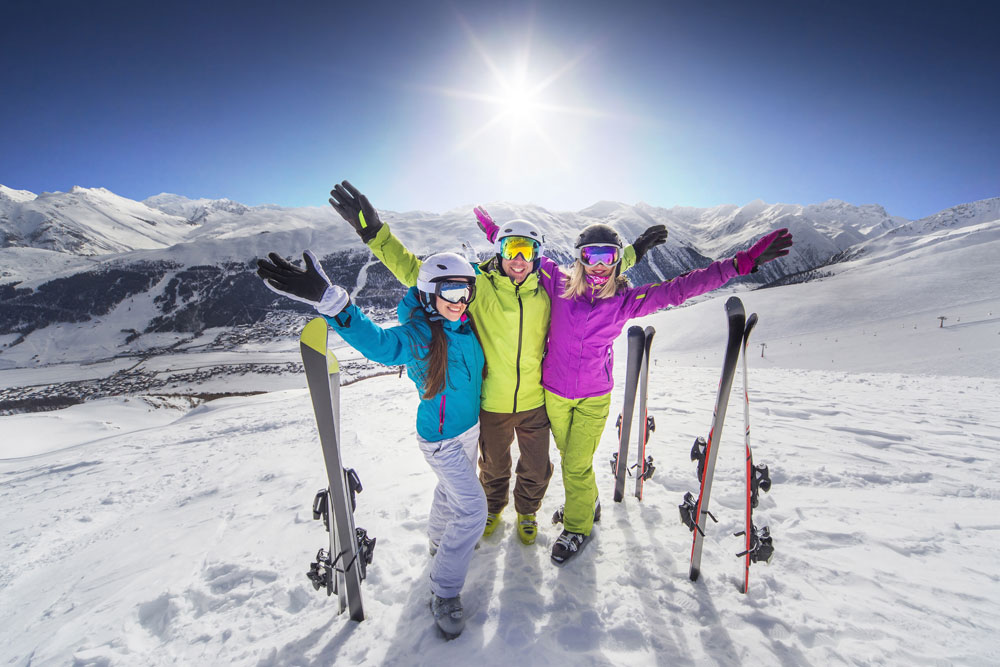
Intermediates (the sweet spot)
Intermediates do really well here because you get cruisy local laps and the option to explore the wider Grand Massif for variety.
Long route days are the big fun – and you can even ski big tours without needing blacks.
Best sunny ski slopes often sit in linked sectors on clear days.
Stay tip:
- Central for quick access to “go exploring” routes.

Advanced skiers & snow-sure seekers
Advanced skiers can find steep pitches and freeride options, plus excellent long descents across the domain.
Flaine’s off-piste zones (like Gers/Véret itineraries) can be fantastic – just treat them with respect, check forecasts, and consider a guide.
Best lift access: focus on top-of-bowl access for fast vertical.
Stay tip:
- Somewhere that makes early starts easy.

Snowboarders
Snowboarders generally like Flaine because it’s efficient, not faffy: good lift access, plenty of chair/gondola movement, and terrain that doesn’t constantly punish you with endless flats.
The beginner pass also works nicely for learning riders.
Best zones: main bowl for easy laps; linked sectors for variety.
Stay tip:
- Central for quick uplift and easy meet-ups.

Beginners (with a smart plan)
Flaine is a top-tier beginner resort: defined learning areas, beginner uplift, and loads of wide pistes that don’t feel intimidating.
The Beginner Pass is a money-saver if you’re sticking to carpets and novice lifts.
For meals, you can reach mountain restaurants without needing scary descents.
Stay tip:
- Stay central (Forum / beginner-area adjacent) for stress-free lesson mornings.

Families
Families love Flaine because it’s practical: ski school access is straightforward, learning zones are properly set up, and you can keep the daily routine simple.
Flaine also leans into family-friendly skiing (including “blue-run touring” across the area).
Apartments and ski-in/ski-out help a lot with tired legs.
Stay tip:
- Close to beginner areas/meeting points for calm mornings.

Freestyle / Terrain Parks
Flaine offers “fun zones” and freestyle-friendly areas, and the wider domain keeps things playful beyond classic piste cruising.
It’s a good place to progress because you can mix park laps with normal skiing without committing your whole day to one zone.
Coaching availability varies by provider/season, but the setup is generally welcoming rather than intimidating.
Stay tip:
- Central for quick repeat laps.
Looking to stay in Flaine?
Where is Flaine?
Flaine is in Haute-Savoie in the Northern French Alps, above the Arve Valley and within the Grand Massif ski area, with stunning views towards Mont Blanc.
It’s one of the more accessible high-altitude resorts from Geneva, which is why it’s popular for short breaks and family trips. Transfer time is typically around the 1 hour 20 minute ballpark depending on traffic and conditions. You’re also within reach of Cluses for rail connections into the valley, then a road transfer up to resort.
Looking to stay in Flaine?
Skiing in Flaine (ski area, terrain, lifts, snow)
Flaine is the sort of resort that quietly makes your life easy. The mountain layout is simple to “read” on day one, the skiing is mostly confidence-building, and the snow record is helped by its altitude and the bowl-like terrain that tends to protect conditions.
It’s also tied into the wider Grand Massif domain (Flaine, Les Carroz, Morillon, Samoëns and Sixt), so you can keep things local and convenient… or go exploring and turn it into a proper “let’s see how far we can get before lunch” kind of trip.
What you’ll notice quickly is how well Flaine caters for progression. Beginners have dedicated uplift and gentle slopes right where they need them, intermediates get long cruisers and easy day routes, and stronger skiers can hunt out steeper pitches, longer descents, and off-piste zones (with the usual mountain-common-sense safety caveats).
Lift access is generally smooth, and because accommodation is typically ski-in/ski-out across the main bases, you spend more time sliding and less time trudging.


Terrain overview
Flaine’s skiing revolves around a central bowl above the resort, with quick lifts pulling you up and runs fanning out in an intuitive, hard-to-get-lost layout.
The gentlest terrain sits closest to the village and beginner uplift, while the main cruising pistes spread across the bowl and link naturally into routes toward the wider Grand Massif. Crowds build around the main departure lifts and ski-school changeover times, especially in holiday weeks.
Want quieter? Go higher earlier for more space and longer laps, or commit to a “linked-sector” morning where you keep moving away from the obvious hubs.
One handy way to think about the map: the bowl is your home base for cruising, and the outward links are your “adventure spokes” into the rest of the area. If visibility is flat, stick to the more sheltered, lower runs and use the lifts to hop between sectors rather than grinding out long, exposed traverses.
Stay tip:
If you want easy navigation (and easy “pop home” flexibility), base yourself in central Flaine (Forum-style areas) for the simplest access.
Lifts & getting around the mountain
Across the Grand Massif you’ve got 139 marked runs and 62 lifts, which really helps people fan out when the resort is busy – you’re not all funnelling into one “main motorway” all day.
In Flaine itself, the lift network is built for fast access into that central bowl, so your day starts quickly (always a win), and you can rack up proper mileage without loads of faffy traverses.
Once you’re up, it’s pretty intuitive: do your warm-up laps in the bowl, then use the higher lifts as your “switchboard” to peel off into different sectors and link onwards into the wider area.
Peak queues are most noticeable mid-morning and around lunch – predictable rather than disastrous on most weeks – and they tend to cluster at the obvious “everybody starts here” departure points.
The best queue-avoid strategy is wonderfully dull: ski early, shift lunch by 30–45 minutes, and do repeat laps on a quieter chair when the main lines swell.
Also worth knowing: wind and flat-light days can make certain exposed uplifts feel slower (or occasionally pause), so having a Plan B loop in your pocket – a set of runs you can lap without crossing the busiest hubs – keeps the day moving nicely.
Stay tip:
Ski-in/ski-out isn’t just comfort here – it’s a time-saver. Being able to click in early buys you better snow and shorter lines.
Snow reliability & season length
Flaine’s altitude (roughly 1,600–2,500m) and its big natural bowl/cirque layout make it one of the more reliable snow bets in the Grand Massif.
In the early season, things usually knit together from the top down: the higher bowl and upper pistes tend to get going first, while lower runs can be more “depends what’s fallen this week” – totally normal for a resort with a proper vertical drop.
Come mid-winter (roughly January – early March), Flaine is often in that lovely “set it and forget it” zone: colder temps, steadier coverage, and fewer weird thaw/freeze surprises. It’s also when the bowl really pays off – storms can load it up nicely, and you’re not constantly hunting for one magic strip of snow.
In spring, Flaine can still be excellent, you just need a slightly smarter rhythm: ski early, stay higher for longer, and treat lower, sunnier pistes as “morning coffee runs” before they soften.
If it’s warm, follow the best-feeling snow rather than stubbornly sticking to your plan – firm up high, softer down low, and the sweet spot moves as the day goes on.
Windy/flat-light day? Drop a little lower and lap the more sheltered pistes until the visibility behaves.
Stay tip:
For late-season trips, pick a base that keeps your end-of-day return simple – central areas reduce the chance of a slushy “walk of doom” home.

Flaine has very tempting off-piste access straight from lift-served terrain, and the wider Grand Massif opens up proper scenic “big day” missions – including the famous 14 km Cascades descent from Grandes Platières down toward Sixt-Fer-à-Cheval. It’s worth saying out loud: Cascades itself is a marked piste (not wild backcountry), but it feels adventurous because it drops into a nature reserve and there’s nothing “resort-y” about it – no handy lunch stops, so chuck water/snacks in your pocket and don’t bank on a mid-run hot chocolate rescue.
For true off-piste beyond the marked runs, this is where holiday confidence can outpace mountain reality. Flaine has pockets of terrain that look friendly from the lift… then suddenly you’re dealing with rollovers, loaded aspects, and (very specifically here) limestone lapiaz zones where crevices can be hidden under snow like trapdoors.
Do the boring-but-smart things: check the Météo-France avalanche bulletin (BRA/BERA) before you go, carry the right safety kit (and actually know how to use it), and if you’re not 100% on snowpack + route choice, hire a qualified guide – local guiding days are very much a thing in Flaine for exactly this reason.
Stay tip:
If freeride days matter to you, stay close to main lift departures so you can start early (early often means better snow and clearer decision-making).
Beginners & improvers
Flaine is genuinely beginner-friendly, and it doesn’t just say it – it backs it up with free beginner uplift so you can get sliding without immediately buying a full-area pass. There are four free lifts (the Pré, Bissac and Michalet magic carpets, plus the Flaine Forum télébenne), which is ideal for first-timers who want lots of short, low-stress repetitions.
Once you’re ready to venture beyond the nursery zone, the Beginner Pass is a smart budget step-up: it’s valid on a specific set of lifts (including Ballacha, Forêt, the Gérats chairlifts, the Pré/Michalet/Bissac carpets, and the Télébenne) so you’re not paying for terrain you won’t use yet.
Improvers do really well here because the jump from green to blue feels… friendly. The pistes are generally roomy, gradients are forgiving, and the bowl layout makes it easy to repeat the same “confidence builder” laps without getting lost or accidentally ending up somewhere spicy.
The only “watch it” is traffic on the easiest runs at ski-school changeovers – if it feels busy, just slide your timing a bit (start earlier, or take a hot chocolate break when everyone else is moving).
Stay tip:
If lessons are key, aim to be near the main beginner meeting areas (Flaine runs meeting points across levels like Forum and Forêt) so mornings start calm instead of chaotic.
Freestyle & “more than pistes”
Flaine is good at giving you “extras” without making you trek halfway across the mountain for them. The resort has multiple fun zones and freestyle-friendly spaces, and the nice bit is you can properly dip in and out: do a few playful laps, then go straight back to cruising without wasting half your day on logistics.
On the mountain, the highlights are clearly signposted: Ze Quartz Park sits on the Émeraude run, there’s a Funny Slope beneath the Grands Vans chairlift, plus boardercross runs and the Urban’z freestyle zone with jumps/modules for people who want to practice features.
That mix works brilliantly for mixed groups – the “feature hunters” can lap the fun zones, the “I’m here to cruise and vibe” crew can loop pistes nearby, and you can still meet for lunch without turning it into a summit meeting.
A small reality check: parks and fun zones are way more enjoyable when you’re not doing them cold and rattly. Do one warm-up lap first, then go in when your legs are awake – you’ll progress faster and fall less dramatically (a win-win). If it’s busy, hit the fun zones earlier in the day, then switch to quieter chair laps once everyone else clocks on.
Stay tip:
If you want maximum tries and fast progress, being quick onto the main uplift helps – short lift cycles = more laps = more learning (and more fun).
Best Runs in Flaine (by ability)
For beginners:
Start close to the beginner areas and build confidence on gentle runs before extending your range.
Use the beginner uplift network first (the Pré area + the Télébenne link), then graduate onto longer, friendly greens like Pin, Épicéa and Mélèze where you can practise turns without feeling rushed.
If you’re on the Beginner Pass, stick to the lifts/carpets it covers (and keep your laps on the easy stuff) so you’re not paying for terrain you won’t use yet.
For intermediates:
Intermediates should plan at least one “big journey” day – the Grand Massif is made for it.
Make Cascades (14 km) a goal if your stamina is decent; it’s a proper scenic reward and one of the area’s calling cards.
For classic Flaine cruising, lap the bowl on long confidence-boosters like Serpentine, Cristal and Tourmaline, then spice it up with a few reds like Faust or Méphisto when you fancy something punchier.
For advanced:
Advanced skiers should hunt steeper pitches, ungroomed options and itineraries, and use Flaine’s top access to stack vertical efficiently.
The headline tests are the blacks like Diamant Noir and Agate, plus steeper/faster laps off the upper lifts where you can keep the legs working.
For “bigger day” variety, head out across the domain rather than expecting endless steepness right above resort – Flaine’s strength is mixing proper top-end runs with huge mileage options. Off-piste can be excellent, but conditions change fast – treat it seriously.
Off-piste note:
Flaine/Grand Massif can be properly rewarding – the classic is the Gers bowl, with the black Onyx line shown down the middle. Up high around Grandes Platières, you’ll also see tempting “off-the-side” terrain near Grand Chaudron / Combe de Véret – but this is exactly where people get lulled into thinking it’s tame just because it’s lift-accessed. Watch for lapiaz/limestone areas shown on the map – not somewhere you want to freestyle your way into after fresh snow.
Looking to stay in Flaine?
Looking for accommodation in Flaine
Flaine’s accommodation is spread across several bases/levels, and the good news is: you’re rarely far from skiing.
The real difference is convenience: how close you are to ski school, rentals, supermarkets, and your preferred après vibe.
Because Flaine is largely designed around ski access, you can choose a base that matches your routine rather than worrying about commuting every morning.
If you like being in the middle of everything, stay central. If you want quieter nights and often better value, look at the slightly higher/quieter bases. Families usually do best near beginner meeting points. Groups who care about après do best where they can walk home without thinking.
Quick chooser: which area is right for you?
- If you want the easiest “first trip” experience, stay central near lifts, rentals and ski school meeting points.
- If your priority is quiet nights and fast first tracks, choose a calmer base where ski-in/ski-out is strongest and foot traffic is lower.
- If you’re travelling with kids, being close to beginner zones is a holiday-saver – less carrying, less stress, fewer meltdowns.
- If budget matters, look for areas that offer better-value apartments but still keep you well connected by resort movement. Flaine is one of those resorts where a smart base choice doesn’t just save money – it saves energy every day.
Village Comparison Table
| Area / Base | Altitude | Vibe | Best For | Nightlife | Beginner-Friendly | Access / Getting Around |
|---|---|---|---|---|---|---|
| Central hub (Forum-style) | 1,600m | Busy-ish, convenient | First-timers, groups | ★★★★ | ★★★★ | Walkable services + easiest lift access |
| Quieter residential (Forêt-style) | 1,700m | Calm, better value | Budget + sleep | ★★ | ★★★★ | Easy links, less bustle |
| Higher ski-focused (Montsoleil-style) | 1,750m | Peaceful, ski-first | Ski-in/out lovers | ★★ | ★★★ | Strong ski access, fewer shops |
| Beginner-adjacent (Front de Neige-style) | 1,600m | Practical, family-friendly | Families + learners | ★★ | ★★★★★ | Close to beginner zones |
(Star ratings are “relative vibe” rather than gospel)
Best Area for First-Timers
Pick the central hub – Flaine Forum – if it’s your first time. It’s the most forgiving base because everything is close: lift departures, rentals, ski-school meet-ups, food options, and the essential “we forgot sunscreen / snacks / gloves” shops.
Flaine is built on different levels (Front de Neige, Forum, Forêt, Les Gérats), and Forum is the one that feels like the natural “town centre” you’ll keep drifting back to.
It also makes group logistics way less annoying: if your lot splits by ability, meeting up is easy because people naturally pass through the middle at some point.
And if you’re learning, having a short hop back to your place is a genuine confidence boost – warm toes, quick regroup, back out again without turning it into an expedition.
Bonus: getting between Forum and Forêt is generally straightforward thanks to the resort’s pedestrian links (so you’re not always trudging up and down like you’re training for a charity hike).
Stay tip:
Prioritise Forum + close to lifts over “fancier but further” – your first trip goes way better when mornings are simple.
Best Area for Ski-in Ski-out
For the most consistent ski-in/ski-out rhythm, look higher and more ski-focused – Flaine Montsoleil and the quieter upper bases (with Hameau de Flaine being the “out-of-the-way but lovely” option).
The biggest win is flow: you clip in, you’re skiing, you’re lapping. It feels less like you’re commuting to start your day and more like the mountain is literally outside your front door.
Montsoleil was built between the original resort and the Hameau, and it’s designed around that ski-first convenience.
This setup suits confident skiers/riders (or keen intermediates) who care more about mountain time than being next door to every shop and bar.
The trade-off is evenings can feel a bit more “residential” – quieter streets, fewer casual pop-in options – which is either mildly annoying… or exactly what you wanted after a big day.
If you’re in the Hameau/upper zones, you’ll typically lean on the free shuttle links when you want to dip into the centre.
Stay tip:
If ski-in/ski-out is the whole point, choose somewhere where you can ski back close to your building (not “near-ish”) – it’s the difference between effortless and faff.
Best Area for Nightlife
If nightlife matters, go central (Forum).
Flaine isn’t a mega-party resort, so the main advantage is being able to keep things easy and spontaneous: you can do après, roll into dinner, decide on “one more,” and still walk home without taxis, buses, or icy-path negotiations.
Central also gives you the widest choice of bars and restaurants, which helps when your group starts doing that thing where everyone’s hungry but nobody can choose a place.
It’s also just nicer at night: the centre has that “people are around, lights are on, you can wing it” energy, whereas higher bases can feel very quiet once skiing is done.
And if you do end up staying slightly above in Forêt, you’re still well connected to the hub via the resort’s pedestrian links between levels – so you get a calmer base without fully sacrificing the ability to actually go out.
Stay tip:
Pick somewhere you can get back to on foot in normal shoes in 5–10 minutes – that’s the sweet spot for “fun night” without “logistics meeting.”
Best Area for Families
Families should prioritise proximity to beginner zones and lesson meeting points, because the goal is simple: calmer mornings and fewer “carry everything” moments.
In Flaine, being central (Forum) or sensibly placed near the lower access points (Front de Neige) helps you avoid the daily boot-stomp, and it makes it much easier to pop back if someone’s gloves mysteriously vanish (they will).
Flaine’s layout across levels is great once you know it – but with kids, fewer level-changes before 9:30am is always the win.
Quieter, more residential bases can be brilliant for families too: less late-night noise, easier early nights, and a bit more “home base” vibe.
The key is making sure you’re not making every ski day start with a trek or a shuttle queue – children do not appreciate your commitment to “characterful walks.”
If you’ve got mixed ages/abilities, central also makes regrouping simple when one person wants more runs and another wants a hot chocolate and a sit-down.
Stay tip:
Choose accommodation with easy lift access + space to kit up (boot room/storage) – mornings are smoother when you’re not playing Tetris with helmets in a tiny hallway.
Best Area for Budget Travellers
Budget travellers usually get best value in the quieter residential bases – Flaine Foret is a classic shout – where apartments can price better while still keeping you well connected to the centre.
Flaine’s accommodation scene leans heavily toward apartments and self-catering, which is great for keeping costs under control if you’re even mildly organised with food.
The real savings come from avoiding taxis and doing a simple plan: a proper supermarket shop early on, easy breakfasts, and a couple of “eat in” nights mixed with a couple of “proper holiday dinner” nights.
You still feel like you’re on a ski trip, you just don’t haemorrhage money on snacks and convenience meals every single day.
If you go even quieter/outskirt-y (upper areas like the Hameau), the accommodation can feel like better “space-for-money,” but make sure you’re happy using the resort links/shuttles to get around.
Stay tip:
Pick a place with a kitchen you’ll actually use (oven/hob, decent fridge) – that’s where Flaine budget trips quietly win.
Our Top Hotels

★★★
- Village in central Flaine Forêt
- Lifts - around 2 mins walk
- Wellness area
The Grand Vans chairlift and the ski school meeting point are about a minute away, and you’re in Flaine Forêt where everything feels compact and practical .
These are self-catering apartments, so they work well for families. The bonus is that you still get wellness bits and a location that feels genuinely slope-focused.
Why choose it? You’re basically paying for less hassle – and in week one, that’s money well spent.

★★★★★
- Village on the quiet Montsoleil edge
- Lifts - ski-in/out
- Pool + Deep Nature spa
Up in Montsoleil and set a little back from central Flaine, it has the more peaceful, cocooned feel that works brilliantly for couples, wellness-first travellers and families.
The selling point is that it still keeps skiing easy: ski-in/ski-out access, children’s ski school nearby, shuttle links into the centre, and strong spa credentials.
Why choose it? Quiet, classy, ski-friendly – basically Flaine with its shoulders dropped.

★★★★
- Village about 1 min walk from central Flaine
- Lifts - around 2–3 mins walk
- Pool + spa
It’s near the slopes, next to the town centre, and has enough entertainment on site to keep kids, teens and slightly overgrown adults happily occupied.
The mood is fun rather than posh, but the facilities are strong: pool, spa, children’s play areas, live music in the bar, games rooms and a few dining options.
Why choose it? It makes the week feel easy and lively without tipping into chaos.

★★★
- Village about 2 mins walk from central Flaine Forêt
- Lifts - around 150–200m
- Pool + sauna + outdoor jacuzzi
You’re in Flaine Forêt, close to the centre, close to lifts, and you get apartment practicality with a pool and sauna setup that stops it feeling too bare-bones.
The location helps a lot: restaurants are close, the supermarket isn’t far, and when snow is good you can often make the ski-return feel even easier.
Why choose it? Good-value Flaine without the usual “cheap and a pain” compromise.
Tour Operators who go here
Looking to stay in Flaine?
Après ski, restaurants & winter activities
Flaine’s village life is geared around skiing convenience. It’s functional, easy to navigate, and designed so you can spend your day on the mountain rather than doing logistics.
The upside is you get a calm rhythm: ski, lunch, ski, après, dinner – without the “how do we get there?” drama.
The resort is also well placed for big scenic experiences, including the 360° viewpoint at Grandes Platières (also accessible to pedestrians via the cable car), which is a lovely option for non-skiers or rest days.
Après here is sociable rather than feral. You’ll find terrace drinks, music, and friendly spots to unwind, but Flaine isn’t trying to out-party the headline party resorts.
Food is classic Alpine fuel: warming, filling, and exactly what you want after a big day.
Non-ski activities in Flaine are enough to keep mixed groups entertained, and getting “home” is generally simple because the resort design prioritises easy movement around the bases.

Apres ski in Flaine is more “sunny terrace and good chat” than “DJ-on-a-table chaos,” but you’ve still got a solid little circuit if you know where to point your skis.
The classic starting point is La Pente à Jules – it’s lively, it’s slope-adjacent, and it’s got that end-of-day “one drink turns into… three” energy (often with DJ sets).
If you want a pubby, easy-going vibe later on, Le White Pub is the dependable choice – proper après atmosphere, beer options, and it’s regularly flagged as one of the main evening hubs in resort.
For something that can feel a bit more “local bar meets holiday crowd,” add Brasserie Les Cimes into the mix (central and sociable), and if you’re over in Forêt, Le Diamant Noir is another popular stop for a drink and some atmosphere. If your group likes a “pub games / keep-it-lively” style place, The Flying Dutchman is often mentioned as one of the liveliest bars, and Les Caves is the late-night option when someone inevitably says, “We’re not done yet.”
And for a curveball that works for families and groups, Galaxy Bowling is a genuinely fun evening option with drinks, games and that “we’re still socialising but not committing to a full night out” vibe.
Mountain‑top Moments
Mountain food in Flaine is exactly what you want mid-ski-day: hearty, warming, and designed to get your energy back up without fuss.
A proper “bookmark this” lunch spot is La Pente à Jules – it’s not just an après place, it’s also a great refuel stop, and it’s known for being the kind of terrace where you plan to stay 40 minutes and somehow it becomes two hours.
For big views (and a very “this is why we came to the Alps” moment), head up to the top of the Grandes Platières area where you’ll find Le Désert Blanc. It’s accessible via the Grandes Platières cable car and works brilliantly for a scenic lunch – especially if the weather is clear and you want to linger with a coffee while staring at mountains like you’re in a postcard.
Back closer to the village ski-back zone, you’ve also got easy-to-reach options that work well when the weather turns or the group is hungry now. Places like L’Éloge are conveniently located at the bottom of the slopes near the Grandes Platières area, making it a handy “quick but still nice” stop when you don’t want to waste prime snow time searching for a table.

Village food in Flaine is all about easy, satisfying meals that hit the spot after a full day outside.
If you want something with proper Alpine character, Le Michet is a great shout – it’s a historic chalet-style restaurant with that cosy “wood beams + fireplace energy” that feels especially good when your cheeks are still wind-chilled from the slopes.
For central, straightforward dining right in the resort hub, Chez Daniel is a solid go-to – it’s in Flaine Forum and is a proper restaurant (not just a quick bite), which makes it handy for an easy evening plan when the group can’t agree on anything.
Up in Flaine Forêt, La Perdrix Noire is another good option for a sit-down dinner, officially classed as a traditional restaurant and handy if you’re staying higher up the resort. It gives you another proper dinner choice without having to trek across Flaine in ski boots pretending that counts as après exercise.
You’ve also got spots like Brasserie Les Cimes, which is very well located near the Tourist Office and on the way toward the Grandes Platières cable car – so it’s a convenient “let’s eat without trekking” option that suits mixed groups.
If your night is more “beer, burgers, and something lively,” Le White Pub can double up as an easy casual choice (and it’s also where people naturally drift later on for a drink).
And if you want a “don’t overthink it” approach for a week: mix a couple of self-cater nights (Flaine is pretty friendly for that), then pick two or three “proper dinner” evenings at places like the above so it still feels like a holiday, not just feeding time.
Flaine is strong for mixed groups because you can genuinely fill a rest day without it feeling like you’re just killing time.
Yes, you’ve got the obvious stuff (scenic uplift/viewpoint moments, wellness downtime, easy family-friendly bits), but Flaine’s properly good at the “non-skiers can do their own thing” side of the holiday.
A big reason is how pedestrian and level-based the resort is – you can bounce between Forum/Forêt/Front de Neige on foot, via pedestrian routes, outdoor lifts, and free shuttles, so nobody needs to trek miles or plan like it’s a military operation.
And then there’s the very-Flaine flex: it’s basically an open-air art + architecture museum in ski resort form. The resort’s heritage setup spotlights Marcel Breuer’s design, plus monumental works like Dubuffet’s “Le Boqueteau”, Picasso’s “Tête de Femme” and Vasarely’s “Les Trois Hexagones” – and the Art Centre even runs free guided heritage tours.
For “do something, not just wander” days, Flaine also leans into fun extras: there’s ice skating, plus ice driving experiences and even quad biking on ice for a properly different afternoon.
If your vibe is more “recover and reset”, you’ve got a proper aquatic centre and a whole menu of spas for that post-ski (or non-ski) glow-up.

Getting home safely & easily
Getting back after dinner or après in Flaine is usually pretty painless – mainly because the resort is built for short hops between bases, not “15-minute taxi debates in ski boots.”
Flaine’s centres sit on different levels (Forum / Forêt / Front de Neige etc.), and the good news is they’re linked by pedestrian routes and inter-level connections, so you’re not trudging up a mountain road in the dark like it’s some kind of character-building exercise.
If you’re staying central (Forum / Front de Neige), you’ve basically won the “easy evenings” lottery. Most bars and restaurants are a quick walk away, and you can wander home when you’re done – no planning, no timing it, no “who’s sober enough to navigate?” admin. It’s the best setup if your group likes a spontaneous drink that turns into another drink.
If you’re based a little higher or quieter (think Forêt / Montsoleil / Hameau-style areas), evenings still work – they’re just slightly more “be aware of the route” than “float home.” You’ll typically use the pedestrian links to drop back to your level, and if you’ve gone full ‘late one’, you may be relying more on a shuttle/taxi vibe depending on where you’re sleeping.

Ski schools & learning zones
Flaine is set up in a learner-friendly way, which makes skiing and snowboarding lessons feel less stressful than in many big resorts.
The learning zones are properly defined, beginner uplift is available, and progression from “first turns” to “I can do this blue” feels a natural ski experience.
Flaine also offers a dedicated Beginner Pass for the beginners’ area lifts and carpets – a really practical way to keep costs sensible while you’re learning.
Guiding matters most if you plan to go off-piste or want a local to show you the best routes and timing (especially on tricky visibility days).
For families, the biggest value is often not just teaching – it’s reducing morning chaos and keeping confidence high.

Beginner areas in Flaine are properly supported – you’ve got four free lifts right in resort (Pré, Bissac and Michalet magic carpets, plus the Flaine Forum Télébenne), so day-one skiers can repeat the basics without immediately buying a big lift pass.
That’s a massive confidence boost because you can do short, low-stress laps and build muscle memory without the “we’ve paid loads so we must go far” pressure.
On top of that, there’s a defined “beginners’ network” that keeps things calm and predictable: start on the carpets, then level up in sensible steps rather than accidentally dropping into “why is this steeper than it looked on the map?” territory.
The Beginner Pass is valid on a specific list of lifts/carpets – Ballacha, Forêt, the Gérats chairlifts, plus Pré/Michalet/Bissac and Télébenne – which is ideal because you’re not paying for terrain you’re not ready to use yet.
If you’re brand new, that structure is gold: fewer choices, less confusion, more repetition – and repetition is what turns “survival turns” into “oh… I can actually ski.”
One small rhythm tip: beginner areas feel calmest early, then get busier around lesson changeovers, so if it’s crowded, take a breather and come back when it thins out.
If lessons are central to your trip, staying close to the main meeting areas and beginner zones is the easiest way to upgrade your week.
Flaine is split across levels (Forum / Forêt / Front de Neige / Les Gérats) and they’re linked by pedestrian routes and outdoor lifts, but being near the action still turns “morning chaos” into “we’re early and calm.” And when you’re learning, starting the day calm is basically half the battle.
It also makes all the little daily admin easier: rentals, last-minute snacks, toilet stops, and the inevitable “we forgot a glove” problems. If you’re travelling with kids, this one decision can be the difference between a smooth week and a daily stress-fest – fewer long stomps in ski boots, fewer carry-everything missions, more actual energy for the lesson itself.
One extra smart move: check where your ski school meets and aim to base nearby. For example, if your meet-up is around Forêt / Bissac, being in that zone can save you a surprising amount of faff.
Flaine makes getting to lessons easier than loads of resorts because it’s designed around those connected bases – Forum, Forêt and Front de Neige are quick to move between via pedestrian routes and outdoor lifts.
You’re rarely battling a long road walk or complicated bus plan, which is a quiet but huge win for first-timers.
Still: do a quick “practice walk” the day before your first lesson so you’re not hunting a meeting point at 8:55am.
If your lesson meet-up is in Forêt (e.g., near Bissac), factor in the level change and the classic faff time: boots, helmets, a quick loo stop, and the one person who suddenly can’t find their pass.
If you’ve got kit hire in the morning, build in even more buffer – queues + fitting boots is the classic lesson-start sabotage.
If you’re staying in a higher/quieter base, give yourself that extra 10 minutes and treat it like airport logic: arrive early, breathe, then start the lesson warm and ready.
The aim is to begin in “I’m learning” mode – not “sorry, sorry, sorry” mode (in front of a group of terrifyingly efficient French 6-year-olds).
Looking to stay in Flaine?

Lift passes, costs & budgeting
Lift passes in Flaine are fairly simple: you’ve basically got the Flaine pass for skiing locally, the Grand Massif pass for the wider linked area, and a Beginner Pass for first-timers.
For a lot of people, the local Flaine pass is absolutely enough. If you’re mainly skiing the bowl, building confidence, or just want a straightforward week without route-planning homework, it does the job nicely.
If you’re the type who wants variety, linked-area mileage and at least one proper exploring day, that’s where the Grand Massif pass starts to make sense.
And if you’re learning? Don’t pay for a huge domain while you’re still mastering stopping and turning. The Beginner Pass exists for a reason.
Which ski pass should you buy in Flaine?
Think of it like this: buy the pass that matches your days 1–2, not the imaginary version of you who might be lapping glacier reds by Thursday.
Option A - Flaine Pass (local)
Best for: most short breaks, steady improvers, families, and anyone happy skiing Flaine itself.
What you’ll actually use it for: cruising the Flaine bowl, repeating favourite runs, and keeping the week simple.
Why you’ll like it: it gives you plenty of skiing without paying extra for terrain you may not actually use.
Plain English: This is the “keep it simple and ski Flaine properly” pass.
Option B - Grand Massif Ski Pass (linked area)
Best for: confident intermediates and above, or anyone who wants bigger route days and more variety.
What you’ll actually use it for: linking out beyond Flaine into the wider Grand Massif and keeping the week feeling fresh.
Why you’ll like it: it’s the better choice if you know you’ll genuinely explore rather than just talk about it over breakfast.
Plain English: This is the “big area, bigger adventures” pass.
Option C - Beginner Pass
Best for: first-timers and early-stage learners.
What you’ll actually use it for: the beginner lifts and learning area, without paying full-mountain prices too soon.
Why you’ll like it: it’s cheaper, calmer, and makes much more sense for day one or two than buying a full-area pass you won’t use properly.
Plain English: This is the “learn smart, spend less” pass.
Flaine lift pass prices 2026/27
Here are the published headline prices for Flaine Winter 2026/27 (prices shown in EUR):
| Flaine Pass (local) | Adult | Child | Senior |
|---|---|---|---|
| Half day (4 hours) | €54.60 | €43.70 | FREE |
| 1 day | €60.70 | €48.60 | FREE |
| 6 days | €364.20 | €291.60 | €29.00 |
| 7 days | €424.90 | €340.20 | €29.00 |
| Grand Massif Pass (linked area) | Adult | Child | Senior |
|---|---|---|---|
| Half day (4 hours) | €56.70 | €45.40 | FREE |
| 1 day | €63.00 | €50.40 | FREE |
| 6 days | €378.00 | €304.40 | €29.00 |
| 7 days | €441.00 | €352.80 | €29.00 |
| Flaine Beginner Pass | Adult | Child |
|---|---|---|
| Half day (4 hours) | €27.50 | €22.00 |
| 1 day | €30.50 | €24.40 |
Deposits, insurance, and when to buy
Here’s how to do Flaine like someone who hates queues and hates wasting money:
Ski-card/keycard: Your ski pass is loaded onto a rechargeable ski card costing €2, and that card is non-refundable.
Insurance: Optional My Ski Insurance is €3.60 per person, per day. Check the details on your own winter sports insurance before travelling.
The simplest budgeting tip is this: buy online where you can, use the self-service pick-up machines, and don’t automatically pay for Grand Massif unless you know you’ll use it. If you’re mainly skiing Flaine, stick with Flaine. If you’re learning, start with the Beginner Pass and save yourself some very unnecessary spend.
Looking to stay in Flaine?
Common Flaine Ski Holiday Mistakes
Flaine is designed to make ski holidays wonderfully straightforward, but a few common mistakes can still leave you staying in the wrong part of resort, spending more than necessary or making the wider Grand Massif harder work than it needs to be.
Buying the biggest pass “just in case”
It’s so tempting to go straight for the full Grand Massif pass, then spend most of the week lapping local terrain because the group is learning, tired, or just happy where they are.
Flaine is big enough locally to keep most people busy, and the Beginner Pass/local pass can save real money. Start with what you’ll actually ski in the first couple of days, then upgrade if you’re genuinely itching to roam.
Picking accommodation that’s awkward for lesson routines
Flaine is convenient, but lesson logistics still matter. If you’re doing ski school (especially with kids), being close to meeting points is a holiday-maker.
Otherwise your mornings become a daily shuffle: boots, rentals, walking, shuttles, late arrivals, frazzled energy – and nobody learns well when they’re stressed. Choose a base that matches your routine, not just your budget.
Treating off-piste like it’s “just piste with fluff
Flaine has tempting off-piste access and excellent freeride potential, but risk changes quickly with weather, wind and visibility. If you’re leaving marked runs, do the sensible stuff: check avalanche info, carry the right kit, and ideally go with a qualified guide if you’re not fully confident in route choice. The best powder day is the one where everyone gets home safe.
Skiing the same few runs all week
The Grand Massif is one of Flaine’s biggest perks, but people sometimes never leave the local bowl because it’s easy and familiar. Even one or two planned “explore days” can make your holiday feel twice as big.
You don’t need to be an expert – the area is designed so families and intermediates can tour too. And if you make Cascades your “big scenic mission,” you’ll remember it.
Skiing and eating at exactly the same times as everyone else
Queues and crowded restaurants are usually a timing problem more than a resort problem. If you hit lifts at peak ski-school start time and eat lunch at noon sharp, you’ll stand around more than you need to.
Ski early, shift lunch by 30–45 minutes, and do repeat laps on quieter lifts when the main departures swell. It’s the easiest way to make Flaine feel calmer.
Getting to Flaine
Getting to Flaine is relatively straightforward, with Geneva providing the quickest airport access and good road and transfer links into the resort. Whether you’re flying, driving or arriving by train, here’s everything you need to know.
1) Fly + road transfer
(the “land, grab skis, go” option - and the most common)
Geneva (GVA) is the obvious airport for Flaine, and a big part of why it’s so popular for short breaks.
The journey is mostly motorway, then you’ve got the classic final climb from the valley up to resort – straightforward in good weather, slower when it’s snowing or it’s peak changeover day.
Rough timing guide (good conditions):
- Geneva Airport (GVA) → Flaine: 1 hour 20 minutes – 1 hour 45 minutes
- Cluses (valley) → Flaine: 30–40 minutes (this is the “last climb” timing)
Once you arrive, Flaine is set up to be car-light: the centre is pedestrian and you’ve got free resort shuttles linking levels, so you’re not spending your holiday “driving around the resort.”
Real-world tip: on Saturdays/holiday weeks, assume the last 30 minutes can double – book a transfer with a clear drop-off point (Forum/Forêt/Hameau), and pad your ETA so you’re not sprinting into ski hire at closing time.
2) Train to Cluses + bus/taxi up
(the “car-free but still doable with skis” choice)
Cluses is the main valley rail gateway – close enough to Flaine that the last leg is a quick hop, but far enough that you’ll want it pre-planned.
From Cluses station you can go bus (Altibus connections), taxi, or private transfer, and several stops in Flaine are served so you can line it up with where you’re staying.
Rough timing guide (good conditions):
- Geneva Cornavin → Cluses (train): 1 hour 15 minutes – 1 hour 45 minutes (service-dependent)
- Cluses station → Flaine (road leg): 30–40 minutes
Arrive in Flaine and you’ll mostly switch to “walk + ski + shuttles” mode – it’s designed to move between levels without needing a car.
Real-world tip: if you’re arriving late, don’t wing it – book the Cluses → Flaine leg in advance (bus seats/taxis can vanish in peak weeks), and choose accommodation where the final 200 metres isn’t an uphill ice rink with luggage.
3) Driving to Flaine
(flexible, but mind winter kit + parking rules)
Driving is pretty painless by Alps standards… right up until the final climb, where winter rules apply. The official approach is: A40 motorway → exit 19 (Cluses Centre), then follow signs via N205 briefly and onto D106 toward Flaine / Les Carroz for the mountain road up. From the point you join the D106, you’re typically around 30–40 minutes from resort.
Rough timing guide (good conditions):
- Geneva → Flaine: 1 hour 20 minutes – 1 hour 45 minutes
- A40 exit 19 (Cluses) → Flaine: 30–40 minutes
Parking is organised by resort level: car parks at P1 (Front de Neige), P2 (Forum), P3 (Forêt), plus a free option at Col de Pierre Carrée with a free shuttle connection. In winter, the main car parks are paid, and Flaine’s centre is pedestrian – you unload, park, then live the “walk/shuttle” life.
Real-world tip: have an unloading plan before you arrive (screenshots of residence instructions + which car park you’re using). Nothing ruins the first hour faster than doing confused loops of the levels while everyone’s hungry.
Getting around once you’re there (easy… with one tiny “different levels” reality check)
Walking + resort links (your default setting - if you’re central)
Flaine is designed around short connections, not long commutes. If you’re based centrally (Forum / Front de Neige-ish), most of what you need - lifts, ski hire, lesson meet-ups, supermarkets and dinner - is a quick wander away. The only thing to clock is that Flaine is built on several levels, so “five minutes away” can sometimes mean “five minutes + an escalator/outdoor lift link” rather than a flat stroll.
Free resort shuttles + inter-base connections (your secret weapon for tired legs and tired kids)
If you’re staying a bit higher/quieter (Forêt / Montsoleil / Hameau-style), the resort links do the heavy lifting. Flaine has free shuttles and internal connections that help you hop between bases without turning it into a boot-stomp mission - especially handy at the start/end of the day. It also makes mixed-ability meet-ups easier, because people naturally funnel through the central service/lift areas.
Taxis + late-night reality (for getting home after dinner or when you can’t be bothered)
Late night in Flaine is more “small resort practical” than “city abundant.” You can get taxis, but it’s not a constant stream - so if you’re staying out of the centre and you know you’ll want a lift home after dinner/après, book ahead and you’ll feel wildly organised. Flaine is built so you can arrive, park the transport thoughts, and just… holiday.
Ready to make your piste dreams a reality?
Whether you’re scouting dreamy hotels, comparing the best tour operators or looking for fresh ski inspiration, we’re here to help you turn ideas into an actual holiday.
Take the next step by browsing hotels in this resort, choosing a trusted ski tour operator or signing up to our newsletter for destination ideas, practical advice and the latest tips delivered straight to your inbox. From finding the right place to stay to choosing the best way to book, we’ve got plenty to help you plan with confidence. Pick your next move and let the adventure begin.
Looking for more inspiration?
Sign up to our free newsletter

Ready to book your stay?
Take a look at our hotel guide and see what suits your requirements and budget
Tour operators
For more from our tour operators click the logos above
Flaine FAQs
Whether you’re visiting Flaine for the first time or heading back for another trip, these FAQs should help answer the most common questions before you book and before you travel.
Is Flaine good for beginners?
Yes – it’s one of Flaine’s biggest strengths. There are beginners’ zones with free lifts, and a dedicated Beginner Pass that covers specific beginner lifts/carpets, so you’re not paying for terrain you’re not using yet.
The resort layout also helps: easy learning terrain close to base, then natural progression onto longer, wider pistes. Base choice matters: stay near meeting points if lessons are central.
Is Flaine snow-sure?
Flaine’s official altitude range is 1,600–2,500m, which helps it hold snow well in the Northern Alps. Official dates list opening 6th Dec 2025 and closing 19th Apr 2026 (early days snow-dependent).
January-early March is usually the most consistently wintry, while spring can be great with early starts.
Is Flaine good for intermediates?
Absolutely. Intermediates get lots of cruisy local skiing plus the option to tour the wider Grand Massif.
It’s ideal for “mileage without misery,” and you can plan fun route days without needing to be an expert. The area even supports touring on easier runs, which is great for mixed groups.
Is it snowboard-friendly?
Generally, yes. The resort is built around efficient uplift and ski access, and the Beginner Pass helps newer riders build confidence on a defined network.
Staying ski-in/ski-out reduces carrying/boot-walking, which snowboarders always appreciate.
Should I buy Flaine-only or Grand Massif passes?
If you’re learning, cautious, or short on time, Flaine-only (or Beginner Pass) is often perfect.
If you’re staying longer and love variety, Grand Massif makes the area feel properly big. Official pricing shows both local and area options with multi-day rates (see our lift pass prices above). Start with what you’ll actually use, then upgrade if needed.
How much are lift passes?
Official Flaine pricing shows 1 day €60.70 adult / €43.70 child (8–14) and 4 hours €54.60 adult / €43.70 child; Beginner Pass 1 day €30.50 adult / €24.40 child. Under 8s and 75+ can get free day skiing at the ticket office with proof of age.
Do I need to pay for a ski card?
Yes, but how depends on where you buy. Official terms state the ski-card is free for online bookings and typically €2 at cash desks/vending machines; it’s rechargeable and non-refundable. Buy online if you can – it’s usually smoother and cheaper.
Is Flaine good for families?
Yes. Flaine’s learner-friendly setup, easy movement around resort, and family-friendly touring options make it a strong choice.
The biggest family “hack” is staying close to lesson meeting points and beginner zones so mornings are calm and everything feels manageable.
Is Flaine a party resort?
Not really – it’s more “friendly après” than “club till 3am.” If you want livelier evenings, stay central so you can walk to bars and restaurants easily. If you want quiet nights and early lifts, pick a calmer base. Flaine is best when your priority is skiing well and enjoying relaxed evenings.
What’s the #1 Flaine tip?
Choose your base for your routine. Lessons and families: stay near beginner meeting points. Après fans: stay central so you can walk home. Ski-obsessed early starters: choose quieter ski-in/ski-out bases. Flaine rewards smart logistics – and when your logistics are easy, the whole holiday feels better.