


Cortina gives you multiple ski areas, dramatic Dolomite scenery and some of the most stylish mountain stops in Italy. It’s the ski resort equivalent of turning up in technical gear and somehow ending the day at aperitivo looking vaguely glamorous - with long lunches, serious views and just enough sporty bite to stop the whole thing feeling like a very pretty photo shoot.
This guide was written by Michelle Wheeler
Cortina d’Ampezzo ski resort at a glance
Cortina d’Ampezzo is a glam-but-legit ski town in Italy’s Dolomites: proper mountain drama, Olympic heritage, and a “let’s do aperitivo properly” attitude that quietly ruins other resorts for you.
It sits in Veneto’s Ampezzo Valley and feels like a real place (shops, cafés, people living life), not a purpose-built ski dorm.
Skiing-wise, you’re looking at a base around 1,224m and lift-served highs up to 3,244m via the Tofana cableways. The local Cortina network has 120 km of slopes served by 34 ski lifts, with the option to go bigger via Dolomiti Superski if you want full “endless Dolomites” energy.
Transfers are reassuringly doable: Venice Marco Polo is a classic gateway and the bus/drive is typically around 2 hours depending on weather and traffic.

Altitude
1,224 m - 3,244 m
Pistes
120 km
Ski Season 26/27
28 Nov - 2 May
Transfer Time
120 mins
Number of pistes by difficulty
Resort Guide Quick Facts
(the stuff you actually care about)
Best for:
Intermediate cruisers who love scenic mileage, confident skiers who want iconic ski runs (hello, Tofane), and anyone who treats lunch as a daily sporting event. It’s also brilliant if your group’s mixed-ability: you can keep beginners comfortable while stronger skiers chase steeper alpine skiing in the Tofana sector.
Ski area size:
Locally, think 120km of pistes across Cortina’s main areas, plus day-trip options that make the map feel bigger than it looks (Lagazuoi / Hidden Valley is the headline). If you upgrade to Dolomiti Superski, you’re stepping into a mega-network spanning 12 ski resorts with 1,200km of pistes.
Altitude:
Base altitude is about 1,224m, with lift access reaching 3,244m at Cima Tofana for panoramic-showoff mode (note: that top section is seasonal). The skiing itself is spread across multiple faces and bowls, so you can “follow the sun” or chase shade depending on conditions.
Villages / bases (each has a different vibe):
Cortina town is the hub: smartest for dining, shops, nightlife and general ease. Quieter edges like Crignes and Fiames feel more residential (and calmer at night). Pocol is higher and closer to the Cinque Torri and Lagazuoi ski area (great for early access), while San Vito di Cadore can be a cheaper base if you don’t mind commuting.
Beginner friendliness:
Beginner terrain exists and ski schools are strong, but Cortina isn’t a “car-free ski-to-everything” beginner bubble. The easiest start is sticking to learning areas (Socrepes and Mietres-type zones) and building confidence before you venture into the bigger sectors. Staying near a learner lift base saves a lot of faff.
Ski season (published dates):
Cortina d’Ampezzo’s 2026/27 season dates are selected skiing from 28th November 2026, with most areas opening in early December and the higher ski slopes continuing into 2nd May 2027. Cortina opens and closes in stages, so check the official Dolomiti Superski Cortina calendar before booking at either end of the season.
You’ll love Cortina for…
Village charm
Scenic
Intermediates
| Our rating | |
|---|---|
| ★★★★ | Beginner |
| ★★★★ | Intermediate |
| ★★★ | Advanced |
| ★★★ | Off-Piste |
| ★★★ | Snowboarding |
| ★★★★ | Snow Reliability |
| ★★★ | Extent |
| ★★★ | Apres-Ski |
| ★★★ | Mountain Restaurants |
| ★★★★★ | Scenery |
| ★★★★★ | Village Charm |
| ★★★★ | Non-Skiers |
Best for snow: Late January – March
Late January to March is usually the safest bet for coverage and consistent piste quality across sectors.
Best for value: Early December and late March
Early December and late March can be quieter - book smart and you’ll dodge peak pricing and peak queues.
Best for families: January (outside peak holiday weeks)
January (outside holiday spikes) is the sweet spot: decent snow, calmer slopes, fewer “main character” skiers.
Avoid if possible: Christmas / New Year and February school holiday weeks
Christmas/New Year and mid-Feb school holidays - same views, more crowds, pricier rooms, spicier queues.
Tour Operators who go here






Looking to stay in Cortina d’Ampezzo?
What’s Cortina like?
Cortina ski resort feels like the Dolomites put on a nice coat and decided to be effortlessly cool about it.
It’s got that Italian resort thing where skiing is important… but so is lunch, espresso, and looking vaguely put-together while doing both.
You’re not just here to rack up vertical – you’re here for the whole “mountains + culture + food” bundle.
It’s also not a single, neatly packaged ski bowl where everything funnels back to one lift. Cortina’s three main ski areas sit around the valley, which means you get variety (different aspects, different vibes), but you’ll plan your days a bit more deliberately – especially if your group hates early-morning logistics.
Town layout
Cortina’s centre is genuinely town-y, with Corso Italia as the main artery for strolling, shopping and evening plans.
Several lift bases are a short drive/bus away rather than right in the pedestrian core, so “close to the lift” is a question you should ask very literally when booking.
Ticket offices and lift bases are spread across places like Faloria (from town), Socrepes / Lacedel, and the Cinque Torri / Lagazuoi side, so your morning depends heavily on where you sleep.
Overall vibe
It’s classic Cortina: elegant without being stiff, sporty without being shouty.
You’ll see families, proper skiers, and plenty of people who are here for the vibe as much as the pistes.
There’s real heritage too – Cortina hosted the 1956 Winter Olympics, and the whole place has that “historic mountain resort” energy rather than “built last Tuesday for skiing.”
Après-ski
Après here is less “shots at 3pm in ski boots” and more “perfect aperitivo that accidentally turns into dinner.”
Yes, you can get lively, but the default is stylish bars, wine spots, and late dinners rather than Dutch-techno-on-a-table chaos.
If you want proper party, you can find it – but Cortina’s superpower is the classy slow-burn evening that starts with spritz and ends with you ordering dessert like it’s a personality trait.
Looking to stay in Cortina d’Ampezzo?
Who Cortina suits
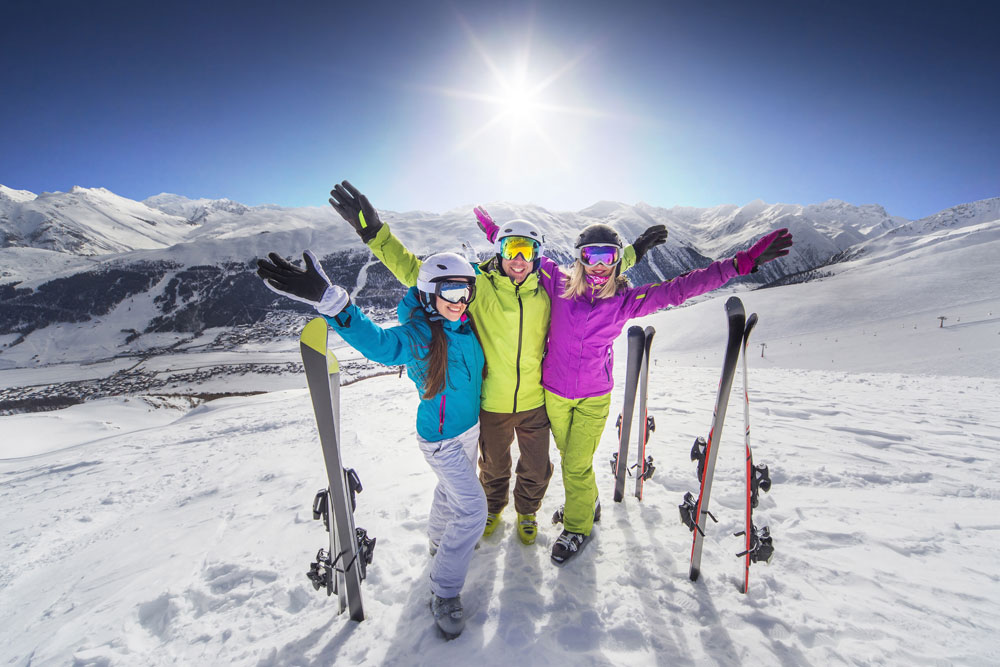
Intermediates
This is really Cortina’s sweet spot. If you love long, scenic blues and reds, plenty of variety, and the kind of mountain views that make you stop mid-run just to stare for a second, you’ll have a very good time here.
Cortina suits intermediates who want relaxed mileage rather than an all-day survival exercise, and there’s enough across the different sectors to keep things interesting all week. It also rewards a bit of planning, especially if you want to tick off one of the big scenic route days like Lagazuoi and Armentarola.
Stay tip:
- Stay in or close to the main town so you can easily switch sectors and ski the best snow each day.

Advanced skiers & snow-sure seekers
Advanced skiers will get the most out of Cortina around Tofana, where the terrain turns steeper, sportier and a bit more serious. This is the side for stronger skiers who enjoy challenging pistes, faster lines and a touch of World Cup theatre under their skis.
Cortina’s expert appeal is less about endless cliffy chaos and more about classic, high-quality terrain in a seriously beautiful setting. That said, conditions can change quickly, and some of the resort’s more iconic lines deserve proper respect.
Stay tip:
- Stay with quick access to the Tofana lifts so you can get up early and catch the best conditions before things get scraped off.

Snowboarders
Cortina can absolutely work for snowboarders, but it’s one of those resorts where a little route planning saves a lot of muttering. Some of the scenic links and longer connections can include the occasional annoying flat bit, so this is not the place for blindly following a piste map and hoping for the best.
The more board-friendly days tend to focus on sectors with stronger lift infrastructure, especially around gondolas and cable cars like Tofana and Faloria. If you stay flexible and think ahead about how you’re getting back, it can be a great place to ride.
Stay tip:
- Stay centrally so you can pivot between sectors easily if one area feels a bit too traverse-heavy.

Beginners
Cortina works well for beginners if you keep things simple at the start. There are solid learner areas, respected ski schools, and enough gentle terrain to build confidence without feeling thrown in at the deep end.
The key is not turning every lesson morning into a mini expedition in ski boots, so staying near a beginner-friendly base really helps. Socrepes and the Lacedel side make those first few days feel far less faffy, and easy mountain lunches matter too when everyone’s still finding their ski legs.
Stay tip:
- Book near Socrepes or Lacedel so getting to lessons feels easy, not like a daily mission.

Families
Families can do really well in Cortina, but this is a resort where booking the right base makes a much bigger difference than people expect. It has the polish, good dining, attractive town feel and reliable facilities that parents tend to appreciate, but it is not the kind of place where every hotel opens straight onto a nursery slope.
That means smooth mornings matter: shorter walks, easier access to ski school, and somewhere comfortable to retreat to at the end of the day. Apartments and family-friendly hotels usually make life much easier than squeezing into a standard room.
Stay tip:
- Stay in town or near a beginner base so ski-school mornings are simple and non-ski time is easy too.

Freestyle / Terrain Parks
If freestyle is your whole personality, Cortina probably isn’t the resort you build the entire trip around. Its appeal leans much more towards classic piste skiing, scenery, and stylish cruising than mega-park laps from first lift to last chair.
That said, if you like mixing a bit of freestyle into a wider mountain week, it can still work nicely.
Seasonal setup matters here, so it’s worth checking what features are actually built before you go, rather than assuming there’ll be a huge park waiting for you.
Stay tip:
- Stay in central Cortina so you can get to whichever sector has the season’s park setup without locking yourself into the wrong side of resort.
Looking to stay in Cortina d’Ampezzo?
Where is Cortina?
Cortina d’Ampezzo sits in Veneto, in the Ampezzo Valley of the Dolomites (a natural UNESCO World Heritage site), close to the South Tyrol border – so you get that very “northern Italy meets big alpine drama” feel.
It’s not on a main railway line, which is why people typically arrive via Venice / Treviso airports or via train to Calalzo di Cadore and then take a bus or taxi into town. Once you’re there, you’re surrounded by famous Dolomite landmarks and you can day-trip into other Dolomiti Superski areas if you want to go full mileage monster.
Looking to stay in Cortina d’Ampezzo?
Skiing in Cortina (ski area, terrain, lifts, snow)
Cortina’s skiing is spread across distinct sectors – think of it as a set of mini-resorts orbiting the town rather than one single linked bowl.
The upside is variety: different aspects, different snow feel, and lots of “choose your own adventure” days (sunny cruisers, steeper sport laps, scenic tours). The trade-off is logistics: some days involve buses or short drives, and if you choose the wrong base for your priorities you’ll feel it at 8:45am in ski boots.
A smart Cortina week usually starts with a confidence-building first ski day in your nearest sector, then builds into a Tofana day for the iconic pistes, a Faloria / Cristallo day for variety, and a Lagazuoi / 5 Torri ski day for the big scenic experience, before repeating your favourites based on snow conditions and crowds.


Terrain overview
Cortina’s ski area is spread across a few distinct sectors rather than one single “clip in and roam everywhere” bowl, and that really shapes how you plan your days.
The big names are Tofana, Faloria-Cristallo-Mietres, and the Lagazuoi / 5 Torri side, each with its own feel. Tofana is the sporty, headline-making sector with famous pistes, World Cup pedigree and some of the resort’s strongest on-piste terrain.
Faloria tends to feel a bit more relaxed and scenic, with lovely cruising and huge views back across the valley, while Lagazuoi / 5 Torri are where Cortina goes full postcard mode: dramatic rock scenery, cinematic descents and some of the most memorable ski touring-style days in the Dolomites.
The catch is that these sectors are not all seamlessly skied from one base area, so your starting point matters more here than in a more compact French mega-resort. Cortina town is the main hub, but lifts are accessed from different points including the Faloria cable car near the centre, the Socrepes/Lacedel side for Tofana access, and the separate 5 Torri/Lagazuoi lift bases reached more strategically.
Stay tip:
If Lagazuoi and 5 Torri are high on your hit list, staying around Pocol or on the south-west side of Cortina can make those early scenic-start mornings much easier.
Lifts & getting around the mountain
Cortina’s lift system is generally modern and comfortable, but it works best when you treat it like a collection of linked ski days rather than one giant all-day conveyor belt.
You’ve got a mix of cable cars, gondolas and chairlifts, with drag lifts mostly limited to learner zones or smaller connecting pockets, so for most skiers the uplift feels civilised rather than punishing.
The bigger issue is flow: queues tend to form at the obvious morning access points, especially between 9:00 and 10:00, and then again around lunch when lots of people funnel back through the same popular lifts and mountain restaurants.
Cortina rewards a bit of tactical thinking. Either go early and knock off the best-known sectors before everyone else arrives, or deliberately avoid the rush, start slightly later, and enjoy quieter pistes once the first wave has parked itself over coffee and strudel.
It is also one of those resorts where bus links, road transfers and base-area choice matter more than people first assume, because moving between sectors is not always an effortless ski-through.
On scenic route days, especially around Lagazuoi, Cinque Torri and Armentarola, punctuality matters – leave late and you’ll spend more time chasing the route than enjoying it.
Stay tip:
Stay in central Cortina if you want maximum flexibility, because it gives you the easiest options for switching sectors when one base is busy or conditions look better elsewhere.
Snow reliability & season length
Cortina usually skis best when you understand its rhythm rather than expecting all-day identical conditions.
This is the Dolomites, so sunshine, temperature swings and changing snow surfaces through the day are all part of the package.
The altitude is respectable rather than ultra-high, and the spread of sectors helps because you can often find better snow on one side of the mountain even if another is catching too much sun.
Tofana often holds up well for stronger piste skiing, while different aspects across Faloria and the scenic sectors can feel noticeably different depending on temperature, wind and recent snowfall.
Snowmaking plays a big role in keeping core pistes reliable, especially on the main marked terrain, and that is particularly useful in early season or during dry spells.
In practical terms, late January through March is usually the sweet spot for consistency, while early season depends more on temperatures and coverage, and late season often becomes a game of “excellent morning, softer by lunch, slushy by late afternoon.”
Cortina is brilliant for people who are happy to ski smart: start earlier, choose the right sector, and respect the fact that a red run at 10:30 can feel very different by 2:30.
Stay tip:
If you like chasing the best surface conditions each day, stay in Cortina town so you can easily pivot between Tofana, Faloria and the outer sectors depending on weather and snow.

Cortina has real off-piste appeal, but it is firmly in the category of “beautiful and serious,” not “bit of cheeky sidecountry, what could go wrong?”
The dramatic Dolomite landscape means there is plenty of tempting terrain around the marked pistes, especially for confident skiers looking at gullies, bowls and steeper side lines, but the consequences of poor decisions can ramp up quickly.
Snow conditions in the Dolomites can also be deceptive: a slope that looks inviting from a piste may be wind-affected, thinly covered, or carrying very different avalanche risk from what you expect.
This is absolutely a resort where local knowledge counts. If off-piste is part of the dream, the smart move is to hire a qualified local mountain guide, bring proper avalanche kit, and treat the day as a real mountain day rather than a casual extension of piste skiing.
For many visitors, Cortina’s sweet spot is actually combining its world-class scenery and famous pistes with maybe one guided off-piste day, rather than trying to turn the whole trip into a powder hunt. That gives you the adventure without drifting into the kind of decision-making that ends with a helicopter, a lecture, or both.
Stay tip:
If you’re planning guided off-piste days, stay in Cortina centre so meeting guides, adjusting plans around weather and reaching different starting sectors stays simple.
Beginners & improvers
Beginners and improvers can have a really good week in Cortina, but this is one of those resorts where reducing faff is almost as important as picking the right lesson.
There are learner-friendly areas, respected ski schools and enough gentle terrain to build confidence properly, especially if you start in the right place and progress steadily.
The Socrepes / Lacedel side is especially helpful because it makes those first few days feel more manageable, with easier logistics and less chance of turning a lesson morning into a sweaty ski-boot expedition.
Cortina is not a resort that flatters bravado for long, so improvers do best when they build up gradually rather than deciding on day two that they are “basically parallel now” and charging into bigger terrain.
It also helps to be sensible about downloads and timing: if the weather turns, visibility goes flat or legs have stopped cooperating, taking the lift down is not failure – it is good holiday management.
One of Cortina’s quiet strengths is that it lets beginners learn in a very beautiful setting without feeling trapped in one tiny nursery corral all week, but you do need to keep choices smart and confidence-led.
Stay tip:
For first-timers and nervous improvers, stay near Socrepes, Lacedel or the lower Tofana access side so ski school and easy first runs feel close, calm and low-drama.
Freestyle & “more than pistes”
Cortina’s personality beyond the pistes is much more about scenic ski experiences, natural terrain and memorable route days than about being a full-blown park resort.
If your dream week is sunrise-to-sunset park laps, there are stronger choices elsewhere in the Alps, and it is worth checking in advance what freestyle setup is actually built for the season rather than assuming there will be a big permanent park waiting for you.
But if you like a mix of cruising, side hits, a bit of playful terrain and the occasional feature session, Cortina can still be great fun. What really makes this area stand out is the kind of ski day that becomes the story you tell afterwards.
The Super 8 route is a classic for exactly that reason: it strings together brilliant scenery, manageable mileage and a proper Dolomites “wow, this place is ridiculous” feeling without needing to be an expert mission.
Then there is the Armentarola / Hidden Valley experience, one of the most famous descents in the area, where the long run-out ends with the wonderfully odd little horse tow across the flat – one of those very Dolomites moments that feels part ski day, part travel anecdote.
Stay tip:
If scenic route days like Super 8, Cinque Torri and Lagazuoi-Armentarola are your priority, stay around Pocol or on the 5 Torri side of Cortina so you can reach those start points early without adding a long morning transfer.
Best Runs in Cortina (by ability)
For beginners:
Keep your first days focused on the gentler confidence-builders around the easier bases, especially runs like Campo Scuola Socrepes, Socrepes, Rosà, and Tofanina on the Tofana side, or easy options like Col Gallina and Averau over on the Falzarego / 5 Torri side.
These are the sort of pistes where you can lap without stress, stop when you need to, and build rhythm without accidentally tipping yourself onto something steeper than planned.
For intermediates:
This is Cortina’s real sweet spot. For the big scenic, postcard-worthy day, do Armentarola from Lagazuoi, then look at the Super 8 area around 5 Torri, where pistes like Scoiattoli, Lino Lacedelli, Potor, and Falzarego–Bai de Dones give you that lovely “plenty of mileage, zero panic” feeling.
On the more classic cruising side, Faloria Normale, Tondi Normale, Rio Gere, and Padeon are all great names to have on your radar when you want long, confidence-boosting runs with proper views.
For advanced:
Head straight for the Tofane and Faloria sectors if you want Cortina at its sharpest. This is where names like Forcella Rossa, Col Druscié A, Vertigine Bianca, and Olympia delle Tofane / Stratofana (Schuss) start appearing on the map, alongside Faloria’s steeper tests like Canalone Franchetti, Vitelli, Stratondi, and Bigontina.
These are the runs that give Cortina its sporty edge and its World Cup credibility – proper heritage pistes that feel a lot more serious than the scenery might first suggest.
Off-piste note:
Whether you’re eyeing the Tofana couloirs, the terrain around Ra Valles, the classic steeps off Faloria, or lines near Lagazuoi / Armentarola, go with a guide and proper safety kit – Cortina’s mountain terrain can be brilliant, but it is not forgiving of guesswork.
Looking to stay in Cortina d’Ampezzo?
Looking for accommodation in Cortina
Cortina isn’t a “choose which village” resort in the way some French mega-stations are – it’s more “choose how much hassle you’re willing to tolerate each morning.”
The town centre is best for restaurants, shops, and evening life, and it’s the most flexible base if your group will ski different sectors on different days. The trade-off is that some lift bases aren’t right outside your door, so you’ll lean on buses/taxis or a short drive.
If you want quicker access to specific ski days, you can stay on the edges: areas like Pocol put you in a strong position for the 5 Torri / Lagazuoi side (great for scenic touring).
Quieter residential pockets (think Crignes / Fiames vibe) are calmer and often feel more “Alpine home base” than “tourist strip.” Budget travellers sometimes look beyond Cortina itself (e.g., San Vito di Cadore) but you’re swapping price for commute – totally fine if you’re organised and don’t mind a daily transfer.
Quick chooser: which area is right for you?
- If it’s your first time, stay central so you can pivot plans easily.
- If you’re here for Lagazuoi / 5 Torri, lean toward Pocol.
- If you hate buses with a passion, pay more to reduce transfers.
- If nightlife matters, be walkable to Corso Italia.
- And if you’re in a mixed group, don’t optimise for the best skier – optimise for the person who gets grumpy fastest when mornings are chaotic (that’s usually the real boss of the holiday).
Village Comparison Table
| Area / Base | Altitude | Vibe | Best For | Nightlife | Beginner-Friendly | Access / Getting Around |
|---|---|---|---|---|---|---|
| Cortina centre / Corso Italia | 1,224m | Lively, stylish, easiest evenings | Mixed groups, foodies, first-timers | ★★★★ | ★★★ | Buses/taxis to lift bases; most flexible |
| Crignes / Fiames edges | 1,200-1,300m | Quieter residential feel | Calm nights, couples, “sleep well” people | ★★ | ★★★ | Short hop into town; still need lift transport |
| Socrepes / Lacedel side | 1,200m-1,400m | Practical ski-focus | Lessons, quick Tofana access | ★★ | ★★★★ | Strong for ski routines; less central nightlife |
| Pocol | 1,500m | Higher, more mountain-base feel | 5 Torri/Lagazuoi days, early starts | ★★ | ★★★ | Great for touring side; town evenings need transport |
| San Vito di Cadore (nearby) | 1,000m | Quieter, often better value | Budget, families wanting space | ★ | ★★★ | Daily commute; plan buses/driving |
(Star ratings are “relative vibe” rather than gospel)
Best Area for First-Timers
For most first-timers, Cortina town centre is the safest and smartest choice. Not because it gives you that classic French-resort ski-in/ski-out ease – Cortina generally doesn’t – but because it makes the whole holiday feel simpler from the minute you arrive.
This is a resort spread across different ski sectors, so if you stay centrally you are not locked into one mountain routine before you’ve even figured out where you like skiing most.
You can check the weather, decide whether Tofana, Faloria or the Lagazuoi / 5 Torri side makes most sense, and head off without feeling like you’ve booked yourself into the wrong end of the valley.
It also works brilliantly for people still finding their feet with the resort itself: ski hire, restaurants, cafés, smart shops and that all-important “where do we actually go tonight?” question are all much easier when you are based near Corso Italia and the surrounding streets.
Cortina also has a proper town feel, so staying central means you get the full experience rather than just somewhere to sleep between ski days.
Stay tip:
Aim for accommodation within easy reach of Corso Italia or the Faloria cable car side of town, so you get both evening walkability and flexible access to different ski sectors.
Best Area for Ski-in Ski-out
This is the category where Cortina needs a reality check, because it is simply not a classic ski-in/ski-out resort in the way places like Avoriaz or Val Thorens are.
Accommodation can get a bit cheeky here, and “close to the slopes” sometimes really means “you will still be carrying skis further than you’d hoped.”
The closest thing to ski convenience is staying near one of the main lift-access points, especially around the Socrepes / Lacedel / Tofana side, where your mornings can feel much more direct and much less like a transport puzzle.
That part of Cortina suits people who care more about getting on snow quickly than being in the thick of the evening buzz.
You are trading some town-centre wandering for smoother ski starts, which can be a very fair swap if you are the sort of person who wants first lifts, fast coffee and boots on before the queues properly build.
Just be very specific when booking: ask how far the accommodation really is from the lift, whether you can walk it in ski boots without regretting your life choices, and whether “ski access” still holds up in ordinary winter conditions rather than only after a big snowfall.
Stay tip:
For the most ski-convenient base in Cortina, focus on the Socrepes / Lacedel / Tofana access side and ask providers for exact walking distance to the nearest lift, not just vague “slope nearby” wording.
Best Area for Nightlife
If nightlife matters, Cortina town centre is the clear winner again. This is where you want to be if your ideal evening involves après drifting into dinner, then maybe a bar, then maybe one more drink you absolutely did not plan on having.
Cortina’s nightlife is not really about huge, thumping mega-clubs; it is more polished than that, with stylish bars, hotel lounges, wine spots and places where people somehow look put-together even after skiing all day.
Staying central means you can actually enjoy that properly rather than spending the evening watching the clock and wondering how annoying it will be to get home.
The biggest advantage is walkability: around Corso Italia you can move easily between drinks, dinner and late-night wandering without needing a taxi strategy.
It also gives the holiday a different feel – more Dolomite town break with skiing attached, rather than just bed-lift-bed efficiency.
If you like a bit of atmosphere but still want choice over how lively the night becomes, central Cortina gives you the most freedom.
Stay tip:
Stay close to Corso Italia if you want the easiest stroll between bars, restaurants and late-night spots without turning every evening into a transport mission.
Best Area for Families
Families usually do best either in Cortina town itself or on the quieter edges just outside the centre, depending on what kind of trip you are trying to have.
Town works well if you want convenience: restaurants are easy, shops are close, pharmacies and practical bits are on hand, and there is enough life in the place that non-ski time does not feel flat.
That can be especially helpful with younger kids, teenagers who get bored easily, or mixed groups where not everyone wants every evening to revolve around cooking pasta in the apartment.
The quieter edges, though, can be a really smart family move too, especially if you want more space, easier parking, a calmer atmosphere at night or accommodation that feels less tightly packed than the centre.
In Cortina, the biggest family win is reducing friction – fewer awkward transfers, easier ski-school mornings, less trudging around in boots, and somewhere comfortable enough that coming back in the afternoon feels like a relief rather than a logistical second shift.
Because the resort is not naturally ski-in/ski-out, family location decisions matter more here than in some purpose-built resorts.
Stay tip:
If ski school and easy evenings are your priority, look for family-friendly accommodation in central Cortina or toward the lower Tofana / Socrepes side, where mornings are simpler and non-ski time is still easy.
Best Area for Budget Travellers
Budget and Cortina are not always the easiest travelling companions, because this is one of the Dolomites’ smarter, more polished resorts, and prices can absolutely reflect that. But there are still ways to do it sensibly.
Within Cortina itself, the best-value choice is often a simpler hotel, guesthouse or apartment on the quieter edges of town, rather than chasing something ultra-cheap far away and paying for it later in buses, taxis, lost time and general holiday irritation.
That is especially true in Cortina because you may already be dealing with transfers between ski sectors, so making your accommodation awkward on top of that is often a false economy.
Some travellers also look at San Vito di Cadore or other nearby bases to save money, and yes, that can work – but only if you are truly comfortable with the daily commute and not kidding yourself about how charming it will feel by day four in cold boots and tired legs.
The best Cortina budget strategy is usually to stay practical, not remote: a smaller room, a less flashy property, or self-catering in a sensible location often beats the “bargain” that comes with daily hassle attached.
Stay tip:
For the best value without sabotaging your trip, look for simple accommodation on Cortina’s quieter edges rather than commuting from farther out unless you are genuinely fine with the extra travel every day.
Our Top Hotels

★★★
- Village - 10 mins walk to centre
- Lifts - shuttle to Faloria, Tofana and Socrepes
- Nearby paid spa access
It’s a softer, slightly quieter base with a useful shuttle routine to the main lift areas.
The hotel has a traditional feel, a proper restaurant and good mountain views. Some rooms are simpler than others, but the overall vibe is warm and easy-going.
The shuttle is the key detail: use it, love it.
Why choose it? A relaxed, practical hotel where the shuttle does the heavy lifting – praise be.

★★★★★
- Village - central Cortina
- Lifts - 7–8 mins walk / ski bus nearby
- Indoor pool + spa
Here you have a blend of old-school grand-hotel glamour with proper ski practicality: spa, pool, ski bus nearby, and the centre of town right there when you want boutiques, aperitivo and people-watching.
The wellness centre is a real facility, not a token gesture, and the lounges and restaurants suit a grown-up, comfortable evening routine.
Why choose it? Big Cortina glamour with enough practical bits to make the ski week genuinely easy.

★★★★
- Village - quiet edge, centre 1–2 mins drive
- Lifts - ski shuttle / short drive
The setting is stunning: spruce forest, Dolomite views and a rooftop terrace.
Inside, it’s elegant without being precious, with Alpine-style rooms and a homely feel.
The restaurant and bar keep evenings simple if you don’t fancy schlepping into town, and interconnecting rooms make it handy for families.
Why choose it? A peaceful, view-heavy base that works beautifully if you don’t need main-street buzz at bedtime.

★★
- Village - around 100 m from centre
- Lifts - central ski-bus / Faloria walkable
You’re very close to the centre, so you can keep evenings easy and use the resort bus network without feeling marooned.
The hotel is basic, but that’s the value trade-off. Rooms are straightforward, some have balconies or mountain/garden views, and free parking is a useful perk if you’re driving in or touring the Dolomites.
Why choose it? Cheap-and-cheerful central Cortina, with the savings left for pizza, passes and panic glove purchases.
Tour Operators who go here
Looking to stay in Cortina d’Ampezzo?
Après ski, restaurants & winter activities
Cortina is one of those resorts where “what we do after skiing” is nearly as important as “what we do while skiing” – and honestly, that’s part of the magic.
Food here is a genuine highlight (mountain huts with serious cooking, plus a town packed with proper restaurants), and après is more Italian-apéritif than beer-funnel chaos.
The rhythm that works best is: ski hard-ish in the morning, do a confident lunch booking (or an early hut stop before the rush), then finish with a civilised drink that may or may not become dinner depending on your self-control.
For non-skiers (or tired legs), Cortina is strong because the town itself has enough going on: shops, cafés, galleries, and that “stroll and look at mountains” lifestyle.
One practical note: because lift bases can be spread out, your “après” might happen either back in town (easy if you’re central) or near lift return points – so think about how you’ll get home before you get too enthusiastic about that second spritz.

Cortina’s après is much less “boots on tables by 4pm” and much more pick your mood and dress accordingly.
If you want something lively but not wildly chaotic, Bar Sport is one of the classic people-watching spots right on Corso Italia, while Molo Pub is a strong shout if you want better cocktails, craft beer and a more local, slightly more grown-up feel.
For aperitivo with a bit more polish, La Suite is popular for drinks with a view of the bell tower, Enoteca Baita Fraina is the go-to for serious wine in a central setting, and Faro di Cortina is a good pick if you want proper cocktails rather than just defaulting to “another spritz then.” Villa Sandi and Enoteca Cortina also fit that smarter Cortina rhythm where one glass somehow turns into a full pre-dinner event.
Later on, Cortina usually leans into aperitivo, dinner, then a final drink, rather than all-night mayhem – although there are options if you want them. VIP Club Cortina is the historic, wood-panelled, glamorous old-school choice, Bilbò Club has that classic jet-set reputation, and Belvedere out in Pocol is the more iconic late-night name if you’re happy to deal with a taxi or car rather than stumbling home on foot.
If you want somewhere easier before the proper late-night decision, Janbo works nicely as a covered-terrace drinks stop, and Bar El Becalen is a cosy wine-bar option near the centre if your idea of nightlife is more “excellent glass of red and a final gossip” than full dancefloor commitment.
Mountain‑top Moments
Cortina’s mountain food is absolutely a main character and the fun is that each stop has its own personality.
On the 5 Torri side, Rifugio Averau is the “lunch actually matters” choice: scenic, polished and properly memorable, with refined Dolomite cooking and dishes like casunziei stuffed with šciopetìs (a wild local herb), plus homemade cakes. Nearby, Rifugio Scoiattoli is one of Cortina’s classic slope-side favourites on the Super8 and Great War routes, and it leans into Ampezzo tradition with a playful signature dish: “Violette ai sapori del bosco,” a homemade pasta flavoured with blueberries and forest notes.
If you want the most dramatic perch of the lot, Rifugio Nuvolau is less about a giant menu and more about simple, authentic mountain dishes in a setting that looks like someone built a restaurant on top of a postcard. Over on the Tofana side, Rifugio Pomedes is a real institution, and it’s a great place to order something hearty and local like the Ampezzo potatoes with speck, the special spinach dumplings, or grilled vegetables with grilled cheese if you want something a little lighter without going full rabbit food.
If you want something slightly slicker without losing the mountain feel, Chalet Tofane near Socrepes is the useful crossover stop: part proper mountain restaurant, part serious pizzeria, so it works whether you want a full lunch or just something easy that still feels like a treat. Higher up on the Tofana side, Masi Wine Bar Al Druscié is the more grown-up, sunglasses-on-terrace option, pairing Amarone and other Masi wines with traditional dishes such as risotto, salumi and cheese boards, beef fillet and lamb.

In town, Cortina gives you a really good spread between proper treat-night dining and the kind of comforting, no-drama places you want after six hours outside.
Baita Fraina is still one of the standouts if you want a dinner that feels a bit special without tipping into anything stiff: it’s known for dishes like casunziei (the local beetroot-filled pasta Cortina is famous for), tagliolini with white deer ragout, spätzle with speck and chanterelles, and richer mains like fillet of beef with porcini.
For another classic local-leaning dinner, da Beppe Sello is worth knowing for its house special Benfatti alla moda – ravioli stuffed with caciotta and marjoram in tomato and basil sauce – as well as dishes like deer medallion with red wine and juniper, orzotto alpino with smoked ricotta, and its traditional Brazorà dessert with zabaglione.
If your group wants something broader and easier, Il Vizietto is a handy central option on Corso Italia with a menu that swings from alpine-friendly comfort to seafood-heavy “we’re definitely not roughing it” dishes – think tagliatella with deer ragù, purple potato gnocchi with scampi, pumpkin and taleggio, brasato di cervo with polenta, or just a very solid tiramisù at the end.
And for those useful mixed-tastes evenings when one person wants pizza, one wants pasta, and one is already saying “I’m honestly fine with anything” in a deeply unhelpful way, Al Passetto is one of the reliable all-rounders in town, right by the bus station and easy to reach from the centre.
If you want a true splurge night, Tivoli is the big one: Michelin-starred, just outside the centre, and very much the book-ahead option. Also, yes, dessert is non-negotiable here – this is not the resort for pretending you’re “just having something light.”
Cortina is genuinely good at rest days, and not just in a “well… there’s always shopping” kind of way.
If your legs need a reset, do a proper town-and-culture day: start with a lazy coffee, wander Corso Italia, then give yourself something actually worth seeing. The big easy win is skating at the Olympic Ice Stadium, the same rink used for the 1956 Winter Olympics and later featured in For Your Eyes Only – which is a pretty strong upgrade on “we mooched around for a bit.”
If you’re more museum than ice time, Cortina has a very solid trio: the Ethnographic Museum of the Regole d’Ampezzo for local traditions and valley life, the Mario Rimoldi Museum of Modern Art for serious 20th-century Italian art, and the Rinaldo Zardini Palaeontology Museum if ancient fossils and Dolomite geology are your thing.
And if the weather is giving full grey-sky drama, honestly, Cortina does “bad-weather recovery day” very well: long lunch, slow aperitivo, maybe some shopping, and absolutely no guilt about it.
If you want your non-ski day to still feel properly alpine, Cortina has stronger options than just standing around admiring peaks and calling it wellness. You can head out with Guide Alpine Cortina for snowshoeing, winter trekking, ice climbing or even a winter via ferrata if you want something more adventurous than a scenic stroll.
For history with actual mountain scenery attached, the Open-Air Museum of the Great War at the Cinque Torri area is one of the best specific excursions, with restored trenches and wartime positions that make the Dolomites’ First World War story feel much more real than a plaque on a wall.
And for a lower-effort, high-reward outing, take the Faloria cable car up for the views and a coffee or lunch at Rifugio Faloria – it’s exactly the sort of “we didn’t ski today but somehow still had a very Alpine day” move that works brilliantly in Cortina.

Getting home safely & easily
In Cortina, “getting home” is mostly a local transport question, because the ski areas sit around the valley rather than all spilling straight into the main street.
In winter, the ski bus + urban bus network links the town centre with key lift bases (think Socrepes, Faloria, Freccia nel Cielo and more), and in peak periods it can run every 15–30 minutes – plus you can check live arrivals via the Dolomiti Bus app/QR codes at stops.
If you’ve got a valid ski pass / ski ticket, local public transport in Cortina is free of charge (handy for the “après got chatty” journey home). If you don’t have a pass (rest day, non-skier, late arrival), a Dolomiti Bus urban ticket for Cortina is €1.70 if bought in advance or €2.40 on board, valid for 75 minutes – and there are weekly options if you’ll use it a lot.
For late-night or door-to-door ease, Cortina has an official RadioTaxi service (generally available daily for long hours), but prices vary – best to book and ask for a quote.

Ski schools & learning zones
Cortina is a strong place to learn, especially if you like the idea of instruction in a “proper ski town” rather than a conveyor-belt beginner factory.
There are multiple schools and a long teaching tradition here – so you can find everything from gentle first-timer confidence building to high-level coaching for strong skiers who want to sharpen technique on serious pistes.
The big difference vs super-compact resorts is logistics: you’ll have a better time if you book skiing and snowboarding lessons that meet near where you’ll actually ski that day, or you choose accommodation that makes the meeting point easy.
Also, in peak weeks, book early – Cortina is popular, and the best time slots go first.

For beginners in Cortina, the smartest move is to start where the terrain is genuinely designed to help you repeat, reset and improve without feeling like the mountain is trying to embarrass you.
On the Tofana / Socrepes side, that usually means keeping your first days around the easier pistes such as Campo Scuola Socrepes, Socrepes, Rosà, Tofanina, Redoncè and Roncato, which give you exactly what beginners need most: short, manageable runs you can lap more than once without your confidence disappearing halfway down.
If your lesson plan takes you farther out, easy pistes like Col Gallina, Averau and Son Forca are also good names to know on the more scenic side of the ski area, but for most true first-timers the Socrepes zone is the most natural place to start.
Cortina also helps beginners by making shorter pass options easy to buy at the lift bases, which matters more than people think. You can buy morning, afternoon, daily and multi-day passes from 1 to 7 days at the ticket offices at the bottom of the lifts, so you do not need to commit to a massive ski plan before you know how your legs, confidence and weather are behaving.
That is a very useful setup for day one or two, when a half-day and a calm lesson often beats forcing a full-day epic just because you’ve paid for it.
In Cortina, faster progress usually comes from repeating the same easy pistes well – especially around Socrepes – rather than rushing off because the views are spectacular and your optimistic holiday brain has decided that today might be your “red run era.”
If you’re taking lessons in Cortina, staying close to your likely lesson base is one of those boringly practical decisions that makes the whole holiday feel better.
The big beginner-friendly clue here is Socrepes / Lacedel: the Cortina Ski School’s secondary office is in Lacedel 1 in the Ista Cortina ski area, and it’s reachable by car or bus, with the stop under the Socrepes car park.
That makes this side of town especially useful for families, first-timers and anyone who wants to avoid turning every morning into a logistical side quest. If you’re within easy reach of Socrepes, you cut down the boot-carrying, reduce bus dependence, and make it much easier to get beginners onto snow while the stronger skiers in the group head off elsewhere.
Staying “in Cortina” is not always the same as staying usefully close to the place your lesson actually starts. If you have children in a classic course, the end-of-course race is held on the Baby and Roncato Socrepes slopes, which is another little clue that the Socrepes side is very much one of the core learning hubs.
So if lessons are central to your trip, the best accommodation move is usually one of two things: either stay near Socrepes / Lacedel / lower Tofana access for the easiest possible mornings, or stay in central Cortina only if you’re confident the bus, car or taxi hop will still feel painless in ski boots with kids, tired adults or both.
Cortina is one of those resorts where “where do we actually meet?” is not admin – it is strategy.
The private lesson meeting point for Cortina Ski School is in front of the Socrepes office, but if lessons are sold in other areas such as Faloria, 5 Torri or Col Gallina, the meeting place is agreed in advance.
The school also notes that in the event of early opening of the Faloria ski area, lessons are held at the top with the appointment at the Skilift (Rifugio Faloria), and they specifically ask guests to confirm place and time with the secretariat the day before.
Do not assume one fixed nursery-slope meeting point and hope for the best. Check it, then check it again.
If you’ve bought passes online, collection points include places like Faloria, the Rio Gere cable car departure station, while automatic machines and ticket zones are available at points including Socrepes, Olympia delle Tofane and 5 Torri, which can help take some pressure off the morning if you sort passes early rather than queueing at the last second.
In Cortina, the calm adult move is to arrive early, get a coffee, tighten boots in peace and look vaguely in control; the bad move is assuming a ten-minute margin is plenty, then discovering snow, parking or a child’s mitten crisis has other ideas.
Looking to stay in Cortina d’Ampezzo?

Lift passes, costs & budgeting
There are two Cortina lift pass options:: stay with the Cortina Skiworld valley pass for skiing around Cortina and the surrounding local areas, or buy Dolomiti Superski and open up the much bigger Dolomites network.
For a normal week based firmly in Cortina, the local pass can make plenty of sense. It covers more than 120km of pistes across Cortina d’Ampezzo, San Vito di Cadore, Auronzo and Misurina, so you’re hardly restricting yourself to a tiny patch of mountain.
Dolomiti Superski is the one to consider if exploring is genuinely part of the plan. It covers 12 ski areas and around 1,200km of pistes – but they are not all seamlessly ski-linked from Cortina, so buying the bigger pass doesn’t magically turn Cortina into the middle of a 1,200km lift circuit.
The trick is working out whether Cortina itself is the holiday, or whether Cortina is going to be your base for exploring further afield.
Which ski pass should you buy in Cortina?
Think of it like this: staying mainly around Cortina? Buy local. Planning several proper days elsewhere in the Dolomites? That’s when Dolomiti Superski starts earning its keep.
Option A - Cortina Skiworld Valley Pass (local)
What it is: The local pass covering more than 120km of pistes across Cortina d’Ampezzo, San Vito di Cadore, Auronzo and Misurina.
Best for: Families, mixed groups, intermediates and anyone planning to spend most of the holiday skiing around Cortina.
The pass covers the main Cortina sectors including Tofana, Faloria–Cristallo and 5 Torri–Lagazuoi, alongside the other areas within the Cortina Skiworld consortium.
Cortina’s sectors aren’t all seamlessly joined by pistes and lifts, so even with the local pass there can be buses and transfers involved when moving between different parts.
Plain English: This is the “Cortina is already plenty for the week” pass.
Option B - Dolomiti Superski (area pass)
What it is: The full-area pass covering all 12 Dolomiti Superski regions – around 1,200km of pistes and roughly 450 lifts.
Best for: Confident intermediates, advanced skiers and anyone who genuinely intends to spend several days exploring outside Cortina.
It opens up areas including Alta Badia, Arabba–Marmolada, Val Gardena and Val di Fassa, but don’t mistake “included on the pass” for “directly lift-linked from Cortina”. Some adventures require a bus or road transfer before the skiing starts.
Plain English: This is the “we actually intend to explore the Dolomites” pass – brilliant if you use it, expensive overkill if you don’t.
Option C - Shorter local tickets
What it is: Cortina also sells shorter-duration local products including morning, afternoon and day tickets alongside its normal multi-day passes.
Best for: Beginners, lesson days, arrival or departure days and anyone who knows they won’t be skiing from first lift until last.
They can be particularly useful during the first day or two of a beginner holiday when paying for a huge ski domain makes very little sense.
Plain English: This is the “buy the skiing you’ll actually use today” option.
Cortina lift pass prices 2026/27
Here are the published headline prices for Cortina Winter 2026/27 (prices shown in EUR):
| Cortina Skiworld Valley Pass (local) | Adult | Junior |
|---|---|---|
| Half day | TBC | TBC |
| 1 day | TBC | TBC |
| 6 days | TBC | TBC |
| 7 days | TBC | TBC |
| Dolomiti Superski Pass (area) | Adult | Junior | Senior |
|---|---|---|---|
| 1 day | €89.00 | €62.00 | €80.00 |
| 6 days | €453.00 | €317.00 | €407.00 |
| 7 days | €480.00 | €336.00 | €432.00 |
Buying online – an easy saving
Dolomiti Superski gives a 5% discount on day and multi-day passes bought online at least two days before the first day of skiing.
To get the full discount, reuse an existing MyDolomiti Card. If you buy online but don’t reuse your existing card, the discount drops from 5% to 3%.
Ski Demon tip: If there’s an old MyDolomiti Card hiding in the ski-jacket drawer, dig it out. For once, keeping a random bit of plastic from an old ski holiday can actually save you money.
Deposits, insurance, and when to buy
Here’s how to do Cortina like someone who hates queues and hates wasting money:
Ski card: The reusable MyDolomiti Card can be topped up online. Your first card can be obtained free through the online purchase/collection system; if you specifically request a MyDolomiti Card when buying a normal day or multi-day ticket at a sales point, there can be a €5 charge. Keep it for future trips.
Insurance: Third-party liability insurance is compulsory for anyone skiing in Italy and it is not included automatically with the lift pass. Check whether your existing winter sports insurance already provides suitable liability cover before buying separate insurance.
When to buy: For Dolomiti Superski, buying online at least two days ahead gives you the clearest saving. Reuse your MyDolomiti Card for the full 5% discount, and always check which seasonal price band your dates fall into before budgeting.
Is Dolomiti Superski worth the extra?
This is less about kilometres and more about what you’re actually planning to do.
If the holiday is based around Tofana, Faloria, 5 Torri and the wider Cortina Skiworld areas, buying Dolomiti Superski simply because 1,200km sounds magnificent probably isn’t necessary.
If you already have Alta Badia, Arabba–Marmolada, the Sellaronda or other Dolomite ski areas pencilled into the week, the bigger pass makes much more sense.
Just remember that Cortina is not directly plugged into the Sellaronda in the same way as Selva, Corvara or Arabba. Wider-area days need a little more planning than simply pointing your skis towards the next valley.
Looking to stay in Cortina d’Ampezzo?
Common Cortina Ski Holiday Mistakes
Cortina d’Ampezzo is easy to enjoy, but its spread-out ski areas, scenic day routes and famous lunch stops mean a few common mistakes can make your holiday more complicated.
Staying somewhere “close to the lifts” and discovering that means “close to a bus timetable”
Cortina’s sectors are spread out, so your accommodation choice decides whether mornings are smooth or annoying. If you don’t want daily logistics, pay for location – or commit to a very organised routine.
Trying to do the big scenic tour days without starting early
Routes like the Super 8 and Armentarola are amazing, but they reward punctual people. Leave late, stop too long for lunch, and suddenly you’re stressed about connections instead of enjoying the views.
Overbuying your lift pass
People panic and get the biggest pass “just in case,” then ski the same sector for five days because it’s good and they’re happy. Be honest: do you actually want day trips, or do you want a relaxed week with a couple of highlight routes?
Doing lunch like an amateur
In Cortina, lunch can be a full event – and if you rock up at 12:45 to a famous rifugio with no plan, you’ll queue, rush, and spend too much. Go early, book where possible, or pick a quieter hut on peak days.
Ignoring end-of-day snow and timing
Sunny Dolomite afternoons can go soft, and late-day legs can go wobbly. Plan your “hard stuff” earlier, keep a download option in mind if needed, and don’t turn a brilliant day into a survival mission at 3:30.
Getting to Cortina d’Ampezzo
Getting to Cortina d’Ampezzo is straightforward, with several airport options and useful rail-and-bus connections into the resort. Whether you’re flying, driving or arriving by train, here’s everything you need to know before you travel.
1) Fly + road transfer
(the “land, grab skis, go” option - and the most common)
Most fly-in trips to Cortina start with Venice Marco Polo and finish with a pre-booked private transfer or shared coach up into the Dolomites.
Marco Polo is approximately 162 km from Cortina and Treviso is 130 km, and there are regular airport-to-Cortina coach links in season.
Treviso is also a handy option if the flights work better, and because it is closer, it is usually a bit quicker on the road in good conditions.
Snow, Saturday changeovers and general winter-road nonsense can still stretch things, so treat all timings as sensible guides:
- Venice Marco Polo → Cortina: roughly 2 hours by road in decent conditions.
- Treviso Airport → Cortina: roughly 1 hour 40 minutes – 2 hours by road in decent conditions.
- Verona Airport → Cortina: roughly 3 – 3.25 hours by road, depending on traffic and conditions.
Real-world tip: if you’re arriving on a Saturday, build in a bit of emotional padding – Cortina is easy enough to reach, but the combination of airport traffic, weather and changeover-day timing can turn “quite civilised” into “why are we still behind this coach?” faster than you’d think.
2) Train + bus
(the “car-free and absolutely doable, but you need to respect the connection game” choice)
Cortina is not on the rail network – the nearest train station on the south side is Calalzo di Cadore, which is around 35 km from Cortina and is connected onward by Dolomiti Bus. There is also Dobbiaco/Toblach to the north at 31 km, but Calalzo is the more common gateway from the Venice direction. Trenitalia also now promotes FrecciaLink to Cortina via Venice Mestre, which is handy if you want one ticket and less faff.
Typical timings look like this:
- Venice Santa Lucia / Mestre → Calalzo di Cadore (train): roughly 3 hours 45 minutes – 4 hours+, depending on the connection.
- Calalzo di Cadore → Cortina (bus or shuttle): roughly 30 minutes.
- Venice direction → Cortina overall (train + bus): allow roughly 4.25 – 5 hours door-to-door, depending.
Buses are also a practical alternative to the train-bus combo: ATVO, Cortina Express and Flixbus all connect Cortina with Venice Airport and Venice-Mestre railway station, with extra high-season links including Treviso Airport.
Real-world tip: this route works best when your accommodation choice is not adding a bonus final mission. Pick somewhere that does not turn “arrive in resort” into “now solve another transport puzzle.”
3) Driving to Cortina
(flexible, scenic, and very handy - as long as you respecct the winter mountain roads)
Driving to Cortina is straightforward in principle: Cortina is crossed by the SS51 Alemagna north-to-south and the SR48 bis Dolomites Road east-to-west, which tells you exactly what kind of arrival this is – proper Dolomite roads, not motorway-to-door simplicity.
From the south, Venice is the usual reference point; from the west, Verona is a longer but still manageable run.
Time-wise:
- Venice → Cortina: roughly 2 hours in normal conditions.
- Treviso → Cortina: roughly 1 hour 40 minutes – 2 hours in normal conditions.
- Verona → Cortina: roughly 3 hours 10 minutes – 3 hours 15 minutes in normal conditions.
There are large parking lots at Son dei Prade and Bai de Dones, so a drive-and-park setup can work well if you are staying outside the centre or targeting specific sectors.
Real-world tip: don’t plan this like a dry-road motorway run. Build in extra time for snow, slower mountain traffic and Saturday changeover congestion, and if you’re driving straight from the airport, avoid booking a flight that lands so late you’re tackling Dolomite roads in the dark, tired, and already mildly irritated.
Getting around once you’re there (easy enough… but Cortina is not a “clip in outside the hotel and drift everywhere” kind of resort)
Walking (your default setting - if you’re central)
If you’re staying in Cortina centre, day-to-day life is very walkable. Corso Italia and the surrounding streets make it easy to stroll between coffee, shops, ski hire, aperitivo and dinner without needing to think too hard about logistics. The slight catch is that “walkable town” does not automatically mean “walkable ski resort” - because the main lift access points are spread out, you’ll often still be using transport for the actual ski bit of the day.
Skibus and local buses (your actual ski-day workhorse)
The Skibus is the thing that makes Cortina function properly. The Dolomiti Bus setup links the centre with key access points including Socrepes, Freccia nel Cielo / Tofana, Faloria, Rio Gere and Passo Tre Croci. That means you can stay central and still move between sectors without turning every morning into a full tactical operation. It also helps that Cortina’s ticket offices are spread across multiple lift stations.
Taxis (great when needed, less great as your entire plan)
Taxis absolutely exist in Cortina, and there are several official/local services plus the main Radiotaxi consortium in town. Late-night availability can feel limited and prices can sting a bit more in busy weeks. If nightlife is part of your plan, staying central makes life much easier because you can keep evenings spontaneous and save taxis for the odd lift-base dash, bad-weather day or “we have made several poor but festive decisions” moment.
Ready to make your piste dreams a reality?
Whether you’re scouting dreamy hotels, comparing the best tour operators or looking for fresh ski inspiration, we’re here to help you turn ideas into an actual holiday.
Take the next step by browsing hotels in this resort, choosing a trusted ski tour operator or signing up to our newsletter for destination ideas, practical advice and the latest tips delivered straight to your inbox. From finding the right place to stay to choosing the best way to book, we’ve got plenty to help you plan with confidence. Pick your next move and let the adventure begin.
Looking for more inspiration?
Sign up to our free newsletter

Ready to book your stay?
Take a look at our hotel guide and see what suits your requirements and budget
Tour operators
For more from our tour operators click the logos above
Cortina FAQs
Whether you’re visiting Cortina for the first time or heading back for another trip, these FAQs should help answer the most common questions before you book and before you travel.
Is Cortina good for a first-time ski trip?
Yes – if you book the right location and keep expectations realistic. You’ll find beginner zones and strong instruction, but Cortina isn’t the simplest “everything at one lift base” layout.
Your best move is staying somewhere that makes ski school and easy pistes straightforward, then building up gradually. Do that, and Cortina becomes a brilliant first trip because you get great scenery, great food, and a real town to enjoy once you’re done skiing.
Do I need a car in Cortina?
You don’t need one, but it can make life easier depending on where you stay. If you’re central, you can lean on buses / taxis and keep evenings simple. If you’re outside the centre or you’re planning lots of sector-hopping, a car adds flexibility – just remember winter tyres, parking realities, and the fact that driving doesn’t magically make the resort ski-in/ski-out.
Which lift pass should I buy: local or Dolomiti Superski?
If you’re mostly skiing Cortina and nearby valley areas, the local pass can be plenty (and cheaper). If you’re the type who wants to roam – Sellaronda-style days, multiple resorts, variety every day – Dolomiti Superski is worth it. The quickest self-check: if you plan more than 2–3 “other area” days, the bigger pass starts to make sense.
How do I avoid queues in Cortina?
Start early on peak days, and don’t all do the same obvious lift at the same obvious time. The sweet spot is often either first lift (then early coffee) or a slightly later start once the initial rush clears.
Also: pick lunch times strategically – queues aren’t just lifts, they’re huts too. If you see a base area looking hectic, switch sector (one of Cortina’s underrated superpowers).
Is Cortina snow-sure?
It’s a strong Dolomites option because you’ve got altitude range and multiple aspects, plus robust snowmaking in key areas. But “snow-sure” always comes with caveats: early season depends heavily on temperatures, and spring skiing can mean soft afternoons.
The practical approach is: visit late Jan–March for the most consistent conditions, and book accommodation that lets you switch sectors based on snow and weather.
What’s the best “big day out” route?
If you do one iconic experience, make it Armentarola (Hidden Valley) from Lagazuoi – long, scenic, properly memorable, and yes, the horse-tow bit is a whole story on its own. The Super 8 tour is another great “views + gentle mileage” day that feels like a curated highlights reel without being exhausting.
Is Cortina expensive?
It can be – especially accommodation and dining if you don’t plan. You can soften the blow by staying slightly out of the hottest central spots, choosing apartments / self-catering, and being strategic with lunches (early / late, book where possible, pick less hyped huts on peak days). Lift pass costs are what they are, but buying online early can help.
Where should snowboarders be careful?
Any long scenic connection can hide flat sections – so check your route before you drop in, especially on tour days. Prioritise gondola-heavy access and be realistic about end-of-day returns when legs are tired. If you’re with skiers, agree meeting points and escape options so you’re not stuck while they glide away laughing.
Do I need to book restaurants and ski school in advance?
In peak weeks: yes. Cortina is popular and the best lesson slots and dinner tables get snapped up early. If you’re travelling in Feb half term or over New Year, book ski school as soon as you’ve booked accommodation, and reserve at least a couple of “must-eat” dinners so you’re not wandering hungry at 8:30pm.
What’s the single best planning tip for Cortina?
Pick accommodation that matches your priorities. If you want nightlife and flexibility: central. If you want touring days: closer to the 5 Torri / Lagazuoi side. If you’re learning: stay near a practical beginner base. Cortina is amazing, but it punishes vague planning – so decide what your “perfect day” looks like and build your base around that