


Best Ski & Snowboard Resorts in Italy
Italy is the ski country people start looking at when they want more than just lift mileage. Yes, you can do huge linked areas, high-altitude skiing and big mountain days. But Italy also brings the bits that make a week away feel like a proper holiday: lunches worth stopping for, coffee that does not feel like punishment, handsome villages, and resorts that often feel like real places rather than somewhere built around a car park and a gondola.
Serious scenery
Italy does the kind of mountain views that make people stop mid-run and faff with their phone.
More holiday
Brilliant at making a ski week feel like an actual break, with long lunches, good wine, and handsome towns.
Mixed priorities
Works well when not everyone wants the same trip, combine proper skiing with atmosphere, good food, and style.
Strong range
You can do high-altitude and practical, linked and lively, scenic and polished, or low-key and good value.
Why choose Italy for a ski holiday?
Italy does a very particular thing well: it makes ski holidays feel less functional and more enjoyable. There are big ski areas here, of course, but the real edge is everything wrapped around them.
Strong food, warm hospitality, sunnier-feeling mountain culture, and resorts that often have more charm than the classic “bed base + lift + supermarket” setup.
It also covers a lot of trip styles without feeling samey. Want polished and scenic? Cortina d’Ampezzo and Courmayeur do that beautifully. Want altitude and snow confidence? Cervinia, Livigno and Passo Tonale make a very strong case for themselves. Want a lively week with big linked terrain? Sauze d’Oulx and Sestriere sit inside the Via Lattea and give groups plenty of room to spread out. Want classic Dolomite scenery with a serious ski network attached? Selva Val Gardena and Madonna di Campiglio are the names people keep coming back to.
Compared with some other Alpine countries, Italy often feels like the sweet spot between scenery, atmosphere and spend. Switzerland can feel pricier, France can feel more purpose-built, and Austria often wins on full-throttle après. Italy, though, is where a lot of skiers land when they want the week to feel stylish, tasty and human as well as snowy. That is why it so often starts as a “maybe this year” idea and ends up being the actual booking.
GOOD TO KNOW
- High-altitude options if snow confidence matters
- Big linked ski areas for mileage lovers
- Proper towns and prettier bases
- Usually kinder on the wallet than people expect


Tour Operators who go here








Italian ski regions explained
Italy is not one neat ski product in one neat wrapper. The region you choose really does shape the whole trip.
You do not need to become obsessed with mountain geography, but it is worth understanding the broad regional differences before you book, because they genuinely affect the sort of holiday you end up having.
That means not just the scenery, but the skiing style, the village atmosphere, the food, the pace, the lift networks and even the rhythm of the week. It helps to know whether you are looking at the Dolomites, the Aosta Valley, the Milky Way or somewhere smaller and quieter, because resorts in the same country can still feel miles apart in character.
Without that bit of context, it is very easy to compare places as though they are basically interchangeable, when in reality they may suit completely different skiers, budgets and trip styles.
Aosta Valley
If you like big mountains, high altitude and a more dramatic western-Alps feel, start here. Cervinia, Courmayeur and La Thuile all sit in this region, but they do three different jobs. Cervinia is the altitude-and-scale specialist. Courmayeur is the stylish Mont Blanc one. La Thuile is the smart-value linked-skiing option. It suits skiers who want big scenery, strong snow confidence and resorts with a bit of grown-up edge.
The Dolomites: South Tyrol, Trentino and Cortina
This is where Italy goes full postcard and somehow gets away with it. Selva Val Gardena, Madonna di Campiglio and Cortina d’Ampezzo are all different, but they share beautiful peaks, strong hut culture and skiing that feels scenic and sociable rather than frantic. This area suits couples, families, confident intermediates and anyone who wants the week to feel good off the snow as well as on it.
Lombardy and the high-altitude east
Livigno and Passo Tonale sit firmly in the snow-reliability conversation. Both are high, both have long seasons, and both appeal to skiers who want solid mountain access without paying purely for the name. Livigno adds serious freestyle and snowboard credibility; Passo Tonale adds practical, snow-sure mileage and glacier support.
Piedmont and the Milky Way
If you want linked terrain and straightforward ski mileage, this is the bit of Italy waving both arms. Sauze d’Oulx and Sestriere plug into the Via Lattea, which gives groups lots of room to do different things. One person can chase miles, one can stop for a long lunch, and one can mysteriously end up in après by 3pm.
Explore Italian ski resorts - from headline-makers to practical crowd-pleasers
Italian ski resorts are not all the same, which is a big part of their appeal. Some are the headline-makers, with famous names, huge Dolomite views and big linked ski areas. Others are less showy and simply make the whole week feel easy, friendly and enjoyable. Italy is great at both. You can go for the bucket-list ski trip, or choose a resort that just gets the holiday side of things right – and that matters just as much.
You can go for the full wow-factor option, with dramatic scenery, cruisy pistes and lunches that make it very tempting to stop early. Or you can choose a resort that wins you over more quietly by being easy, pleasant and low on faff. That is where Italy is so good. It makes a ski holiday feel like a proper holiday, with lovely villages, welcoming mountain huts and a more relaxed pace. That is the real pull: not just the skiing, but how enjoyable the whole week feels around it.

Italian big names and headline hitters
The best all-round ski resorts in Italy
Italian lively linked-area picks
Italian scenic character favourites
The best time to ski in Italy - not one magic week - just the right week for the trip you actually want
Italy is one of those countries where timing changes the whole feel. The good news is that Italy gives you plenty of choice across the season. The slightly less convenient news is that it does not all ski the same way, at the same time, in the same conditions – which is why picking the right week and the right resort tend to go together more than people first assume.
A high Dolomites resort in January will feel very different from a lower, prettier village in late March, and both will feel different again from a big Christmas-week trip in one of the more snow-reliable areas. That is not a problem, by the way – it is actually part of what makes Italy so appealing.
You are not trying to find one magic week that suits absolutely everyone. You are trying to find the week that suits your trip. Maybe that is peak winter snow, maybe it is sunnier slopes and long lunches, maybe it is better value, fewer crowds or school-holiday convenience. Get that bit right, and Italy can be an absolute dream.

Early season
Cervinia, Livigno, Passo Tonale
This is when altitude does the heavy lifting. Best if you want stronger pre-Christmas snow odds, longer seasons, and a shortlist built around height and practicality rather than lower-down village charm.
Peak winter
Selva Val Gardena, Madonna di Campiglio, Sestriere, Sauze d’Oulx, Cortina
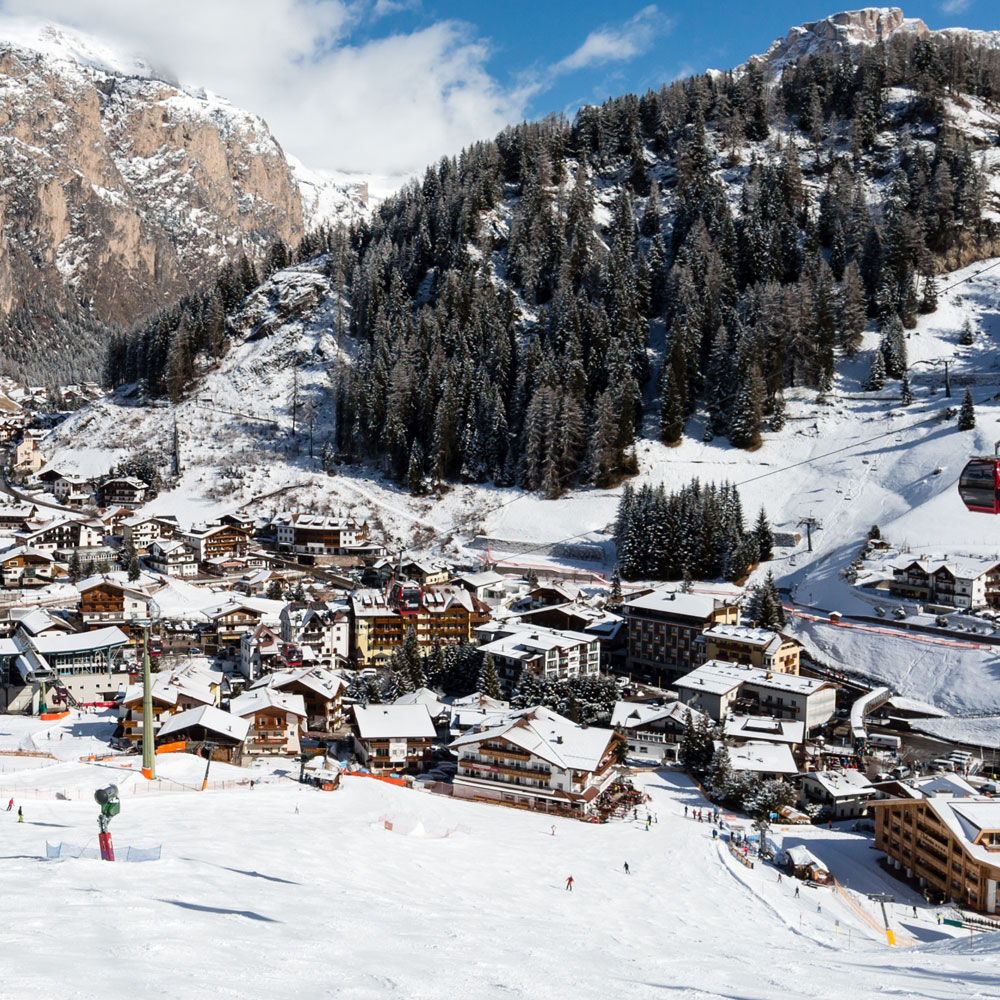
This is a lovely window for Italy: snow cover is usually more settled, linked ski areas are properly up and running, and the resorts feel lively without peak-holiday intensity.

February half term
Cervinia, Sestriere, Sauze d’Oulx, Selva Val Gardena, Livigno
This is when big ski areas and sensible resort choices really matter. Think mixed-ability appeal, room to spread out, and a smoother week when the mountains are at their busiest.

Late season
Cervinia, Livigno, Passo Tonale
Spring in Italy can be glorious, but this is the time to lean towards altitude and staying power. Ideal for sunny laps, long lunches and keeping proper ski mileage going later into the season.
Getting to Italian ski resorts - fly, train or drive
Italy is one of those ski countries where the journey can really shape the week.
Some resorts are brilliantly set up for a straightforward airport transfer, some make much more sense if you have a car, and some are surprisingly doable by rail if you do not mind a neat bit of onward travel. The trick is not treating the whole country like one big interchangeable ski map, because Italy tends to reward people who match the travel style to the right region.
Fly
Usually the easiest shout for a standard ski week, especially if you want the least possible messing about between baggage reclaim and your first mountain view.
Great fit for Cervinia, Sauze d’Oulx, Sestriere, Livigno, Passo Tonale, Selva Val Gardena and Cortina
Train
More realistic than people often assume, but definitely a “choose wisely” option. Italy can work very nicely by rail when the resort has a sensible gateway station and the final transfer is not an expedition.
Works nicely for Sauze d’Oulx, Sestriere, Selva Val Gardena and Madonna di Campiglio
Drive
A solid option if you want flexibility, or simply do not fancy playing luggage roulette. In the right parts of Italy, driving gives you a lot of freedom and can make the whole trip feel much simpler.
Strong for Cervinia, Sauze d’Oulx, Sestriere, Livigno, Passo Tonale and Madonna di Campiglio
Italy ski holiday FAQs
When is the best time to ski in Italy?
That depends on what you are trying to optimise.
For snow confidence, the higher resorts like Cervinia, Livigno and Passo Tonale are the safest early- and late-season bets.
For the full linked-area experience, January to early March is often the sweet spot, especially in the Dolomites and Via Lattea. For sunshine and terrace lunches with decent skiing still attached, late March and April can be brilliant in the right high resorts.
Which Italian ski resorts are best for families?
Family-friendly usually comes down to convenience, flow and terrain shape more than the marketing.
Cervinia, Selva Val Gardena, Madonna di Campiglio and Sestriere all make sense for different family types because they combine scale with decent infrastructure.
Passo Tonale is also often liked for its straightforward, practical feel. If you are travelling with younger children, focus on base layout and ski-school logistics as much as the piste map.
Which Italian resorts are snow sure?
The honest shortlist starts with altitude. Cervinia is the flagship answer. Livigno is another strong one, and Passo Tonale stays in the conversation because of glacier support and long-season positioning.
Beyond that, it is really about choosing the right point in the season and not assuming every beautiful Italian village is equally resilient when the weather turns mild.
Are Italian ski resorts good for snowboarders?
Yes, and in some cases very much yes. Livigno is the standout thanks to its freestyle reputation and strong snowboard identity.
The wider Dolomites and Via Lattea also give riders a lot of mileage when conditions line up well. As ever, the main thing to watch is flat-link annoyance in some larger networks, which is why resort-specific detail still matters once you narrow your shortlist.
What is the easiest Italian ski resort to get to?
There is no single winner, but there are some obvious easy-access contenders.
Sauze d’Oulx and Sestriere score well because Oulx is a proper rail gateway. Cortina is more practical than many people expect thanks to direct coach links from Venice.
Val Gardena is also easier on public transport than plenty of UK skiers realise once you understand the Bolzano or Bressanone setup.
Are Italian ski holidays expensive?
They can be, but they definitely do not have to be. Italy has premium-name resorts where location, school-holiday timing and polished town atmosphere push prices up fast.
But it also has resorts where the value equation is genuinely good, especially if you book outside peak weeks or choose a practical base over the most famous address in town. In other words, Italy is not automatically cheap, but it is often better value than people fear.
Which Italian resorts suit mixed-ability groups?
Italy is very good at mixed-ability trips because several of its best resorts sit inside wider linked domains.
Cervinia works well if people want different levels of challenge without feeling too split up. Livigno is strong because it combines varied skiing with a proper town.
Selva Val Gardena and Madonna di Campiglio are excellent when stronger skiers want mileage but others still want a beautiful, enjoyable week. Sauze d’Oulx and Sestriere are classic group picks for the same reason.
Tour Operators who go here
Ready to pick a resort?
Choose the Italy ski resort that feels right for your kind of week
Whether you want long lunch energy, high-altitude reassurance, handsome scenery, big linked skiing or a resort that leans more charm than chaos, Italy gives you plenty to work with. This is the point where casual browsing stops being very useful and the real shortlist starts taking shape.