


Courmayeur is what happens when a proper mountain town slips into a cashmere jumper: Mont Blanc doing all the dramatic shouting in the background, while everyone else eats well, dresses slightly better than necessary, and makes even a quick ski lunch feel faintly glamorous.
This guide was written by Michelle Wheeler
Courmayeur ski resort at a glance
Courmayeur sits in Italy’s Aosta Valley, right under the Mont Blanc massif – so yes, the scenery is outrageously good before you’ve even clicked into a binding.
The town is at about 1,224m, with skiing rising to 2,755m (Cresta d’Arp), and the season is typically early December into early April depending on snowfall and lift scheduling.
Expect a modern-feeling lift network (lots of cabins/cable cars for access, then chairs doing the mountain work) and a ski area that’s split across Plan Chécrouit and Val Vény – two sides with very different “moods”.
For UK travellers, it’s reassuringly doable: you’re looking at roughly 1.5 hours from Turin Airport, around 1.5 hours from Geneva Airport, and roughly 2–2.5 hours from Milan Malpensa in normal winter driving conditions. And once you’re there, the daily routine is easy: you’re basically choosing whether you’re a Dolonne gondola person, a Courmayeur cableway person, or a Val Vény cableway person – and you’ll plan your accommodation around that.

Altitude
1,224 m - 2,755 m
Pistes
100 km
Ski Season 26/27
28 Nov - 11 Apr
Transfer Time
90 mins
Number of pistes by difficulty
Resort Guide Quick Facts
(the stuff you actually care about)
Best for:
Intermediate skiers who want confident reds with Mont Blanc views, snowboarders who appreciate cabins and fewer drag-lift tantrums, and anyone who wants a resort that does “mountain lunch” like it’s a competitive sport. It’s also strong for mixed-ability groups because the area split (Plan Chécrouit vs Val Vény) gives you genuine variety without needing a mega-linked domain.
Ski area size:
The resort has 33 runs (11 blue, 17 red, 5 black), with 100km between piste and off-piste – it skis bigger than a simple piste-km number suggests, but it’s not a sprawling super-domain.
Altitude:
The town is 1,224m, Plan Chécrouit sits at 1,704m, and the top lift/slopes altitude is 2,755m (Cresta d’Arp). This gives you a decent altitude spread, plus that Mont Blanc “weather has opinions” factor – some days are perfect, some days are “espresso and a long lunch” days.
Villages / bases (each has a different vibe):
Courmayeur centre is the classic base: walkable, lively, and great for food. Dolonne is the practical skier’s choice – it’s its own little village feel but with immediate lift access and a slightly quieter night vibe. Entrèves/Val Vény side is brilliant if you want quick access to Val Vény terrain (and Skyway Monte Bianco nearby), with more of a “mountain hamlet” feel than town centre buzz.
Beginner friendliness:
Better than people assume – there are nursery areas at Plan Chécrouit and Maison Vieille, plus gentle zones accessed from the Entrèves cable car, including a magic carpet area.
Ski season (published dates):
Courmayeur’s 2026/27 ski season is scheduled to run from 28th November 2026 to 11th April 2027. That gives you a good late-November-to-mid-April window, although snow and lift availability can be more limited at either end. Check the official Courmayeur Mont Blanc Funivie winter dates before booking an early or late trip.
You’ll love Courmayeur for…
Snow sure
Apres-ski
Intermediates
| Our rating | |
|---|---|
| ★★ | Beginner |
| ★★★★ | Intermediate |
| ★★★ | Advanced |
| ★★★ | Off-Piste |
| ★★★ | Snowboarding |
| ★★★★ | Snow Reliability |
| ★★ | Extent |
| ★★★★ | Apres-Ski |
| ★★★ | Mountain Restaurants |
| ★★★★ | Scenery |
| ★★★★ | Village Charm |
| ★★★ | Non-Skiers |
Best for snow: Late January - March
Late January to March is your safest bet - colder temps, deeper base, and snowmaking has usually done its job.
Best for value: Early January (after New Year) and late March
Early January (after New Year) and late March can be a sweet spot: quieter slopes, better deals, still plenty open.
Best for families: February half-term
February half-term is lively and well-supported, but book lessons, lunch spots, and accommodation early or regret it.
Avoid if possible: Christmas / New Year and UK half-term weeks
Christmas/New Year and UK half-term weeks if you hate queues and want last-minute everything to be easy.
Tour Operators who go here





Looking to stay in Courmayeur?
What’s Courmayeur like?
Courmayeur feels like a “real” mountain town with Italian polish – the kind of place where you can finish skiing and immediately switch into a nicer dinner plan without feeling like you’re overdressed for the village.
It’s got that Mont Blanc glamour (quietly expensive jackets, good coffee, great food), but it’s not a fake luxury bubble: you’ll still see proper local life ticking along.
On the mountain, the split personality is the fun bit. Plan Chécrouit tends to feel open, cruisy, and sociable, while Val Vény has a more dramatic, wilder look and a slightly more “serious mountain” vibe.
You can do mellow confidence-building laps one day, then go chasing steeper lines and different light the next – without needing to drive anywhere.
Town layout
Courmayeur’s layout is straightforward: the centre is compact and walkable, with shops and restaurants clustered so you can do the classic “boots off, shower, aperitivo” routine without a taxi budget.
For skiing access, you’ll usually commit to one of the lift bases: the Courmayeur cableway (up to Plan Chécrouit), the Dolonne gondola (super convenient if you stay that side), or the Entrèves / Val Vény cableway (for Val Vény terrain and a quieter base feel).
Overall vibe
Think “Italian resort with taste” rather than “rowdy ski factory”. The après exists, so no one’s pretending Courmayeur goes to bed early, but that’s not really the main event.
The bigger pull is the food, the wine, the polished little-town feel, and that slightly smug pleasure of skiing all day with Mont Blanc looming theatrically in the background.
It’s a resort that suits people who want their ski trip to feel like a proper holiday as well as a ski week – relaxed, stylish, and civilised, even if they still plan to ski hard from first lift to last.
Après-ski
Après in Courmayeur is less about inflatable penguins at 3pm and more about places that start as a sunny terrace drink and escalate… if you choose violence.
You’ve got proper slope-side spots like Super G and Bar du Soleil, and then you roll back into town for late drinks or a bigger night at places like Shatush if you want it.
The best part: you can tailor it – gentle aperitivo energy or “we’ve accidentally stayed out” energy, depending on your group.
Looking to stay in Courmayeur?
Who Courmayeur suits
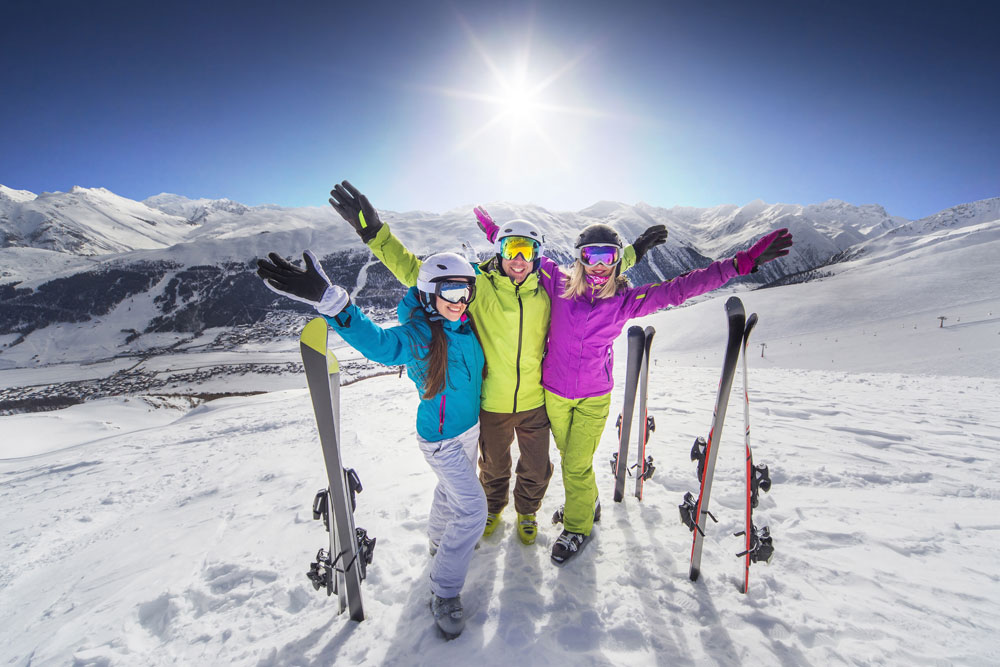
Intermediates (the sweet spot)
This is your playground. Courmayeur’s reds are the “fun, confidence-building” kind, and the terrain split keeps things interesting: cruise and lap Plan Chécrouit when you want flow, then switch to Val Vény for a different feel and lighting.
The mountain stats even call out big vertical drops (like Arp–Dolonne) that intermediates will love as a “that was a proper run” moment.
Stay tip:
- Central Courmayeur for the best mix of lift access, food, and evenings without needing transport plans.

Advanced skiers & snow-sure seekers
Courmayeur has real expert appeal thanks to its steeper sectors, strong freeride culture, and access to proper big-mountain terrain, including famous routes linked to the Mont Blanc massif.
The Skyway itself even highlights Vallée Blanche access from Punta Helbronner, which tells you straight away this is serious glaciated terrain, not something to treat like a casual detour.
There’s a long mountain-guiding tradition here too, which feels very fitting for the place.
Stay tip:
- Entrèves / Val Vény side if your priority is fast access to that side’s terrain and you like an early start.

Snowboarders
Snowboarders generally get on well here because the lift mix leans heavily on cabins/cable cars for access, which is kinder on knees and dignity than endless drags.
You’ll still want to plan routes to avoid awkward flats, but you can build great days by lapping Plan Chécrouit for flow, then heading to zones like Youla or Arp when you want steeper, more “ridey” terrain.
Stay tip:
- Dolonne is a strong choice – quick lift access and easy returns, so you’re not unstrapping for a long walk home.

Beginners (with a smart plan)
Courmayeur is quietly beginner-friendly if you base yourself smartly. The gentler learning zones around Plan Chécrouit and Maison Vieille make progression less intimidating, and the Entrèves side is also flagged as a good beginner starting point with a magic carpet and mellow slopes.
For confidence days, aim for mountain restaurants around the learning areas so you’re not taking a survival-level red run to get lunch.
Stay tip:
- Near the Courmayeur cableway or Dolonne gondola so mornings are simple and you can bail easily if legs (or nerves) give up.

Families
Courmayeur works for families because it’s a compact town with quality services and a ski school scene that’s set up for kids and progression.
The resort has a large instruction base (over 300 instructors) and you’ve got beginner zones that keep first-timers out of harm’s way. Off the slopes, you’ve got easy win activities like Skyway, and the nearby thermal spa at Pré-Saint-Didier is the ultimate “tired parent recovery plan”.
Stay tip:
- Courmayeur centre for walkability (restaurants, shops) or near the cableway/Dolonne to keep ski-school mornings smooth.

Freestyle / Terrain Parks
Courmayeur’s setup is better than you might expect from its classy, polished town vibe.
There’s an Aretù rail area with beginner and advanced lines, plus kicker lines and a jib area, so it’s got enough going on for progression without needing to be some huge, full-blag mega-park.
The piste map also marks a Snow Park zone, which means you can easily work a few park laps into a normal ski day rather than making it your entire personality.
Stay tip:
- Courmayeur/Dolonne so you’re closest to the main lift arteries and can do short sessions without wasting time.
Looking to stay in Courmayeur?
Where is Courmayeur?
Courmayeur is in north-west Italy’s Aosta Valley, tucked right under the Mont Blanc massif and close to the borders with France and Switzerland.
It’s a classic “Italy but very Alpine” location: you’re not in the Dolomites vibe here – it’s big peaks, glaciated scenery, and proper high-mountain energy. Travel-wise, it’s made easier by good access from major airports and by the fact that you’ve got multiple lift bases (Courmayeur, Dolonne, Entrèves) feeding the ski area’s two main sides, Plan Chécrouit and Val Vény.
Looking to stay in Courmayeur?
Skiing in Courmayeur (ski area, terrain, lifts, snow)
Courmayeur is one of those resorts where the shape matters as much as the stats.
It’s not a single mega-bowl you mindlessly lap; it’s two distinct sides with different feel and light, connected by lifts and smart routing.
Courmayeur’s ski area is split across the contrasting Plan Chécrouit and Val Vény sectors, with 33 runs served by 18 lifts. The town sits at 1,224m, while the lift-served terrain reaches 2,755m.
But the real story is how you use it: start early to dodge queues, pick the right side for weather and visibility, and plan lunch like it’s part of your ski technique.


Terrain overview
Courmayeur’s ski area is more interesting than it first looks on a piste map because it’s not one big obvious bowl where everything fans neatly from a single front.
Instead, the mountain is shaped around a few distinct zones that each change the feel of your day: Plan Chécrouit is the main side and the easiest place to get your bearings, with the cruisier feel, key meeting points, and the kind of terrain most people naturally start on.
Then you’ve got Val Vény, which feels more dramatic and slightly wilder, with that big-mountain Mont Blanc backdrop doing a lot of the heavy lifting for the resort’s personality.
Maison Vieille, Youla, and Arp are the names that matter because they’re the points that decide whether your day feels relaxed, scenic, fast-moving, or a bit more adventurous.
That split layout is exactly why Courmayeur can feel charming and slightly tactical at the same time. The town itself feeds the main mountain via the Courmayeur cableway, Dolonne gives you a very handy gondola base, and Entrèves is the key access point for the Val Vény cableway.
It means the mountain doesn’t fill up in one simple, predictable way: the obvious base lifts get busiest first, then things often feel more relaxed once people have spread themselves across Plan Chécrouit, Youla, Arp, and over towards Val Vény.
Stay tip:
Book your hotel around the lift you’ll actually use every morning, because “five minutes away” can mean something very different once ski boots and uphill streets get involved.
Lifts & getting around the mountain
One of Courmayeur’s underrated strengths is that the lift system is genuinely quite comfortable to use.
For a resort with a stylish, old-school mountain-town reputation, it gets you uphill pretty efficiently: you’ve got 4 cable cars, 2 cabin lifts, 8 chairlifts, plus surface lifts and a beginner carpet, so the overall feel is less draggy and exposed than some resorts where half the day seems to happen on slow chairs in bad weather.
On colder, windier or snowier days, that mix matters. There’s a real difference between “romantic Alpine day out” and “why can’t I feel my face?”, and enclosed lifts help keep Courmayeur on the right side of that line.
That said, the headline uplift capacity doesn’t magically erase pinch points. Even with 26,305 people per hour, you’ll still feel pressure at the predictable moments: the first lift wave in the morning, around ski-school meeting times, and during busy holiday weeks when everyone has exactly the same bright idea.
Courmayeur isn’t unusual there – but because access is channelled through a few key lift bases, the queues can feel more concentrated than in resorts with a huge spread-out front.
The best strategy is be organised, get there early, and decide whether you’re doing a full day or a clever partial one. If you miss the first push and rock up late, you’re often better off leaning into a shorter, smoother day rather than trying to wrestle a peak-time start into submission.
This is very much a resort where timing your day well makes the mountain feel smarter, calmer and more premium.
Stay tip:
If queue-dodging is one of your love languages, stay in Dolonne so you can get to the lift base quickly and quietly before the main town traffic starts funnelling in.
Snow reliability & season length
Courmayeur’s snow reliability is one of those stories that needs a slightly more grown-up answer than “high resort = good snow” or “Italian side = sunny so probably slushy.”
In reality, it’s a mix of altitude, aspect, terrain choice, and a strong snowmaking setup. The resort has 82% artificial snow coverage, backed up by a substantial network of snow cannons and snowmaking stations, which gives it a much sturdier core-season setup than people sometimes assume when they think of Courmayeur mainly as the chic side of Mont Blanc.
The top station at 2,755m is comfortably high enough for solid mid-winter conditions, even if this is not one of those ultra-high glacier domains where snow quality is the entire brand identity.
What really helps Courmayeur feel adaptable is the fact that the mountain doesn’t ski as one single weather zone. Plan Chécrouit and Val Vény can feel very different on the same day depending on sun, wind, visibility and recent snowfall.
One side might be the obvious choice for clearer cruising, while the other feels colder, snowier, more protected, or just better preserved. That gives regulars a bit of tactical freedom, which is part of the resort’s appeal.
The honest version, though: early and late season can absolutely work, but lower slopes are still lower slopes. You shouldn’t build a precious once-a-year trip around the fantasy that November or very late spring will definitely ski like peak February just because Mont Blanc is nearby looking dramatic.
Courmayeur usually delivers best when you treat it as a smart mid-season bet with flexibility, not a miracle machine.
Stay tip:
If you’re travelling early or late season, stay near the Courmayeur cableway or Dolonne so you can get up to the more reliable snow quickly and avoid wasting energy on the lower mountain.

Courmayeur’s off-piste reputation is absolutely real, and this is where the resort stops being merely stylish and starts feeling properly serious.
This is Mont Blanc terrain – the kind of place where the scenery is incredible, the possibilities are big, and the consequences are very capable of being big too. The access to the Vallée Blanche from Punta Helbronner is about as far from “cheeky little powder detour” as you can get. That route is legendary for a reason: it’s glaciated, high-mountain, and part of a wider alpine world that deserves respect.
Courmayeur’s long-standing mountain-guiding culture fits that perfectly; this is not a resort pretending to have adventure credentials – it genuinely has them.
You can feel that identity in the surrounding terrain too. You have freeride-focused areas like Toula and Marbrées, so exploring beyond the piste boundaries is part of the local skiing culture.
Proper off-piste here means guide territory, avalanche-awareness territory, and equipment territory. The sensible rule is very simple: if you want the Mont Blanc version of Courmayeur, do it properly. That means a guide, the right kit, and enough humility to understand that spectacular terrain is not the same thing as forgiving terrain.
Stay tip:
If off-piste days are the main event for you, base yourself in Entrèves or near the Val Vény side so you can get to the right lift fast and make the most of the best snow window.
Beginners & improvers
Beginners can ski in Courmayeur happily, but they’ll have the best time when the whole day is kept simple and low-friction. This is not a resort where absolute first-timers want to spend half the morning dealing with awkward logistics, long walks, or ending up on the wrong side of the mountain because something looked straightforward on a map.
The good news is that there are gentler nursery and learner-friendly areas around Plan Chécrouit and Maison Vieille, and the Entrèves side is also beginner-accessible, with a magic carpet and mellow terrain that makes the early learning curve feel more manageable. So yes, beginners can absolutely get going here without being thrown straight into “whoops, that’s definitely not a green” territory.
For improvers, Courmayeur can actually work really well because it rewards repetition and confidence-building rather than forcing you into endless motorway pistes. If you pick one zone and lap it properly, you can build rhythm and control without that chaotic sense of always having to move on to the next huge sector.
The thing to watch is energy and return planning. Because Courmayeur’s skiing is split across distinct areas, tired legs plus poor timing can leave you with a more annoying end-of-day shuffle than you’d ideally want.
It’s not disastrous, but it’s the sort of resort where a small logistical mistake can make a beginner day feel harder than the skiing itself. Keep it simple, keep it local, and let progress come from familiarity rather than over-ranging too early.
Stay tip:
If you’re a first-timer or cautious improver, stay near the Courmayeur cableway or Dolonne so you can reach the learning zones quickly and get home easily if the legs – or the confidence – go missing mid-afternoon.
Freestyle & “more than pistes”
Courmayeur’s freestyle side is a nice surprise because it fits the resort’s personality in quite a clever way.
This is not a place trying to reinvent itself as a hardcore park destination with endless features and a full-time “send it” identity. Instead, it offers something much more usable for most people: a proper, well-integrated freestyle zone that lets you mix things up during a normal ski day.
The Aretù area at 2,000m has beginner and advanced rail lines, double kicker lines around 6–8m, and jib features, which is more than enough for people who want progression, variety, or just a bit of fun without planning their whole holiday around park laps.
That actually suits Courmayeur brilliantly. The mountain’s appeal is about balance: scenic cruising, interesting sectors, good lunches, stylish town, then enough extras to stop the ski day feeling one-note. So the fact that you can dip into freestyle, do a few laps, then go straight back to cruising or exploring makes the whole thing feel more relaxed and less performative.
It also makes the resort a decent fit for mixed groups, where not everyone wants the same kind of day. One person can scratch the park itch, someone else can stick to the pistes, and you can still regroup without it turning into a full logistics operation.
That “more than pistes” feeling is part of what makes Courmayeur quietly appealing: it has range, but it doesn’t shout about it.
Stay tip:
If you’re planning to mix park laps with general piste cruising, staying central in Courmayeur or Dolonne keeps the whole day flexible, so you can dip in and out of different zones without overcommitting.
Best Runs in Courmayeur (by ability)
For beginners:
Stick to the gentler zones around Plan Chécrouit and Maison Vieille, and build confidence on the mellow labelled areas like Pra Neyron and Le Greye rather than chasing “bigger” terrain too early.
If you’re learning, your best run is the one you can repeat without panic – that’s how you improve fast.
For intermediates:
Make time for the big vertical feel of the mountain – check out Arp–Dolonne – an amazing headline descent – the kind of run intermediates remember.
Mix in laps around zones like Youla, Aretù, and Plan Chécrouit when you want flow and consistent snow.
For advanced:
Chase steeper lines and the more serious terrain feel around Youla and the Val Vény side, and keep an eye on conditions because this area can go from perfect to spicy very quickly.
Check out zones like Zerotta and Peindent over on the Val Vény side, which advanced skiers often use as gateways to more technical skiing and freeride planning.
Off-piste note:
Courmayeur is close to true high-mountain routes – including glaciated terrain like Vallée Blanche that should be approached with a qualified guide and the right equipment.
Looking to stay in Courmayeur?
Looking for accommodation in Courmayeur
Courmayeur is one of those resorts where your accommodation choice can genuinely upgrade (or mildly sabotage) the whole week – not because anything is “bad,” but because the skiing access points are distinct.
If you stay in Courmayeur centre, you get maximum evening convenience: restaurants, bars, shops, and that classic Italian “stroll and snack” vibe. If you stay in Dolonne, you’re playing the practical game: super quick access to the lift base and a slightly calmer feel at night, while still being close enough to town for dinner. If you base yourself near Entrèves / Val Vény, you’re leaning into a quieter, mountain-hamlet vibe with fast access to the Val Vény cableway (and Skyway Monte Bianco nearby).
The big “decision tip” is this: don’t pick your base based on vague claims like “close to the lifts.” Pick it based on which lift you’ll actually ride most mornings.
Quick chooser: which area is right for you?
- If you want a classic first trip with everything walkable, go Courmayeur centre.
- If you’re here to ski hard and minimise faff, go Dolonne.
- If you want quieter nights and Val Vény focus, go Entrèves/Val Vény side.
- If you’re a scenery-and-chill person, consider the valleys (Val Ferret/Val Vény) – just accept you’ll be using buses/taxis more.
Village Comparison Table
| Area / Base | Altitude | Vibe | Best For | Nightlife | Beginner-Friendly | Access / Getting Around |
|---|---|---|---|---|---|---|
| Courmayeur centre | 1,224m | Lively, stylish, walkable | First-timers, foodies, mixed groups | ★★★★ | ★★★★ | Walk to cableway or short ride to Dolonne/Entrèves |
| Dolonne | 1,205m | Practical, slightly quieter | Ski-first trips, early starts | ★★★ | ★★★★ | Step-straight-into-lift convenience; easy into town |
| Entrèves / Val Vény base | 1,300m | Hamlety, mountain feel | Val Vény focus, quieter stays | ★★ | ★★★ | Quick to Val Vény cableway; town is a short ride away |
| Val Ferret / Val Vény valleys | Varies | Scenic, calm, nature-first | Quiet breaks, walkers, “not here to party” | ★ | ★★ | You’re committing to transport planning |
(Star ratings are “relative vibe” rather than gospel)
Best Area for First-Timers
If it’s your first trip to Courmayeur, then stay towards Courmayeur centre.
It gives you the easiest, least faffy version of the resort: breakfast cafés, ski hire, shops, bars, and dinner options all within a pretty easy walking radius, so the holiday feels smooth from day one rather than slightly logistical.
Just as importantly, you’ve got direct access to the ski area via the Courmayeur cableway, which keeps your morning routine nice and simple.
That matters more here than people expect, because Courmayeur is stylish and compact-looking, but it isn’t one of those resorts where every hotel magically spills straight onto the slopes. For first-timers, that simplicity is gold.
People massively underestimate how much energy gets burned on the “admin” side of skiing: finding the right bus, wondering if you’ve picked the wrong lift base, realising your hire shop is actually further away than it looked online, or dragging tired legs home after a long day. Staying in the centre strips a lot of that out.
It also suits beginners and nervous skiers especially well, because if the weather turns, the legs go, or someone in the group decides they’re done by lunchtime, you’ve got warm cafés, lunch spots, and easy retreat options right there instead of being marooned in a quieter corner of resort.
Stay tip:
For a first Courmayeur trip, stay close enough to walk easily to the Courmayeur cableway, not just “central-ish” on a map – uphill streets and ski boots have a funny way of making five minutes feel like fifteen.
Best Area for Ski-in Ski-out
Courmayeur needs a bit of honesty on ski-in/ski-out, because it is not that classic purpose-built, click-in-outside-your-apartment kind of resort.
This is a proper mountain town with character, not a giant snowfront lined with concrete blocks and convenience. So the best practical answer is to stay very close to the Dolonne gondola or within easy reach of the Courmayeur cableway.
That gives you the closest thing to ski-in/ski-out by Courmayeur standards: not literal doorstep skiing for most places, but a short, manageable walk that keeps the day feeling smooth instead of turning lift access into a mission.
Dolonne is especially strong if your definition of ski convenience is “I want to waste as little time and effort as possible before first lift.” It has a more functional feel than staying right in the heart of town, but that’s exactly the appeal if your priority is mountain access rather than evening atmosphere.
Around the Courmayeur cableway works well too, especially if you still want the buzz of the centre nearby. The main thing is not to get seduced by optimistic marketing language.
In Courmayeur, some places will hint at ski-in/out credentials when what they really mean is “you can get to a lift eventually with enough determination.” If it needs a bus ride or a complicated transfer, that is not ski-in/ski-out – that is just branding with good marketing.
Stay tip:
If ski convenience is your main priority, look for accommodation near Dolonne gondola or the Courmayeur cableway, and treat any listing that mentions a bus as “ski-near-ish” rather than genuine ski-in/ski-out.
Best Area for Nightlife
For nightlife, the clear winner is Courmayeur centre. That’s where the resort’s evening personality really shows up: aperitivo spots that turn into another drink, good wine bars, smart restaurants, and places like Shatush when the night starts drifting beyond respectable intentions.
Courmayeur nightlife is not really about chaotic, boots-on-tables, all-day carnage in the way some Austrian resorts are. It’s more polished, more food-and-drink-led, and a bit more “let’s have one nice glass of wine” before somehow ending up several venues deep. If that sounds like your kind of evening, the centre is where you want to be.
Staying elsewhere is possible, obviously, but it changes the mood. In Dolonne or Entrèves, you can still head into town for drinks or dinner, but the small psychological drag of needing to think about the trip home does make people weirdly sensible.
Suddenly someone’s checking the time, someone else is googling taxis, and the whole night loses a bit of momentum.
In the centre, you can just lean into the evening properly without the transport admin hovering in the background. That makes a big difference in Courmayeur, because part of the fun here is how naturally the town flows from ski day to aperitivo to dinner to “well, clearly we’re not going home yet.”
Stay tip:
If evenings matter, stay in Courmayeur centre proper, so you can walk home after bars and dinner instead of accidentally becoming the person who leaves early because the last bus is looming.
Best Area for Families
For families, look at Courmayeur centre for convenience and flexibility, or Dolonne if easy lift access matters more than being in the middle of the action.
Courmayeur centre works well because it makes the whole week simpler: you can walk to shops, cafés, and restaurants, grab forgotten gloves without a full expedition, and generally keep life easy if plans change at short notice.
That’s especially handy with younger kids, tired legs, or mixed-energy days where one person wants to push on and someone else wants hot chocolate immediately. It also helps that Courmayeur feels like a real town rather than a purpose-built resort bubble, so the non-ski bits feel more pleasant and less like filler.
Dolonne is a strong family option too, particularly if mornings are your stress point. Being close to a lift base helps enormously when you’ve got children in lessons, bags to carry, layers to negotiate, and the usual family ski-holiday chaos before 9am.
You’re also slightly removed from the busiest evening buzz, which can be a plus if your ideal night involves an easy dinner and an earlier bedtime rather than one last drink.
Another reason Courmayeur works for families is that it has genuinely good non-ski options nearby: Skyway Monte Bianco is the obvious headline outing, and Pré-Saint-Didier gives you a proper spa-and-thermal option for adults or older teens on quieter days.
So if weather, energy, or attention spans wobble, you’re not stuck with “guess we’ll just sit in the hotel lobby then.”
Stay tip:
For family trips, choose Courmayeur centre for all-round ease or Dolonne for smoother ski mornings – and prioritise being near the lift you’ll actually use, because that’s what really lowers the stress levels.
Best Area for Budget Travellers
Courmayeur is not a classic budget resort, so the trick here is less about finding a magically cheap neighbourhood and more about limiting the expensive little leaks that add up over a week.
On that front, Dolonne often makes the most sense. It can be a smart base because you’re close to lift access, which helps you avoid paying for taxis, relying on buses, or wasting time and money moving around more than necessary.
You’re also close enough to town to make self-catering practical, pick up groceries without hassle, and keep restaurant spending under a bit more control rather than defaulting to the handiest expensive option every time hunger strikes.
The bigger budget win in Courmayeur is being strategic, because this is the kind of resort where people overspend by accident. They book somewhere that looks cheaper but is awkwardly placed, then end up paying in transport, convenience meals, or lost ski time.
Or they buy full-day lift tickets for every single day when a couple of shorter sessions would actually make more sense, especially on arrival day, departure day, or a weather-affected afternoon.
Courmayeur rewards people who plan a bit rather than people who assume it’ll all somehow balance out. Stay smart on location, keep your daily logistics tight, and the resort becomes much more manageable financially – even if it’s never going to be “cheap and cheerful” in the old-school bargain sense.
Stay tip:
if you’re watching the budget, stay in Dolonne and build your savings around walkable lift access, self-catering convenience, and smarter ticket choices, because in Courmayeur the hidden costs are what really get you.
Our Top Hotels

★★★★
- Village near centre
- Lifts - around 2 mins walk to the ski elevator
- Pool + spa
It sits close to the ski elevator for Plan Checrouit, and the chalet-style setup gives you more breathing room than a standard hotel room.
The feel here is more ‘cosy Alpine nest’ than standard hotel box.
You get chalets, apartments and rooms in warm wood-and-stone style, plus proper wellness facilities for easing ski legs at the end of the day.
Why choose it? Brilliant if you want beginner logistics with grown-up comfort and a proper post-ski recovery zone.

★★★★★
- Village centre
- Lifts - around 450m to cable car
- Pool + Royal Spa
This is the one for travellers who like a proper old-school hotel feel, with elegant public spaces, a spa, a pool and a location that puts you right in the heart of the village.
You get the Royal Spa, refined lounges and a location that works beautifully for dinners, shopping and evening strolls.
The lift walk is longer than others, but manageable, the trade-off is being properly in Courmayeur’s elegant centre.
Why choose it? Pick it for classic five-star Courmayeur style right where the village is at its loveliest

★★★★
- Quiet edge / near Dolonne
- Lifts - 800m to lift, free shuttle
- Spa, sauna, steam room + outdoor hot tub
It sits slightly away from the busiest centre, with a free shuttle. You’re close enough to Courmayeur’s centre for aperitivo, but not right in the thick of the evening buzz.
The hotel has a cosy chalet feel, with wood, stone, mountain views and a more personal atmosphere.
The wellness setup is also genuinely useful, with sauna, steam room and an outdoor hot tub for post-ski recovery.
Why choose it? A cosy, characterful all-rounder with shuttle convenience and a surprisingly good wellness setup.

★★★
- Quiet edge of town
- Lifts - free minibus / around 700m to slopes
- Wellness area - none
It sits slightly away from the main buzz, the free minibus helps with lift access.
This is not a spa-and-scented-candle sort of place. It’s traditional, family-run, a little old-school and much more about value than gloss.
The appeal is simple: you get a real hotel, proper meals, a quieter setting and transport help to the lifts.
It’s best for travellers who don’t mind being slightly off the main drag if the price is right.
Why choose it? A sensible value pick with shuttle help, proper food and no unnecessary frills pushing up the price.
Tour Operators who go here
Looking to stay in Courmayeur?
Après ski, restaurants & winter activities
Courmayeur is a resort where the off-slope experience is genuinely part of why people come back.
The town has that Italian “we care about food and appearance” thing going on – in a good way – so even a casual dinner feels like a proper plan.
Après is more terrace-and-spritz than foam-and-whistles, and it can either stay classy or get lively depending on where you steer the group.
Food is the headline: you’ve got mountain huts that do sunny lunches properly, plus in-town restaurants that range from pizza comfort to special-occasion dining.
And for non-ski days, Courmayeur is stacked: Skyway Monte Bianco is an all-timer, and the thermal spa at Pré-Saint-Didier is the most convincing argument for taking a rest day you’ll ever hear.

Courmayeur après is less about going full chaos by default and more about picking the version of the evening that suits your mood.
If you want that classic mountain moment where “we’ll just stop for one” quietly turns into a full golden-hour session, the slope-side spots are where to start. Super G is the obvious big-name move if you want views, atmosphere, and that polished Courmayeur energy where it all feels a bit more stylish than your average plastic-beer-sun-terrace situation.
Bar du Soleil is another easy win for a relaxed drink while you’re still in ski mode, and The Outsider is exactly the sort of place that works when the weather’s good, the legs are pleasantly tired, and nobody’s in any rush to head down.
Once you’re back in town, the mood shifts from mountain après to proper evening-out territory. Courmayeur centre is where the resort’s nightlife really comes into its own: more aperitivo, more wine, more “let’s do this properly.”
Caffè della Posta is a good example of that more refined, civilised side of the resort – ideal if you want a pre-dinner drink that feels stylish rather than shouty. Then there’s Shatush, which is the place to aim for when you want the night to stop pretending it’s just about a quiet drink and actually get going.
The clever way to do Courmayeur is to plan the evening backwards. If you’ve booked a nice dinner, go for a scenic drink at Super G or Bar du Soleil, enjoy the moment, then head down while you still feel organised and vaguely superior. If the plan is Shatush and a proper late one, embrace that too – just don’t kid yourself that tomorrow is the day for heroic first-lift ambition.
Mountain‑top Moments
Courmayeur mountain food is not just “grab something and crack on” territory – it’s a genuine part of the resort’s appeal.
The ski area itself has more than twenty mountain chalets and restaurants, which tells you a lot before you’ve even sat down: this is a place where lunch matters.
Big names worth knowing include Maison Vieille for that classic, comforting mountain-stop feel, Super G for a polished terrace lunch with a bit of scene, Chiecco on Plan Chécrouit for an old-wood-hut, traditional-Courmayeur atmosphere, and Rifugio Monte Bianco on the Val Vény side when you want your lunch served with full-blown Mont Blanc drama.
Chez Ollier is another strong shout, leaning into family-run warmth, local dishes, and homemade desserts rather than anything overly showy.
This is where Courmayeur feels most like itself: Fontina, Fromadzo, local cheeses, polenta, and proper Valdostan cooking, rather than the usual forgettable ski-lunch filler.
The smart move is to make one lunch a proper occasion – sunny terrace, clear views, maybe even a long, lazy stop if the weather is showing off – then keep the other days quicker and more functional so you still get the ski mileage in.

In town, Courmayeur does food in a way that feels very like the resort itself: polished, a bit indulgent, but still rooted in the Aosta Valley rather than just doing generic “nice Italian dinner.”
If you want the proper special-occasion night, Pierre Alexis 1877 is the one to dress up for in the pedestrian centre, with a menu built around local ingredients and alpine foraging rather than just standard mountain-hotel luxury.
Depending on the season, that can mean dishes like Fontina mousse with chestnuts and black truffle, plin ravioli with hare, mountain pine risotto, or deer with cocoa and quince – which is a very Courmayeur way of saying “yes, we ski, but we also care what’s on the plate.”
For easier comfort, Pizzeria du Tunnel is the reliable classic: it bills itself as the oldest pizzeria in Courmayeur, has a wood-fired oven, more than 30 pizzas, and also serves typical Valdostan dishes alongside the usual pizza-and-pasta safety net.
For those in-between evenings when nobody wants a full production but everyone still wants to eat well, Caffè della Posta 1911 and Café Roma are exactly the sort of places that make Courmayeur evenings easy.
Caffè della Posta is the more historic, aperitivo-first option right on Via Roma, the sort of place that suits a drink, some lighter plates, and a civilised “let’s see where the night goes” start.
Café Roma is a bit livelier, built around cocktails, music, and an aperitivo buffet with local cheeses, cured meats, and gourmet antipasti, so it works well when the group wants flexibility rather than a rigid booking.
And because this is Courmayeur, it’s worth leaning into the local side of the menus too: look out for things like Fontina, Fromadzo, Lard d’Arnad, polenta concia, and carbonada, because that’s what makes eating here feel specific to the resort rather than just “Italian food after skiing.”
The best Courmayeur approach is one standout dinner, one easy pizza night, and one flexible aperitivo-led evening – enough planning to eat very well, without turning every night into a mission.
Skyway Monte Bianco is the obvious headliner, but in Courmayeur it really does earn that status. This is not just “nice cable car, good view” territory: the rotating cabins climb from the valley up to Punta Helbronner at 3,466m, with the Pavillon mid-station giving the whole experience that slightly surreal, high-alpine-theatre feel Courmayeur does so well.
It is spectacular in the obvious visual sense, but it also feels more dramatic here because you’re looking straight into proper Mont Blanc terrain, not just admiring a pretty backdrop from a distance. And because Skyway is tied into serious alpine routes like the Vallée Blanche world, even non-skiers get that extra thrill of feeling close to somewhere genuinely big-mountain and iconic.
If your idea of a perfect non-ski day involves less altitude and more horizontal lounging, Pré-Saint-Didier is the classic Courmayeur answer: a historic thermal spa facing Mont Blanc, and exactly the kind of place that can turn even the most committed piste-hound into a warm-water convert.
Beyond that, Courmayeur is strong precisely because the non-ski options don’t feel like filler. Via Roma gives you a proper pedestrian shopping street with boutiques and sports shops, the Courmayeur Sport Center adds things like ice skating and indoor climbing, and the snowy landscapes of Val Ferret and Val Vény open up scenic winter walks, snowshoeing and even sleddog experiences.
So if the group wants a day off skiing, Courmayeur can still deliver something that feels genuinely like a holiday, not just an awkward gap in the schedule.

Getting home safely & easily
Getting home after a night out in Courmayeur is either pleasantly easy or mildly character-building, depending entirely on where you’ve decided to stay.
If you’re based in Courmayeur centre, this is one of the resort’s big strengths: the town is compact and walkable enough that dinners, drinks, and aperitivo stops can usually end with a straightforward stroll back rather than a transport mission.
That makes the centre a very forgiving base for evenings, especially if your plans start civilized and then quietly drift into “ah, apparently we’re staying for one more.”
If you’re staying in Dolonne or over towards Entrèves / the Val Vény side, the equation changes a bit. You can absolutely still enjoy nights out in town, but you’ll usually need to think about local buses, hotel shuttles, or taxis rather than assuming the journey home will sort itself out.
And really, that’s the key Courmayeur rule: make the getting-home plan before you properly settle into the evening. The classic “we’ll work it out later” approach sounds very relaxed at 7pm and feels much less clever when it’s cold, you’re underdressed, and someone is insisting the walk “isn’t that far” despite clearly having no idea.

Ski schools & learning zones
Courmayeur is a strong place to learn because it’s got proper infrastructure and a well-developed instruction scene.
The resort has a large pool of instructors (over 300) across local schools, with options for both skiing and snowboarding and a mix of private and group formats.
The biggest “success factor” isn’t just booking a good school – it’s making the daily routine easy so you actually show up relaxed (and on time), rather than flustered and arguing about where the meeting flags are.
If you’re progressing from beginner to intermediate, Courmayeur’s split terrain is helpful: you can stick to gentle zones when you need confidence, then move to longer, more varied runs as your control improves.
And for advanced skiers, guiding is where Courmayeur really comes into its own – this is Mont Blanc territory, and local guides are part of the culture, not an add-on.

In Courmayeur, beginner learning works best when you keep things simple and use the mountain’s gentler, more confidence-friendly zones properly rather than trying to “see a bit of everything” too soon.
The most useful areas are around Plan Chécrouit and Maison Vieille, where the nursery slopes and easier terrain make repetition feel natural rather than tedious – and that repetition is exactly what helps beginners improve.
Courmayeur is not one of those resorts where the learning experience is spread evenly everywhere; it works better when you treat the right zones as proper bases and let confidence build there first.
The Entrèves side is also worth knowing about because it’s flagged as beginner-friendly, with a magic carpet and gentler terrain that can feel calmer and less hectic during busier weeks or peak holiday periods.
That matters because Courmayeur’s mountain is split into distinct sectors, and beginners usually have a better time when the day feels contained rather than sprawling.
Courmayeur rewards the calmer approach: build confidence around Plan Chécrouit or Maison Vieille first, then widen the day once the basics feel genuinely easy.
On uplift, Courmayeur is kinder to beginners than some resorts because so much of the access relies on cabins and cable cars rather than long, exposed chairs right from the start. That takes away a surprising amount of beginner anxiety. There’s a huge difference between learning to ski and learning to ski while also worrying about how to get on and off a lift without causing a small public incident.
In Courmayeur, the enclosed lifts help reduce that “learning tax,” so once you’re comfortable getting up the mountain without feeling rattled, progress tends to come much faster.
For nervous adults and first-time kids especially, that makes the whole experience feel more manageable from day one.
If lessons are a big part of your trip – your accommodation choice matters more than people think. In Courmayeur, the smart move is to stay near the lift base your ski school is most likely to use.
In practice, that usually means being close to the Courmayeur cableway or the Dolonne gondola, because those are the cleanest, easiest routes up towards the main learning terrain around Plan Chécrouit.
This is one of those resorts where a little convenience goes a long way. If you can get from hotel to lift base with minimal drama, the whole week feels smoother. You are not burning energy on buses, debating routes, or doing that stressed holiday-parent speed-walk while carrying helmets and snacks.
It also makes a difference at the end of the lesson day, when tired beginners usually do not want one more logistical challenge before lunch.
Courmayeur can be genuinely easy for learners, but it works best when you lean into that ease instead of accidentally designing a more complicated holiday than you needed.
Getting to lessons in Courmayeur is usually straightforward once you understand that many meeting points are up on the mountain, not necessarily right in the village.
Plan Chécrouit is a common anchor for learning and group organisation, so the main job each morning is getting there with enough time to spare.
If you are staying in Courmayeur centre, that often means walking to the Courmayeur cableway and heading up from there. If you are based in Dolonne, you have the advantage of being near the gondola, which can make ski school mornings feel smoother and less rushed.
If you are staying over towards Entrèves or the Val Vény side, you need to be a bit more careful that your access point actually matches where your lessons are taking place, because “it’s all Courmayeur” does not always mean “it’s all equally convenient.”
In Courmayeur, where access to the learning areas often depends on the right lift rhythm, leaving things tight is rarely worth it. Aim to arrive early enough that no one feels hunted.
A calm five or ten minutes before lessons start is infinitely better than turning up breathless and trying to hand over a stressed, under-caffeinated beginner to an instructor.
For guided days, whether that is a stronger skier stepping beyond the pistes or a family booking more tailored tuition, the morning setup matters just as much. Courmayeur’s terrain can get serious quite quickly once you move beyond the gentler learning zones, so a good guided day should begin with a proper briefing: current conditions, aims for the session, equipment check, and an honest plan that suits the group rather than the fantasy version of the group.
In a resort with real Mont Blanc presence and more complex terrain nearby, good instruction and guiding is not just about finding nice snow or ticking off mileage – it is also about pace, judgement, and making the right choices for the day.
That is part of what makes learning in Courmayeur feel good when it is done properly: the mountain gives you room to progress, but it also rewards people who stay organised and don’t try to wing it.
Looking to stay in Courmayeur?

Lift passes, costs & budgeting
Courmayeur lift passes are pretty straightforward once you realise there are really three “levels” of purchase: a standard Courmayeur pass for normal skiing days, a wider-area pass if you want multi-resort flexibility, and shorter-duration tickets that are perfect for arrival days, rest days, or beginners who don’t need full-day mileage.
The other budgeting reality is that peak periods have higher pricing, so “when you ski” matters nearly as much as “how many days you ski.”
The best money-saving habit is resisting the automatic full-day pass purchase. If you’re not going to be on snow from first lift to last lift (kids, late start, travel day, spa day), buy the ticket that matches your actual plan.
Courmayeur offers 3-hour and 4-hour options, which is exactly what most people wish existed once they’ve paid full price for a day they used for three hours.
Which ski pass should you buy in Courmayeur?
Think of it like this: buy the pass that matches your days 1–2, not the imaginary version of you who might be lapping glacier reds by Thursday.
Option A - Courmayeur (Teleskipass)
- Best for: most normal Courmayeur ski trips, especially if you’re staying in resort and skiing the local area most days.
- What you’ll actually use it for: everyday resort skiing, whether that’s a full week of proper ski days or a mix of shorter hours tickets and full days depending on energy / weather / travel plans.
- Why you’ll like it: it’s the simplest, most practical choice – no overthinking, no paying extra for access you probably won’t use, just the pass that matches how most people actually ski Courmayeur.
- Mixed-ability angle: really handy if your group is all over the place ability-wise, because cautious beginners can go for 3–4 hour tickets while the more committed skiers get full days or multi-days.
- Heads-up: this is the local-area pass, so it’s about making Courmayeur easy rather than giving you big multi-resort bragging rights.
Plain English: This is the “keep it simple” pass – the right choice if Courmayeur is your main base and you want the easiest, most sensible option for a normal ski holiday.
Option B - Aosta Valley (Valle d’Aosta) pass
Best for: skiers who genuinely want variety, are planning to ski more than one resort, or like having a wider-weather backup plan.
What you’ll actually use it for: dipping into other Aosta Valley resorts during the same trip, or keeping your options open if conditions / mood / group plans change during the week.
Why you’ll like it: it gives you flexibility and a bit more freedom, which is great if you hate the idea of being tied to one ski area all week.
Who it suits most: confident skiers, restless types, or groups who are actually organised enough to make use of the wider access.
Heads-up: it costs more than the standard Courmayeur pass, so it only makes sense if you’ll genuinely use that extra range – otherwise you’re just paying premium money for theoretical freedom.
Plain English: This is the “I actually plan to ski beyond Courmayeur” pass – worth it for variety lovers, not worth it just because the bigger option sounds more exciting.
Option C - Beginner option (hours tickets / short-duration passes)
- Best for: beginners, early lessons, arrival day, and those “let’s not overdo it” first couple of ski days.
- What you’ll actually use it for: keeping costs sensible while you learn, doing a shorter session without the pressure of needing to ski from first lift to last, and avoiding that classic beginner mistake of doing too much too soon.
- Why you’ll like it: it lowers the pressure completely – you can focus on learning, stop when your legs or brain are done, and still feel like you’ve had a successful ski day.
- Beginner-friendly angle: especially useful on day one or day two, when tiredness, travel, nerves, and first-lesson wobbles mean a full-day pass is often more optimistic than realistic.
- Heads-up: beginners often think “full day = better value,” but if you only ski for a few hours and spend the rest knackered, it’s not actually the bargain it looked like.
Plain English: This is the “gentle start, less pressure, less wasted money” pass – ideal if you’re learning, arriving mid-trip, or just not ready for a full-day commitment.
Lift pass prices (Winter 2025/26)
Here are the published headline prices for Courmayeur Winter 2025/26 (prices shown in EUR):
| Courmayeur Teleskipass (local pass) | Adult | Child | Senior |
|---|---|---|---|
| 4 hours | €63.00 | €44.00 | €55.50 |
| 1 day | €69.00 | €48.50 | €60.50 |
| 6 days | €355.00 | €248.50 | €312.50 |
| 7 days | €404.00 | €283.00 | €355.50 |
| Aosta Valley pass (area pass) | Adult | Child | Senior |
|---|---|---|---|
| 6 days | €386.00 | €270.00 | €340.00 |
| 7 days | €438.00 | €307.00 | €385.50 |
Deposits, insurance, and when to buy
Here’s how to do Courmayeur like someone who hates queues and hates wasting money:
Deposits & keycards: Courmayeur lists a €2 keycard fee.
Insurance: optional ski insurance is listed at €3.50/day for adults and €1.50/day for children (under 8) on the resort rates page.
When to buy (avoiding overpaying): the simplest rule is “buy what you’ll actually use.” Use hours tickets on travel days, avoid upgrading to a bigger-area pass unless you have a real plan to use it, and remember high-season pricing exists.
Looking to stay in Courmayeur?
Common Courmayeur Ski Holiday Mistakes
Courmayeur is easy to enjoy, but its separate ski sectors, varied lift access and serious mountain terrain mean a few common mistakes can make your holiday more complicated.
Staying “near the lifts” without choosing which lift
Courmayeur has multiple access points (Courmayeur cableway, Dolonne gondola, Entrèves/Val Vény cableway).
If you pick accommodation that’s “close” in a vague sense but far from the lift you’ll actually ride, your mornings become a daily faff tax. Decide which side you’ll ski most, then stay near that lift base.
Buying full-day passes for half-day legs
On paper you’ll ski all day, but in reality someone arrives late, someone’s learning, someone’s tired. Courmayeur literally offers 3-hour and 4-hour tickets – use them on arrival days, lesson days, and “let’s just cruise” days. That one habit can save more than most people manage with complicated budgeting spreadsheets.
Picking the wrong side for the day’s weather
Plan Chécrouit and Val Vény can feel wildly different depending on light, wind, and visibility. People lose a day by stubbornly sticking to “the plan” instead of switching sides and skiing what’s working. Check conditions, be flexible, and treat bad visibility as an excuse for a longer lunch, not a reason to suffer.
Underestimating Courmayeur’s off-piste seriousness
This is Mont Blanc terrain, and the resort itself highlights major routes like Vallée Blanche as guide territory. If you go exploring without the right knowledge or kit, you’re not “adventurous,” you’re just gambling. Hire a guide, do it properly, and you’ll have a better day anyway.
Not booking the “non-ski win” early
Skyway and the Pré-Saint-Didier thermal spa are both popular, and they’re the kind of thing everyone suddenly wants to do on the same stormy day. Pick a tentative rest-day plan before you travel, and make a reservation if it’s required – future-you will feel extremely smug.
Getting to Courmayeur
Getting to Courmayeur is straightforward, with several airport options and good transfer links into the resort. Whether you’re flying, driving or arriving by train, here’s everything you need to know before you travel.
1) Fly + road transfer
(the “land, grab skis, go” option - and the most common)
For most people, flying in and pre-booking the road transfer is the easiest way to do Courmayeur.
The main airport options are Turin, Geneva, and Milan Malpensa. The resort sits in that handy Alpine crossover zone where Italy, France and Switzerland all feel fairly close. Turin is the obvious Italian gateway, Geneva is often the most convenient for international flights, and Milan Malpensa gives you another strong option if flight times or prices work better there.
The final leg is all about road conditions, tunnel traffic, and whether you’ve picked a classic Saturday handover day when everyone else has also decided to travel through the mountains at once.
It’s a fairly straightforward transfer by Alpine standards, typical timings look like this:
- Turin → Courmayeur: roughly 1 hour 30 minutes
- Geneva → Courmayeur: roughly 1 hour 30 minutes
- Milan Malpensa → Courmayeur: roughly 2 to 2.5 hours
Real-world tip: if you’re booking flights, don’t just compare airport prices – compare the full journey. A “cheaper” flight can stop looking clever very quickly if it lands at an awkward hour and leaves you hanging around for a long, expensive transfer.
2) Train + bus
(the “car-free and doable, but not exactly doorstep simple” choice)
Courmayeur is absolutely reachable by public transport, but this is not one of those resorts where you glide off a train platform and straight onto a gondola.
The nearest rail stop is Pré-Saint-Didier, and from there you continue by SAVDA bus into Courmayeur. From the Italian side, that usually means routing via Turin or Milan, often with at least one change along the way. From the France / Switzerland side, a common route is via Chamonix, then over by bus to Courmayeur.
So yes, it works – but it rewards people who plan it properly. This is a connection-based journey, not a “we’ll wing it and it’ll probably be fine” one.
Typical timings look like this:
- Turin → Pré-Saint-Didier: usually around 2.5 to 3.5 hours by rail
- Milan → Pré-Saint-Didier: usually around 4 to 5 hours by rail
- Pré-Saint-Didier → Courmayeur: roughly 10 to 20 minutes by bus
- Chamonix → Courmayeur: roughly 35 to 45 minutes by bus
Real-world tip: if you’re coming by train and bus, book accommodation in Courmayeur centre or close to your chosen lift base – after a connection-heavy travel day, the last thing you want is discovering your hotel is technically nearby but involves dragging luggage uphill through snow.
3) Driving to Courmayeur
(flexible, but mind the winter roads)
Driving to Courmayeur is a genuinely popular option because the resort is reachable from several directions.
It sits near the meeting point of northern Italy, France and Switzerland, so it’s one of those Alpine resorts that can work surprisingly well whether you’re coming up from Italy or across from the French / Swiss side.
The thing to take seriously is winter readiness. Courmayeur is not the place for optimistic “we’ll probably be fine” tyre decisions. And if your route takes you anywhere near the Mont Blanc Tunnel, build in a bit of patience: at busy times, especially weekends and changeover days, traffic can get slow in a very Alpine, very character-building sort of way.
Typical timings look like this:
- Turin → Courmayeur: roughly 1 hour 30 minutes
- Geneva → Courmayeur: roughly 1 hour 30 minutes
- Milan Malpensa → Courmayeur: roughly 2 to 2.5 hours
- Chamonix → Courmayeur (via Mont Blanc Tunnel): roughly 35 to 45 minutes
Real-world tip: don’t choose your hotel as if you’ll be using the car every day. In Courmayeur, the smarter move is to stay somewhere that lets you park up and forget about it, because once you’re in resort, walking and local transport are usually far less hassle than driving around looking for convenience that doesn’t really exist.
Getting around once you’re there (easy… with one tiny “don’t get stranded after dinner” reality check)
Walking (your default setting - if you’re staying in Courmayeur centre)
If you’re based in Courmayeur centre, life is pleasingly simple. You can walk to cafés, bars, shops, dinner, and a lot of the day-to-day holiday essentials without turning every outing into a mini expedition. That’s a big part of Courmayeur’s charm: it feels like a proper Alpine town rather than a resort where you’re constantly calculating how to get from bed to lift to aperitivo.
Dolonne (close enough to feel easy - and often the smart skier move)
If you’re staying in Dolonne, you’re not isolated at all - it’s close enough to Courmayeur to feel easy, and for skiers it can actually be a very practical base thanks to lift access. You’ll probably still walk some journeys, especially in good weather, but it’s more of a “slightly removed but still convenient” setup than a full separate-resort vibe.
Local bus + taxis (for Entrèves / Val Vény side, or getting home after a good night out)
If you’re staying over towards Entrèves or the Val Vény side, or you’re heading out beyond the centre, local transport starts to matter more. These areas are only a short ride away, not some heroic cross-valley trek, but they’re far enough that you probably won’t want to rely on “we’ll just wander back” energy, especially after dinner or drinks.
Ready to make your piste dreams a reality?
Whether you’re scouting dreamy hotels, comparing the best tour operators or looking for fresh ski inspiration, we’re here to help you turn ideas into an actual holiday.
Take the next step by browsing hotels in this resort, choosing a trusted ski tour operator or signing up to our newsletter for destination ideas, practical advice and the latest tips delivered straight to your inbox. From finding the right place to stay to choosing the best way to book, we’ve got plenty to help you plan with confidence. Pick your next move and let the adventure begin.
Looking for more inspiration?
Sign up to our free newsletter

Ready to book your stay?
Take a look at our hotel guide and see what suits your requirements and budget
Tour operators
For more from our tour operators click the logos above
Courmayeur FAQs
Whether you’re visiting Courmayeur for the first time or heading back for another trip, these FAQs should help answer the most common questions before you book and before you travel.
Is Courmayeur good for beginners, or is it secretly intimidating?
It’s beginner-friendly if you treat it like a smart learner rather than a hero. The gentle zones around Plan Chécrouit and Maison Vieille are designed for progression, and the Entrèves side is also beginner-accessible with a magic carpet.
The real trick is choosing accommodation that makes mornings simple – being near the Courmayeur cableway or Dolonne gondola removes half the stress before you’ve even skied.
Do I need a car in Courmayeur?
Not if you stay in the centre or near a lift base. Courmayeur is perfectly workable as a “park it and forget it” resort for a week, especially if your accommodation choice matches your daily lift routine.
A car is useful if you’re staying out in quieter areas or you want to explore the wider valley, but for a classic ski week it’s often more hassle than help once you’re there.
What’s the best lift base to use each morning?
Pick the one closest to your bed – genuinely. Courmayeur’s key access points are the Courmayeur cableway (for Plan Chécrouit), the Dolonne gondola, and the Entrèves / Val Vény cableway.
If you’re staying central, the Courmayeur cableway is the obvious anchor. If you’re staying Dolonne side, use Dolonne. If you’re staying near Entrèves, lean into Val Vény. The “best” one is the one you can reach without faff.
Is Courmayeur snow-sure?
It’s solid for its altitude range and, importantly, its snowmaking. The mountain top is at 2,755m and artificial snow coverage is 82%, which helps a lot in marginal periods. The honest version: mid-winter is usually great, early/late season can still be variable lower down, and visibility/wind can affect the upper mountain. If you’re anxious about snow, travel later January to March for the best odds.
Should we buy full-day passes every day?
Only if you’ll ski full days. Courmayeur offers 3-hour and 4-hour tickets, and those are perfect for arrival days, lesson-heavy days, or when someone in the group is building confidence.
If you buy full days “just in case,” you’ll often overpay – because real ski holidays include long lunches, tired legs, and at least one day where the weather wins.
What’s the best value lift pass for a week?
For most people doing a normal Courmayeur week, the local multi-day pass is the value sweet spot – you’re paying for what you’ll actually use. The wider Aosta Valley pass only becomes “worth it” if you truly plan to ski multiple resorts or you need maximum flexibility.
If you’re not 80% sure you’ll use the wider access, don’t buy it and then try to justify it with a stressful day trip.
Is Courmayeur good for snowboarders?
Yes – the lift mix helps, because cabins/cable cars reduce the drag-lift grind and keep you warmer on bad-weather days.
You still want to avoid route choices that force long flats, but you can build really fun days by sticking to Plan Chécrouit for flowing laps, then heading to zones like Youla/Arp when you want steeper riding. Dolonne is a particularly convenient base for snowboarders because you can keep transitions minimal.
Is there proper après, or is it all quiet dinners?
There’s proper après – it’s just more “Italian terrace energy” than “chaos at 3pm.”
You’ve got slope-side spots like Super G and Bar du Soleil for sunny drinks, and then town venues like Shatush if you want the night to turn up. If your group wants late nights every day, stay central so you’re not negotiating transport at midnight.
What are the best non-ski activities for a bad weather day?
Two words: Skyway and spa. Skyway Monte Bianco is a bucket-list sightseeing day with rotating cabins and high-altitude stations, and Pré-Saint-Didier’s thermal spa is the ultimate recovery move with warm pools and a full wellness setup.
If you’ve got family or mixed abilities, having one of these pencilled in can save a storm day from becoming a grumpy day.
Do we need a guide for off-piste?
If you’re going into serious terrain here, yes – and it’s not just a safety lecture, it’s a quality-of-day upgrade.
Courmayeur is connected to proper high-mountain routes (including glaciated lines like Vallée Blanche), and local mountain guides have deep experience in the Mont Blanc region. If you hire a guide, you’ll get better snow, better decisions, and a much lower chance of becoming an anecdote.