


Val Thorens sits at 2,300m with direct access to the 600km Three Valleys, so big terrain, big views and serious snow reliability come built in. From there, subtlety rather goes out the window: lively après, huge ski days and just enough chaos to make the whole week feel gloriously alive. It’s part serious ski base, part party village and part “how is this much mountain even legal?” - which is exactly why people keep coming back.
This guide was written by Michelle Wheeler
Val Thorens ski resort at a glance
Val Thorens sits right at the top of the Belleville valley in the French Alps, plugged straight into the mighty Les 3 Vallées network.
The village itself is at 2,300m, and you can ski lift-served terrain up to around 3,230m, which is basically code for: “yes, it’s one of the safest bets for snow conditions in Europe”.
On paper you’ve got about 150km of pistes in the Val Thorens–Orelle sector, with 600km across the full 3 Vallées. Lift-wise, it’s a modern, high-capacity setup (chairlifts and big gondolas doing most of the heavy lifting), designed for shifting lots of people quickly – because in peak weeks, it needs to.
For travel, you’re typically looking at around 50–70 minutes from Moûtiers station, and roughly 2–3 hours from the main airports depending on which one you fly into and how savage the traffic is.

Altitude
2,300 m - 3,230 m
Pistes
150 km
Ski Season 26/27
21 Nov - 2 May
Transfer Time
50-140 mins
Number of pistes by difficulty
Resort Guide Quick Facts
(the stuff you actually care about)
Best for:
If your priority list says “snow reliability, big terrain, and I want to ski hard for a full week without repeating the same three runs,” Val Thorens is very much your place. It’s also brilliant if you like the idea of stepping out of your building, clipping in, and being on a ski lift in minutes. The trade-off is that it’s not the quaint chocolate-box village vibe – this is more “mountain basecamp with a serious ski habit”.
Ski area size:
Think of it in two layers. Layer one is Val Thorens–Orelle: around 150km of pistes served by 31 lifts – more than enough for a week, especially if you mix groomers, steeps and a bit of “follow-your-mates-into-that-side-hit” energy. Layer two is the full Three valleys ski area: 600km of interconnected slopes and 161 lifts.
Altitude:
Base at 2,300m, skiing up to around 3,230m, and the resort itself pushes the snow-sure skiing narrative hard – with most slopes above 2,000m. Early season, that altitude is your friend. Late season, it’s the difference between spring snow and sad slush.
Villages / bases (each has a different vibe):
- Val Thorens is the main high village: lively, convenient, and very “ski first, everything else second.”
- If you’re considering the cheaper, quieter “gateway” option, Orelle sits much lower in the valley at around 900m and links you up to the high terrain – great for budget and calm evenings, less great if you want to stumble home in ski boots after après.
Beginner friendliness:
Surprisingly decent for such a big, high resort: there are free beginner magic carpets and a discounted EasyRider beginner pass concept, plus plenty of progression terrain once you’re past day-one wobble legs.
Ski season (published dates):
Val Thorens–Orelle’s 2026/27 ski season is scheduled to run from 21st November 2026 to 2nd May 2027. The wider Les 3 Vallées area is listed from 5th December 2026 to 18th April 2027, giving Val Thorens a considerably longer season at either end. Check the official Val Thorens opening dates and Les 3 Vallées opening dates before booking right at either end.
You’ll love Val Thorens for…
Extensive area
Snow sure
Intermediates
| Our rating | |
|---|---|
| ★★★★ | Beginner |
| ★★★★★ | Intermediate |
| ★★★★ | Advanced |
| ★★★★ | Off-Piste |
| ★★★★ | Snowboarding |
| ★★★★★ | Snow Reliability |
| ★★★★★ | Extent |
| ★★★ | Apres-Ski |
| ★★★ | Mountain Restaurants |
| ★★★ | Scenery |
| ★★★ | Village Charm |
| ★★★ | Non-Skiers |
Best for snow: Late January – March
Late January to March is the sweet spot - cold, settled, and the high altitude keeps the base solid.
Best for value: Early December or mid-January
Early December or mid-January (after New Year) when prices drop and queues calm down.
Best for families: March
March tends to be sunny, forgiving, and happier for kids - just book lessons early for school-holiday weeks.
Avoid if possible: Christmas / New Year and February half term
Christmas/New Year and February half-term - amazing atmosphere, but you’ll pay more and queue more.
Tour Operators who go here







Looking to stay in Val Thorens?
What’s Val Thorens like?
Val Thorens resort is basically a purpose-built ski machine – high, efficient, and geared around maximum slope time.
You’re up at 2,300m, surrounded by big alpine terrain, and most people are here to do one thing extremely well: ski or ride a lot, then eat/drink/sleep, then do it again.
If you’ve done prettier, older resorts and thought “this is lovely but why am I on a bus every morning,” Val Thorens is the antidote. It’s more functional than storybook, but the payoff is convenience: loads of ski-in/ski-out lodging, quick access to lifts, and easy links into the wider 3 Vallées playground.
Town layout
The village is compact and designed around ski access, so you’ll find clusters of accommodation with direct snowfront routes rather than one main street.
It’s also semi-pedestrian in winter, with parking pushed into official car parks. That makes it feel safer when you’re walking around in ski boots carrying a helmet and pretending you’re not out of breath.
Because it’s built for winter logistics, most practical stuff – ski hire, supermarkets, lift ticket points – is laid out so you can do errands without a faff.
Overall vibe
It’s international, sporty, and properly lively – less “quiet Alpine charm,” more “everyone’s here for a good week and they know it.”
You’ll see a mix of hardcore skiers doing bell-to-bell laps, groups on their annual trip treating lunch like an endurance sport, and snowboarders hunting side hits and park lines.
The altitude gives it that crisp mountain feel, and the resort leans into a modern, event-driven energy. If you like a place that feels busy and buzzy (especially peak weeks), you’ll love it.
Après-ski
Après here is a spectrum: you can do laid-back drinks and an early night, or you can go full send and accidentally end up dancing in ski socks.
The resort is famous for being lively, and that vibe builds from late afternoon onwards – especially in peak periods when the whole place feels like it’s running on adrenaline and mulled wine.
If you want loud and late, stay central so you can walk home easily; if you want sleep, choose a quieter edge of town and accept a slightly longer stroll back after dinner.
Looking to stay in Val Thorens?
Who Val Thorens suits
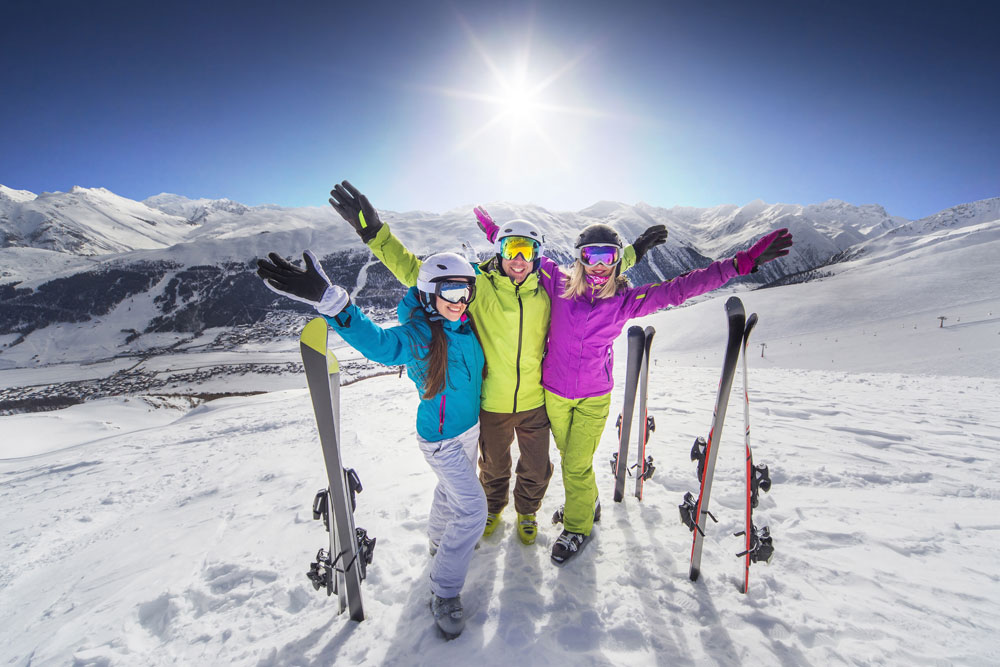
Intermediates (the sweet spot)
You’ll have an absolute field day here. The local area already gives you loads of cruising mileage, and once you link into the 3 Vallées ski area you can chase long reds/blues across multiple valleys without feeling like you’ve “done it all” by Wednesday.
Sun-wise, aim to follow the light (mornings one side, afternoons the other) and plan one “big tour day” early in the week before legs fade.
Stay tip:
- Go central snowfront for quick morning uplift, so you’re on the good pistes before the crowds wake up.

Advanced skiers & snow-sure seekers
Steeps, big lines, and plenty of “that looks spicy” terrain – especially once you use Val Thorens as your launch pad into the wider 3 Vallées linked ski area.
Off-piste is a major draw, but it comes with real alpine risk: avalanche kit, partners who know what they’re doing, and ideally a local guide if you’re not totally confident.
Stay tip:
- Prioritise fast access to the main uplift so you can get high early – wind closures and crowds both punish late starts.

Snowboarders
Val Thorens works well for snowboarders because the resort is modern and lift-access is generally efficient – less “endless drag-lift suffering,” more high-capacity chairs and gondolas.
The big win is terrain variety: you can lap groomers, hunt natural hits, and head out on day missions into the 3 Vallées without feeling trapped. The thing to watch is long link routes on busy days – plan connections earlier and avoid arriving at pinch points at 3pm.
Stay tip:
- Central or near main uplift so you can dodge the worst end-of-day traverses.

Beginners
Better than people assume for a “big mountain” resort: you’ve got free beginner uplift via magic carpets, plus a discounted beginner-pass setup that keeps early days cheaper and less intimidating.
The main trick is weather management – on stormy/whiteout days, stick to sheltered learning zones and don’t let a confident mate drag you onto wide-open high slopes “because it’s only a blue”.
Stay tip:
- Pick somewhere genuinely walkable to beginner areas and ski lesson meeting points so mornings stay calm and you’re not juggling buses and nerves.

Families
For families, the headline is convenience: ski-in/ski-out accommodation reduces tantrum potential by roughly 73%.
There are beginner facilities (including free carpets) and beginner-pass options, and the resort has plenty going on beyond skiing.
The smart move is booking lessons/childcare early for school holidays – spaces go quickly here.
Stay tip:
- Choose a quieter spot still close to learning areas, so bedtime isn’t a nightly negotiation with a booming bassline.

Freestyle / Terrain Parks
Val Thorens has a strong freestyle reputation, with dedicated areas and a scene that feels genuinely progression-friendly rather than intimidating.
It works well whether you’re landing your first 50/50s and small jumps or stepping up to bigger lines and more technical features. The setup gives riders room to build skills properly.
Stay tip:
- Aim for easy access to the main lift network so you can do short park laps without a long commute – freestyle days are better in bite-sized sessions.
Looking to stay in Val Thorens?
Where is Val Thorens?
Val Thorens is in Savoie in the French Alps, in the Belleville valley, and it forms part of the Les 3 Vallées mega-area alongside places like Méribel, Courchevel, Les Menuires, Saint-Martin-de-Belleville, Brides-les-Bains and Orelle.
It’s one of the highest ski resorts in Europe – the village is at 2,300m – so it’s one of those resorts people pick specifically for snow confidence. For travel planning, the main rail gateway is Moûtiers–Salins–Brides-les-Bains, about 37km away, with transfers/shuttles taking roughly an hour-ish depending on conditions.
Looking to stay in Val Thorens?
Skiing in Val Thorens (ski area, terrain, lifts, snow)
Val Thorens ski resort in France is big enough to keep most people busy for a week just in the local sector – about 150km of pistes – and then it gets silly once you add the full 600km of Les 3 Vallées, the largest interconnected ski area in the world.
The mountain is mostly high, open terrain, which is brilliant for views and snow quality, but it also means wind and visibility can be the boss some days.
If you plan smart – early starts, lunch at off-peak times, and a flexible “storm day vs bluebird day” strategy – you’ll ski a ton and queue surprisingly little, even in busier weeks.
The best way to think about it is: pick a “home zone” near your accommodation for quick warm-up laps, then build out. Do one big cross-valley day early in the week, keep one day for freestyle/messing about, and leave a final day for repeats of your favourites.


Terrain overview
Val Thorens is Europe’s highest ski resort and that makes more sense once you realise the village itself sits high up at 2,300m and the skiing fans straight out above it rather than forcing you to grind your way up from a low base every morning.
The resort layout is built around a broad, open bowl with several key lift departure points from the snowfront, and from there you can decide whether to keep things local or branch out into the wider 3 Valleys ski area.
Skiing directly above Val Thorens gives you fast access to cruisy high-altitude runs, steeper faces, and a good mix of terrain around areas like Plein Sud, Péclet, and the Cime Caron side. If you want mileage, you can head towards Méribel via Mont de la Chambre, or towards Les Menuires for a more relaxed, rolling feel.
Because it is such a major hub, the obvious fronts of resort get busy first thing, especially around the main snowfront lifts and the big departure zones used by ski schools. Once you are up and away, though, the mountain opens beautifully and the crowds spread out.
Quietest skiing is usually found later in the morning on less obvious sectors or on the far side of the local bowl once the early rush has burned off.
Stay tip:
If you want the easiest start to the day, stay close to the Rond-Point des Pistes or main snowfront so you can get straight onto the first lifts before the ski school wave arrives.
Lifts & getting around the mountain
Val Thorens is one of the best ski resorts – it is built for volume, and honestly, it has to be.
This is one of the biggest, busiest high-altitude resorts in France, so the lift system is designed to shift a lot of people quickly. You have a mix of high-capacity chairlifts, fast gondolas, and efficient links that make it surprisingly easy to move around the local ski area and out into the wider 3 Vallées.
The good news is that there is usually more than one way to get where you want to go, which helps when one sector starts backing up.
The less good news is that in school holidays and peak weeks, queues still absolutely happen – especially between about 9:30 and 11:00, and then again from around 15:30 when people suddenly realise they need to get back across the mountain before lifts start shutting.
The smartest move in Val Thorens is not trying to outsmart everyone else with some mythical secret route. It is mostly about timing.
Start early, avoid the obvious crossings at obvious times, ski while other people are eating, and do not leave your return route too late if you have wandered far into the 3 Vallées.
The mountain is well connected, but “plenty of lift options” does not mean “infinite time to get home.”
Stay tip:
If you are coming in February or over New Year, stay somewhere with genuinely quick snowfront access rather than “five minutes in ski boots,”.
Snow reliability & season length
This is where Val Thorens really gets to show off. At 2,300m for the village and with skiing that climbs to around 3,230m, it is one of the highest major ski resorts in Europe, and that altitude makes a huge difference.
While lower resorts can spend early December nervously refreshing snow forecasts, Val Thorens is often already in decent shape thanks to its height, colder temperatures, and generally strong snow retention. A lot of the terrain sits well above 2,000m, which helps preserve cover right through the core winter months.
Snowmaking adds another layer of reassurance on key runs and return routes, but the altitude is the real headline act here.
In early season, you are usually getting a better shot at reliable skiing than in many lower French resorts, although the full extent of links and less-used runs will still depend on snowfall.
Midwinter is when the place feels properly locked in: cold, snowy, and exactly what people mean when they say “snow-sure.”
Late season brings classic spring conditions, with firmer pistes in the morning and softer, sunnier skiing by afternoon. Even then, Val Thorens tends to hold up better than most because it simply starts so high.
Stay tip:
If snow quality is your absolute priority, book late January to mid-March and stay near the main lifts so you can make the most of crisp morning conditions before the sun softens the lower-facing pistes.

Val Thorens has proper off-piste appeal, and not in a marketing-brochure “there’s a bit beside the piste if you squint” way.
The terrain here is naturally open, high, and alpine, with plenty of scope for freeride lines, bowls, and ungroomed areas once conditions line up. Add in the wider 3 Vallées and the options increase again.
Strong skiers love it because you can find everything from short accessible powder shots to more committing terrain that absolutely deserves respect. The flip side, obviously, is that this is serious mountain ground. High altitude, rapidly changing weather, wind loading, whiteout risk, and avalanche danger are all very real here.
Val Thorens is not the place to treat off-piste like an afterthought just because the lift access is easy. Easy access does not equal safety. If you are not fully confident reading terrain, assessing conditions, and making route decisions, book a local mountain guide.
It is money well spent, and you will usually ski better terrain more confidently anyway. Proper kit matters too: transceiver, shovel, probe, and the knowledge to use them. This is not solo-experiment territory.
Stay tip:
If off-piste days are high on your list, stay central near the main uplift so you can get out early with a guide and make the most of the more stable morning snow window.
Beginners & improvers
Val Thorens is actually kinder to beginners than people sometimes expect from a huge, high-altitude resort with a big-name reputation. Yes, it is large, busy, and occasionally weather-exposed, but the learning setup is solid.
There are beginner-friendly areas close to resort, free beginner lifts and carpets, and a discounted beginner pass that makes a lot of sense if you are not yet roaming far.
For improvers, it also works well because you can graduate from the nursery slopes onto gentle blues without that horrible “right, good luck on this terrifying motorway” jump that some big resorts accidentally serve up.
The main thing to keep in mind is that Val Thorens is high and open, and that can change the mood quickly when the weather turns. Flat light, wind, and cold can make easy slopes feel more intimidating than they really are, especially if confidence is still new.
This is one of those places where repeating the same comfortable runs is not boring – it is smart. Progression is usually better when people stop trying to prove a point and just build mileage calmly.
Also, the end-of-day factor is real: tired legs and high-altitude conditions are not the ideal mix for magical breakthroughs.
Stay tip:
If you are a true beginner or travelling with one, stay as close as possible to the ski school meeting area and nursery slopes so mornings feel easy and the inevitable late-afternoon energy crash is less of a drama.
Freestyle & “more than pistes”
Val Thorens has long had a proper freestyle reputation, and it is one of the reasons the resort appeals to younger riders, snowboarders, and anyone who likes their ski week with a bit more personality than just piste mileage.
The freestyle setup changes a bit from season to season, but the resort usually offers dedicated park space plus plenty of natural-feeling terrain around the mountain for side hits, rollers, and that general “let’s mess about for a bit” energy.
The altitude helps here too, because features tend to hold up better than they might in lower resorts when conditions get warm or patchy elsewhere.
What makes Val Thorens especially good is that it is not just for people launching themselves into orbit. There is enough progression-friendly terrain for riders working on basics, smaller features, and confidence, as well as steeper or more technical options for those with bigger ambitions.
Even outside the formal park setup, the mountain has a playful quality that suits skiers and boarders who like finding natural terrain features between piste laps.
Best approach? Keep it sensible. Warm up on piste, hit the park while you are fresh, and leave before fatigue turns “one last go” into a very avoidable slam.
Stay tip:
If park laps and playful skiing are a big part of your week, stay somewhere with easy snowfront access so you can dip in for shorter sessions without turning every freestyle hit into a whole expedition.
Best Runs in Val Thorens (by ability)
For beginners:
The best beginner plan here is to start in the free Easy Rider zones around the Castor & Pollux carpets, then graduate onto gentle confidence-builders like Voie Lactée, La Valtho and the Traversée des 2 Lacs area once those first turns feel less dramatic.
These runs keep you close to resort, make it easy to repeat the same terrain, and are a much better call than charging straight onto the bigger open slopes higher up. On windy or flat-light days especially, sticking to these lower, more sheltered beginner sectors is usually the smart move.
For intermediates:
This is where Val Thorens really starts showing off. Long, confidence-boosting cruisers like Plein Sud, Gentiane, 2 Combes and Bleuets are perfect for high-mileage laps, while runs such as Lac Blanc, Médaille and Chamois let you step things up without it turning into a full expert commitment.
It is also brilliantly easy to build a proper roaming day from here, head towards Col de la Chambre and the wider 3 Vallées links. Just keep one eye on the clock, because “one more valley” is fun at 11am and significantly less charming when you are trying to get home at 4pm.
For advanced:
The headline here is simple: serious high-alpine terrain with proper steep stuff when conditions line up. Strong skiers should look at Face Nord, Combe de Caron, Christine and the steeper pitches accessed from Cime Caron, where Val Thorens feels at its most dramatic and properly big-mountain.
There is loads of variety, but this is also the part of the ski area that feels the weather first: wind, flat light and snowfall can change the plan quickly, and closures are not unusual. Start early for the best snow, stay flexible, and do not leave your best legs on the first run.
Off-piste note:
If you are heading beyond the marked runs around sectors like Cime Caron, Col de Rosaël or the wider Val Thorens–Orelle side, treat it as proper alpine off-piste. Carry the right kit, go with people who know what they are doing, and ideally hire a guide unless you are genuinely experienced.
Looking to stay in Val Thorens?
Looking for accommodation in Val Thorens
Val Thorens is mostly about positioning, because the village is high and compact – so tiny differences in where you sleep can change your whole week.
The big split is between staying right on the snowfront (max convenience, more noise/footfall) and staying slightly set back (often better value and quieter nights, but you’ll walk a bit more).
If you’re travelling with beginners, you want to be close to the learning zones and lesson meeting points so mornings don’t start with a logistical crisis.
If you’re here to ski hard, you want quick access to main uplift so you’re up and out early. If you’re here for nightlife, you want to be able to walk home without a trek.
And if you’re trying to keep costs down, the “quiet edge” or even down-valley base (like Orelle at around 900m) can make your wallet breathe again – just accept you’ll trade some convenience.
Quick chooser: which area is right for you?
- If it’s your first time, stay central and snowfront so navigation is easy and you don’t waste energy walking in boots.
- If you’re ski-in/ski-out obsessed, choose ski accommodation that genuinely clips onto a piste route – ask “how far to the lift in metres” and don’t accept vibes as an answer.
- If nightlife matters, stay close to the centre so you can wander home safely.
- If you’ve got kids, pick somewhere quieter but still walkable to beginner zones.
- If budget is king, look at the quieter edges or consider Orelle (lower valley) for cheaper lodging with lift access up to the high terrain.
Village Comparison Table
| Area / Base | Altitude | Vibe | Best For | Nightlife | Beginner-Friendly | Access / Getting Around |
|---|---|---|---|---|---|---|
| Central snowfront (Val Thorens) | 2,300m | Busy, convenient | First-timers, short trips | ★★★★★ | ★★★★ | Walk-to-lifts, everything close |
| Quieter edge (Val Thorens) | 2,300m | Calmer evenings | Families, light sleepers | ★★ | ★★★★ | Short walk/brief glide to lifts |
| Slightly set-back village (Val Thorens) | 2,300m | Better value | Budget-with-convenience | ★★★ | ★★★ | Walkable, but plan boot time |
| Orelle (down-valley gateway) | 900m | Quiet, traditional | Budget, calm nights | ★ | ★★ | Lift up to high terrain; commute feel |
(Star ratings are “relative vibe” rather than gospel)
Best Area for First-Timers
For a first trip to Val Thorens, the smartest move is to stay central and close to the main snowfront, especially around the Rond-Point des Pistes side of resort or within easy reach of Place Caron.
Val Thorens is compact by big-resort standards, but that only feels reassuring when you actually know where you’re going.
On day one, when it’s busy, snowy, and you’re trying to work out which residence entrance is yours while carrying skis and questioning your life choices, central convenience suddenly becomes very important indeed.
Staying near the heart of the resort makes the whole week feel easier: quick access to lifts, simpler ski school meet-ups, easier supermarket runs, and the option to pop back for lunch or a tactical warm-up without turning it into a logistical event.
This also works especially well for mixed-ability groups. If some people are in ski or snowboard lessons, some are heading off for bigger days, and someone else has forgotten a glove or needs coffee immediately, central Val Thorens keeps the chaos manageable.
The only thing to watch is noise. The most convenient parts of resort are also the busiest, especially in school holidays and peak après hours, so there is a balance to strike between “in the middle of everything” and “able to sleep like a functional adult.”
Stay tip:
For a first Val Thorens week, aim for accommodation near Place Caron, Rue de Caron, or the main snowfront so you can learn the resort fast and keep every day low-fuss.
Best Area for Ski-in Ski-out
Val Thorens offers one of the strongest ski-in ski-out options in the Alps, but this is also where it pays to be slightly fussy.
In Val Thorens, “ski-in ski-out” can mean anything from genuinely stepping out onto the snow and gliding straight to the lifts, to dragging your skis for several hundred metres along packed paths before you even click in.
The resort is built high and cleverly, so there are loads of properties with excellent slope access – particularly around Plein Sud, the upper parts of resort, and residences that back directly onto pistes or connecting snow lanes.
When it is done properly, it is brilliant: less carrying, faster starts, easier lunch returns, and a much better chance of squeezing in one last lap without turning it into a boots-on-pavement death march.
It is especially worth paying for if you are travelling with children, keen skiers, or anyone who gets grumpy at unnecessary effort.
In a high-altitude resort like Val Thorens, where weather can be cold, windy, or full of drama, being able to get on and off the mountain quickly is not just a luxury – it genuinely improves the week. Just make sure you check the exact piste or lift access rather than trusting vague wording.
Stay tip:
In Val Thorens, the Plein Sud side and residences with direct snowfront access are your best bet for proper ski-in ski-out rather than the “technically walkable” version.
Best Area for Nightlife
If nightlife matters even a little bit to your holiday, stay central.
Val Thorens is one of the livelier high-altitude resorts in France, and if you want easy access to après bars, late drinks, and the kind of night that starts with “just one” and ends with you ordering chips in a salopette, you do not want a long trek home.
Staying around Place Caron, Rue de Gébroulaz, or within easy walking distance of the main bar and club zone means you can dip in and out of the action without overcommitting.
That matters more than people think. The ability to do après, head back for a shower, then go out again for dinner or drinks without needing a full expedition plan makes the whole resort feel more fun and much less effort.
The trick in Val Thorens is to stay close to the nightlife without putting yourself directly on top of the loudest bits unless you are absolutely certain that sleep is not part of your holiday goals.
Some of the central streets can stay noisy late, especially during peak weeks, so there is a sweet spot: near enough to stroll home in minutes, far enough that the bass is not personally involved in your bedtime.
Stay tip:
For the best nightlife setup, book centrally near Place Caron or just off the main bar streets, but avoid rooms directly above busy après spots unless you truly never sleep.
Best Area for Families
Families usually do best in the quieter but still practical part of Val Thorens – somewhere with straightforward lift access, easy routes to beginner zones, and a calmer evening atmosphere once everyone is tired and slightly sticky from hot chocolate.
The best family base is often just off the busiest centre rather than smack in the middle of it.
You still want to be close enough to walk or slide easily to lifts and lesson meeting points, but without the late-night noise, heavy foot traffic, and full-throttle après energy that can make evenings feel more frazzled than festive.
Areas near the nursery slopes or quieter residence clusters slightly back from the noisiest central strip tend to work well.
In Val Thorens, family ski holiday convenience is really about friction reduction. Shorter walks matter. Easy snack-break returns matter. Ski storage, lifts in the building, nearby shops, and not having to drag children uphill at the end of the day matter a lot.
Because the resort sits high and can feel cold and exposed, small conveniences count for even more here than in a lower, prettier village where wandering around is half the fun. In Val Thorens, efficient wins.
Stay tip:
Families should look for quieter residences near the snowfront or beginner sectors, where you get easy morning access without putting overtired kids right above the resort’s busiest nightlife zone.
Best Area for Budget Travellers
For budget travellers, the goal in Val Thorens is not to stay miles away – because there really is not a “miles away” in the classic sense – but to be slightly less prime.
One street back from the snowfront, a less flashy residence, or a smaller apartment in a functional location can make a noticeable difference to price without wrecking the convenience factor. That is the sweet spot.
Val Thorens is compact enough that you can still keep things pretty easy even if you are not in the absolute premium locations.
If you are willing to walk a bit, self-cater, and care more about skiing than polished hotel vibes, there are usually savings to be had without sacrificing the basics.
Areas a little back from the main front de neige often deliver the best balance.
There is also the wildcard option of basing in Orelle, which links into the Val Thorens ski area and can be much cheaper for accommodation. It is a very different setup, though.
Orelle works better for disciplined skiers who are happy treating the holiday more like a ski mission than a full resort-stroll experience.
You lose the easy lunch-return convenience and the all-day Val Thorens buzz, but you gain a friendlier bill at the end.
Stay tip:
For best-value Val Thorens stays, look one row back from the snowfront or consider simple self-catering residences; for maximum savings, Orelle is worth a look, but only if you are happy trading resort convenience for price.
Our Top Hotels

★★★★
- Village slope-side in upper Val Thorens
- Lifts - ski-in/out
- Wellness area
You are right by the slopes and opposite the ESF meeting point The hotel itself has a more polished, design-led feel than the usual ‘practical family base’ type place.
You get easy access to the lifts, a wellness area for the end-of-day thaw-out, and a location that makes lunch breaks and ski-school drop-offs easy.
Why choose it? It makes beginner ski weeks feel smoother from day one.

★★★★
- Village upper slope-side
- Lifts - ski-in/out
- Wellness area
The bonus is everything is wrapped into one all-inclusive ski package: lift pass, lessons, dining and slope access.
The style is modern and upbeat. You do get is genuine ski-in ski-out convenience, strong food-and-drink inclusions, and a very easy routine if you like the idea of everything being organised from the off.
Why choose it? One of the easiest premium ski weeks money can buy if you like everything wrapped up neatly.

★★★★
- Village piste-side edge of town
- Lifts - ski-in/out
- Wellness area
You get a prime piste-side location, strong mountain views and a bit of energy around the place, which suits couples, friend groups and confident skiers who like a buzz but do not want to commit to full-on party hotel territory.
The design is more playful than traditional, and that keeps it feeling current rather than dusty.
Why choose it? It nails that sweet spot between convenience, comfort and a bit of après energy.

★★★
- Lower Val Thorens, quiet-central area
- Lifts - ski-in/out
This is the classic budget sweet spot – practical apartments, doorstep skiing and enough nearby facilities to keep life easy.
The apartments are simple, cosy and functional rather than glossy. You can keep costs down with supermarket breakfasts, easy dinners and selective eating out, while still having the option of a restaurant and bar in the residence.
Why choose it? For saving money without giving up ski-in/ski-out convenience, Le Cheval Blanc is a proper little win.
Tour Operators who go here
Looking to stay in Val Thorens?
Après ski, restaurants & winter activities
Val Thorens is one of those resorts where you can make the week whatever you want: early nights and first lifts, or full après chaos and a heroic attempt to ski the next day.
The village is high, compact, and built around winter life, which means you’re rarely far from food, drinks, or a warm place to hide when the weather gets feral.
It’s also semi-pedestrian with parking managed in car parks, so once you’re in, you can mostly forget about cars and just walk/shuttle around.
Food-wise, you’ve got the classic French Alps mix: quick mountain lunches if you’re skiing hard, longer sit-down lunches if you’re leaning into holiday mode, and plenty of comfort food in the evenings.
Non-ski activities are there for storm days or tired legs – think swimming/spa-style downtime, indoor activities, gentle winter walks, and generally anything that lets your quads recover enough to go again tomorrow.

Après in Val Thorens usually starts properly the moment people slide off the mountain and spot a sun terrace with music on it.
For the classic slope-side session, La Folie Douce Val Thorens and Le 360 are the big hitters: both are on-mountain, both lean into DJs, dancing and a full “we are absolutely not going straight home” mood, with Le 360 pitching itself as a high-altitude party spot and La Folie Douce sitting up by the Plein Sud and Pionniers lifts.
If you want something a bit more lunch-meets-lingering, places like Chalet de la Marine also work brilliantly for a long terrace stop before things drift village-wards.
Once you’re back in resort, the energy spreads out nicely depending on how big a night you want.
Saloon Bar, Favela, Le Monde and Jackie’s Bar Club all sit firmly on the lively end of the spectrum, while Le Malaysia is the late-night heavyweight, opening nightly with a live concert from 23:00 before rolling into a DJ set until 04:00.
If you want quieter, hotel bars and lounge-style spots are the smarter call than the main bar strip.
Mountain‑top Moments
Mountain lunch in Val Thorens can genuinely go in two very different directions: quick-and-functional, or full “we’ve now accidentally turned lunch into the main event.”
For fast, varied options, Les Chalets du Thorens is useful because it is basically a mini on-mountain food village, with everything from pizzeria and snacks to wok, sushi, crêpes and waffles.
If you want a quick but better-feeling stop, Le Chalet de la Marine also has a bistro side aimed at simpler, hearty dishes rather than a full long lunch.
If you are here for the proper Alpine lunch experience, Val Thorens has some very strong mountain options. Chez Pépé Nicolas is the classic “make a meal of it” choice, with Savoyard food built around cheese made on site, produce from its garden and big mountain views from two terraces.
Chalet des 2 Lacs leans cosy and comforting, with wood-fire, bistro energy and a menu built for cold-weather appetite, while Les Aiguilles de Péclet is the dramatic high-altitude one at 3,000m, known for its sunny terrace and refined food.
Then there is La Fruitière or La Petite Cuisine at La Folie Douce, which is the move when you want lunch with a side order of music and atmosphere rather than a quiet reset.
On colder or windier days, though, be strategic: Val Thorens is high, exposed and not subtle about it, so a sheltered indoor table can be a much better life decision than pretending terrace weather is “actually quite nice.”

In the village, Val Thorens dinner options really do split into a few useful camps: full-on Savoyard comfort food, smarter “let’s make a night of it” places, and easy crowd-pleasers for the evenings when everyone is too tired to pretend they want anything more complicated than carbs, melted cheese, and a chair.
For the classic mountain-food fix, La Fondue is exactly what it sounds like in the best possible way, with raclette, tartiflette, fondue and charcuterie built for cold legs and big appetites.
Chez Augustine leans into the same cosy refuge feel with fondue, raclette, tartiflette and hot-stone grills.
If you want something broad and reliable for mixed groups, Le Tivoli is a handy all-rounder thanks to its traditional restaurant, pizzeria and cheese-speciality setup.
If the mood is a bit more date-night than duvet-and-pasta, restaurants in Val Thorens are better than the resort’s party-first reputation might have you believe, with plenty of genuinely good places worth swapping ski socks for something smarter.
Club 72 Steak House is a good shout for a livelier evening meal, with dishes like creamy burrata to share, Aubrac rib of beef, slow-cooked beef fondant, sea bass and a properly nostalgic chocolate mousse, while Les Explorateurs is the polished, gastronomic option for inventive mountain cooking.
La Maison brings a brasserie feel with a menu shaped by Michelin-starred chef Cyril Attrazic, and Alpen Art is a nice middle ground when you want fondue or winter dishes in a place that still feels stylish rather than stubbornly rustic.
The big practical warning, though, is very Val Thorens: book ahead in peak weeks. Good tables go fast once everyone comes off the hill hungry at roughly the same time.
For non-ski days, or the kind of morning where your legs file a formal complaint, Val Thorens is actually very good at keeping you entertained without making it feel like a consolation prize.
Le Board is the obvious recovery HQ: it has a swimming pool, wellness area, fun park, fitness spaces and indoor sports courts, so it works whether you want a proper spa reset or just somewhere warm to move about without clipping into skis again.
If you still want a bit of mountain fun without committing to a full ski day, Cosmojet is the big-name option – the longest toboggan run in France – while Moon Xperience gives you snowtubing for a more chaotic, laugh-first kind of afternoon. And if your group contains at least one person who hears “zipline” and instantly becomes twelve years old, La Bee is the one: a double zipline that flies down into resort.
If you want something calmer, Val Thorens also does scenic, slower-paced mountain time very well. The resort has marked pedestrian paths and snowshoeing options, plus pedestrian lift passes if you want the big views without the ski effort.
That makes it especially handy for mixed groups, because non-skiers can still get up high for lunch, photos and a proper mountain atmosphere instead of being stranded in the village.
For families or bad-weather days, the simple winners are Bowling Val Thorens on Place de l’Arche and the resort cinema. And if you want something more memorable than just a wander and a hot chocolate, activities include dog sledding, snowmobiling, snow groomer rides, and even Péclet by Night evening skiing.

Getting home safely & easily
Getting home in Val Thorens is usually pretty low-fuss, which is one of the perks of staying in a purpose-built high-altitude resort.
The resort runs a free station shuttle through winter, and there is also a separate free shuttle linking the centre with the car parks.
In practice, that means if you are staying around the central Val Thorens zones like Place Caron, Place des Arolles or close to the snowfront, the journey home is usually either an easy walk or a short shuttle hop rather than a full logistical exercise.
Val Thorens is also set up so you generally do not need a car during your stay, and street parking is not allowed.
Late at night, the main thing to know is that taxis and VTCs do exist, but they are more of a backup plan than a lifestyle choice, especially in peak weeks when demand jumps and everyone suddenly wants one at the same time.
So if nightlife matters to you, the smartest transport strategy is still old-fashioned: book accommodation you can realistically walk back to after dinner, drinks or après, rather than assuming you will magic up a ride at midnight in ski season.

Ski schools & learning zones
Val Thorens is popular enough that lessons can book out fast – especially in UK school holiday weeks – so the “book early” advice here isn’t optional, it’s sanity preservation.
The good news is that the resort is set up for progression: free beginner carpets and structured beginner-pass options help keep first days less intimidating and less expensive, and there’s plenty of terrain to grow into once you’ve nailed turns and stops without panicking.
Guiding is also a big deal in a resort like this because the terrain is vast and the off-piste temptation is strong. If you’re advanced and want to explore safely (or you just want someone else to handle route planning while you ski), a qualified guide is the best “upgrade” you can buy.
For mixed-ability groups, lessons can also be the secret weapon to stop arguments – everyone improves faster, and nobody has to play unpaid instructor.

Val Thorens is actually very well set up for early progression, but the smartest start is still the least glamorous one: use the free beginner areas properly before you go chasing “real skiing” too soon.
The resort has two free Easy Rider beginner zones: one on the Milky Way trail beside the Castor & Pollux carpets, and another on the Frog slope beside the Shrew and Vole carpets.
They are there for a reason. Short, repeatable sessions in these zones usually build confidence much faster than one heroic, over-ambitious run that ends in panic and a sideways slide into self-doubt.
Once those basics feel steadier, Val Thorens also offers a discounted Easy Rider beginner pass for 4 hours or 1 day at 50% of the public price, designed to open up gentle next-step terrain rather than fling you straight into the deep end.
The key thing in Val Thorens is understanding that “beginner terrain” here still sits in a high, open resort. On a bluebird day that is brilliant. On a windy, snowy or flat-light day, it can feel much bigger and more intimidating than it really is.
That is why sheltered repetition matters. If you are using the beginner pass, check exactly what lifts it includes before setting off, because the point is to unlock calm progression terrain, not to end up above something that feels one bad decision away from tears.
The beginner pass covers selected lifts including Cairn, 2 Lacs, Cascades, Moutière and Caron, so it is useful – but still worth understanding before you click through the gates with more optimism than control.
If anyone in your group is learning, staying close to the beginner sectors and lesson meeting points in Val Thorens is one of those boringly sensible decisions that pays off every single day.
The resort may be compact, but compact in normal shoes and compact in ski boots with a nervous beginner are not the same thing at all.
The easiest setup is accommodation with quick access to the central snowfront, the Easy Rider areas, or the main school meeting zones, because it makes mornings calmer, cuts down on carrying and faffing, and gives beginners a much easier escape route for coffee, toilet stops, glove disasters or full “I need a break right now” moments.
This matters even more in Val Thorens because the schools are spread across recognisable resort points rather than one single magic gathering square.
ESF uses Jardin Montana for children’s lessons, Oxygène lists its meeting point in front of Tourotel on the slopes, and Evolution 2 uses the Pionniers lift area for some group lessons.
If you stay nearby, the stronger skiers in the group can still peel off and ski properly while lessons are happening, then regroup without the whole day turning into a logistics spreadsheet with goggles on.
For families and mixed-ability groups, that kind of convenience is worth real money in Val Thorens.
Lesson mornings in Val Thorens are much smoother when you treat them like a small operation rather than a casual wander.
Aim to be early – genuinely early – because a 15-minute buffer disappears fast when you are sorting boots, hunting for lift passes, adjusting helmets and trying to reassure someone who has suddenly remembered that skis are slippery.
This is especially true in peak weeks, when the central snowfront areas get busy and the simple act of moving through resort takes longer than you thought it would. If your accommodation is not right by the slopes, factor in proper boot-walk time rather than assuming you will magically slide everywhere.
It also helps to know your school’s exact meeting point before day one.
In Val Thorens, that can mean Jardin Montana for ESF children’s groups, Tourotel for Oxygène, or Pionniers for some Evolution 2 group lessons, so “we’ll just find it” is not the world’s strongest plan when everyone else is trying to do the same thing at 8:55am.
On the first lesson day especially, it is worth treating the timing like an airport run: laid-out kit, passes sorted the night before, and departure earlier than your relaxed holiday brain thinks necessary. That way the day starts with actual skiing, not with someone stress-jogging in ski boots.
Looking to stay in Val Thorens?

Lift passes, costs & budgeting
There are two main choices for lift passes in Val Thorens: stay within the 150km Val Thorens–Orelle ski area, or buy the Les 3 Vallées pass and unlock the full 600km linked domain.
For families, beginners, intermediates and anyone happy spending most of the week around Val Thorens and Orelle, the local pass offers plenty of skiing.
Stronger skiers who genuinely want days out towards Méribel, Courchevel and the wider 3 Vallées will get much more from the full-area pass.
There’s also an excellent EasyRider beginner pass, free nursery lifts and Family Flex pricing that can make a surprisingly large difference to the cost of a family ski week.
The important bit is not buying 600km simply because it looks impressive on the piste map.
Which Val Thorens ski pass should you buy?
Think of it like this: staying mainly around Val Thorens? Buy local. Planning proper Méribel and Courchevel days? Go 3 Vallées. Still learning? Start with EasyRider.
Option A - Val Thorens–Orelle (local pass)
What it is: Full access to the 150km Val Thorens–Orelle ski area.
Best for: Families, mixed groups, beginners, intermediates and anyone who wants a substantial ski week without feeling obliged to cross several valleys every day.
For 2026/27, an adult pass costs €73.50 for one day, €367.50 for six days and €421.50 for seven days during the main season. The six-day deal is particularly good: you pay for five days and get the sixth day free.
If you decide that one 3 Vallées day sounds fun, you can buy a one day 3 Vallées extension from the ticket office on the morning you want to use it.
Plain English: This is the “150km is already quite a lot of skiing, thanks” pass.
Option B - Les 3 Vallées (area pass)
What it is: The full-area pass covering the complete 600km Les 3 Vallées domain, including Val Thorens, Orelle, Les Menuires, Méribel and Courchevel.
Best for: Confident intermediates, advanced skiers, snowboarders and anyone who genuinely enjoys big touring days.
During the main season, an adult pass costs €84.20 for one day, €421 for six days and €486 for seven days.
Like the local pass, the six-day ticket is priced as five days, which makes it particularly useful for the standard Saturday-to-Saturday ski holiday.
Plain English: This is the “Méribel for lunch, Courchevel tomorrow and who knows where we’ll end up Wednesday” pass.
Val Thorens lift pass prices 2026/27
Here are the published headline prices for Val Thorens Winter 2026/27 (prices shown in EUR):
| Val Thorens–Orelle (local pass) | Adult | Child | Senior |
|---|---|---|---|
| 4 hours | €65.50 | €53.70 | €16.30 |
| 1 day | €73.50 | €60.20 | €18.30 |
| 6 days - pay for 5 | €367.50 | €301.00 | €91.50 |
| 7 days | €421.50 | €345.20 | €105.00 |
| Les 3 Vallées (area pass) | Adult | Child | Senior |
|---|---|---|---|
| 4 hours | €75.10 | €61.50 | €18.70 |
| 1 day | €84.20 | €69.00 | €21.00 |
| 6 days - pay for 5 | €421.00 | €345.00 | €105.00 |
| 7 days | €486.00 | €398.30 | €121.20 |
Family Flex – definitely worth checking
Val Thorens uses the same Family Flex principle as the other 3 Vallées resorts: qualifying families all pay the child price.
It’s available on 6 – 21 day Val Thorens–Orelle and 3 Vallées passes for families of at least three people, including at least one child aged 5 – 17. Groups can contain a maximum of two adults and six children, and everyone must buy the same area and duration in one transaction.
Ski Demon tip: Two adults travelling with one child already qualify. On a six day 3 Vallées pass, that saves the two adults €152 between them – considerably more useful than a free branded neck warmer.
Saturday skiing – another useful discount
If your trip includes a Saturday ski day, don’t automatically buy a normal one-day ticket. Val Thorens offers 10% off the Val Thorens–Orelle day pass on Saturdays and 20% off the 3 Vallées day pass, with the promotional tickets sold online.
That makes Saturday surprisingly good value for short-break skiers or anyone arriving early enough to squeeze an extra ski day into the holiday.
Deposits, insurance, and when to buy
Here’s how to do Val Thorens like someone who hates queues and hates wasting money:
Pass card: If you already have a compatible Val Thorens hands-free card beginning 01-1614, you can reload it online and head straight to the lifts. Otherwise, passes can be collected from resort machines or sent out in advance, with free delivery advertised by the lift company.
Insurance: Carré Neige costs €3.50 per person per day and covers things such as mountain rescue, medical costs and repatriation following a covered ski accident. Check it against your existing winter sports insurance before automatically adding it.
When to buy: Standard passes aren’t necessarily cheaper because you buy ahead, but Saturday offers are web-only, and Family Flex, EasyRider and the different seasonal tariffs can make a significant difference. Work out which product fits the holiday before everybody disappears off to buy their own pass.
If you’re debating local versus 3 Vallées – a 6 day adult pass is a difference of €53.50. If you’re planning several days beyond Val Thorens, that’s easy to justify. If you only want one big day out, the €51 extension makes the local pass the best alternative.
Looking to stay in Val Thorens?
Common Val Thorens Ski Holiday Mistakes
Val Thorens makes big ski holidays feel effortless, but its high-altitude weather, vast Three Valleys access and busy slopes mean a few wrong decisions can add cost, fatigue or unnecessary faff.
Booking a ski hotel “near the lifts” without confirming what that actually means
In Val Thorens, 200m can be a flat stroll… or it can be an uphill trudge in ski boots on a slippery pavement. Ask for exact distances and whether you can genuinely ski back to the building in normal conditions. Your future knees will thank you.
Doing your big 3 Vallées adventure day on day one
Your legs aren’t ready, your navigation is sloppy, and that’s how people end up stressed at 3pm, far away, googling lift connections like it’s an exam. Do a warm-up day locally first, then plan your big tour once you’ve got your bearings.
Ignoring weather at altitude
Val Thorens is high and open – amazing on bluebird days, but wind and flat light can turn it into a confidence test.
Build a flexible plan: sheltered pistes on storm days, high alpine bowls when visibility is good, and don’t stake your happiness on one specific route.
Queuing at the same time as everyone else and then blaming the resort for it
Start early, ski through lunch, and avoid the obvious choke points at 9:30 and 15:30. The lift system is built to shift people, but peak-week human behaviour is… predictable.
Skipping insurance because “I’ve got travel insurance already”
Mountain rescue can be expensive, and not all policies cover everything the way you think they do. Carré Neige is explicitly designed for ski incidents – compare coverage properly before you decide.
Getting to Val Thorens
Getting to Val Thorens is manageable, with several airport options and useful rail connections through Moûtiers. Whether you’re flying, driving or arriving by train, here’s everything you need to know before heading up to the resort.
1) Fly + road transfer
(the “land, grab skis, go” option - and the most common)
Most people flying to Val Thorens come in via Chambéry, Grenoble, Lyon or Geneva, then do the final leg by pre-booked private transfer, shared shuttle, taxi or VTC.
As a sensible guide:
- Chambéry → Val Thorens: roughly 1 hour 40 minutes
- Grenoble → Val Thorens: roughly 2 hours 20 minutes – 2 hours 45 minutes
- Lyon → Val Thorens: roughly 2 hours 20 minutes – 2 hours 45 minutes
- Geneva → Val Thorens: roughly 2 hours 20 minutes – 2 hours 45 minutes
Real-world tip: if you’re arriving on a Saturday, book the transfer in advance. The road up is a classic ski-resort funnel, and having a seat locked in removes a lot of avoidable stress.
2) Train to Moûtiers + bus/taxi up
(the “car-free and actually very sensible” choice)
The nearest proper rail station is Moûtiers–Salins–Brides-les-Bains, which is only 37km from resort. From there, the standard last leg is the S63 shuttle up to Val Thorens. Taxis and VTCs are also available from the station if you want the simplest final stretch.
Typical timings look like this:
- Moûtiers station → Val Thorens (S63 shuttle): roughly 45 minutes – 1 hour
- Paris → Moûtiers: under 5 hours by TGV
- London → Moûtiers: Eurostar Snow via Lille runs on Saturdays and Sundays in winter
Real-world tip: if you’re doing the train-and-shuttle combo, book accommodation with an easy walk from the bus station or close to a resort shuttle stop.
3) Driving to Val Thorens
(flexible, but this is not the resort for winging the parking plan)
Driving to Val Thorens is straightforward on paper: via the A430 Chambéry–Albertville, then the dual carriageway up to exit 41, followed by the final climb. Do not blindly trust GPS if it tries to send you via the D96 from Moûtiers, that route is regularly closed.
As a rough guide:
- Chambéry → Val Thorens: roughly 1 hour 40 mins
- Grenoble → Val Thorens: roughly 2 hours 20 minutes – 2 hours 45 minutes
- Lyon → Val Thorens: roughly 2 hours 20 minutes – 2 hours 45 minutes
- Geneva → Val Thorens: roughly 2 hours 20 minutes – 2 hours 45 minutes
Real-world tip: do not arrive in Val Thorens without both the right winter kit and a booked parking space. Get organised in advance.
Getting around once you’re there (easy… with one tiny “ski boots” reality check)
Walking (your default setting - if you’re central)
Val Thorens is one of those resorts that feels pleasantly manageable once you’ve actually arrived. It’s a semi-pedestrian resort, and you can walk from one end to the other in about 20 minutes. If you’re staying centrally - around the snowfront, Place Caron, or the main restaurant/bar zone - you can usually get to lifts, ski hire, supermarkets and dinner without needing a transport plan.
Free resort shuttle (your secret weapon for tired legs)
If you’re staying a little further out, or you’ve hit that point in the day where everyone suddenly becomes dramatically exhausted, the free resort shuttle is the move. This means you do not need to panic if your residence is not right on the main snowfront - but you will be much happier if you know where the nearest shuttle stop is before you start hauling skis around in a headwind.
Valley links, Orelle timing + taxis (don’t get stranded)
If you’re staying down-valley in Orelle, getting around becomes less about wandering and more about timing. You need to keep an eye on the lift and connection closing times. For late-night practicality, taxis and VTCs do exist, but they are more useful as a backup than a guaranteed instant solution, especially in busy weeks.
Ready to make your piste dreams a reality?
Whether you’re scouting dreamy hotels, comparing the best tour operators or looking for fresh ski inspiration, we’re here to help you turn ideas into an actual holiday.
Take the next step by browsing hotels in this resort, choosing a trusted ski tour operator or signing up to our newsletter for destination ideas, practical advice and the latest tips delivered straight to your inbox. From finding the right place to stay to choosing the best way to book, we’ve got plenty to help you plan with confidence. Pick your next move and let the adventure begin.

Looking for more inspiration?
Sign up to our free newsletter

Ready to book your stay?
Take a look at our hotel guide and see what suits your requirements and budget
Tour operators
For more from our tour operators click the logos above
Val Thorens FAQs
Whether you’re visiting Val Thorens for the first time or heading back for another trip, these FAQs should help answer the most common questions before you book and before you travel.
Is Val Thorens good for snow in early season?
Yes – this is one of its biggest strengths. The village sits at 2,300m and the terrain rises to around 3,230m, so it’s often skiable earlier than lower resorts.
Val Thorens–Orelle opens from mid-end November, early season can mean limited runs at first – so manage expectations, ski what’s open, and treat the first days as “warm-up and enjoy being in the mountains” rather than demanding wall-to-wall terrain.
Should I buy the local pass or the full 3 Vallées pass?
If you’re a confident intermediate+ who loves exploring, the 3 Vallées pass is a playground unlock: 600km and huge variety.
If your group has beginners, or you’re happy skiing mostly local, the Val Thorens–Orelle area is already about 150km, which is plenty.
The sneaky smart option is buying local first, then upgrading/adding a day if you’re craving more – especially because weather, energy, and confidence decide how much you’ll realistically roam.
How do I avoid queues in peak weeks?
Be boring and strategic. Ski early (be on a lift at opening), take lunch either before 12:00 or after 13:30, and avoid major cross-area connections at the same time as everyone else is trying to get home.
Peak queue windows are usually mid-morning and late afternoon. If you can stay near the main uplift, you’ll also “win the morning” more often because you’re through the pinch points before they build.
Is Val Thorens beginner-friendly or too intense?
It can be beginner-friendly if you stay disciplined. There are free beginner carpets and beginner-pass options, plus plenty of progression terrain.
The intensity comes from weather: high, open slopes can feel intimidating in wind or flat light. The solution is choosing sheltered learning zones, booking lessons early, and not letting someone else dictate your terrain before you’re ready. Progression beats bravado every time.
What’s the deal with parking - can I just park outside my accommodation?
In winter, no: Val Thorens is semi-pedestrian and parking is compulsory in car parks, not on resort streets.
There are multiple car parks with different pricing and height limits. If you’re driving, plan parking before you arrive so you’re not doing stressed laps of the resort in snowfall.
How long is the transfer to Val Thorens from Moûtiers station?
Moûtiers–Salins–Brides-les-Bains is the closest station at about 37km from Val Thorens. Transfer time is typically around 50–70 minutes depending on traffic and weather. In peak weeks, it can be longer – so build buffer time, especially if you’re catching a return train or flight.
Do I need Carré Neige insurance if I already have travel insurance?
Maybe, maybe not – check your policy properly. Val Thorens sells Carré Neige at €3.50/day and it’s designed around ski incidents (rescue/medical/repatriation-type costs).
Some travel insurance covers these, some doesn’t, and some has tricky exclusions. The “adult” move is comparing coverage before you travel, not after you’ve tweaked a knee and discovered your policy thinks skiing is a dangerous hobby you should have outgrown.
Is it worth staying in Orelle to save money?
If budget matters and you don’t mind a “commute to skiing” vibe, yes.
Orelle is down-valley at around 900m and links you up to the high terrain and the wider 3 Vallées network. The benefit is usually cheaper accommodation and quieter evenings. The downside is you lose some of that Val Thorens “step out and ski” convenience, and you need to be more organised about timing your day.
Is Val Thorens worth it if not everyone in the group skis?
Yes – more than people sometimes expect. Because Val Thorens sits high and has a proper resort setup, non-skiers are not just left staring at a ski map and a coffee. There are pedestrian lift options for mountain views, spa and pool time at Le Board, winter walking, snow activities like tobogganing, plus bars, restaurants and enough general resort buzz that a non-skier can still feel part of the holiday.
It works best if you plan a couple of shared lunch spots and meeting times in advance, so the skiers can ski properly and the non-skiers still get the fun bits without the faff.
What’s the single best “first day” plan?
Keep it simple. Do a warm-up morning on local groomers so you get your mountain legs back, then take a sensible lunch at a quiet time. In the afternoon, do one exploration loop that still keeps you close enough to get home easily – no heroic cross-valley mission on day one.
If anyone’s learning, prioritise lessons and beginner zones with free carpets and celebrate small wins. Day one should end with “that was fun, let’s do more,” not “why are we still skiing and where even are we?”