


Selva Val Gardena is basically the Dolomites doing what they do best: big scenery, slick ski days, and just enough Italian flair to make lunch feel suspiciously important. Some resorts make you choose between postcard looks and proper ski convenience - Selva gives you both.
This guide was written by Michelle Wheeler
Selva Val Gardena ski resort at a glance
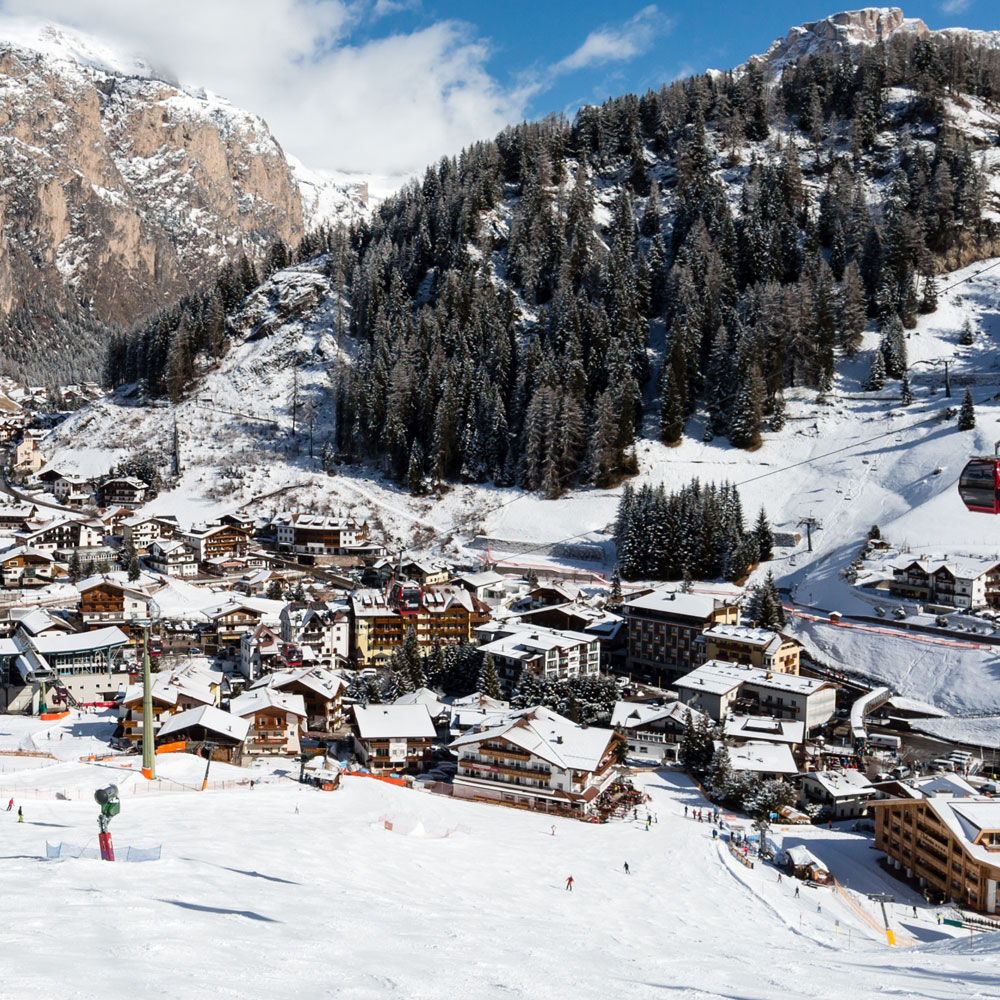
Selva Val Gardena (aka Wolkenstein) is the “I want the Dolomites done properly” choice: a pretty, lived-in mountain village that drops you straight into the Val Gardena / Alpe di Siusi ski area, with the wider Dolomiti Superski playground sitting right there for bigger days.
The village sits at about 1,563m, and the local high points push up to around 2,518m, which is enough altitude to feel properly alpine without being a bleak, windswept launchpad.
You’re looking at roughly 181km of pistes served by 79 lifts in the Val Gardena / Alpe di Siusi area, and the lift system leans modern and high-capacity, with lots of gondolas and chairs (plus a few drags where you’d expect them in beginner zones).
Transfer-wise, it’s very doable: Bolzano is the closest (about 40 minutes by road), with Innsbruck 1 hour 30 minutes, Verona 2 hours 10 minutes, Venice 3 hours 15 minutes, and Munich 3 hours 30 minutes as common gateways depending on flights and budget.
Altitude
1,563 m - 2,518 m
Pistes
181 km
Ski Season 26/27
4 Dec - 4 Apr
Transfer Time
40 - 90 mins
Number of pistes by difficulty
Resort Guide Quick Facts
(the stuff you actually care about)
Best for:
Intermediates who want long, confidence-boosting reds and blues with ridiculous views, snowboarders who appreciate gondolas and fewer drag-lift nightmares, and groups who like mixing big ski days with cosy food-and-wine evenings. It’s also strong for families if you stay sensibly, because the resort layout makes “meet you for lunch” logistics genuinely achievable.
Ski area size:
The local Val Gardena / Alpe di Siusi pass area is around 181km of pistes with 79 lifts, which is already a full-week playground if you’re not trying to set an Olympic training schedule. If you go bigger with Dolomiti Superski, you’re buying into the broader network.
Altitude:
Selva village is about 1,563m, and the higher local sectors top out around the mid-2,000s. Mornings can be crisp, afternoons can be sunny and springy, and you’ll want to think a little about aspect and timing.
Villages / bases (each has a different vibe):
- Selva is the most “straight into skiing” base, with lift access and a proper resort buzz.
- Santa Cristina feels slightly calmer and family-friendly, and it’s handy for accessing sectors like Col Raiser.
- Ortisei is the prettiest-stroll-and-shop option, often a touch more Italian “passeggiata” in the evenings, and it links nicely up toward Seceda.
Beginner friendliness:
Better than you’d think for a resort famous for big terrain, as long as you pick the right zones. There are dedicated beginner areas and gentle progressions, but the wider network can funnel you onto busier routes if you’re not paying attention – so planning matters here.
Ski season (published dates):
Selva Val Gardena’s 2026/27 ski season is scheduled to run from 4th December 2026 to 4th April 2027, including the Sellaronda links. Dates can still shift with snow and operating conditions, so check the official Val Gardena winter website before booking right at either end.
You’ll love Selva for…
Extensive area
Scenic
Intermediates
| Our rating | |
|---|---|
| ★★★★ | Beginner |
| ★★★★★ | Intermediate |
| ★★★★ | Advanced |
| ★★★ | Off-Piste |
| ★★★ | Snowboarding |
| ★★★★ | Snow Reliability |
| ★★★★★ | Extent |
| ★★★ | Apres-Ski |
| ★★★ | Mountain Restaurants |
| ★★★★ | Scenery |
| ★★★ | Village Charm |
| ★★★ | Non-Skiers |
Best for snow: January – early March
January into early March is usually your safest bet for consistent coverage and wintry temps, especially higher up.
Best for value: Early December and late March
Early December (after opening) and late March can be great if you’re flexible and you don’t need peak-week certainty.
Best for families: January (outside peak weeks)
January (non-peak weeks) is the sweet spot - good snow odds, less chaos, and better lesson availability.
Avoid if possible: Christmas / New Year and school holidays
UK school holidays and the Christmas/New Year stretch, unless you love queues and paying “festive premium” for everything.
Tour Operators who go here






Looking to stay in Selva Val Gardena?
What’s Selva Val Gardena like?
Selva is that rare combo of genuinely beautiful and genuinely practical.
You’ve got proper Dolomites drama in every direction – jagged limestone, pink sunsets, the lot – but you’re not stuck doing long hikes in ski boots to reach a lift.
The village is built around being outdoorsy: you’ll see families, groups, locals, and serious skiers sharing the same pavements like it’s normal (because here, it is).
It’s also a great base if your group can’t agree on one “type” of ski trip. Want big mileage days? Easy. Want long lunches at mountain huts and a gentle cruise home? Also easy.
Want a week where some people take lessons, some chase steeper lines, and some treat the whole thing as a scenic food tour with occasional skiing? Selva can handle that without anyone feeling like they compromised.
Town layout
Selva is fairly spread along the valley floor rather than one tiny square, so where you stay really affects your daily faff level.
The good news is it’s set up for skiers: lift access points are integrated into the village. If you’re close to central spots (think the main village areas), you’ll have the easiest time for shops, dinner, and the classic “we’ll meet later” plans.
If you stay a little further out, it’s still manageable, but you’ll want to get friendly with the local bus system or accept a bit more walking.
Overall vibe
Selva has a confident, well-run feel. It’s not trying to be Ibiza-on-snow, and it’s not pretending to be a silent wellness monastery either.
It’s active, friendly, and international, with a strong local culture (Val Gardena is famously Ladin as well as Italian/German).
The mountains are the headline act, but the village does a very good supporting role: plenty of places to eat well, enough nightlife to keep groups entertained, and a general sense that people here actually know how ski weeks work.
Après-ski
Après in Selva is more “lively bars, good music, and a few places that properly kick off” than “tables-dancing at 3pm for everyone.”
You can absolutely do the early-afternoon party stop on the way home, but you can also do cosy wine, a long dinner, and an early night without feeling like you’re missing the entire point of the resort.
The vibe is flexible – and that’s a big part of why Selva works for mixed groups.
Looking to stay in Selva Val Gardena?
Who Selva Val Gardena suits
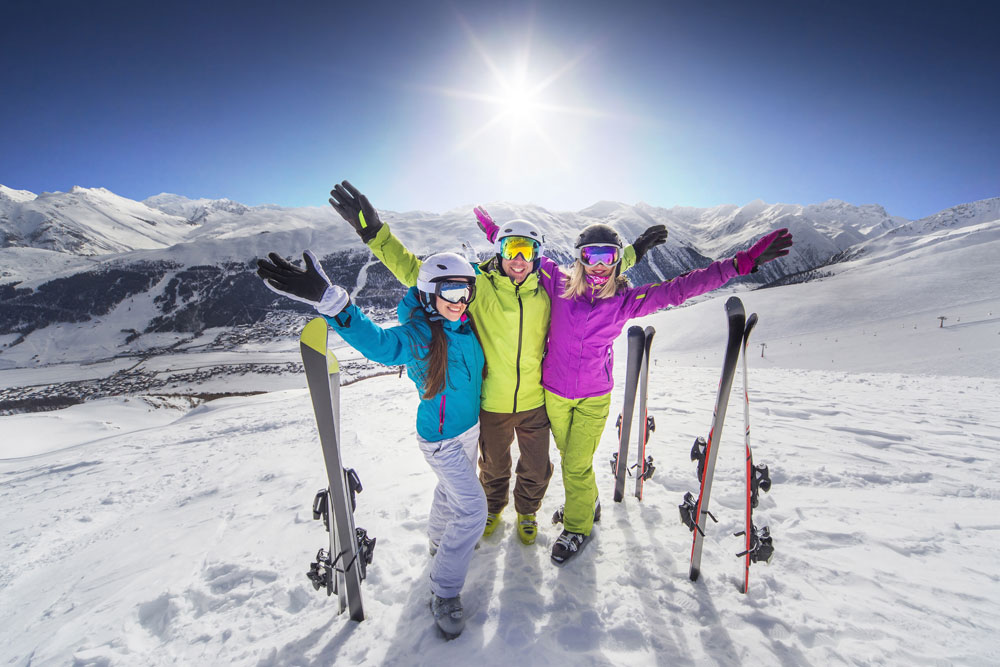
Intermediates (the sweet spot)
This is Selva’s love language. You’ve got cruisy blues and reds, lots of long, scenic descents, and the kind of terrain where you can quietly improve without feeling like you’re “training.”
Seceda is a big intermediate magnet because it mixes views, sun, and satisfying runs (including the famously long La Longia down toward Ortisei).
Stay tip:
- Pick central Selva or somewhere with quick access to the main lifts so you can get first tracks and avoid the mid-morning pinch points.

Advanced skiers & snow-sure seekers
You’re not coming to Selva for endless above-treeline powder fields, but you are coming for steeper pistes, technical lines, and the option to go exploring across the wider Dolomiti Superski domain.
Classic “serious” terrain includes famous race-linked runs like Saslong and steeper black options in the area.
If you’re tempted off-piste, do it properly: book a local guide and carry the right kit.
Stay tip:
- For staying, prioritise fast access to the lifts that get you into the steeper sectors early.

Snowboarders
Selva is pretty snowboard-friendly thanks to a lift system that leans heavily on gondolas and chairs, which means less of the classic drag-lift misery.
Seceda/Col Raiser style areas can be great because you can lap satisfying pitches, and you’ve also got terrain parks like Snowpark Piz Sella for riders who want features and progression.
Stay tip:
- Stay central or near a main lift base so you’re not pushing along icy pavements with a board bag twice a day.

Beginners
Selva works for beginners if you stay smart and keep your early days in the right zones.
Look for the nursery slopes and gentle lifts in the village area and prioritise accommodation that’s walkable to the easier learning zones.
The biggest beginner win here is structure: do lessons in the morning, repeat the runs in the afternoon, and don’t let friends drag you onto a full Sella Ronda loop on day two.
Stay tip:
- Aim for central Selva so you can keep things simple – short walks, easy meet-ups, and minimal bus dependence.

Families
Families do well here if you build the week around convenience.
Val Gardena has multiple established ski schools in the valley, including in Selva and Santa Cristina, so you can choose lesson meeting points that suit your accommodation rather than commuting the whole crew every morning.
The goal is to make mornings calm and afternoons flexible
Stay tip:
- Look for family-friendly hotels/apartments close to beginner areas or on a simple bus line.

Freestyle / Terrain Parks
If you like a park session as part of your week, Selva fits nicely.
Snowpark Piz Sella is the headline name-check in the area, and it’s the kind of setup where you can dip in for a few laps, build confidence on smaller features, and keep it fun without sacrificing your “big Dolomites ski day.”
Stay tip:
- Stay in central Selva so you can bounce between normal piste days, park laps, and après without needing a full logistical briefing.
Looking to stay in Selva Val Gardena?
Where is Selva Val Gardena?
Selva sits in Val Gardena in South Tyrol (northern Italy), right in the Dolomites – so you’re in that sweet spot where the scenery is borderline ridiculous and the infrastructure is genuinely good.
It’s one of the key villages in the valley alongside Ortisei and Santa Cristina, and it’s a strong base for skiing both the local Val Gardena / Alpe di Siusi area and for linking into wider Dolomiti Superski adventures. For travel planning, you can fly into a northern Italy / Tirol airport, then take a road transfer into the valley, with public transport options if you’d rather not drive.
Looking to stay in Selva Val Gardena?
Skiing in Selva Val Gardena (ski area, terrain, lifts, snow)
Selva’s skiing is all about variety with a side of “how is every run this pretty?”
You can rack up mileage, chase specific famous pistes, do scenic loops, or spend half a day committing to the noble art of long lunch.
The local area (Val Gardena / Alpe di Siusi) is already big enough for most week-long trips, and if you add Dolomiti Superski, your map starts looking like someone accidentally gave you a whole mountain range.
The main thing to know is that Selva is a connector: it’s brilliant for getting places, which is amazing… until you realise that means other people also use it to get places. Your week goes from “effortless” to “why am I queuing?” depending on when and where you start your day.


Terrain overview
Selva Val Gardena works so well because it sits at one of the most strategic points in the whole Val Gardena / Dolomiti Superski network.
From town, your day can start in very different directions depending on mood and ability. The Dantercepies side is your fast gateway toward Passo Gardena, the Cir area and the Sellaronda, with big views and that classic “straight into the mountains” feeling from the first uplift.
Ciampinoi opens the door to the Piz Sella zone, Plan de Gralba and the wider Sella link-up, while routes across the valley let you work toward Col Raiser, Seceda and some of the most scenic cruising terrain in the Dolomites.
That mix is what makes Selva feel so flexible: you can do a huge mileage day, a photo-heavy scenic day, or a more targeted “best runs only” plan without ever feeling boxed into one side of the resort.
On the map, the main pinch points are usually obvious. The Ciampinoi departures get busy once everyone decides it is Sellaronda o’clock, Dantercepies can back up when skiers are funneling toward the Passo Gardena side, and the big connectors around Plan de Gralba can feel crowded mid-morning.
Quieter skiing is often found by heading out early, taking a first lift before the masses, and spending your opening hour in sectors people usually pass through rather than linger in. Skiers who move slightly against the classic circuit flow often get a much calmer mountain.
Stay tip:
Stay near either the Ciampinoi or Dantercepies lift if easy network access matters to you, because in Selva a hotel that looks only “a bit further out” on the map can add real delay once morning queues start building.
Lifts & getting around the mountain
Selva’s lift system feels built for movement rather than just local laps, and that is a big part of its appeal. The resort is geared around high-capacity gondolas and modern chairlifts that move people quickly onto the mountain, which matters in a place that acts as a major gateway to the Sellaronda.
The main lifts out of town do the heavy lifting efficiently, and once you are up high the network is surprisingly intuitive for such a large ski area.
You are not just skiing a local hill here; you are plugging into one of the best-linked systems in the Alps, where a well-planned morning can take you from Selva’s doorstep to famous sectors around Passo Sella, Arabba-bound links, or the scenic Val Gardena side toward Seceda.
The key to “sounding the mountain” properly – or more accurately, getting around it without donating your day to lift queues – is timing.
Selva has predictable rush moments: first thing when everyone leaves town, mid-morning when Sellaronda traffic thickens, and around lunch when popular meeting points clog up.
The smartest move is to start early, commit to one major objective before lunch, and avoid dithering at the base stations deciding where to go.
Big cross-area link-ups are best done first, not as a vague afternoon ambition when everyone else has had the same idea.
Once traffic builds, even short connectors can feel slower than they look on the map.
Stay tip:
Staying within easy walking distance of a primary lift base is one of the biggest quality-of-life upgrades in Selva, because it lets you get ahead of the flow instead of joining it.
Snow reliability & season length
Selva Val Gardena generally has a strong snow record by Dolomites standards, but the real story is about smart terrain, altitude and grooming rather than just raw snowfall totals.
The village itself sits high enough to feel properly wintry in season, and once you move up onto the main ski sectors you are dealing with a broad network of pistes supported by extensive snowmaking and serious piste preparation. That combination matters a lot here.
The Dolomites often deliver beautiful cold spells, crisp sunny mornings and excellent visibility, and Selva benefits from that more polished, well-managed side of Alpine skiing where groomed terrain stays in good shape even when natural snowfall is not doing all the work.
Mid-winter is usually the sweet spot for the most dependable all-round conditions, especially if you want the full linked-up experience with fewer worries about thin lower sections.
Early season can ski very well on prepared pistes, but the quality depends more heavily on temperatures and snowmaking coverage than on storm cycles.
Late season often brings classic spring patterns: excellent corduroy first thing, softer snow by late morning on sun-exposed runs, and slushier returns if temperatures rise.
The upside is that clear weather can make for stunning ski days, but it rewards people who think about aspect and timing rather than skiing the same plan all day.
Stay tip:
For early- or late-season trips, stay somewhere that gets you uphill fast, because the best snow in Selva is often found by starting high and skiing the prime sectors before the sun gets to work.

Selva has genuine off-piste appeal, but it is very much a place where good decisions matter.
The surrounding Dolomite terrain offers tempting lines, steep faces, gullies and freeride-style possibilities beyond the marked pistes, especially for skiers who know the wider Val Gardena and Sella sectors.
There is a strong mountain culture in the area, and local guiding services make a big difference because this is not just a “duck a rope and see what happens” sort of destination.
The limestone landscape can be dramatic, complex and misleading: from a piste it may look playful and accessible, but once you leave the marked runs you are dealing with terrain traps, variable coverage, wind-loaded snow and route-finding that gets serious very quickly.
Avalanche risk is real, and conditions can change fast with wind, fresh snow or warming temperatures. Off-piste in the Dolomites is not only about snowpack knowledge; it is also about knowing exactly where you are going and how you are getting back.
Hiring a certified local guide is the smart move, especially if you want the best snow rather than just the nearest side-hit. Proper kit is non-negotiable: transceiver, shovel, probe, and the knowledge to use them properly.
Stay tip:
If guided freeride days are part of the plan, stay centrally in Selva so early guide meet-ups, weather pivots and quick access to the right lift sector are all easy.
Beginners & improvers
Selva can absolutely work for beginners and improvers, but it rewards a bit of planning because the overall scale of the area can feel huge at first glance.
The best approach is to treat the first couple of days as skills-building rather than sightseeing. There are easier areas and beginner-friendly slopes around the resort and across the wider Val Gardena domain, but not every route back to town feels gentle when the pistes are busy.
That is the important bit: in Selva, it is not just about whether you can ski a blue or easy red in isolation, it is about whether you can stay relaxed when the slope gets busier, narrower, or acts as a return route for stronger skiers pushing through.
Improvers tend to do best here when they repeat the right runs, build confidence on quieter pistes, and level up steadily instead of trying to “see the whole resort” too soon.
The local scale makes overreaching very easy. One wrong turn and you can find yourself committed to a busier red return or a connector that feels much bigger than expected.
Lessons help a lot because instructors know which sectors are genuinely confidence-building and which are technically manageable but psychologically unhelpful.
Stay tip:
For a smoother first trip, stay near central Selva or close to beginner-friendly access points so mornings feel simple and you are not burning confidence on logistics before the skiing even starts.
Freestyle & “more than pistes”
Selva is not just a piste-mileage machine; it has enough variety to stop the week feeling samey, especially if you like mixing your skiing up.
The standout freestyle option is Snowpark Piz Sella, which is the obvious place to build into your plan if you want jumps, features and a break from pure cruising.
It fits nicely into a Val Gardena day because you can combine a few park laps with scenic skiing, long linked descents and one of those dangerously relaxed mountain lunches the Dolomites do so well. That broader “more than pistes” appeal is one of Selva’s real strengths. You are not locked into a single ski personality here.
Even for non-park skiers, Selva delivers plenty of memorable extras. You have iconic sectors, famous descents nearby, the whole Sellaronda day-trip factor, and that classic Dolomite rhythm of ski, stop, admire the view, ski some more, then accidentally spend far longer than planned over lunch.
It is a resort that suits skiers who like ticking off names they have heard before – Ciampinoi, Dantercepies, Piz Sella, Seceda – while still having room for playful laps and more relaxed mixed days. There is no glacier here, but there is enough scale and variety to keep a week feeling rich.
Stay tip:
If freestyle access and lively evenings both matter, staying in Selva itself makes the most sense, because you get easier access to the Piz Sella side without giving up the best choice of bars, restaurants and walkable resort life.
Best Runs in Selva Val Gardena (by ability)
For beginners:
For beginners, keep it simple and confidence-first. Start with easy, repeatable pistes like Nives, Mickey Mouse and Risaccia, then step up to longer but still friendly runs such as Dantercepies–Selva or Gran Paradiso once turns and speed control feel more natural.
These are the kind of runs that let you practise properly without every lap feeling like a stress test, which matters in a big ski area like Selva where it is very easy to drift onto terrain that looks mellow on the map but feels busier in real life.
For intermediates:
You’ve got classic cruising runs like Dantercepies, Frea and Campo Freina, plus longer “that was a proper ski day” descents such as La Longia over on the Seceda side – one of the best-known runs in the whole area and exactly the sort of piste that makes a Dolomites trip feel instantly worth it.
You can also build whole days around flowy, scenic sectors near Comici II, Piz Seteur–Comici and the Passo Sella side without ever feeling like you are surviving the mountain rather than enjoying it.
For advanced:
The big name is Saslong, the World Cup-linked classic accessible within the Val Gardena ski area, but from Selva you have plenty of your own leg-burners too: Cir is one of the resort’s signature tougher pistes, La Ria is a serious black with a steep pitch and huge views above Selva, and Paprika plus Ciampinoi No. 3 add more of that “right, now we’re actually skiing” energy.
These are the runs for strong skiers who want something more memorable than just ticking off miles.
Off-piste note:
There is tempting terrain beyond the markers, but do not freestyle it. Go with a qualified local guide and full avalanche kit – transceiver, shovel and probe – because the Dolomites are spectacular, but they are not the place for casual guesswork.
Looking to stay in Selva Val Gardena?
Looking for accommodation in Selva Val Gardena
Where you stay in Selva is less about “is it nice?” (it’s the Dolomites, you’ll be fine) and more about how your days will flow.
If you want effortless mornings and flexible afternoons, you want to be central or near a key lift base so you can start early, pop back for lunch if you fancy, and avoid doing the daily “walk of shame” in ski boots.
If your group cares about après and dinner choice, central Selva is the easiest win because you can wander out without coordinating taxis like it’s a wedding.
If you’re prioritising ski-in/ski-out vibes, you’ll often do best slightly outside the very centre where the pistes run closer to accommodation. The trade-off is that evenings can be quieter and you might rely more on buses (which are frequent) or short taxis (which vary in price and availability by week).
If you’re a family, think about lesson meeting points first and nightlife second – because nothing ruins a holiday faster than a daily morning scramble to get kids across town on time.
Quick chooser: which area is right for you?
- If you’re a first-timer or a mixed group, stay central Selva.
- If you’re here for pure skiing efficiency, look for accommodation close to a main lift base or with genuine ski-back access.
- If you want calmer evenings and potentially better value, consider Santa Cristina or Ortisei and plan your lift access like an adult.
Village Comparison Table
| Area / Base | Altitude | Vibe | Best For | Nightlife | Beginner-Friendly | Access / Getting Around |
|---|---|---|---|---|---|---|
| Selva centre | 1,563m | Lively, practical, ski-first | First-timers, mixed groups, après + dining | ★★★★ | ★★★★ | Walkable, buses handy |
| Selva (near main lift bases) | 1,563m | Convenience with a ski focus | Early starts, mileage days | ★★★ | ★★★ | Short walks, quick lift access |
| Plan de Gralba area | higher up-valley | Quieter, “wake up and ski” | Ski-in/out seekers, advanced skiers | ★★ | ★★ | Less walkable; bus/taxi helps |
| Santa Cristina | lower than Selva | Calmer, family-friendly | Families, quieter stays | ★★ | ★★★★ | Easy bus links; good lift access |
| Ortisei | lower than Selva | Prettiest town vibe, more strolling | Foodies, couples, gentle pace | ★★★ | ★★★ | Lift up to Seceda; buses to Selva |
(Star ratings are “relative vibe” rather than gospel)
Best Area for First-Timers
For first-timers, central Selva is the safest bet by a mile. This is the part of resort where everything feels most joined-up: lifts, ski school, shops, bars, restaurants, and that general “I can actually work this place out without needing a tactical meeting” energy.
Selva is the highest village in Val Gardena and one of the main access points to the Sellaronda, so staying central means you are right in the thick of the action rather than slightly detached from it.
That matters more than it sounds on a first trip, because the less time you spend decoding bus stops, dragging skis uphill, or trying to remember where everyone agreed to meet, the more brain space you have left for the actual skiing.
Central Selva is also the easiest place to be flexible. If your legs are cooked by 3pm, you can call it and get home without turning the journey back into its own mini expedition.
If confidence suddenly arrives and you fancy a drink after skiing, you are already in the right place. If your group is split between “civilised dinner” and “let’s see where the night goes,” staying in the middle keeps both options open.
It is the least stressful choice, and on a first ski holiday that is worth a lot. Selva has plenty of accommodation in the village itself, so you are not short of options either.
Stay tip:
In Selva, aim for somewhere with easy access to the village centre and straightforward reach to the main lift departures, because first-timer convenience is all about removing friction, not chasing a “better deal” that turns every morning into admin.
Best Area for Ski-in Ski-out
If ski-in/ski-out is your priority, this is where you need to get gloriously picky. In Selva, true clip-in-and-go properties do exist, but a lot of places use ski-in/ski-out a bit generously.
The strongest area for a genuinely ski-focused stay is Plan de Gralba, where properties sit right by the Sellaronda routes and the Piz Seteur / Plan de Gralba lift zone.
That is the sort of location that feels brilliant at 8:30 in the morning, when other people are still walking to lifts and you are already moving. It is also ideal if your holiday is built around mileage, first lifts, and making the most of the network rather than lingering over cappuccinos in the village centre.
The trade-off is simple. The more slope-side your location is, the more you may give up the easy village atmosphere that central Selva does so well.
Plan de Gralba is fantastic for skiers who want quick mountain access and a proper ski-day rhythm, but it is less about wandering between bars, shops, and dinner spots after dark.
For some people, that is a perfect exchange. For others, especially mixed groups, it can feel a little too functional. The right answer depends on whether your holiday is mainly about skiing hard or about balancing skiing with village life.
Stay tip:
If you are paying extra for ski-in/ski-out in Selva, check whether it is really on or beside the piste in Plan de Gralba / Piz Seteur rather than just “near a ski bus,” because those are two very different holidays.
Best Area for Nightlife
For nightlife, central Selva wins comfortably. This is the easiest place to do the full ski-holiday chain of events: après, quick change, dinner, then a very sincere promise that you are “just going for one more.”
Selva leans into the mix of après-ski, live music, restaurants and traditional-plus-modern dining, and that all lands best when you can do it on foot rather than calculating taxis or late buses.
If your group includes a few people who want lively evenings and a few who will vanish after dessert with zero apology, the village centre keeps both camps happy.
There is also something underrated about being able to wander. In central Selva, you are not locked into one hotel bar or one pre-booked dinner plan.
You can see how the mood develops. Maybe it is a quiet pasta-and-bed sort of night. Maybe it turns into live music and one of those Alpine evenings that ends later than originally advertised.
Either way, staying central gives you options without making the whole evening feel like logistics management. In a resort where skiing is already the main event, that kind of effortless nightlife is exactly what most groups want.
Stay tip:
If evenings matter, stay in walkable central Selva rather than out toward the more piste-focused edges of resort, because being able to stroll home beats arranging transport in ski resort temperatures every single time.
Best Area for Families
For families, the best choice is usually central Selva or Santa Cristina, and the right one depends on what kind of family ski trip you are trying to have.
Central Selva is strongest for convenience: shorter walks, easier meet-ups, more dinner choice, and less chance of the whole morning unraveling because one child cannot find a glove and another has suddenly forgotten how stairs work.
It is also helpful if you want quick access to ski schools, lift bases and everyday practical stuff like shops and cafés. When you are travelling with children, convenience is not boring; it is survival with better scenery.
Santa Cristina, on the other hand, can be the smarter choice for families who want a calmer base. Officially it is pitched as the more peaceful, sun-kissed village at the foot of the Sassolungo, with a smaller scale and a more relaxed feel.
That can be gold at the end of a busy ski day, especially if your ideal evening is not “more action” but “feed everyone, get everyone horizontal, nobody melt down.”
It still has strong winter-sports credentials, including direct Sellaronda access from the village, but the overall vibe is gentler than central Selva’s busier gateway feel.
Stay tip:
For family trips, choose your base around the easiest morning routine rather than the prettiest hotel photos: in Selva that usually means central convenience, while in Santa Cristina it means a calmer end-of-day atmosphere.
Best Area for Budget Travellers
Budget travellers should be realistic: the most central, most convenient parts of Selva usually charge for that convenience.
If you want better value, look at the edges of Selva, apartment-style accommodation slightly outside the busiest core, or widen the net to Santa Cristina, where you can often get a bit more breathing room for your money while still staying well connected to the ski area.
Selva has a huge range of accommodation overall, which helps, but the classic rule still applies: if you want to pay less, you normally give up a little immediacy.
The good news is that this trade-off is more manageable here than in plenty of other big-name ski resorts, because Val Gardena has a strong bus and ski-bus system.
The Val Gardena Guest Pass, available through participating accommodation, includes local buses and ski bus services, which makes staying a little further from the main action much more workable.
So no, you do not have to stay dead-centre to make the holiday function.
You just want to be honest with yourself about how much walking, bus use, and timetable-checking your group will tolerate before it starts calling the whole thing “character building” in a bad tone.
Stay tip:
For better-value stays in Selva Val Gardena, look for apartments or smaller hotels just outside the premium core and make sure the property includes the Val Gardena Guest Pass, because that is what turns “slightly further out” from annoying into sensible.
Our Top Hotels

★★★★
- Village 5 mins walk
- Lifts - ski-in/out, lift behind the hotel
- Wellness area
Here you have direct ski-in/ski-out access beside the slopes.
It’s family-run, friendly and unfussy in a very likeable way, with a relaxed lounge-bar and a wellness area for post-ski recovery.
You’re close enough to the centre for a wander, but the hotel itself has a quieter, tucked-away feel.
Why choose it? Pick it when slope access matters more than flash, but you still want a proper, comfy hotel.

★★★★
- Central Selva
- Lifts - short stroll
- Rooftop spa + infinity pool
It has a rooftop panoramic wellness area with infinity-pool, wrapped into one of Selva’s more historic and prestigious addresses.
Expect elegant alpine interiors, proper dining, a central location and a sense of occasion without tipping into stiff.
The short stroll to the lifts is the trade-off, but you are right in the village with shops, bars and evening wanderings within reach.
Why choose it? For a central Selva stay with history, spa sparkle and a little ‘ooh, fancy’.

★★★★
- Town centre 150 m
- Lifts - ski-in/out
- Wellness area
It’s both ski-in/out and only around 150 m from the centre. The hotel has a cleaner, more contemporary feel than some of Selva’s traditional options, so it suits anyone after comfort without the carved-wood overload.
Half board keeps evenings easy, and the location works nicely for Sellaronda days, village wandering and meeting friends for drinks.
Why choose it? A stylish, slope-friendly all-rounder that makes Selva feel pleasingly simple.

★★★
- Quiet edge of town / near woods
- Lifts - reachable by ski bus or walk, ski-back possible in good snow
- Spa with hot tub, saunas, steam bath and relaxation areas
The bonus is the spa: hot tub, saunas, steam bath and proper relaxation areas at a three-star level.
The setting is calm, close to the woods and still within reach of the village, so it works well if you’re not chasing nightlife every evening.
Why choose it? A peaceful, good-value Selva base with much better wellness than you might expect.
Tour Operators who go here
Looking to stay in Selva Val Gardena?
Après ski, restaurants & winter activities
Selva’s food-and-drink scene is one of the reasons people come back.
You can keep it casual – pizza, pasta, speck, and a cosy wine bar – or you can go more “we’re in Italy, obviously we’re doing a proper meal.”
The mountain-hut culture is also a big part of the experience: lunches can be quick, or they can become an event involving sun terraces, local dishes, and someone suggesting a “tiny” grappa that absolutely isn’t tiny.
Après is lively without being relentless. You can find places to start early (straight off the slopes), but you can also build nights around good restaurants and finish with a last drink somewhere central.
And for non-ski activities, you’ve got genuinely decent options: ice skating, winter walking, snowshoeing, and day-trip potential if someone’s legs declare independence halfway through the week.

If your group likes the classic “ski down, music up” routine, Selva can absolutely deliver – just in that slightly more polished, more grown-up Dolomites way rather than full-table-dancing chaos from 3pm onwards.
The big names worth knowing are Luislkeller, La Stua, Kronestube, Snowbar Ruacia and Saltos, and they all hit a slightly different note.
Luislkeller is the obvious choice if your lot want proper après energy with DJs and a later-night feel, while La Stua leans more cosy and central – the kind of place that works brilliantly for that first drink when everyone is still half in ski mode and arguing about who had the best run of the day.
Kronestube, right by the Ciampinoi cableway, is a handy shout for beers, snacks and an easy post-ski stop, especially if you want something lively but not too try-hard.
And if you are finishing near the Saslong side, Snowbar Ruacia is one of the best-known slope-side names in town, sitting right at the foot of the famous run and very much geared toward skiers who want to keep the day rolling rather than call it after the last turn.
For a more bar-style evening – Selva still gives you a decent mix. Saltos is one of the strongest for music and atmosphere without committing to a full late-night mission, and its spot right on the Sellaronda makes it feel naturally woven into a ski day rather than a separate night-out plan.
Mountain‑top Moments
Mountain food in Selva Val Gardena is not just a refuel stop – it is half the holiday if you do it properly. Around Plan de Gralba and the Passo Sella side, check out places like Rifugio Emilio Comici, Chalet Gérard and Rifugio Salei.
Comici is the glam one: all Sassolungo views, terrace aperitivo energy and a kitchen that openly leans more refined than standard ski-hut fare, with a reputation for fresh fish and seafood rather than just the usual “plate of carbs and hope.”
Chalet Gérard is a brilliant “long lunch” pick if you want mountain food with a slightly more polished edge – think polenta with melted alpine cheese or gorgonzola and porcini mushrooms, beef goulash with polenta or speck dumpling, and apple strudel with warm vanilla sauce rather than just grabbing the first schnitzel in sight.
Salei, right on the Sellaronda route, gives you range: proper hut comfort food, pizza, bar snacks and more substantial dishes like homemade cheese dumplings, tagliatelle with porcini and chanterelles, fresh mountain trout, and deer chops in Lagrein wine sauce.
If you fancy a proper hut crawl, the Seceda side is where Val Gardena really starts showing off. Sofie Hut is known for Tyrolean specialities and a strong wine list, Fermeda leans into classic Tyrolean cooking in old-school stube style, and Troier Hut is especially good if you want something that feels rooted in local farm produce – the family highlights fresh milk and meat from their own farm, daily-made dishes, homemade pastries, and specifically recommends Buchteln with vanilla sauce if you are in dessert-first mode.
Selva is one of those resorts where lunch can be quick if you want it to be, but it is much more fun when it absolutely is not.

Selva’s village food scene is one of those lovely Alpine overachievers: you can go full comfort-food mode after a cold day, or lean into the more polished “we’re in Italy, let’s not waste this” version of dinner.
For relaxed, easy options, La Bula is a reliable village-centre shout for pizza, typical dishes and all-round casual convenience, while Speckkeller leans more old-school and local.
Restaurant Nives is a step up in style without becoming stuffy: it sits right on the village square and mixes South Tyrolean and Italian cooking, with current menu dishes including a South Tyrolean speciality board, spinach tagliatelle with venison ragout, beef consommé with speck dumplings, local cheese fondue, and Alpin Beef tartare with marinated egg yolk and truffle caviar.
If you want the smarter end of Selva dining, you’ve got proper options. TyBistro is great for a more refined-but-not-fussy meal, with dishes like homemade tagliatelle with hare ragù, ossobuco alla milanese with saffron mountain potato purée, and a TyBurger made with Alpine grey cow beef.
TyRestaurant pushes further with things like Schlutzkrapfen with spinach and mountain nettles, venison ragout tagliatelle, Alpine cheese fondue, and Pici cacio e pepe with lime and red prawns.
Then there is the proper treat-yourself tier. Suinsom, Selva’s Michelin-starred spot, is known for a Dolomites-meets-Mediterranean style, with signature dishes such as amberjack sashimi with citrus and caviar, green pici with lamb ragout and cuttlefish tartare, and grilled eel.
Da Zenz Gourmet plays a similar special-occasion role, leaning into that sea-and-mountain contrast cooking.
Granbaita Gourmet, meanwhile, offers tasting menus built around a modern take on Trentino–Alto Adige traditions.
For the fancier names, it is worth booking early in the week. Suinsom has just 20 seats, Granbaita Gourmet has 30, and Da Zenz is deliberately small. In peak season, last-minute optimism can get punished pretty fast.
Selva is properly good for rest-day options that do not feel like the sad backup plan for someone with tired legs.
The obvious classic is ice skating at the Pranives ice rink right in Selva: it is indoor and family-friendly.
If you want something calmer, winter walking in Vallunga (Langental) is one of the best non-ski calls in resort – the official winter walk runs through the whole valley and gives you that big Dolomites scenery without needing any technical skill at all.
And if “walk, but make it more alpine” is your thing, the wider Val Gardena area has around 30 km of cleared winter hiking paths, plus proper snowshoe routes on the Resciesa side, including hikes to the Holy Cross Chapel with huge panoramic views.
For a more playful afternoon, tobogganing is very much part of the local winter mix, with runs for both families and people who like their fun with a bit more speed. If you want another low-pressure snow activity without committing to full alpine skiing, cross-country in Vallunga is a strong shout from Selva itself.
And if you like your non-ski time organised for you, the Val Gardena Active winter programme has things like torch-lit walks, guided snowshoe excursions, wood carving classes, beginner climbing, yoga, and even guided planet and galaxy observation, which is a pretty good reminder that Selva does not run out of things to do the second you take your skis off.

Getting home safely & easily
Getting back is usually easy, but it depends on how late you’re staying out.
For most of Selva, walking works fine – especially if you’re central – because you’re never wildly far from accommodation.
For anything that involves moving between villages (Selva ↔ Santa Cristina ↔ Ortisei), the local bus network is the practical answer, and many guests get access to buses via the Val Gardena Guest Pass depending on accommodation.
For late nights, there’s a Nightbus system, but it needs a special ticket: €3 single or €5 for all night, bought directly on the bus (and the guest pass isn’t valid for it).
If you’re staying somewhere more out of the way, taxis exist, but pricing varies by time, demand, and distance – so if budget matters, plan around buses and walkable locations rather than assuming “we’ll just taxi it.”

Ski schools & learning zones
Val Gardena is a serious ski destination, and it shows in the depth of lesson options.
You’ve got multiple ski schools across Selva and the neighbouring villages, which is brilliant because you can choose meeting points and lesson styles that fit your trip rather than forcing your trip to fit one school’s schedule.
For adults, group lessons can be a great confidence-builder here because the terrain progression is logical – wide pistes, clear zones, lots of scope to level up from cautious cruising to confident reds. Private lessons are the “fast-track” option, especially if you’re returning after a long break, learning to snowboard, or just want someone to help you avoid route-planning mistakes that end in stress.
For kids, the main win is organisation: well-defined meeting points, structured sessions, and instructors who are used to dealing with everything from “fearful first day” to “tiny missile with no brakes.”
If you’re travelling in peak weeks, book early – because the best lesson times and the best instructor availability go fast.

Beginner learning in Selva Val Gardena works best when you keep the first couple of days local, repetitive and gloriously unambitious.
The most obvious name to know is Skilift Nives, because that is one of the main beginner-friendly reference points in Selva and also an official base for the Ski & Snowboard School Selva Gardena.
That matters, because it gives the whole learning process a bit more structure: you are not just being pointed vaguely toward “some easy slopes somewhere,” you are working around a proper lesson hub with dedicated ski-school operations in resort.
The Selva school is also the oldest in Val Gardena, founded in 1937, and it offers group and private lessons for both adults and children, which helps if your trip includes a mixed bunch of total beginners, nervous returners and one overconfident mate who claims they will “pick it up in an hour.”
The big win here is progression without panic. In Selva, the smart play is a couple of hours of instruction, then repeating the same easy terrain until turning, stopping and speed control start to feel automatic rather than theoretical.
Snowboarders especially should be kind to themselves on day one: Selva may be plugged into one of the great ski networks in the Alps, but that does not mean your first afternoon should involve getting dragged somewhere steeper just because the scenery is nice.
Build confidence near the learning areas first, then graduate outward once you can link turns cleanly and stay relaxed when the slope gets a bit busier.
The wider Val Gardena area is very well set up for learners, but Selva only feels easy if you respect the process instead of rushing it.
If lessons are a big part of your week – beginners, kids, snowboard first-timers, or anyone trying to level up without a meltdown – your accommodation choice should be lesson-first, nightlife-second.
In Selva, that usually means staying fairly central and, ideally, within easy reach of Skilift Nives or the main village ski-school meeting setup.
Selva is a fantastic base for skiing, but it is also one of the valley’s main gateway villages, so once the morning flow gets busy, even a hotel that looked “not far at all” on a booking map can suddenly feel a lot less cute.
If you are staying in Santa Cristina or Ortisei, it can still work really well – just do not treat the lesson logistics like a fun surprise.
Val Gardena has ski schools in all three main villages, and Santa Cristina’s ski school, for example, is based locally and runs children’s and adult courses there too.
So the key is matching your accommodation to your actual lesson base, rather than assuming the whole valley functions like one neat little beginner zone. It does not. It is connected, yes, but “connected” is not the same thing as “effortless at 8:45am with a child, a helmet, one missing glove and a rapidly vanishing window for being on time.”
Getting to lessons in Selva is usually straightforward, which is one of the reasons the resort works well for first-timers despite the size of the wider ski area.
If you are staying centrally, walking is often the easiest answer. If you are based further out, the valley’s bus system does a lot of the heavy lifting: the network is extensive and frequent, and local buses connect the main villages well enough that you do not need a car to make the week function.
For families or beginner-heavy groups, that is a big plus, because it means you can stay slightly outside the absolute premium core without automatically turning every lesson morning into a tactical operation.
It is also worth checking whether your accommodation includes the Val Gardena Guest Pass, because that covers all buses in Val Gardena and nearly all public transport in South Tyrol, with a few specific exclusions like the Nightbus and the Monte Pana/Saltria bus.
In practical terms, that makes village-to-village lesson logistics much easier and cheaper if your base and your meeting point are not in exactly the same place.
Taxis are still your emergency backup for missed buses, wrong meeting points or the occasional pre-lesson wobble, but they should stay in the backup category rather than becoming Plan A.
Looking to stay in Selva Val Gardena?

Lift passes, costs & budgeting
Selva’s lift-pass decision is basically stay within Val Gardena and Alpe di Siusi, or buy Dolomiti Superski and unlock the Sellaronda and the much wider Dolomites network.
The local Val Gardena / Alpe di Siusi pass already covers around 181km of pistes and 79 lifts, so this is hardly the budget option for a tiny ski area. For families, beginners and groups that want to explore Val Gardena properly, it can easily fill a week.
But Selva sits directly on the famous Sellaronda, and the local pass does not cover the complete circuit. If skiing the Sellaronda, Alta Badia, Arabba or other Dolomite areas is part of the holiday plan, you need Dolomiti Superski.
That makes the decision fairly straightforward: local skiing or full Dolomites exploring.
Which ski pass should you buy in Selva Val Gardena?
Think of it like this: staying around Val Gardena and Alpe di Siusi? The local pass gives you loads. Want the Sellaronda and proper Dolomites adventure days? Buy Dolomiti Superski.
Option A - Val Gardena / Alpe di Siusi Pass (local)
What it is: The local pass covering the combined Val Gardena and Alpe di Siusi ski area, with around 181km of pistes and 79 lifts.
Best for: Families, beginners, relaxed intermediates and anyone planning to spend the week exploring Selva, Santa Cristina, Ortisei and Alpe di Siusi.
It gives you a large local ski area, including the main Val Gardena sectors and the gentler terrain of Alpe di Siusi.
The limitation is the Sellaronda. Selva sits on the circuit, but the complete Sellaronda crosses lifts belonging to other Dolomiti Superski areas – the local pass isn’t enough to ski it.
Plain English: This is the “Val Gardena itself is plenty for us” pass – big enough for a proper week without paying for the whole Dolomites network.
Option B - Dolomiti Superski Pass (area pass)
What it is: The full pass covering 12 Dolomite regions, around 1,200km of pistes and roughly 450 lifts.
Best for: Confident intermediates, advanced skiers and anyone choosing Selva specifically because they want to ski the Sellaronda and explore well beyond Val Gardena.
For 2026/27, an adult high-season pass costs €89 for one day, €453 for six days and €480 for seven days.
This is the pass you need for the full Sellaronda, as well as ski days into areas such as Alta Badia, Arabba–Marmolada and Val di Fassa.
Plain English: This is the “Selva is our launchpad for the Dolomites” pass – the one to buy if the Sellaronda and big roaming days are genuinely part of the holiday.
Option C - Half-day and flexible options
What it is: Shorter-duration local tickets plus flexible multi-day products for skiers who don’t necessarily want consecutive full days.
Best for: Arrival or departure days, beginners, lesson days and anyone building rest days into a longer stay.
The Val Gardena/Alpe di Siusi area sells an afternoon pass from 12:00, with the adult 2026/27 rate starting from €53 in the lower season and €58 in high season.
There are also flexible options such as 5 days out of 6, which can be worth comparing if you already know one day is destined for spa, shopping or a very long lunch.
Plain English: This is the “we want skiing without signing a blood oath to ski every available hour” option.
Selva Val Gardena lift pass prices 2026/27
Here are the published headline prices for Selva Val Gardena Winter 2026/27 (prices shown in EUR):
| Val Gardena / Alpe di Siusi (local pass) | Adult | Child | Youth |
|---|---|---|---|
| Half day | €58.00 | €41.00 | €52.00 |
| 1 day | TBC | TBC | TBC |
| 6 days | TBC | TBC | TBC |
| 7 days | TBC | TBC | TBC |
| Dolomiti Superski (area pass) | Adult | Child | Senior |
|---|---|---|---|
| 1 day | €89.00 | €62.00 | €80.00 |
| 6 days | €453.00 | €317.00 | €407.00 |
| 7 days | €480.00 | €336.00 | €432.00 |
SuperPremière and Springdays – these can be excellent value
Val Gardena participates in the Dolomiti Superski accommodation-linked early and late-season offers.
The Dolomiti SuperPremière operates in December, with qualifying accommodation allowing you to receive additional accommodation, ski-pass and equipment-hire days free. Then from 13th March – 4th April 2027, the Dolomiti Springdays promotion applies at participating properties.
During the first Springdays period, a qualifying stay can mean six ski-pass days for the price of five. Later in March, shorter-stay variations are also available. These aren’t automatic lift-pass discounts – you need to stay with participating accommodation.
Ski Demon tip: Don’t buy Dolomiti Superski simply because Selva is on the Sellaronda. Buy it because you actually intend to ski the Sellaronda and explore beyond Val Gardena.
Deposits, insurance, and when to buy
Here’s how to do Selva Val Gardena like someone who hates queues and hates wasting money:
Ski card: The MyDolomiti Card is reusable and available free from the main sales offices. If you already have one, keep it and reload your new pass online rather than starting again.
Insurance: Third-party liability insurance is compulsory for skiing in Italy and is not automatically included in the lift pass. Check that your winter sports insurance includes suitable liability cover before travelling. Helmets are also compulsory for skiers and snowboarders of all ages in Italy.
When to buy: Once your dates are fixed, buy online at least two days ahead for the 5% advance discount. Also check the SuperPremière and Springdays accommodation offers if travelling early or late in the season.
The bigger decision, though, is still the pass itself. If you are staying within Val Gardena and Alpe di Siusi, buy local. If Sellaronda, Alta Badia and Arabba are already being discussed over breakfast, go Dolomiti Superski.
Looking to stay in Selva Val Gardena?
Common Selva Val Gardena Ski Holiday Mistakes
Selva Val Gardena is easy to enjoy, but its huge linked ski area, busy Sella Ronda routes and different lift-pass options mean a few common mistakes can make your holiday more complicated.
Treating Selva like a small, simple resort on day one
It’s connected, it’s busy in peak hours, and it rewards planning. If you set off late and “see where we end up,” you can accidentally funnel yourself onto the busiest routes and spend the morning in queues rather than skiing.
Pick a sector, start early, and do your ambitious “loop” day before lunch, not after.
Booking accommodation based on a vague “it looks nice” and ignoring where your lifts and lessons actually are
In Selva, being 10 minutes further out can turn into 30 minutes of extra faff twice a day – especially if you’re wrangling kids or beginners.
Convenience is king here. You can always walk to dinner; you can’t always magically teleport to a lesson meeting point when you’re late.
Overcommitting to Dolomiti Superski when your group won’t actually use it
It’s an amazing pass, but “amazing” and “best value for you” are not always the same thing.
If half your group will happily lap the same friendly sectors and spend two hours at lunch, a local pass can be the smarter buy – and you’ll feel smug every time someone says “we didn’t even leave the valley.”
Underestimating spring conditions
Selva can deliver glorious blue-sky skiing, but that also means freeze-thaw cycles and afternoon softness. If you sleep in, you might miss the best snow of the day.
Ski the sunnier stuff earlier when it’s still grippy, then shift plans in the afternoon instead of battling slush and pretending it’s character-building.
Dabbling off-piste because the terrain looks inviting
The Dolomites are not a “just pop over there” environment – avalanche risk, route-finding, and conditions are real, and rescue is not a vibe.
If you want off-piste, hire a qualified local guide and bring proper kit. You’ll ski better lines, more safely, and you’ll actually enjoy the day instead of spending it feeling slightly panicked.
Getting to Selva Val Gardena
Getting to Selva Val Gardena is straightforward, with several airport options and useful rail-and-bus connections into the valley. Whether you’re flying, driving or arriving by train, here’s everything you need to know before you travel.
1) Fly + road transfer
(the “land, grab skis, go” option - and the most common)
For Selva Val Gardena, your most practical airport choices are Bolzano, Innsbruck, Verona, Venice and Munich.
In normal conditions it is pretty straightforward, but classic Alps rules still apply: snow, Saturday changeovers and holiday traffic can turn a tidy transfer into a much longer one, especially on the final valley approach.
As a sensible guide:
- Bolzano → Selva Val Gardena: roughly 45–55 minutes
- Innsbruck → Selva Val Gardena: roughly 1 hour 45 minutes – 2 hours
- Verona → Selva Val Gardena: roughly 2 hours 15–30 minutes
- Venice → Selva Val Gardena: roughly 3 hours 10–30 minutes
- Munich → Selva Val Gardena: roughly 3 hours 40 minutes
Real-world tip: Selva is only one of the three main Val Gardena villages. Double-check whether your booking is actually in Selva, Santa Cristina or Ortisei.
2) Train to Bolzano / Ponte Gardena + bus / taxi
(the “car-free but still doable with skis” choice)
Train travel is very doable for Val Gardena if you like the idea of skipping winter driving. The closest train stations are Bolzano, Ponte Gardena/Waidbruck, Chiusa and Bressanone/Brixen, and from there you continue into the valley by regional bus, taxi, transfer or car sharing.
Typical last-leg timings to Selva are:
- Bolzano → Selva (bus): roughly 1 hour.
- Bressanone/Brixen → Selva (bus): roughly 1 hour 5 minutes.
- Ponte Gardena/Waidbruck → Selva (bus): roughly 35–40 minutes.
This works best if your accommodation is central or you have the final leg sorted in advance, because public transport is very manageable right up until the moment you are dragging a suitcase and ski bag over icy paving wondering why your hotel is “only 300 metres away.”
Real-world tip: If you are doing train + bus, check where the bus stop actually is compared with your accommodation before you book.
3) Driving to Selva Val Gardena
(flexible, but plan for snow + parking reality)
Driving to Selva is pretty straightforward until the valley climb. The classic approach is via the Brenner motorway (A22), then out at Chiusa / Klausen, which is the official Val Gardena exit. From there you continue on SS242D toward Val Gardena; where you should you reach Ortisei in around 20 minutes, and Selva is a few kilometres further on up the valley.
The broad route is:
- Follow the A22 Brenner motorway
- Take the Chiusa / Val Gardena exit
- Continue on SS242D into the valley
- Pass through Ortisei, then Santa Cristina, and on to Selva Val Gardena
The big driving tips are the usual Alpine ones, but they matter here: travel early if you can, carry proper winter kit, and do not assume your sat-nav knows more than current weather and traffic updates.
Real-world tip: Set your sat-nav to your exact hotel in Selva, not just “Val Gardena” or even just “Selva,” and confirm parking in advance if you are staying centrally.
Getting around once you’re there (easy enough… as long as you respect the “walking in ski boots” bit)
Walking (your default setting - if you’re central)
Once you’re in Selva, walking covers a lot if you’ve booked somewhere central. You can usually get to lifts, ski hire, bars, shops and dinner without too much drama. If your accommodation is close to the village centre, you’ll feel very clever all week. If it’s technically “only a short walk” but uphill and slippery, you may feel slightly less clever by day three.
Local buses (your secret weapon for village-hopping)
For getting between Selva, Santa Cristina and Ortisei, the buses are the backbone of the whole setup. That is what makes Val Gardena work so well without needing a car: you can stay in one village, ski in another, head elsewhere for dinner, and generally move around the valley without it becoming a full logistics exercise.
Nightbus + taxis (for later nights or lower-effort moves)
The Nightbus is the practical answer when normal bus timings no longer match your evening ambitions. After that, taxis are best treated as a backup rather than the whole game plan - great when needed, but not something to build your week around unless you are totally relaxed about variable pricing.
Ready to make your piste dreams a reality?
Whether you’re scouting dreamy hotels, comparing the best tour operators or looking for fresh ski inspiration, we’re here to help you turn ideas into an actual holiday.
Take the next step by browsing hotels in this resort, choosing a trusted ski tour operator or signing up to our newsletter for destination ideas, practical advice and the latest tips delivered straight to your inbox. From finding the right place to stay to choosing the best way to book, we’ve got plenty to help you plan with confidence. Pick your next move and let the adventure begin.
Looking for more inspiration?
Sign up to our free newsletter

Ready to book your stay?
Take a look at our hotel guide and see what suits your requirements and budget
Tour operators
For more from our tour operators click the logos above
Selva FAQs
Whether you’re visiting Selva for the first time or heading back for another trip, these FAQs should help answer the most common questions before you book and before you travel.
Is Selva Val Gardena good for a first ski trip?
Yes – if you stay central and treat the first couple of days like a confidence build rather than a sightseeing mission.
The area is big and connected, which is amazing once you’re comfortable, but it can feel like a maze if you blindly follow stronger skiers. Book lessons early, lap the same easy zones until turns and stopping feel automatic, then expand your range.
If your accommodation is walkable to your lesson meeting point, your whole week gets easier – less rushing, fewer “we’re late” meltdowns, and more energy for actually skiing.
Do I need a car in Selva?
Not necessarily. If you stay central, you can walk to a lot, and the valley bus system covers links between the main villages.
Many guests also get the Val Gardena Guest Pass through participating accommodation, which covers local buses with specific exclusions.
A car is useful if you’re staying out of town or you want maximum freedom, but it’s not essential for a normal ski week – and not driving every day can be a genuine holiday upgrade.
Which lift pass should I buy: Val Gardena / Alpe di Siusi or Dolomiti Superski?
If you’re mostly skiing within the valley and you want great variety without needing “network bragging rights,” the Val Gardena / Alpe di Siusi pass is usually the sweet spot.
If you’re here for a full week, you ski hard, and you want multiple big exploration days, Dolomiti Superski can be worth it.
The honest test is: will you actually leave the local area more than once or twice? If not, save the money and spend it on mountain lunches and a nicer dinner.
How do I avoid queues in Selva?
Start early, and do your “big objective” (loops, linked days, famous routes) before lunch.
Crowds build mid-morning on the obvious lift bases and connectors because Selva is a hub.
If you’re staying further out, build a routine that gets you to your first lift quickly, not “eventually.” Also, avoid the classic mistake of finishing your day on the most obvious return route at the exact same time as everyone else – shift your timing by 30 minutes and it feels like a different resort.
Is Selva snow-sure?
It’s generally a strong Dolomites bet for a normal season, with solid altitude for the village (1,563m) and higher sectors up into the mid-2,000s, plus widespread snowmaking in key areas.
But “snow-sure” doesn’t mean “identical conditions everywhere all the time.” Early season can rely more on snowmaking, late season can go springy, and weather (wind/visibility) still matters. Plan your ski days around conditions: go higher earlier, chase the best aspects, and don’t assume a sunny week means uniform snow quality all day.
What’s the après actually like - rowdy or relaxed?
It’s flexible. You’ve got lively options like La Stua, Luislkeller, Ruacia, and Kronestube, plus other bar-style choices depending on the mood of your group.
You can do early après straight off the slopes and still make dinner, or you can go full chill with wine and a long meal. The resort isn’t forcing one vibe on everyone, which is why it works so well for mixed groups (and why you don’t need to pick between “party” and “nice holiday”).
What non-ski stuff is genuinely worth doing?
Ice skating at Pranives is a great shout because it’s simple, affordable, and fun even if you’re not sporty.
Winter walks/snowshoe-style days are also excellent here because the scenery does most of the work, and you can treat it as a proper “reset” day rather than a consolation prize. If your legs are cooked, do a short scenic outing, a long lunch, and call it a win.
Is Selva good for snowboarders?
Yes, largely because the lift system is gondola/chair heavy and the terrain offers plenty of enjoyable pitches without constant drag-lift punishment.
You’ll still find some flatter connectors because it’s the Dolomites and it’s a connected network, but overall it’s board-friendly if you plan routes sensibly. And if you want park time, Snowpark Piz Sella gives you a freestyle option without turning your whole week into a park-only trip.
Do I need insurance to ski in Italy?
Yes – liability insurance is compulsory, and Dolomiti Superski states it’s not included in the ski pass and needs to be purchased separately (they provide options online).
Don’t leave this to chance. Sort it before you ski, keep proof accessible, and make sure it covers the dates you’re actually on the slopes. It’s one of those boring admin things that you’ll only care about if something goes wrong – which is exactly why you should do it properly.
What’s the easiest way to save money on lift passes?
Two things: buy smart, and reuse your card.
Dolomiti Superski states that buying a daily or multi-day pass at least two days in advance with a My Dolomiti Card can give a 5% discount, and not reusing your card can reduce the discount (and may incur a €5 fee for a new card in some situations).
Also, choose the pass you’ll actually use – local vs network is the biggest “don’t overpay” lever of all.