


La Plagne brings together 10 linked villages and 225km of pistes in the Tarentaise, all stitched together by lifts and runs, with the wider Paradiski area waiting when you want to roam further. It’s basically a mountain multi-pack: set off for a gentle cruise and somehow end up three chairlifts away, eating tartiflette in a different postcode like it was always the plan.
This guide was written by Michelle Wheeler
La Plagne ski resort at a glance
La Plagne resort sits in the Tarentaise Valley in Savoie (French Alps), and it’s basically the “choose your own adventure” resort: high, snowy, huge, and stitched into the vast Paradiski ski area with Les Arcs via the Vanoise Express.
You’ve got 225km of pistes on the La Plagne side and approx 73 ski lifts, with lots of high-capacity gondolas and chairs doing the heavy lifting (plus plenty of drags where you’d expect them).
Altitude-wise, it’s a multi-village resort: the main “altitude villages” sit around 1,800–2,100m, with lower, more traditional bases like Montchavin down at 1,250m. Up top, you can ski to just over 3,000m in the Bellecôte / glacier zone, which is why La Plagne has a reputation for holding snow conditions well.
For getting in, the stress-free move is train to Aime-la-Plagne, then a bus up to resort in about 30 minutes (it’s properly designed for changeover day logistics). If you’re flying, expect roughly 2–3 hours road transfer depending on airport, traffic, and whether it’s snowing like a movie scene.

Altitude
1,250 m - 3,000 m
Pistes
225 km
Ski Season 26/27
12 Dec - 24 Apr
Transfer Time
30 - 120 mins
Number of pistes by difficulty
Resort Guide Quick Facts
(the stuff you actually care about)
Best for:
Confidence-building progression (greens/blues everywhere), mixed-ability groups, families who want convenience, and intermediates who live for long cruisy laps. It’s also quietly great for “bad weather skiing” because the lower sectors (Montchavin / Montalbert) bring trees and visibility when the high stuff goes flat-light.
Ski area size:
Think of the ski resort La Plagne as several mini-resorts on one mountain, all linked: you can spend a whole trip lapping the main altitude bowl (Plagne Centre / Belle Plagne / Bellecôte) and barely touch the quieter satellite sectors – or do the opposite and chase trees and sunshine. If you’re buying the bigger pass, Paradiski adds the Les Arcs side via the Vanoise Express cable car, turning the whole thing into a proper week-long mission.
Altitude:
It’s a range, not a single number: Montchavin sits at 1,250m, Les Coches around 1,450m, and the main altitude villages hover near 1,970–2,100m (Plagne Centre is 1,970m). The high zone pushes into “proper alpine” territory at over 3,000m, which helps early/late season snow confidence.
Villages / bases (each has a different vibe):
Plagne Centre is the “main hub” feel: busiest, most central for skiing, and easiest for day-to-day life (shops, bars, lessons). Belle Plagne is prettier, more pedestrian, more ski-in/ski-out. Plagne Bellecôte is super practical and family-friendly (less cute, more convenient). Plagne 1800 leans livelier and a bit more “après-ready”. Aime 2000 is the high, iconic mega-building (love it or hate it, it’s convenient). Montchavin-Les Coches and Montalbert are the charm-and-trees options, and Champagny is your sunnier, quieter, “proper village” base with quick lift access.
Beginner friendliness:
Very strong. There are dedicated beginner zones, lots of gentle terrain, and a specific beginners-only offer called Cool Ski, designed so you don’t accidentally follow someone onto something that ends in existential dread. Plagne Bellecôte is a particularly big beginner area, with easy lifts and lots of space to practise without feeling like you’re in the way.
Ski season (published dates):
La Plagne’s 2026/27 ski season is scheduled to run from 12th December 2026 to 24th April 2027 in the high-altitude area, with some lower villages closing on 17th April. Check the official La Plagne opening calendar before booking right at the end of the season.
You’ll love La Plagne for…
Extensive area
Beginners
Intermediates
| Our rating | |
|---|---|
| ★★★★ | Beginner |
| ★★★★★ | Intermediate |
| ★★★★ | Advanced |
| ★★★★ | Off-Piste |
| ★★★★ | Snowboarding |
| ★★★★ | Snow Reliability |
| ★★★★★ | Extent |
| ★★★ | Apres-Ski |
| ★★★★ | Restaurants |
| ★★★★ | Scenery |
| ★★ | Village Charm |
| ★★ | Non-Skiers |
Best for snow: Late January - March
Late January to March is the sweet spot - cold enough for quality snow, long enough days, fewer surprise spring slush moments.
Best for value: Early season and late season
Early season (before Christmas week) and late season can be cheaper, and discounts sometimes kick in off-peak.
Best for families: February half-term
February half-term is the classic, but book early - ski school, transfers, and good apartments vanish fast.
Avoid if possible: Peak holiday weeks
Peak holiday weeks - queues and packed slopes are very real if you don’t plan around them.
Tour Operators who go here






Looking to stay in La Plagne?
What’s La Plagne like?
La Plagne isn’t one “town” – it’s a collection of villages spread along the mountain at different altitudes, plus a few lower, more traditional bases.
That sounds chaotic, but it actually works in your favour because you can pick the exact vibe you want: convenient and central, pretty and quiet, lively and social, or charming and woodsy.
On the mountain, it skis like a big open playground. The main bowl gives you loads of cruising, the high-altitude zone adds that “proper alpine” feel, and the lower sectors give you trees when the weather turns moody. Add the link to Paradiski and you’ve got the kind of terrain variety that stops the “we skied everything by Wednesday” problem dead.
Town layout
The “centre of gravity” is the altitude strip: Plagne Centre, Belle Plagne, Plagne Bellecôte, Plagne Villages/Soleil, Plagne 1800, and Aime 2000. These are linked by lifts, runs, and (crucially) free internal transport like the Télémétro and Télébus links – meaning you can stay in a quieter pocket but still get to the action without a taxi mission.
Then you’ve got the lower villages: Montchavin-Les Coches, Montalbert, Champagny. These feel more “real village” and tend to be calmer at night, with great access to trees. The trade-off is you’re not stepping out into the absolute heart of the main bowl – but you’re also not living inside the busiest parts of the resort.
Overall vibe
La Plagne’s vibe is practical-first, fun-second. It’s built to make ski holidays work: ski-in/ski-out blocks, loads of apartment options, easy family logistics, and a mountain that doesn’t punish you for picking the “wrong” base. It’s not the most chocolate-box pretty in every village (some bits are very French-functional), but the payoff is convenience: quick lifts, lots of accommodation close to slopes, and enough choice that you can tune your trip to your group.
It also attracts a proper mix: families, beginners, intermediate-heavy groups, and plenty of decent skiers who want miles and variety rather than posing outside a designer coffee place.
Après-ski
Après in La Plagne is a choose-your-volume dial. You can do the classic sunny terrace drink that accidentally becomes three hours, or you can go full “ski boots on, DJ on, dignity off.”
The liveliest energy tends to sit around Plagne Centre, Belle Plagne, and Plagne 1800, with plenty of bars that understand the sacred ritual of a 4pm beer that turns into dinner.
There are also quieter bases where après is more “hot chocolate and an early night” – which is honestly underrated if you’ve got kids, or if you’re the person in the group who actually wants fresh legs for day two.
Looking to stay in La Plagne?
Who La Plagne suits
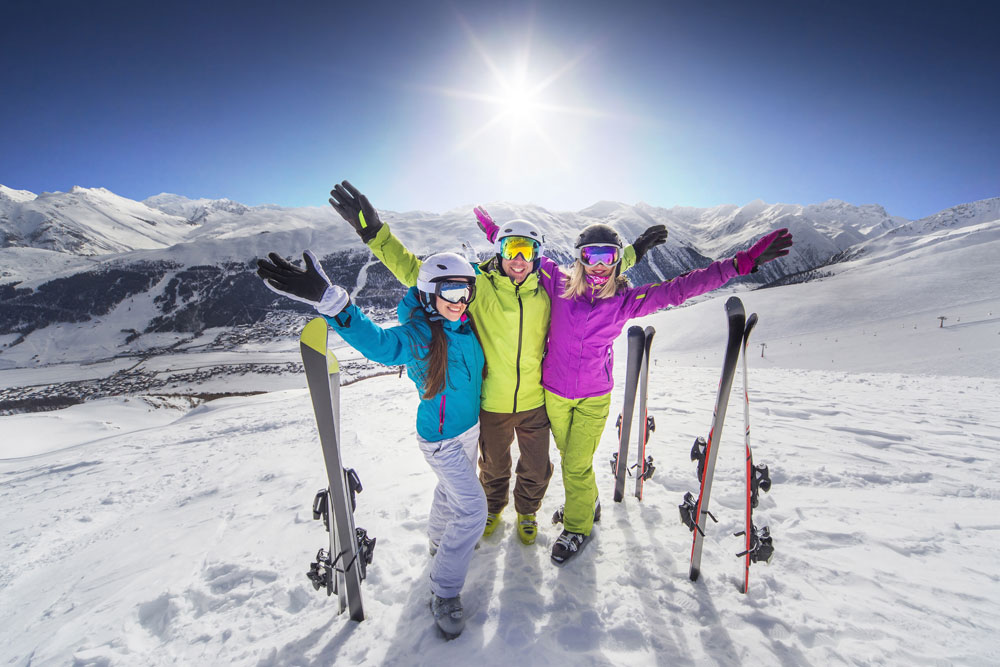
Intermediates (the sweet spot)
Intermediates absolutely feast here. The main bowl gives you endless cruisy laps, and you can mix high-altitude snowier runs with lower tree-lined sectors depending on weather.
If you like long, confidence-boosting runs, you’ll love linking routes across the mountain, and you’ve got the option to upgrade to Paradiski for even more variety across to Les Arcs.
Stay tip:
- Stay central (Plagne Centre, Belle Plagne, or Bellecôte) if you want maximum flexibility each morning – it’s the easiest way to pick your terrain based on conditions and mood.

Advanced skiers & snow-sure seekers
Advanced skiers get plenty: high alpine ski terrain, steeper blacks, and challenging routes – plus the “Natur’” zones that are controlled but left ungroomed for a more off-piste feel.
The Bellecôte / high-altitude area is where you’ll naturally gravitate for that big-mountain sensation. Sensible safety note: if you’re stepping beyond marked runs, treat it seriously – get local knowledge, read avalanche info, and consider hiring a guide.
Stay tip:
- For access, staying around Bellecôte / Belle Plagne keeps you closest to the lifts that feed the higher, more technical terrain.

Snowboarders
Snowboarders generally do well in La Plagne because the lift network is strong and there’s a lot of open, cruisy terrain – but you still want to plan your routes a bit to avoid the odd flatter connection.
The main altitude villages (Plagne Centre / Belle Plagne / Bellecôte) are the safest bet because you’re close to the big lifts and you can choose your sector without getting trapped in a long, poling-heavy traverse.
Stay tip:
- If freestyle matters, being near the Riders Nation park zone is a bonus for quick laps.

Beginners (with a smart plan)
La Plagne is one of those resorts where beginners can actually relax. There are dedicated learning zones, lots of gentle greens and forgiving blues, and the Cool Ski beginner-only areas that reduce the risk of accidentally following your confident mate into a mess.
Plagne Bellecôte is often a great base for first-week skiers because it’s practical, central, and has easy-access beginner terrain nearby.
Stay tip:
- Stay somewhere you can walk to ski school (Plagne Centre or Bellecôte are easiest) and you’ll avoid the classic “8:45am panic march in clunky boots.”

Families
For family ski holidays, La Plagne is basically built for you: lots of ski-in/ski-out accommodation, plenty of apartment-style stays that make meals and bedtime easier, and a resort layout where you can keep life simple (short walks, easy transport links, predictable routines).
Plagne Bellecôte is a common family base because it’s practical and beginner-friendly, while Belle Plagne suits families who want prettier surroundings and pedestrian calm.
Stay tip:
- If you want easy pool/spa downtime, check what your building includes – that can be a genuine trip-saver at 4pm with overtired kids.

Freestyle / Terrain Parks
La Plagne offers proper freestyle rather than a token park tucked away in shame.
The Riders Nation zone is a key feature, and the resort also has multiple fun zones and progression-friendly set-ups – so you’re not stuck choosing between “tiny beginner boxes” and “massive features that terrify your soul.”
Stay tip:
- If park time is a daily thing for you, staying central or near the sectors that feed Riders Nation makes your mornings smoother (because nothing kills motivation like a long commute to your favourite laps).
Looking to stay in La Plagne?
Where is La Plagne?
La Plagne is in Savoie in the French Alps, sitting above the Tarentaise Valley – the same general “mega-ski” neighbourhood as places like Les Arcs, Tignes, Val d’Isère, and the Three Valleys.
The key practical point is that it’s a multi-village, mountainside resort rather than one valley-floor town, which is why transfer times can vary slightly depending on which village you’re heading to. It’s also directly linked into Paradiski (La Plagne + Les Arcs + Peisey-Vallandry) via the Vanoise Express, so you’re not just picking a resort – you’re picking a whole connected ski region.
Looking to stay in La Plagne?
Skiing in La Plagne (ski area, terrain, lifts, snow)
La Plagne’s terrain is the reason people keep coming back. It has that rare combo of being genuinely big while still feeling “manageable” once you learn the main lift arteries.
The mountain breaks into distinct sectors – some wide and open, some forested, some sunnier, some higher and more serious – so you can match your day to the weather and your legs.
And because it’s built around multiple villages, you can often dodge crowds just by choosing a different starting lift than everyone else.
The other secret sauce is variety for mixed groups. Beginners can stay in friendly zones without feeling abandoned. Intermediates can cruise all day without repeating the same two blues. Strong skiers can head for the higher, steeper stuff – and everyone can meet for lunch without anyone having to do a terrifying “just get down somehow” run.


Terrain overview
Think of La Plagne as a “necklace” of purpose-built altitude villages strung along the mountain (Plagne Centre, Belle Plagne, Bellecôte, Plagne 1800, Plagne Villages/Soleil, Aime 2000), all feeding into a big central bowl where you can fan out in a bunch of directions without it feeling like one long slog.
The vibe changes depending on which way you point your skis: Champagny sits a bit apart and often feels brighter and quieter for cruising days; Montchavin–Les Coches is your tree-lined comfort blanket when the weather’s doing that classic Alpine “whiteout with attitude”; and Montalbert is another calmer, more wooded corner that’s great when you want mileage without the main-bowl bustle.
Your “big mountain” routes tend to pull you up and out from the core hubs around Plagne Centre, Plagne Bellecote and Belle Plagne, with the higher lifts stepping you up toward the Roche de Mio area and the upper mountain/glacier zone for colder snow and longer top-to-bottom legs.
It’s also worth clocking that La Plagne isn’t just La Plagne: you’ve got the Paradiski link in your pocket, which means you can turn a normal day into a proper mission over towards Les Arcs if you plan it right (and don’t leave it until 3pm with tired legs and zero snacks).
Stay tip:
If you want maximum flexibility (and fewer “how do we get back?” moments), stay around Plagne Centre / Bellecôte so you can pick any sector each morning.
Lifts & getting around the mountain
The lift system here is built for scale. You’ve got plenty of gondolas and high-capacity chairs designed to shift big numbers quickly, and because the ski area is so spread out, crowds don’t usually feel relentless once you’ve moved beyond the obvious lift bases.
The reality check is that La Plagne still has gateway moments: the lifts that funnel people upward to the higher zones, and anything involved in the Paradiski crossing, can stack up mid-morning in peak weeks (French holiday periods and UK half-term are the usual suspects).
The good news is that queue behaviour in La Plagne is fairly predictable, which means you can outsmart it without needing a spreadsheet.
If you’re on the first lifts, you’ll often get a couple of glorious “empty piste” hours before the ski-school waves arrive. Then there’s the lunchtime shuffle: while lots of people drift off for food at the same time, you can keep skiing and basically borrow the mountain for a bit.
Finally, the last hour can be sneaky-good for ticking off your “must-do” lifts and laps, because plenty of people peel off early for showers, kids’ clubs, or the sacred pre-dinner snack.
Stay tip:
For less queuing stress, pick a base with multiple “first lifts” (Plagne Centre / Belle Plagne), not a spot with only one obvious access lift.
Snow reliability & season length
Snow reliability is one of La Plagne’s headline perks, and it’s not just marketing fluff.
You’re skiing on a high-altitude domain that tops out above 3,000m, and the wider Paradiski ski area keeps a lot of terrain above 2,000m, which helps conditions stay properly wintry through the core season.
In practical terms: you’re less likely to have that “why is it slushy at 10am?” problem compared to lower resorts, and you’ve usually got a decent menu of options even when the weather gets moody.
That said, it’s still the Alps, not a snow globe. You’ll get storm days, you’ll get wind, and you’ll get those flat-light afternoons where everyone suddenly skis like they’ve forgotten where their feet are.
The smart play is to match the terrain to the conditions: go higher when you want colder snow and better coverage, and drop into the tree sectors (Montchavin–Les Coches, Montalbert) when visibility is the issue.
Early season is typically best up high; later season often turns into that classic split personality where lower runs feel springy while the upper mountain hangs onto firmer, colder snow.
Stay tip:
If you’re travelling early/late season, base yourself high (Plagne Centre / Belle Plagne) to keep your “home runs” more snow-reliable.

La Plagne absolutely has that “go on then… just one little line” temptation beyond the groomers.
Between the higher alpine terrain and the resort’s ungroomed-but-secured Natur’ routes, strong skiers can find something that feels freeride-y without needing to disappear into full-on wilderness mode.
Those Natur’ runs are a nice halfway house: they can ski like off-piste, but they’re still part of the managed area, which makes them a great step if you’re building confidence and judgement.
But (and it’s a big but): if you’re leaving marked runs, this is not the place to wing it on vibes alone. Alpine conditions change fast, wind can load slopes deceptively, and “it looked tracked” is not an avalanche assessment.
If off-piste is a proper goal rather than a spontaneous detour, hire a qualified guide, carry the right kit, and treat the morning briefing like it actually matters – because it does. You’ll also get a better day out of it: more good snow, fewer wrong turns, and way less time standing around wondering if that bowl “goes through”.
Stay tip:
Stay near Bellecôte / Belle Plagne if you want fastest access to the higher alpine terrain where freeride objectives tend to sit.
Beginners & improvers
La Plagne can be brilliant for beginners – if you keep it simple. The biggest beginner mistake here is getting seduced by the size of the map too early, then accidentally graduating yourself onto something steeper than your confidence level.
The best rhythm is boring in the best way: stay near your learning zone, repeat the same friendly pistes until they feel automatic, then expand outward in small, confidence-building steps. Wide, cruisy runs are where you’ll actually learn good habits – not on that one “we’ll just try it” run that turns into a survival slide.
The Cool Ski concept is genuinely handy for that awkward in-between stage where you’re done with the nursery slope but not quite ready for full resort exploration – especially if you’re anxious about ending up somewhere spicy.
Improvers should also think ahead to the “getting home” bit of the day: fatigue + late-afternoon snow + busy pistes is when things get messy. Plan routes that give you an easy way back, and if you’re with mixed abilities, agree a “no heroics after 3pm” rule.
Stay tip:
For stress-free ski school routines, stay in Plagne Centre or Bellecôte – short walks, clear meeting points, less morning chaos.
Freestyle & “more than pistes”
Freestyle in La Plagne isn’t some sad little afterthought parked in a corner – it’s properly signposted and treated like part of the experience.
Riders Nation is the headline name for the park/fun-zone scene, and there are also playful areas designed for people who want something more interesting than pure piste cruising without committing to rails and big jumps.
If you’re new to park, the best mindset is “skills session” not “audition for X Games”: little hits, safe features, and repeat laps to build control.
It’s amazing how quickly your general skiing improves when you’re working on balance, pop, and line choice in a fun setting.
And if your group is mixed ability, these zones are weirdly perfect as meeting points. Everyone can lap at their own level, you’re not constantly waiting at the bottom of a run, and it keeps the day social without forcing everyone onto the same terrain.
Stay tip:
If park laps are your daily habit, stay central so you can get to Riders Nation quickly without a long cross-resort commute.
Best Runs in La Plagne (by ability)
For beginners:
If you want friendly, confidence-building terrain right from the village level, look for mellow greens like Boulevard and easy learning areas around Colorado (both show up clearly on the piste map and sit in the “classic first-week” zone).
For gentle progression, cruising blues like Mont Blanc are the kind of run you can repeat without feeling bored – perfect for practising turns, speed control, and that all-important “not stopping in the middle” habit.
For intermediates:
This is where La Plagne shines. You’ve got scenic blues like Bozelet in the Champagny sector (great views, often sunny), plus a buffet of reds and longer links like Mont de la Guerre when you want something more committing.
If you enjoy that “long run, steady rhythm” feeling, building routes that connect sectors (rather than lapping one lift) is where you’ll get the most fun for your legs.
For advanced:
For steeper challenges, names to look out for include Dérochoir (a proper hard run), plus the ungroomed Natur’ blacks like Les Etroits, Morbleu, Coqs, and Palsembleu for when you want bumps, terrain, and bragging rights.
The high zone above Roche de Mio and toward the glacier area is also where you’ll find the most “big mountain” feel – but do check conditions, because icy + steep is not the flex you think it is.
Off-piste note:
La Plagne has plenty of freeride potential, but if you’re leaving marked pistes, go with a qualified guide and full kit – don’t let a sunny day trick you into lazy decisions.
Looking to stay in La Plagne?
Looking for accommodation in La Plagne
Choosing where to stay in La Plagne is less about “which town is best” and more about what kind of holiday rhythm you want.
Do you want to walk out and be in the middle of everything – ski school, supermarkets, bars, lifts, the lot? Or do you want prettier, quieter, more “mountain village” vibes with trees and calm evenings? Because La Plagne can do both… but not in the same postcode.
The altitude villages (Plagne Centre, Belle Plagne, Bellecôte, Villages/Soleil, Aime 2000, Plagne 1800) are the most convenient for ski-first trips. You’re close to the core lift network, you can change plans easily if the weather shifts, and you’ll generally have the most ski-in/ski-out options.
The lower villages (Montchavin-Les Coches, Montalbert, Champagny) are the “charm and trees” play – often quieter, sometimes better value, and brilliant when it’s snowing hard and visibility up high is grim.
The good news: it’s all linked by lifts and free transport, so you’re not isolated – you’re just choosing your home base flavour.
Quick chooser: which area is right for you?
- If you’re a first-timer or you hate logistics, pick Plagne Centre.
- If you want pretty and ski-in/ski-out calm, go Belle Plagne.
- If you’re here for practical family convenience, Plagne Bellecote is hard to beat.
- If you want livelier evenings, Plagne 1800 tends to deliver.
- If you want trees and a more traditional feel, Montchavin-Les Coches or Montalbert are your friends.
- If you want sunshine and a quieter vibe with strong skiing, Champagny is a sleeper hit.
Village Comparison Table
| Area / Base | Altitude | Vibe | Best For | Nightlife | Beginner-Friendly | Access / Getting Around |
|---|---|---|---|---|---|---|
| Plagne Centre | 1,970m | Central, busy, convenient | First-timers, mixed groups | ★★★★ | ★★★★ | Multiple lifts + easy internal links |
| Belle Plagne | 2,050m | Pretty, pedestrian, ski-in/out | Couples, comfort seekers | ★★★ | ★★★ | Great slope access, calm evenings |
| Plagne Bellecôte | 1,930m | Practical, family-focused | Families, beginners | ★★★ | ★★★★★ | Super central for lift network |
| Plagne 1800 | 1,800m | Lively, sociable | Après lovers, groups | ★★★★★ | ★★★ | Quick access + buses/links |
| Plagne Villages / Soleil | 2,050m | Quieter, sunny | Families, calmer stays | ★★ | ★★★★ | Télébus + quick ski access |
| Aime 2000 | 2,100m | Iconic mega-building, high | Ski-first convenience | ★★ | ★★★ | High start, easy links |
| Montchavin-Les Coches | 1,250–1,450m | Traditional, tree-y | Bad-weather days, families | ★★ | ★★★★ | Great trees + link to core |
| Montalbert | 1,350m | Calm, village charm | Quiet trips, value hunters | ★★ | ★★★ | Trees + lifts up to main area |
| Champagny-en-Vanoise | 1,250m | Quiet, sunny village | Relaxed skiers, views | ★★ | ★★★ | Gondola access + calmer slopes |
(Star ratings are “relative vibe” rather than gospel)
Best Area for First-Timers
If it’s your first La Plagne ski trip, Plagne Centre is the safest “no regrets” base. It’s properly central, easy to get your bearings, and it gives you the smoothest daily routine: ski school meet-ups, ski hire, supermarkets, takeaway pizza emergencies, and multiple lift options all within a short stomp.
And that matters more than people admit – because the biggest first-timer holiday-killer isn’t the skiing… it’s the faff.
Staying central means you’re not spending day one decoding shuttle routes and staircases when you could be learning how to stop without doing interpretive dance.
It also buys you flexibility. If the weather’s grim, you can pivot towards the tree sectors without it becoming a whole expedition.
If queues build at one lift, you’ve usually got another way out. If your group splits by ability (it always does), meeting up is simpler because everyone can “orbit” back through the same hub.
Plagne Centre is basically the option that makes La Plagne feel easy – and honestly, that’s a flex.
Stay tip:
If you’re booking apartments, prioritise Plagne Centre addresses near the main lift frontage (rather than “Centre” that’s actually a hillside hike) – it’s the difference between “handy” and “why are we sweating already?”
Best Area for Ski-in Ski-out
If you want proper ski in ski out (not “it’s only 200m… uphill… in ski boots… carrying skis”), Belle Plagne is one of the best bets.
It’s designed around slope access and leans more pedestrian than some bases, which makes it feel calmer and more holiday-like – you’re not constantly dodging traffic or doing that awkward gear shuffle on busy roads.
You can often clip in quickly, get a few early laps before the crowds wake up, and ski back without the end-of-day trek that turns into a mood.
Plagne Bellecôte can also deliver genuine ski-in/out practicality, but the vibe is more functional than pretty – brilliant if you’re prioritising convenience over aesthetics.
Here’s the honesty check though: always look at your building’s exact spot. “Ski-in/out” can mean “you can ski back to within a minute or two,” which is still great… but if you’re imagining clicking in at your door, you want to be picky and check the piste line and nearest lift base.
Stay tip:
When you see “ski-in/ski-out”, cross-check it against the piste map + lift base – if it says “near the lift” rather than “on the piste edge”, assume there’s a boot-walk hiding in the small print.
Best Area for Nightlife
If your perfect day ends with “one drink” that turns into “why is it midnight,” Plagne 1800 is often the liveliest base.
It’s got that more sociable, evening-friendly energy – the kind of place where groups actually go out rather than just talk about going out. It tends to feel a bit more “let’s make a night of it”, especially for mates’ trips, and you’re not reliant on one single venue to carry the vibe.
Plagne Centre can also work well for nightlife because it’s busy, central, and has plenty going on – plus you’ve got the convenience factor: more people, more options, easier taxi/shuttle logic.
The trade-off is simple: lively base = more noise and more movement. If you’re a light sleeper, don’t put yourself directly above the action unless you enjoy falling asleep to the sound of someone retelling their entire day in the hallway at 1am.
And if you’re with kids, a calmer base and a planned early après is usually the smarter play.
Stay tip:
If you want nightlife without living inside it, stay in Plagne Centre but pick accommodation a little set back from the main strip – you’ll still be walk-close, just not “awake-close”.
Best Area for Families
For families, Plagne Bellecôte is a classic choice because it’s central, practical, and beginner-friendly – meaning fewer stressful mornings and fewer “we need to get back quickly” drama moments.
It’s the kind of base where you can keep routines simple: breakfast, boots, lessons, done.
Plagne Centre also works really well if you want convenience plus lots of services close by (shops, hire, snack options, plan-B activities if someone melts down).
If your family likes quieter evenings and a more relaxed, “we’re on holiday” feel, Plagne Villages/Soleil or Belle Plagne can be a nicer atmosphere – especially if you’re not chasing nightlife and you’d rather have calmer streets and a slightly softer pace at the end of the day.
The sanity-saving family rule still applies though: prioritise walkability to ski school meeting points and food options.
A “nice view” apartment is lovely… until you’re doing a 20-minute trek in boots with a tired child who has suddenly decided they hate skiing and love drama.
Stay tip:
Pick accommodation within 5–10 minutes (in boots) of ski school meeting points – it makes mornings calmer and lets you bail out quickly if someone’s cold, tired, or done.
Best Area for Budget Travellers
For better value, look at the quieter and/or lower bases: Montalbert, Montchavin–Les Coches, and sometimes Champagny can offer stronger bang-for-buck, especially if you’re happy with a calmer nightlife scene.
You’re still connected into the wider ski area, and you often get that nicer village feel without paying the “centre of the action” premium.
It’s a good trade if your priorities are snow time and sleep, not being ten steps from the busiest bars.
Also worth considering: slightly older buildings in the altitude villages can be cheaper than the shiny new ski-in/out blocks – and if you’re skiing all day anyway, you might not care that the corridor carpet looks like it survived the 90s.
Spend smart: save on accommodation, then put money where it actually changes your week – good boots, a lesson or two, and the occasional mountain lunch that feels like a proper reward.
Stay tip:
If you’re going budget, choose a base with easy lift access + a supermarket nearby – saving ££ on “tiny top-up shops” and taxis/shuttles is where the real value is.
Our Top Hotels

★★★★
- Belle Plagne, 300m to centre
- Lifts – short track to slopes or 5 mins walk to Belle Plagne gondola
- Pool + hammam
Here you have Belle Plagne’s prettier, calmer atmosphere. You’ve got a short route to the slopes and the village centre close by.
Inside, it leans warm and chalet-ish rather than slick and designer.
The pool and hammam help, and the kids-club angle is handy if this is a family trip where the adults would quite like ten quiet minutes at some point.
Why choose it? It makes learning feel calmer, cosier and a lot less like a military operation.

★★★★★
- Plagne Centre, slopeside
- Lifts – ski-in/out
- Pool + spa
It gives you five-star residence quality right in Plagne Centre, so you get the nice bits – big apartments, spa time, polished interiors – without sacrificing the practical upside of being central.
The apartments are well-designed rather than just large for the sake of it, and the spa setup means you still get that pampered-holiday feeling even though you’re self-catering.
Plagne Centre is also useful if your group likes having things close at hand.
Why choose it? It’s the polished, central, grown-up option for people who want comfort without resort-distance faff.

★★★
- Plagne Soleil, quiet edge of the village
- Lifts – short walk to the piste
- Pool + wellness area
You have value-for-comfort in Plagne Soleil: a quieter base, close-enough slope access, and a genuinely useful wellness area that makes the whole trip better.
Plagne Soleil tends to attract people who care more about skiing convenience and mountain views than being in the loudest bit of town, and Vancouver fits that mood nicely.
Come back, have a swim, sit in the hot tub, head out for dinner or keep it low-key.
Why choose it? Quiet, comfortable and easy to live with – the ski-holiday equivalent of a really competent friend.

★★★★
- Plagne Aime 2000, slopeside
- Lifts - ski-in/out
- Pool + spa
You’re slopeside in Plagne Aime 2000, and the board basis often makes it easier to keep spending predictable.
The location won’t be everyone’s dream aesthetically, but it is undeniably practical for getting on snow,.
Add the spa/pool side and the generally all-in-one feel, and you’ve got a hotel that can save money precisely because it keeps the week contained and simple.
Why choose it? If you want hotel convenience and predictable spend rather than apartment self-catering, this is a strong option.
Tour Operators who go here
Looking to stay in La Plagne?
Après ski, restaurants & winter activities
La Plagne’s “village life” is spread across multiple bases, so the experience depends heavily on where you stay – but the overall pattern is consistent: ski-first days, then choose-your-own-energy evenings.
Food ranges from quick-and-cheerful (pizza, burgers, Savoyard classics) to genuinely excellent dining if you seek it out, and there’s enough après variety that you’re not stuck with just “quiet pint” or “nightclub chaos.”
What’s especially good here is the mix of on-mountain and in-village options. You can do proper lunch stops at mountain restaurants, or you can grab something quick and get back out.
You can do a civilised early après on a sunny terrace, or a louder one with DJs and dancing in ski boots (which always seems like a good idea until you remember your calves).
And because the internal transport network is strong, you don’t have to be glued to one base all week – you can stay calmer but still dip into livelier zones when you fancy it.

Apres ski in La Plagne is a spectrum – and you can absolutely choose your lane.
If you want the classic “sun terrace, loud music, drink in hand,” places like Le Bonnet, La Mine, and the legendary Igloo Igloo are the kind of venues that understand the art of turning a quick beer into a full après session.
If you’re staying around Belle Plagne, you’ll often hear people talk about La Saloon for that lively, social energy, while Spitting Feathers is a known favourite for a more British-bar vibe (handy when you just want a familiar pint and some banter).
If you’re after something a bit more “cosy pub” than “DJ set,” you’ve got options like Monica’s Pub and La Tête Inn, where the pace is friendlier and you can actually hear your mates speak.
For later nights, some bases lean more active than others – Plagne Centre and Plagne 1800 generally feel more “let’s go out,” while the quieter villages are more “one last drink, then bed.”
The smart move for mixed groups is to do your lively après early (4–6pm), then migrate to food somewhere calmer before anyone tips into the “I should not have ordered that shot” zone.
Mountain‑top Moments
Mountain lunches in La Plagne can be anything from a quick snack to a full-on “why did we eat so much, we still have to ski” event.
If you want proper mountain restaurant energy, check out Roc des Blanchets, Chalet des Colosses, Les Inversens, Chalet du Friolin, and Chalet des Verdons Sud – they are part of the on-mountain scene – the kind of places you aim for when you want sunshine, hearty food, and that smug feeling of doing lunch correctly.
The pro move is timing: eat early (11:30-ish) or late (2pm-ish) and you’ll dodge the peak crush.
And if you’re skiing with beginners or kids, pick lunch spots that are easy to reach without tricky run choices – nothing ruins morale like realising your “cute lunch plan” requires a steep red to access.
Also: don’t underestimate the value of a simple hot chocolate stop when the weather turns. A 20-minute warm-up can rescue an entire day.

In the villages, you’ve got a really good mix of easy “feed me now” places and some genuinely tempting “right, tonight we’re doing a proper dinner” options.
If you’re looking to level-up beyond standard pizza/pasta, La Table du Carlina (Belle Plagne) is one of the more “special night” picks, and it also has a cosier sister restaurant, L’Ercheu, that leans into Savoyard classics with a twist – think things like fondue aux morilles, matouille and péla when you want cheese, but with a bit of flair.
Joya in Plagne Centre is another solid shout if you want local produce energy (wines, deli vibes, share plates) without it being stuffy.
And if you want somewhere that feels properly “holiday cosy” after skiing, Le Chalet de La Roche is worth visiting: Savoyard + Italian comfort food (fresh pasta, pizzas, soups/salads), and it’s very much built for that “thaw out, eat something excellent, repeat” routine.
Tiny reality check: if you see older recommendations raving about Union in Montalbert, it closed in April 2024 – so don’t waste your precious evening trying to hunt it down like a ski-town urban legend.
For comfort-food nights, La Plagne does the classics properly. You’ve got the full Savoyard greatest hits: raclette, tartiflette, fondue, plus extra “local nerd” dishes worth ordering when you spot them – farçon (a potato-based speciality), diots (Savoyard sausages), crozets (little square pasta), and all the warming, cheesy things that make you feel like you’ve earned your dinner.
For a really La Plagne-specific “order this because you’re here” moment, Le Farçon in Plagne Centre has a Farçon dish (potato “pancake” style) alongside other hearty mains.
If you want something easy-going for groups (and those nights where everyone’s too tired to negotiate), La Cantine in Plagne 1800 is a reliable shout for pizza + cocktails + tapas energy.
And for a friendly all-rounder that works for mixed ages and mixed appetites, Le Chairlift (Plagne Villages) covers a lot of bases: Savoyard specialities, stews, prime rib, pizzas/burgers, plus the very important crêpes and waffles for dessert people.
If you’re self-catering, you can still eat really well by doing one smart thing: plan two “proper cook” nights, two “easy freezer/pasta” nights, then give yourself permission to eat out a couple of times (ideally when legs are tired and morale needs boosting).
The holiday win is balance – not trying to be gourmet every night, but also not living on supermarket sandwiches like a sad university student who’s “definitely fine, honestly.”
And if you want extra choice, the official resort listings show La Plagne has a lot of restaurant options across the villages – so you’re never stuck.
If you want a break from skiing (or you’ve got someone in the group who doesn’t ski), La Plagne is unusually strong for “actually fun” alternatives.
The headline is the Olympic bobsleigh track – yes, really – which is one of those bucket-list experiences that makes you feel like an athlete for five minutes (and then reminds you you’re not).
You’ve also got things like Aérolive (a proper aerial ride/zipline-style experience) for a hit of adrenaline without needing skis, and Colorado Luge for something family-friendly that still feels exciting.
If you want calmer, think snowshoe walks, scenic lift rides as a pedestrian, spa/wellbeing afternoons, or simply doing a “proper lunch + village wander” day when legs are cooked.
The key is planning: book the big-ticket activities early in peak weeks, because the good time slots go fast and nobody wants the “8:30am only” option unless they’re frighteningly motivated.

Getting home safely & easily
Getting around La Plagne is one of the best parts of the practical setup: there’s a free internal transport network, including shuttle buses and lift-style links like the Télémétro (8am–1am) and the Télébus (running into the evenings too).
The key “grown-up” move is just remembering it’s a system – not a teleport – so keep half an eye on last runs, especially if you’re drifting from “one drink” into “let’s just stay for one more” territory. If you’ve got kids, tired legs, or a group that moves at different speeds, agree a simple plan: which link you’re taking back, and what stop you’re aiming for, before everyone’s full of cheese and optimism.
The dedicated station-to-resort buses are roughly 30 minutes, depending on where you’re staying, so it’s generally straightforward if you’re not cutting it fine.
Taxis are a useful backup, but prices vary – and late at night they’re not always instant, especially in busy weeks. So if you know you’ll want a taxi after dinner/après (or you’re staying somewhere a bit more tucked away), assume it’s possible but don’t assume it’s immediate:.

Ski schools & learning zones
La Plagne is very set up for ski lessons, which is exactly what you want if you’re booking a trip with nervous beginners, kids, or improvers who want a confidence boost.
Because it’s a multi-village resort, the big practical trick is to book lessons in the village you’re actually staying in (unless you love morning logistics for some reason).
Lesson meeting points can look close on a map but feel far when you’re in ski boots carrying poles, helmets, and a child who has suddenly become allergic to walking.
If you’re an adult learner, don’t underestimate how much faster you progress with even a couple of private lessons at the start of the week – it saves you days of practising the wrong thing.
And if you’re planning anything off-piste, a guide isn’t a “luxury add-on”; it’s a safety decision and often the difference between an amazing day and a bad one.

La Plagne’s learning setup is genuinely designed to keep beginners in the right terrain without that classic “we took one lift and suddenly we’re on something terrifying” moment.
The beginner zones and the Cool Ski concept are basically your guardrails: wide, confidence-building pistes, clearer signposting, and uplift that doesn’t feel like you’re being fired into the deep end.
It’s especially useful for that awkward middle phase – when you’re done with the nursery slope, but you’re not quite ready to roam the whole map without a bit of structure (or without accidentally following your over-confident mate onto “just a quick red”).
What makes La Plagne work well for progression is the shape of the terrain: lots of gentle areas where you can repeat laps, add one new challenge at a time, and build skills without the day turning into constant navigation.
You get the chance to practise the same basics properly – turning rhythm, speed control, stopping, using lift lines – rather than spending half your energy just figuring out where you are.
The result is more mileage, less stress, and faster improvement, because you’re doing reps in terrain that matches your level.
Plagne Bellecôte iss a strong beginner base because it tends to be very “learner practical”: plenty of easy terrain nearby, uplift suited to first-week progression, and simple access back to the village when legs (or confidence) start to fade.
It’s also a good “confidence container” for nervous skiers – fewer complicated junctions, fewer surprise steep pitches, and more predictable routes home.
And for mixed groups, it’s handy: stronger skiers can peel off for a harder lap, while beginners can stay in friendly terrain, and you can still reunite without turning it into a logistical mission.
If lessons matter, the smartest move is boring-but-brilliant: stay close enough to walk to the meeting point in under 10 minutes. That proximity turns mornings from slightly chaotic to smooth, and it also saves energy you’d rather spend actually skiing.
Plagne Centre and Bellecôte are usually the easiest “keep life simple” bases for lesson logistics because they’re central, well-served, and tend to have straightforward access to ski schools, hire shops, and lift hubs.
That’s the first-timer superpower: you can leave the accommodation, sort kit, join a lesson, and be on snow quickly – without starting the day with a shuttle connection and a mild panic. If someone in your group is a nervous learner, this matters even more, because calm mornings make for better lessons (and fewer “I don’t want to go today” moments).
Quieter villages can absolutely still work – and they can be lovely for sleep and atmosphere – but you’ll want to confirm exactly where your ski school meets, and how you get there in real life, not in marketing terms. “It’s easy to get to” can mean “easy if you’re organised and leave early,” which is fine… as long as you know that before you book. The rule of thumb: if you’re building your week around lessons, choose meeting-point convenience over a slightly nicer apartment every time. Views don’t help when you’re late, flustered, and starting the day annoyed.
Use La Plagne’s internal transport properly and it becomes refreshingly low-stress.
The Télémétro and the free shuttles can make cross-village movement genuinely painless, especially if you’re staying somewhere quieter but taking lessons in a main hub.
It’s a big quality-of-life perk for families and mixed groups: you’re not stuck doing a daily “who’s walking where and why is everyone grumpy?” debate before you’ve even clipped in.
It also means you can be flexible – stay in one village, meet for lessons in another, then regroup later without feeling trapped.
But don’t plan a tight connection right before a 9am lesson – that’s how you arrive sweaty, stressed, and apologising to your instructor like you’ve missed a flight.
Build in buffer time, especially in peak weeks when shuttles are busier and everyone moves at once.
Aim to be at the meeting point 10–15 minutes early on day one (longer if you’re hiring kit), because there’s always a bit of faff: boot adjustments, helmet fiddling, finding the right group, sorting lift passes, the inevitable “we’re at the wrong flag” moment.
A calm start makes the whole day feel easier – and lessons go better when you’re not arriving in a fluster.
Two simple “make the week smoother” moves:
- Do ski hire the afternoon before your first lesson if you can – it removes 80% of morning stress.
- If you must hire in the morning, treat it like airport timing: leave early, expect queues, and don’t plan to stroll up at 8:55 like you’re popping to Tesco.
Looking to stay in La Plagne?

Lift passes, costs & budgeting
Lift passes in La Plagne are one of those things that can quietly cost you money if you choose badly – not because the resort is trying to trick you, but because there are multiple “right answers” depending on your group.
La Plagne gives you a few ways to spend your lift-pass money, but the big decision is simple: stay within La Plagne’s already substantial 225km ski area, or pay extra for the full 425km Paradiski domain linking La Plagne with Les Arcs and Peisey-Vallandry.
For most families, beginners and relaxed intermediates, the La Plagne pass gives you more than enough skiing for a week. Strong intermediates and advanced skiers who genuinely plan to cross the Vanoise Express and explore Les Arcs will get much more value from the Paradiski pass.
Beginners have the cheaper Cool Ski option, while Champagny-en-Vanoise, Montalbert and Montchavin-Les Coches also have village passes for skiers who deliberately want to keep things local.
Which ski pass should you buy in La Plagne?
Think of it like this: staying mainly on the La Plagne side? Buy local. Planning proper Les Arcs days? Go Paradiski. Still learning? Keep your money in your pocket and start smaller.
Option A - La Plagne Pass
What it is: Full access to the 225km La Plagne ski area, excluding the Vanoise Express link across to Les Arcs.
Best for: Most families, mixed-ability groups, beginners who are progressing and intermediates who want plenty of variety without turning every day into a navigation exercise.
With different sectors stretching from the high-altitude villages down through the wooded lower slopes, there’s easily enough terrain here for a normal ski week.
For 2026/27, an adult pass costs €72 for one day, €370 for six days and €426 for seven days during the main season.
Plain English: This is the “La Plagne is enormous already, thanks” pass.
Option B - Paradiski Lift Pass
What it is: The full-area pass covering La Plagne, Les Arcs and Peisey-Vallandry, linked by the Vanoise Express.
Best for: Confident intermediates, advanced skiers and anyone who genuinely enjoys long touring days and exploring different sectors.
The adult pass costs €78 for one day, €412 for six days and €477 for seven days in the main season.
There’s also a nice bonus with 6–8 day Paradiski passes: you can ski from 12:30 the afternoon before your pass officially starts. If you arrive in resort early enough, that’s essentially a free warm-up session.
Plain English: This is the “yes, we really are going to ski over to Les Arcs” pass.
Option C - Cool Ski / Beginner pass
What it is: A one-day beginner pass giving access to dedicated learning and progression areas around La Plagne.
Best for: Complete beginners, nervous returners and anyone whose first few days will mainly involve practising stopping, turning and discovering that ski boots have absolutely no interest in being comfortable.
For winter 2026/27, the Cool Ski pass costs €39 for the day and is sold at lift-pass offices.
Once you’re confidently leaving the dedicated learning sectors and exploring normal blues, that’s the point where a full La Plagne pass makes more sense.
Plain English: This is the “learn first, pay for 225km later” pass.
La Plagne lift pass prices 2026/27
Here are the published headline prices for La Plagne Winter 2026/27 (prices shown in EUR):
| La Plagne Pass | Adult | Child | Senior |
|---|---|---|---|
| 4 hours | €58.00 | €47.00 | €47.00 |
| 1 day | €72.00 | €58.00 | €58.00 |
| 6 days | €370.00 | €296.00 | €296.00 |
| 7 days | €426.00 | €341.00 | €341.00 |
| Paradiski Lift Pass | Adult | Child | Senior |
|---|---|---|---|
| 1 day | €78.00 | €63.00 | €63.00 |
| 6 days | €412.00 | €330.00 | €330.00 |
| 7 days | €477.00 | €382.00 | €382.00 |
If you already have a La Plagne pass and decide midweek that Les Arcs is calling, you can also buy a one-day Paradiski extension at a lift-pass office rather than paying for the full Paradiski area all week.
Ski Demon tip: Travelling with teenagers? Check the Family Pack before buying four individual adult-rate passes. It can be one of the easiest €100 savings of the holiday.
Deposits, insurance, and when to buy
Here’s how to do La Plagne like someone who hates queues and hates wasting money:
Ski card: Each pass is loaded onto a rechargeable card costing €1. It’s a purchase rather than a refundable deposit, so keep it and reload it on future trips.
Insurance: Carré Neige costs €3.50 per person per day and covers things such as piste rescue and assistance following a covered accident. It should still sit alongside proper winter sports travel insurance.
When to buy: Standard prices aren’t cheaper because you book ahead – online purchase is mainly about convenience. However, Family, Tribe, weekend and occasional promotional offers can make a real difference, so check those before buying.
If you’re debating La Plagne versus Paradiski, be realistic. The six-day upgrade is €42 for an adult. That’s excellent value if you’re going to spend proper days exploring Les Arcs.
Looking to stay in La Plagne?
Common La Plagne Ski Holiday Mistakes
La Plagne is easy to enjoy, but its many villages and huge ski area mean a few common mistakes can make your holiday more expensive, more tiring or unnecessarily complicated.
Treating La Plagne like one “town,” then booking accommodation that’s technically in La Plagne… but not in the vibe you actually wanted
If you want lively bars, don’t book a quiet village and hope for nightlife to magically appear. If you want calm, don’t book above the noisiest bar strip and then complain about sound. La Plagne is multiple bases – pick the one that matches your holiday rhythm.
Buying the biggest lift pass “just in case,” then never leaving the La Plagne side
Paradiski is amazing… if you use it. But if your group includes beginners, short-day skiers, or families who keep things local, the La Plagne pass is already huge. Spend that extra money on lessons, better boots, or a couple of genuinely great lunches – those improve your trip every single day.
Not planning your “get home” route early in the week
It sounds basic, but La Plagne has enough sectors that you can end up tired, late, and trying to navigate back to your village on runs that feel harder at 4pm than they did at 11am. On day one or two, do a “home run rehearsal” while your legs still work. Future-you will write you a thank-you note.
Skiing the high altitude zone on a flat-light day without a backup plan
Yes, the high terrain is exciting – but visibility can vanish and suddenly everything looks like the same white slope. The smart move is to pivot to the tree sectors (Montchavin / Montalbert) when the weather turns. It’s not cowardice. It’s competence.
Sleeping on the internal transport links, then overusing taxis or long walks in ski boots
La Plagne’s free shuttle links and lift-style connections are there to make life easier – use them. The holiday win is not “we survived”; it’s “we made things simple and had more fun.”
Getting to La Plagne
Getting to La Plagne is straightforward, with several airport options and convenient rail connections via Aime-la-Plagne. Whether you’re flying, driving or arriving by train, here’s everything you need to know before you travel.
1) Fly + road transfer
(the “land, grab skis, go” option - with one small ‘Saturday traffic’ reality check)
If you’re flying in, you’ve got loads of airport options in the wider region (Geneva, Lyon, Grenoble, Chambéry are the usual suspects). Transfers can be blissfully smooth… or a bit of a Tarentaise saga if it’s snowing / it’s changeover day – so build in buffer, especially for late afternoon arrivals.
As a sensible rough guide (in decent conditions):
- Chambéry → La Plagne: roughly 1 hour 45 minutes – 2 hours 30 minutes
- Grenoble → La Plagne: roughly 2 hours – 2 hours 45 minutes
- Lyon → La Plagne: roughly 2 hours 30 minutes – 3 hours 15 minutes
- Geneva → La Plagne: roughly 2 hours 45 minutes – 3 hours 45 minutes
Real-world tip: La Plagne is a collection of villages (Plagne Centre, Belle Plagne, Plagne 1800, etc.), so double-check your booking is for the exact one you’re staying in – it’s an easy mix-up, and fixing it after a long travel day is nobody’s idea of fun.
2) Train to Aime-la-Plagne + bus up
(the “car-free, surprisingly painless” choice - if you don’t cut the connection too fine)
For UK travellers, train can be the underrated hero here.
Your gateway station is Aime-la-Plagne, and from there you’ve got bus links up into the resort villages – it’s one of the more skier-friendly rail set-ups in the Alps, so changeover day can feel less like a logistical boss fight.
Typical timings look like this:
- Aime-la-Plagne → La Plagne villages (bus): roughly 30–45 minutes (depends which village you’re heading to)
Real-world tip: line up your train arrival with the bus timetable and give yourself a buffer for delays. Missing the last sensible bus in winter isn’t just “annoying” – it’s how you end up paying taxi prices while slowly losing daylight and goodwill.
3) Driving to La Plagne
(flexible, family-friendly, and great for luggage… but the Tarentaise does not care about your schedule)
Driving is totally doable – but Saturday traffic in the Tarentaise Valley can be legendary. If you can travel outside peak changeover hours (or do a Friday night stop lower in the valley), your future self will thank you.
Route-wise, it’s usually:
- A43 / A430 → Albertville, then
- N90 up the Tarentaise towards Aime, then
- then climb up to La Plagne via the D221 (and friends), depending on your village.
Once you’re climbing, conditions can change fast: pack chains, keep snacks and water accessible, and don’t be the hero trying to “wing it” on summer tyres.
Real-world tip: do your big supermarket shop in the valley (easier + cheaper). If you’re self-catering, check whether your accommodation has a realistic unloading spot… because “close to the apartment” can sometimes mean “close-ish, if you’re a mountain goat.”
Getting around once you’re there (easy… with one tiny “ski boots” reality check)
Walking (your default setting - if you’re in the same village)
La Plagne is made up of a bunch of separate villages, so “walkable” really means walkable within your base. If you’re staying in somewhere like Plagne Centre / Aime 2000 / Belle Plagne, you can usually get to lifts, ski hire and dinner without much drama… but hopping between villages on foot is when you discover that “it’s only 10 minutes” was said by someone not wearing ski boots.
Télémétro + Télébus (your lift-style shortcuts - surprisingly useful)
This is one of La Plagne’s best little quality-of-life perks: it’s built around internal links that feel more like lifts than buses. The Télémétro runs roughly 8am–1am, and the Télébus runs into the evening, so getting between key bits of the resort is straightforward even after skiing - no car needed, no taxi panic, no “who’s walking home in the dark?” negotiations.
Free shuttles (your “park it and forget it” plan)
On top of that, free shuttle buses connect the villages, which means you can realistically park the car on arrival and ignore it for the week. It’s especially handy if your accommodation isn’t properly ski-in/ski-out, or if you’ve got kids who suddenly decide their legs have retired for the day.
Ready to make your piste dreams a reality?
Whether you’re scouting dreamy hotels, comparing the best tour operators or looking for fresh ski inspiration, we’re here to help you turn ideas into an actual holiday.
Take the next step by browsing hotels in this resort, choosing a trusted ski tour operator or signing up to our newsletter for destination ideas, practical advice and the latest tips delivered straight to your inbox. From finding the right place to stay to choosing the best way to book, we’ve got plenty to help you plan with confidence. Pick your next move and let the adventure begin.
Looking for more inspiration?
Sign up to our free newsletter

Ready to book your stay?
Take a look at our hotel guide and see what suits your requirements and budget
Tour operators
For more from our tour operators click the logos above
La Plagne FAQs
Whether you’re visiting La Plagne for the first time or heading back for another trip, these FAQs should help answer the most common questions before you book and before you travel.
Is La Plagne good for complete beginners?
Yes – and not just “it has a nursery slope” good. La Plagne has multiple beginner zones, a lot of gentle terrain, and a beginner-focused concept called Cool Ski that helps keep learners in the right areas.
That matters because the biggest fear for beginners is accidentally ending up somewhere too steep. Base-wise, Plagne Centre and Plagne Bellecôte are usually the easiest for first-timers because they’re practical and close to beginner-friendly uplift.
Do I need the Paradiski pass or is La Plagne enough for a week?
For most people, La Plagne is enough. You’ve got 225km of pistes and loads of variety, so you can happily ski all week without feeling trapped.
Paradiski is worth it if you’re strong intermediates / advanced skiers who’ll actually cross to Les Arcs and explore – or if you’re staying long enough that the extra variety genuinely matters. If your group is mixed ability, consider whether you’ll realistically do the link days, or whether you’ll mostly stay local and meet for lunch.
What’s the best village to stay in for ski-in/ski-out?
Belle Plagne is often the go-to for ski-in/ski-out calm, because the layout suits slope access and it feels pedestrian and “holiday-like.” Plagne Bellecôte can also be extremely practical for stepping straight into the ski day, but the vibe is more functional than pretty. The key is to check your building’s exact location – “ski-in/out” can mean genuinely on the piste, or it can mean a short walk that feels longer in ski boots.
How snow-sure is La Plagne?
It’s one of the best ski resorts in France because the vast ski area reaches over 3,000m, and a lot of terrain sits high enough to hold snow well through the core season.
Early and late season are typically strongest up high, while lower villages can feel more springy if you’re travelling in April. The practical win is choice: if conditions are poor in one sector, you can usually find something better in another (high alpine for cold snow, trees for visibility).
Where are the best tree runs for bad weather?
Your friends here are the lower sectors like Montchavin–Les Coches and Montalbert, where the forest gives you contrast and visibility on snowy or foggy days. If you’ve ever skied in a whiteout and felt like you were floating in a blank Word document, you’ll understand why this matters.
On storm days, don’t stubbornly stay up high just because you planned to – drop into the trees and you’ll often have a better (and safer) day.
Is La Plagne lively at night, or more family-focused?
Both, depending on where you base yourself. Plagne Centre and Plagne 1800 generally feel livelier, while Belle Plagne and the lower villages lean calmer.
Venue-wise, you’ve got proper après names like Le Bonnet, La Mine, and Igloo Igloo, plus pub-style options like Monica’s Pub and Spitting Feathers. The trick for mixed groups is doing early après, then choosing whether you want a quiet dinner or a later night.
How do I avoid queues in La Plagne?
Start earlier, ski through lunch, and be strategic about gateway lifts. Peak queues usually build mid-morning in holiday weeks, especially where people funnel toward the high zone or the Paradiski link.
If you’re staying central, you can often dodge the worst by choosing a less obvious first lift. And if you’re a family, timing matters more than speed: ski from 9 to 11:30, lunch early, then ski again while everyone else is eating.
Is La Plagne good for snowboarders?
Generally yes, especially if you stay central and plan your routes. The lift network is strong and the terrain is mostly friendly, but like many big French domains, there are occasional flatter links where skiers glide and snowboarders… contemplate their life choices.
Staying around Plagne Centre / Belle Plagne / Bellecôte makes it easier to choose routes that minimise annoying traverses. If park riding matters, Riders Nation is a key zone to aim for.
What are the best non-ski things to do?
La Plagne is unusually good here. The Olympic bobsleigh track is the headline “only in La Plagne” experience, and you’ve also got options like Aérolive and Colorado Luge for adrenaline without skis. If you want slower-paced, go for snowshoe walks, pedestrian lift rides, spa afternoons, or a “nice lunch + village wander” reset day when legs are toast.
What lift pass extras and add-ons should I budget for?
Two main ones: the €1 ski-card (don’t forget it) and optional Carré Neige insurance if you want coverage for the kind of ski mishaps that always happen to someone in every group. Also note there’s a €10 fee if you lose your pass and need it reissued – so maybe don’t store it loose in the same pocket as snacks, receipts, and your phone.