


Cervinia is for skiers who like everything a bit bigger: high-altitude cruising, endless Matterhorn views and wide-open pistes. Then there's the mildly ridiculous pleasure of skiing into Switzerland before lunch as if that's just standard holiday behaviour.
This guide was written by Michelle Wheeler
Cervinia ski resort at a glance
Cervinia (officially Breuil-Cervinia) is one of the highest ski resorts in the Alps and sits in Italy’s Aosta Valley, right under the Matterhorn like it’s showing off on purpose.
You’re starting high at around 2,050m, and you can ride lifts up to about 3,480m on the Italian side, with access up to about 3,883m when you include the linked terrain towards Zermatt.
The skiing is big, open and properly “high alpine”: think wide pistes, long cruisers and huge views. The local domain offers around 150km of pistes served by 20 lifts, while the full cross-border area provides roughly 350–360km, depending on what’s counted.
Logistically it’s reassuringly straightforward: Turin is the closest big airport (about 1h 42), with Milan Malpensa around 2h 16, and Geneva around 3h 37 by road.

Altitude
2,050 m - 3,883 m
Pistes
150 km
Ski Season 26/27
24 Oct - 2 May
Transfer Time
100 mins
Number of pistes by difficulty
Resort Guide Quick Facts
(the stuff you actually care about)
Best for:
- Intermediates who love mileage and confidence-boosting terrain,
- Snowboarders who hate endless drag lifts,
- Anyone who wants altitude without feeling like they’re trapped on one busy “main gondola” all week.
- It’s also sneaky-good for mixed-ability groups because the mountain is laid out in a way that lets people split up and reunite without everyone ending up in tears.
Ski area size:
On the Italian resort side (Breuil – Cervinia + Valtournenche) you’ll see the piste total around 150km. Add the international link and suddenly you’re into the famous Matterhorn mega-area numbers (around 350–360km). Practically: you won’t run out of piste – your legs will give up first.
Altitude:
A snow-sure resort with a base altitude of around 2,050m (which is why Cervinia can feel wintry when other Italian ski resorts are looking a bit… grassy), with lift access to about 3,480m locally, and up to about 3,883m when you include the higher cross-border access. This is a big deal for early/late season confidence.
Villages / bases (each has a different vibe):
Breuil – Cervinia is the main hub: functional, lively, and built around getting you onto the mountain fast. Valtournenche down the valley is a quieter, more traditional-feeling base that can be a smart move if you want calmer evenings (and often better value) while still having lift access into the same ski universe.
Beginner friendliness:
It’s a far better resort for beginners than people assume, but this is a high, open mountain and weather can turn quickly, so beginners need the right zones and the right plan (ski school helps a lot here). The good news is there are dedicated learning areas in/near town and progression terrain higher up once confidence clicks.
Ski season (published dates):
Cervinia’s 2026/27 winter season is scheduled to run from 24th October 2026 to 2nd May 2027. That is one of the longest ski seasons around, although early and late-season terrain will depend on snow, weather and which lifts are operating. Check the official Cervino Ski Paradise lift calendar before booking right at either end.
You’ll love Cervinia for…
Beginners
Snow sure
Intermediates
| Our rating | |
|---|---|
| ★★★★ | Beginner |
| ★★★★ | Intermediate |
| ★★ | Advanced |
| ★★ | Off-Piste |
| ★★★ | Snowboarding |
| ★★★★★ | Snow Reliability |
| ★★★ | Extent |
| ★★★ | Apres-Ski |
| ★★★ | Mountain Restaurants |
| ★★★★ | Scenery |
| ★★★ | Village Charm |
| ★★ | Non-Skiers |
Best for snow: Late December - March
Late December to March for the “proper winter” feel, with high-altitude insurance if storms come and go.
Best for value: January (post-New Year) and late March
January (post-New Year) and late March - same terrain, fewer crowds, slightly less wallet pain.
Best for families: Late March to early April
Late March to early April for sunnier days and softer vibes, while still keeping plenty of snow up high.
Avoid if possible: New Year and February half-term
New Year and February half-term - prices spike, queues grow teeth, and restaurants book out fast.
Tour Operators who go here





Looking to stay in Cervinia?
What’s Cervinia like?
Cervinia is one of those alpine resorts where the mountain does most of the talking.
It’s high, dramatic, and unapologetically “proper Alps” – you’re skiing in huge bowls with the Matterhorn looming like a screensaver you can actually fall over in. The piste style leans wide and confidence-building, which is why people come back for “one more week” and accidentally become Cervinia evangelists.
The town itself is more practical than chocolate-box pretty, but that’s not a dealbreaker when your mornings are easy, your ski days are long, and your lunches can be at altitude with ridiculous views. Come here for terrain, reliability, and that smug feeling of being in a major domain without Swiss-level prices.
Town layout
Breuil-Cervinia sits in a bowl, with most accommodation clustered around a walkable resort centre and the main lift access points. It’s not “one lift, one street” simple, but it’s also not chaotic – after day one, you’ll know exactly where your nearest ski hire, supermarket snacks, and emergency espresso live.
Valtournenche is a separate base down-valley with its own lift up (Salette side), which can be a brilliant alternative start point on busy mornings or windier days – you’re still in the same ski ecosystem, just approaching it from a different angle.
Overall vibe
The vibe is “serious skiing, not serious people.” You’ll see keen skiers chasing first lifts, families doing sensible blues, and snowboarders living their best life because the terrain is mostly kind to boards. It’s international but still feels Italian in the way that lunch matters and evenings don’t have to be a nightclub marathon unless you want them to be.
If you want charming, cobbled, fairy-light villages, Cervinia isn’t that. If you want altitude, space, and a resort that makes it easy to rack up big days, it absolutely is.
Après-ski
Après here is more “good bars, good laughs, then dinner” than full send chaos every night – but you can still find lively spots when you want them.
A classic Cervinia day is: ski until your legs wobble, catch a last drink somewhere buzzing, then wander to food without needing taxis or military-grade planning.
The scene ranges from casual pubs to late-night clubby places, and the best part is you can choose your own adventure without feeling like the whole town is forcing you into it.
Looking to stay in Cervinia?
Who Cervinia suits
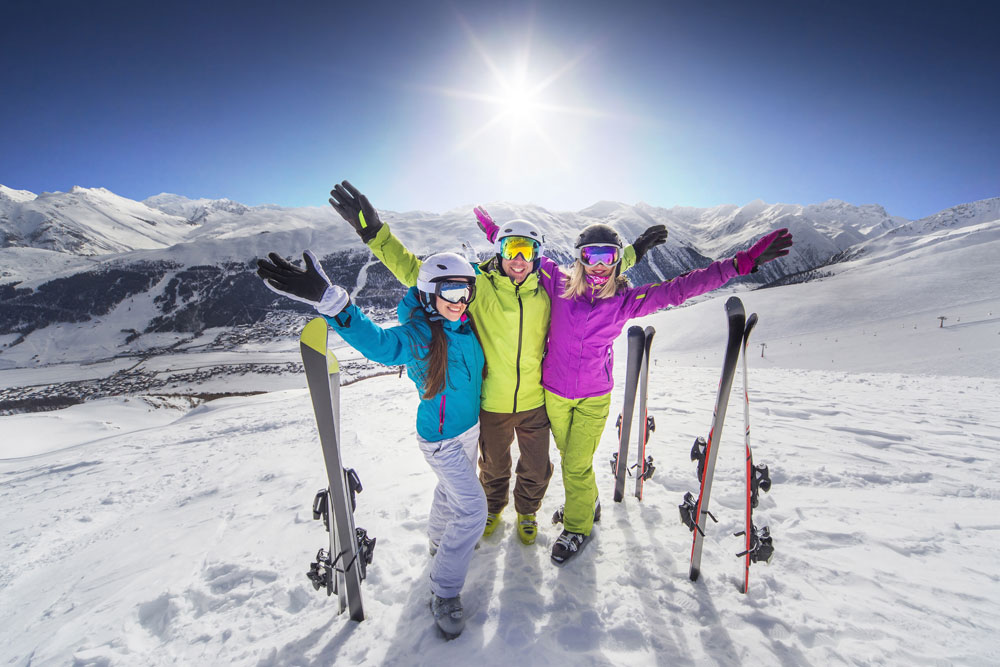
Intermediates (the sweet spot)
This is Cervinia’s sweet spot: long cruisy pistes, wide open blues/reds, and loads of mileage without constant bottlenecks. Head up towards the higher sectors for the big panoramic skiing, then work your way down the long routes when conditions are good.
Sunny days up high can feel properly magical, and the sheer scale makes it great for “let’s just explore” skiing.
Stay tip:
- Breuil-Cervinia centre is the easiest base for fast lift access and flexible mornings.

Advanced skiers & snow-sure seekers
Advanced skiers will love the steep shots and high-alpine feel, plus the serious potential once you start thinking beyond marked pistes. The big safety note is obvious but important: glaciers and high mountain terrain are not the place for “we’ll just have a look” improvisation – hire a guide if you want to do it properly. On-piste, you’ll find steeper options and faster fall-line stuff; off-piste, the terrain can be incredible in the right conditions.
Stay tip:
- Near the main lift access in Breuil-Cervinia so you’re first up and can move quickly when weather windows open.

Snowboarders
Boarders usually get on well here because the pistes are wide and the lift network is largely gondolas/chairs rather than relentless drags.
You’ll still find the odd flat-ish connector if you roam far, but it’s not a resort designed to punish snowboards.
The higher sectors give you long, flowing runs that suit boards perfectly, and the snow reliability helps keep things rideable later in the season.
Stay tip:
- Central Breuil-Cervinia keeps logistics easy and avoids long end-of-day slogs.

Beginners (with a smart plan)
Cervinia can work brilliantly for beginners if you treat it like a two-stage rocket: start in the dedicated learning areas near town, then “graduate” up to the gentler, wider slopes once turns feel reliable.
Because it’s high and open, visibility and wind can be a factor, so booking lessons (especially early in the week) is the cheat code for confidence.
Stay tip:
- Aim for central Breuil-Cervinia so you’re close to ski school meeting points and you can retreat for hot chocolate without drama.

Families
Families like Cervinia for the high-altitude snow confidence and the fact that you can build a routine quickly: lessons, same few favourite pistes, lunch spots you trust, repeat.
Pick accommodation that minimises faff (boot room, short walk, easy dinner options), and you’ll have a much calmer week.
If you’ve got very young kids, being able to pop back to the apartment mid-day is worth its weight in gold.
Stay tip:
- Breuil-Cervinia centre for convenience, or Valtournenche for quieter evenings and often better value.

Freestyle / Terrain Parks
Cervinia has a park scene, including a snowpark around the Cime Bianche Laghi zone, which is exactly where you want it: high, snow-sure, and easy to lap when motivation hits.
It’s not “the biggest park in Europe” bragging territory, but it’s enough for progression – especially if you like mixing park laps with big piste cruising.
Stay tip:
- Base yourself in Breuil-Cervinia so you can get up high quickly and actually use the park instead of talking about it in bars.
Looking to stay in Cervinia?
Where is Cervinia?
Cervinia is located in Italy’s Aosta Valley, at the top end of the Valtournenche valley, directly under the Matterhorn on its Italian side.
It’s linked across the border into Switzerland (to Zermatt ski resort), which is why it punches above its weight as a “single resort” – you’re effectively buying into a much larger international ski playground if you choose the right pass. It’s also why the terrain feels so high and dramatic: this is proper glaciated, big-mountain geography rather than gentle forest slopes.
Looking to stay in Cervinia?
Skiing in Cervinia (ski area, terrain, lifts, snow)
Cervinia’s main ski area is mostly about scale and flow. The pistes are wide, the gradients are friendly for confidence, and the altitude keeps things feeling wintery even when lower resorts start going spring-soft.
The mountain layout rewards a simple strategy: get up high early, enjoy the best snow and visibility while you can, then work your way down later for long cruisers (and lunch, obviously).
A key thing to know: it’s an open, high-alpine area. That’s great for snow reliability, but it can mean wind and flat light on certain days. If you plan with that in mind – and pick the right base – Cervinia is a great resort as it delivers seriously big ski days.


Terrain overview
Think of Cervinia as a layered, high-altitude ski system rather than a resort where everything happens off one front. You begin down in Breuil-Cervinia, then work your way up through the key mid-mountain areas around Plan Maison before pushing higher into the bigger, more panoramic sectors. As you climb, the mountain starts to open out properly, and that’s when Cervinia begins to feel less like a single resort and more like part of a wider high-mountain domain.
That wider feel is a big part of the appeal. Cervinia forms part of the wider Matterhorn ski paradise, with the connection into Zermatt giving the mountain an added sense of scale and adventure. Even if you do not ski across every day, the fact that the resort sits within a linked area changes the whole mood of the place: it feels expansive, varied and slightly more adventurous than a standard one-valley setup. The Valtournenche ski area side adds another useful dimension too, giving you a different entry point and a different “shape” to your ski day, which can be handy when Breuil-Cervinia is busiest.
The link with the Swiss resort of Zermatt is brilliant for variety, but it does come with one important reality check: timing matters. Weather, wind and lift opening times can all affect how easily the wider area skis, so this is not the mountain for leaving route-planning until 2:45pm and assuming it will all somehow work out. On the right day, though, it gives you that proper ski-safari feeling where the map feels exciting rather than decorative.
Stay tip:
If you love exploring and want the easiest access to both Cervinia’s core sectors and the wider linked area, stay in central Breuil-Cervinia for the fastest start to the main uplift.
Lifts & getting around the mountain
The lift system here is built for scale, and it needs to be. Cervinia is not just serving one compact front of slopes – it is part of a broader linked domain, and the network is designed to move people efficiently through a mountain that can feel properly vast on the piste map.
On a normal week, that means you can cover serious ground without the day feeling too stop-start. It is one of the reasons the resort appeals to skiers who hate doing the same ski slope circuit on repeat.
That said, big mountains still have obvious pressure points. In Cervinia, queues tend to build first thing in the morning around the main base lifts, then again after ski school meet-ups when the mountain properly starts moving.
Late afternoon can bring another squeeze as people funnel back toward their homeward routes.
And because this is a resort with access towards the wider area and the Zermatt connection, busy days can feel extra concentrated at the lifts that matter most for crossing the domain.
The boring strategy is still the best one: start a bit earlier than you think you need to, know where you’re heading before you clip in, and on peak weeks either go high straight away or consider starting from the Valtournenche side.
That alternative base can take a surprising amount of stress out of the morning. Midweek tends to feel more relaxed, while weekends, holidays and clear-sky days are when the mountain’s popularity is most obvious.
Stay tip:
If you’re travelling in peak weeks and want an alternative start point into both Cervinia’s slopes and the wider linked area, Valtournenche is well worth considering.
Snow reliability & season length
Altitude is the headline here, and rightly so. With Breuil-Cervinia sitting at around 2,050m and lifts climbing into the high 3,000s, this is one of those resorts people book when they want proper snow confidence rather than a hopeful shrug.
It is also one of the reasons the wider Cervinia-Zermatt area has such a strong reputation for snow conditions: this is a genuinely high mountain environment, and that gives the whole linked domain a level of reliability that lower resorts struggle to match.
The highest sectors also offer glacier skiing, adding to the area’s appeal for early- and late-season trips when lower resorts can be more vulnerable to warmer conditions.
But “snow sure” does not mean “nothing can disrupt the ski day.” In Cervinia, wind and visibility are often the bigger variables than actual snow depth. Because much of the terrain is high and exposed, weather can affect lift operations and the feel of the mountain more than people expect.
On clear days, that openness is part of the magic, especially when you are skiing across a broad international area with huge views and long, confidence-building pistes. On stormy or windy days, the same openness can make the mountain feel more limited.
January to March is usually the sweet spot for dry snow, stable coverage and the best balance of conditions, while early and late season bookings benefit most from Cervinia’s altitude and the strength of the wider linked area above it.
Stay tip:
If you’re booking early or late season and want the most consistent snow base with easy access into the higher linked terrain, stay in Breuil-Cervinia rather than further down the valley.

Cervinia’s off-piste appeal comes from exactly the same thing that makes the piste skiing exciting: altitude, scale and high-mountain terrain. But this is not a resort where “it looks open” should be mistaken for “it must be straightforward.”
Once you leave the marked runs, you are dealing with serious mountain terrain, and in parts of the wider area that includes glaciated environments, changing weather and consequences that are very unimpressed by confidence alone.
The connection with the Zermatt side adds to that sense of scale, but it also underlines the need for proper judgement. This is a high-alpine domain, not a couple of cheeky side stashes beside a chairlift. Snowpack, visibility, route-finding and glacier awareness all matter here, and strong skiers can get caught out very quickly if they treat the off-piste like an extension of a wide blue run. The local guide culture is strong for a reason.
If you want to ski beyond the marked pistes, hiring a certified guide is the smart move, not the over-cautious one. In other words: the mountain is amazing, but it expects a bit of respect back.
Stay tip:
If off-piste is a big priority, stay in Breuil-Cervinia near the main lift access so you can move quickly when weather windows and guide plans line up.
Beginners & improvers
Cervinia works well for beginners and improvers partly because the pistes often feel wide, open and less hemmed-in than in tighter, tree-lined resorts. That can be a real confidence booster. The wider area also gives the resort a nice sense of progression: you can start small, build rhythm, and gradually feel like you are participating in a bigger ski experience rather than being stuck on one learner hill all week.
That said, it is still best approached with a bit of structure. The scale of the mountain – and the fact it links into a broader area with the Zermatt connection in the background – can tempt people into overreaching too early.
Beginners do best with a simple routine: lessons in the morning, a few calm repetition laps afterwards, then quit while the day still feels like a win. Improvers can start stretching out a bit more, but should still pick their moments carefully. Late morning after the first rush, or mid-afternoon once the busiest period eases off, is often a much calmer time to practise.
It also helps to think ahead about where you are eating. Choosing mountain restaurants that do not require an awkward or confidence-sapping final descent makes the whole day feel more relaxed.
Cervinia’s width is helpful, but busy pistes can still get scrappy, and no one improves faster because they were mildly panicking their way to lunch.
Stay tip:
Stay in central Breuil-Cervinia so beginners and improvers can get back to the village easily without feeling stranded high on the mountain.
Freestyle & “more than pistes”
If you like your ski week to have a bit more personality than pure piste mileage, Cervinia has enough variety to keep things interesting.
The snowpark scene around the higher mountain zones, including the Cime Bianche Laghi area, and the altitude helps here too. When lower parks elsewhere can get soft, worn or weather-beaten, Cervinia’s higher setting gives the freestyle side of the mountain a bit more resilience.
But for most people, the bigger “more than pistes” draw is the sheer sense of scale. This is where the wider area and the Zermatt connection really matter.
Even if you are not doing huge international days every single morning, the fact that you can fold extra terrain, different viewpoints and a cross-border feel into your week makes the whole trip feel bigger and more playful. It is not just about racking up kilometres – it is about that mini ski-safari energy, where the day feels like an outing rather than a routine.
Even if you are not a park rider, there is plenty of mileage in that idea. Quiet pistes with fun rollers, little side-hits, long scenic descents and those big open mountain views all help Cervinia feel like more than a “go up, ski down, repeat” sort of resort.
It is a place that suits skiers and snowboarders who like their mountain days to feel roomy, varied and just a tiny bit epic.
Stay tip:
If you want quick access to high terrain, park laps and the easiest route into the wider linked area, stay in Breuil-Cervinia rather than further down the valley.
Best Runs in Cervinia (by ability)
For beginners:
If you’re new to skiing, start in the quieter, easier areas close to town, then build confidence before venturing further across the mountain.
Beginner-friendly zones like Campetto and Baby La Vieille are ideal for those early learning laps: gentle gradients, low-pressure surroundings, and none of that horrible “everyone’s watching me snowplough” energy.
Once you’re feeling steadier, Cervinia’s wide, forgiving pistes make it a good place to move on without the mountain suddenly feeling too serious.
For intermediates:
This is where Cervinia really starts showing off.
Intermediate skiers get the best of the resort with long, flowing cruisers and loads of room to relax into a rhythm.
Ventina is the big-name classic – the sort of run that makes you understand why people bang on about Cervinia’s scale – while pistes like Gran Roc and Gaspard are brilliant for confidence-building mileage and those “one last run” moments that somehow turn into three.
For advanced:
For stronger skiers looking for something steeper and more testing on-piste, runs like Rocce Nere and Pancheron are the names to look for.
These are the slopes that feel more properly alpine, especially when visibility is clear and the surface is good.
On the right day, heading higher adds that extra bit of drama and challenge; on the wrong day, flat light can turn even a strong leggy morning into a game of cautious guesswork.
Off-piste note:
Off-piste here is serious stuff, with classic itineraries like Porta Nera (Schwarztor) showing the kind of terrain on offer. You’ll also find guided descents from areas like the Breithorn, with routes returning towards Cervinia or Zermatt depending on conditions. In other words: glaciers, exposure and fast-changing weather are all part of the package, so hire a qualified guide and do not wing it.
Looking to stay in Cervinia?
Looking for accommodation in Cervinia
Choosing where to stay in Cervinia is mostly about two things: how quickly you want to get onto the uplift in the morning, and what kind of evenings you want after skiing.
Breuil-Cervinia (the main town) is the most convenient base for classic “roll out of bed, ski, eat, repeat” weeks – you’re close to lifts, ski hire, lessons, supermarkets, and you can wander to dinner without planning a logistics operation.
If you’d rather have a quieter, more traditional-feeling base, Valtournenche can be a smart pick. You’re still connected into the same ski area, but the vibe is calmer and prices can be a touch friendlier. The trade-off is that you’re more dependent on that valley lift base for your daily routine, so you’ll want to be a little more intentional with timing.
Then there’s Cielo Alto, a higher, quieter pocket above the town – often good for ski-in/out convenience, but less lively at night and a bit more “you’re committed to where you are.”
Quick chooser: which area is right for you?
- If it’s your first time and you want easy everything, pick central hotels in Cervinia.
- If you want quieter evenings (and you don’t mind being slightly less “in the middle of it”), go Valtournenche.
- If you’re laser-focused on ski convenience and don’t care about nightlife on your doorstep, look at Cielo Alto – just be honest with yourself about whether you’ll miss the evening buzz.
Village Comparison Table
| Area / Base | Altitude | Vibe | Best For | Nightlife | Beginner-Friendly | Access / Getting Around |
|---|---|---|---|---|---|---|
| Breuil - Cervinia village centre | 2,050m | Lively, practical, easy | First-timers, groups, convenience lovers | ★★★★ | ★★★★ | Walkable; easiest for lifts/lessons/shops |
| Cretaz / lift-side pockets | 2,050m | Ski-focused, “close to action” | Fast starts, lesson meet-ups | ★★★ | ★★★★ | Short walk to uplift; very simple routines |
| Cielo Alto | 2,100–2,300m (approx) | Quieter, more residential | Ski-in/out seekers, early nights | ★★ | ★★★ | Often bus/taxi to town; calmer evenings |
| Valtournenche | 1,500m (approx) | Traditional, quieter, better value feel | Families, chill trips, budget-aware | ★★ | ★★★ | Start via valley lift; plan timing a bit more |
(Star ratings are “relative vibe” rather than gospel)
Best Area for First-Timers
Stay in central Breuil-Cervinia. For a first trip, it is easily the least stressful option because the practical stuff is right on your doorstep: ski hire, lift access, supermarkets, cafés, restaurants, and the all-important lesson meeting points.
That matters more than people think. On paper, being “a bit further out” can sound fine. In real life, it usually means more faff, more marching about in boots, and a higher chance of the morning starting with someone saying they are “already tired” before you’ve even clicked into a ski.
It is also the best setup for easy resets, which are gold on a first ski holiday. If conditions turn windy, visibility goes flat, or somebody has had enough after two hours, being able to pop back to the hotel, warm up, regroup, and head out again can completely save the day.
Central Cervinia also gives you the broadest choice of places to eat and drink without needing to plan your evening like a military operation.
When your legs are wrecked and your brain is full of piste maps, that kind of convenience feels very luxurious very quickly.
Stay tip:
If this is your first time in Cervinia, prioritise central Breuil-Cervinia over “better value” spots further out – the easy week usually wins over the slightly cheaper one.
Best Area for Ski-in Ski-out
If you want proper slope-side convenience, Cielo Alto is often where that dream starts looking realistic.
This is the area people tend to look at when they want that satisfying “clip in and go” feeling in the morning, and there are properties here that genuinely deliver it.
The catch, as ever, is that ski-in ski-out can mean very different things depending on who is selling it. Some places are the real deal; others are more like ski-near-enough-if-you’re-in-a-good-mood.
That is still workable for a lot of people, but it is worth being honest with yourself before booking, especially if you are travelling with kids, nervous beginners, or anyone likely to declare mutiny after a five-minute uphill shuffle.
Cielo Alto suits people who care more about mountain access than evening atmosphere. It is quieter, more residential, and a bit more practical than buzzy. That can be perfect if your ideal ski holiday is first lifts, maximum slope time, and a low-key night.
If you want both ski-in ski-out and lively evenings, you can get that in parts of Breuil-Cervinia, but you will usually pay more and need to choose much more carefully. This is one of those cases where the brochure phrase sounds simple, but the exact location really matters.
Stay tip:
If ski convenience is your number one priority, check exactly how “ski-in ski-out” works for that property rather than trusting the label alone – in Cervinia, a 3-minute shuffle can feel very different from true doorstep skiing.
Best Area for Nightlife
For nightlife, Breuil-Cervinia centre wins comfortably.
It is where the energy is, where the best spread of bars and après spots is, and where you can actually enjoy the evening without spending half of it figuring out how to get home.
That last bit matters. Lots of people book somewhere quieter thinking they will just head into town every night, but ski holidays have a funny way of exposing bad planning. After a full day on the mountain, the idea of taxis, buses or a long trudge back uphill in the cold suddenly becomes much less charming.
The nice thing about staying central is that you get options rather than pressure. You can go full après mode, have a lazy drink in the late afternoon, then roll into dinner and decide whether the night ends sensibly or not.
Or you can just enjoy the atmosphere, have one civilized glass of wine, and be back in your room before your boots have fully dried out.
Cervinia centre gives you that flexibility. It feels lively without demanding that every night turns into a story you regret slightly at breakfast.
Stay tip:
If nightlife matters even a little, stay central in Breuil-Cervinia – because “we’ll just head in each evening” is one of those holiday lies people tell themselves on booking day.
Best Area for Families
For families, it really comes down to what kind of week you want.
Central Breuil-Cervinia is usually the easiest choice if convenience is the priority: quicker access to lessons, simpler mornings, easier lunch breaks, and a much faster retreat when someone gets cold, hungry, overwhelmed, or suddenly announces they are retiring from skiing at the age of nine.
That kind of flexibility can be the difference between a week that feels manageable and one that feels like you are permanently carrying helmets, gloves and emotional negotiations from one place to another.
That said, Valtournenche has a lot going for it too. It is generally quieter in the evenings, often a bit better value, and can feel more relaxed if your family does not need to be in the thick of Cervinia’s main resort buzz.
Families with older children or confident young skiers may really like that calmer base, especially if the aim is more “good skiing and early nights” than “everything happening outside the front door.”
The trade-off is simply that Breuil-Cervinia is more forgiving when plans change quickly, and family ski trips are basically built on plans changing quickly.
Stay tip:
If you’ve got very young kids, first-timers or anyone likely to need frequent breaks, choose central Breuil-Cervinia; if your family already skis confidently and likes a quieter base, Valtournenche can be a lovely shout.
Best Area for Budget Travellers
If value matters most, Valtournenche is usually the smartest place to look.
It often comes in cheaper for accommodation, can be friendlier on food and drink costs, and gives you access to the same wider ski area without paying quite so much for a Breuil-Cervinia postcode.
For budget-aware skiers who care more about the mountain than the resort scene, it can be a very sensible move.
You are still in the area, still connected to the skiing, and still getting a proper Cervinia-linked holiday – just with a bit more money left for lunches, lift passes, or the inevitable “how did we spend that much in a mountain restaurant?” moment.
The main compromise is that staying cheaper usually means thinking slightly further ahead.
Mornings need a bit more rhythm, because you are working around the valley lift rather than simply wandering out into central resort life whenever you feel like it.
And at the end of the day, you do need to keep an eye on timing so you are not suddenly doing the ski-holiday equivalent of a commuter sprint. But if you are organised and realistic about that, Valtournenche gives you strong value without feeling like a consolation prize.
Stay tip:
If you want to save money without sacrificing access to the ski area, base yourself in Valtournenche – just make sure you’re the sort of person who can handle a tiny bit of morning planning.
Our Top Hotels

★★★★
- Village 10 mins walk to centre
- Lifts - 3 mins walk to Cretaz / nursery slopes
- Pool + spa
You’re near the Cretaz chairlift and nursery slopes, you’re also within walking reach of the Plan Maison gondola. The wellness setup is properly useful rather than token: indoor pool, hot tub, sauna, steam room, Turkish bath, and relaxation space.
Add in the afternoon tea and the general cosy feel, and it lands nicely for first-timers, nervous returners and families who want a little softness around the edges.
Why choose it? Close to the learner zone, comfy enough to recover in, and just easy in all the ways that matter.

★★★★★
- Village quiet edge of town, 1.5km from centre
- Lifts - shuttle to ski lifts
- Pool + spa
The hotel is beautifully designed, properly high-end, and deliberately more serene than others.
The spa is a real feature rather than a token basement sauna, with panoramic elements, a heated pool, jacuzzi and a more polished wellness feel throughout.
Some suites even have private saunas, which is exactly the sort of detail that tips this from ‘nice’ into ‘very tempting indeed’.
Why choose it? For a properly pampering Cervinia week, this is the one .

★★★★
- Village on the main street
- Lifts - 10 mins walk to Plan Maison gondola
- Pool + spa
It’s central enough for people who want bars and restaurants nearby, comfortable enough for couples, and practical enough for skiers who care about not making every morning harder than it needs to be.
The shuttle-on-request is a good feature here, add the pool, spa and gym, and it becomes a hotel that genuinely supports different holiday styles rather than only one type of guest.
Why choose it? A dependable, no-drama Cervinia base that makes sense for almost everyone.

★★★
- Village around 200m from Cretaz chairlift
- Lifts - 3 mins walk
Here you have apartment-style flexibility close to the lifts. The property is small, modern and more design-conscious than you might expect.
Heated floors, decent finish, a cosy lounge with fireplace, and practical extras like parking and laundry all help it feel like a smart base.
It does not have spa facilities, so the luxury crowd can look elsewhere, but for skiers who want lift access, flexibility and a stylish place to retreat to, it is a very tidy bit of budgeting.
Why choose it? It saves money in the right places, not the miserable ones.
Tour Operators who go here
Looking to stay in Cervinia?
Après ski, restaurants & winter activities
Cervinia’s off-slope life is a nice balance: enough going on to feel fun, not so much that you’re trapped in a “party town or nothing” situation.
Food is a real highlight – this is Italy, after all – so even a quiet night can feel like a win if you choose well.
Non-ski options exist too, which matters on storm days or when someone in the group needs a rest day (or has discovered they suddenly have knees).
Après ranges from lively bars where you’ll still be in ski gear at 6pm, to more relaxed spots for a proper drink and a chat. The resort doesn’t force you into one vibe.
You can do a big day, a couple of drinks, a great dinner, and be asleep before you start questioning your life choices. Or you can go full “one more round” and become friends with strangers you’ll never see again but will follow on Instagram for five years.

Cervinia’s après is a bit of a pick-and-mix situation, which is exactly what you want: you can go full ski-boots-on-the-table energy, keep it sociable and pubby, or ease into something more polished.
For that classic straight-off-the-hill buzz, LOVE Cervinia is the big slope-side name, with DJs, outdoor dancing and a sunny terrace atmosphere that kicks in during the afternoon.
If you want something with a bit more variety, Yeti Bar works nicely for a more casual, social stop – especially if your group wants live sport, beers and a proper catch-up rather than instant table-dancing – while Ymeletrob has that useful “starts relaxed, gets busier later” personality.
Hotel Principe delle Nevi Après Ski Bar is another good one to know, especially for live DJ sets, gigs and cocktails right on the run back into town, so it feels very easy to “accidentally” stop there on the way home.
For a more pub-style evening, Thistles Pub is one of the better names to drop, especially if you want live music and a more familiar, chatty kind of atmosphere. Chalet Hotel Dragon Bar also leans into the informal, good-fun side of things, with quizzes, karaoke and that slightly chaotic group-holiday energy that can either be delightful or become a core memory depending on how many rounds deep you are.
And if your idea of après is less “scream over a remix” and more “sit down with something decent in your glass,” La Champagnerie du Cervin gives you a smarter, calmer option for champagne, cocktails and snacks.
If you want to push on later, Cervinia does have proper nightlife options rather than just bars pretending to stay open. Sound Club is the main clubby late-night name, and it is usually the place people mean when they say they’re “still going.”
Mountain‑top Moments
Mountain lunches in Cervinia can be properly elite if you lean into the “do it right” approach: turn lunch into a proper part of the day rather than a rushed plate of chips at 2:47pm. Chalet Etoile is the obvious classic for a reason – it has that reputation-building mix of history, location and slightly glam mountain-lunch energy, and has both traditional regional dishes and more distinctive plates such as reindeer fillet tempura and ravioli with king crab.
Up high, Bontadini near Plateau Rosà is another big hitter, with panoramic terraces at 3,100m and a menu that leans nicely into hearty Aosta Valley comfort food: think Valdostan polenta, cheese fondue, homemade truffle ravioli, gnocchi with Castelmagno, and even chamois with polenta if you want lunch to feel unapologetically alpine.
If you want more of that full high-mountain refuge feeling, Rifugio Teodulo and Rifugio Guide del Cervino are worth visiting. Teodulo is up at around 3,317m with a panoramic dining room and a proper “yes, we are really up here” atmosphere, dishes include staples like tagliatelle ai funghi, braised meat, polenta, fonduta and strudel – exactly the sort of menu that makes sense when it is cold and your legs are already negotiating with you. Rifugio Guide del Cervino, meanwhile, gives you even more of that dramatic altitude fix, dishes include: polenta with Fontina, polenta with mushrooms, polenta with sausage, stew and deer, braised beef with Valdostan Nebbiolo, plus comforting desserts like apple strudel and blueberry tart.
So the smart ordering move in Cervinia is simple: go hearty, go local, and do not sabotage the afternoon with three glasses of wine if you have technical skiing left.

Village food is where Cervinia quietly wins people over. On the surface, people come for the altitude, the views and the ski area; then a few days in, they realise the resort is actually pretty strong once you sit down properly in the evening.
If you want the “yes, this is why we came to Italy” kind of dinner, Alpage is a very solid shout for classic Aosta Valley comfort food, with dishes from its menu including fonduta di Fontina DOP with toasted croutons, polenta valdostana with Fontina, tagliatelle with porcini mushrooms and cannelloni alla valdostana.
Wood is the smarter, more special-occasion option: it has a Michelin star, leans into local seasonal ingredients with Swedish and Italian influences, and Michelin specifically highlights dishes such as elk tartare in beetroot ravioli with horseradish sauce and cauliflower cooked in butter and topped with smoked Fontina.
If you want another higher-end night, La Chandelle is the polished Hotel Hermitage option, with Aosta Valley and Piedmont cooking plus a more luxe edge – think grilled meats, and even luxury ingredients like oysters, lobster and Florentine steak.
Saint Hubertus also belongs in that more refined bracket, with its own emphasis on handmade stuffed pasta, fresh fish and game.
If the mood is less “celebratory dinner” and more “feed me something comforting before I turn into a sulky icicle,” Cervinia does that well too. Le Bistrot de l’Abbé is a good one to know for a cosy, fireside, wine-bar sort of evening, with selected cheeses, pâté, salmon, local cold cuts and homemade bread – very good for a grazier, more relaxed kind of meal.
And for those classic ski-holiday nights where pizza, pasta and a glass of red feel like the only sensible life choices available, Sotto Zero is a handy name to have in your pocket: it mixes pizzeria staples with regional dishes and lists specialties such as fish soup, scialatelli pasta with fish sauce, polenta Aosta Valley style and tagliata.
The real pro tip in Cervinia is booking ahead. In busier weeks, the better-regarded places fill up fast, and wandering around hungry at 8.45pm in damp socks pretending you’re “easy either way” is not the chic alpine evening anyone had in mind.
If you’re a bigger group, lock in two or three dinners early – one comfort-food night, one smarter night, maybe one proper local-food night – then leave the rest flexible depending on how ruined your legs are.
If you need a break from skiing – or the weather decides to get a bit theatrical – Cervinia still gives you some genuinely good non-ski options. Snowshoeing is a great option with both marked and groomed routes between Breuil-Cervinia and Valtournenche, including two secured routes in the Plan Maison area that you can reach from the village by lift, so it is an easy way to get the views, the fresh air and the Matterhorn backdrop without committing to a full ski day.
And if your legs are starting to mutiny by midweek, spa time is a very sensible reset: Cervinia has a mix of saunas, steam baths, swimming pools and massages across local hotels, plus the Valtournenche Multipurpose Sports Centre, which has a pool as well as sauna and steam bath facilities.
If you want your rest day to feel a bit more “proper outing”, Cervinia’s connection to the wider area helps. The Matterhorn Alpine Crossing means you can now travel between Breuil-Cervinia and Zermatt without skis, thanks to the link completed by the Matterhorn Glacier Ride II, so even non-skiers can turn the international connection into a sightseeing experience rather than just something the skiers bang on about over dinner.
For families, check out the Winter Park Torgnon which is ideal for children, with two conveyor belts, a beginner area, and fun snow activities including tubing, snakegliss and zibob, which is exactly the sort of thing that burns energy without involving ski boots or lesson-related negotiations.
And if your group wants something a bit more adrenaline-y but still off the pistes, why not try snowmobiling as a winter activity, which is a decent wildcard for the “I want to do something snowy, just not skiing” crowd.

Getting home safely & easily
Getting back to your accommodation in Cervinia is usually pretty straightforward if you stay central in Breuil-Cervinia. That part of resort is the least faffy because the village has a pedestrian core, the tourist office sits just a few steps from it, and the main lift departures are only a short walk from the centre – so for a lot of central hotels and apartments, getting home is more “slightly clompy stroll in ski boots” than full transport mission.
If you’re staying a bit further out – especially in Cielo Alto or down in Valtournenche – buses and taxis become much more useful. Arriva runs the local public transport for the Cervinia/Valtournenche area, including the Violet Line for Cielo Alto and a free winter skibus, so you do have a proper fallback if you don’t fancy the uphill shuffle at the end of the day.
And for evenings when it’s cold, late, or nobody can face dragging themselves home after dinner, Cervinia’s official taxi listings give you the sensible backup plan.
The practical summary is this: central Breuil-Cervinia is best if you want to walk almost everywhere, Cielo Alto works fine if you’re happy using the bus when needed, and Valtournenche is more of a “keep one eye on the journey home” base.

Ski schools & learning zones
Cervinia is the kind of place where ski lessons genuinely pay off, not just for beginners but for confident skiers too.
The terrain is big and high, and knowing where to go (and when) can be the difference between “best ski week ever” and “we spent half the time in flat light wondering if we were even on the right chairlift.”
For beginners, a few mornings of structured progression will unlock way more of the mountain than self-teaching ever will. For intermediates, a lesson can tidy up technique and give you the confidence to enjoy steeper reds without the internal panic monologue.
And for advanced skiers, guiding is the sensible route if you want to go beyond the piste in high mountain terrain. Cervinia has long-established ski schools, including the Cervino Ski School, and there’s also a strong local guiding culture.


Cervinia’s learning setup works best when you treat it as a gentle progression rather than one giant leap from magic carpet to “good luck up there.”
The obvious place to start is the Cretaz/Campetto side near the village, where the Cervino Ski School uses the spacious school slope at the start of the Cretaz lift systems for children’s lessons and early-stage learning.
That gives beginners a proper base right near town, which is a big help on day one when everyone is still faffing with boots, nerves and the sudden realisation that ski holidays involve quite a lot of carrying things.
One nice Cervinia-specific advantage is that you are not trapped on one tiny nursery patch all week: as confidence builds, there are beginner-friendly next steps higher up, with the Cretaz treadmill for beginners, plus the Baby La Vieille ski lift and Plan Maison moving carpet as part of the mountain’s lower-pressure progression setup.
That wider progression matters in Cervinia because the resort is big, high and visually quite dramatic from the start. You are learning in a proper mountain setting, not hidden away on a little side slope where the rest of the ski area feels miles away.
The upside is motivation: even nervous beginners can feel like they are part of the resort quite quickly.
The only thing to avoid is moving up too fast just because someone else in your group gets impatient and starts talking about “a nice easy blue” with suspicious levels of optimism.
In Cervinia, the smart move is to earn your way from the village learning areas to the wider terrain in a controlled way, so the mountain feels exciting rather than overwhelming.
If lessons are going to be a big part of the week – beginners, children, nervous improvers, or anybody whose confidence improves dramatically once the morning is not chaotic – staying central in Breuil-Cervinia is still the calmest option by a mile.
This is where Cervinia becomes much easier to manage: the school slope is down by Cretaz, the village is compact enough that you are not turning every lesson morning into a logistics challenge, and even practical stuff like ski hire is right there in the same orbit.
The official Cretaz ski rental is in front of the chairlifts in the Campetto area and about 50 metres from some of Cervinia’s main hotels, which gives you a pretty good sense of how much easier life is when you stay near the learning hub rather than somewhere that looked “only a short distance away” when you booked it.
That convenience is a bigger deal in Cervinia than people sometimes expect, because the mountain can feel quite exposed when the weather is moody. If somebody is cold, tired, overwhelmed or suddenly no longer interested in skiing as a concept, central Breuil-Cervinia gives you the easiest exit strategy.
You can warm up, reset, swap gloves, calm a wobble, and get back out without the whole day collapsing. That is the hidden luxury of staying near the beginner setup: not glamour, not “exclusive vibes,” just a much smoother week with fewer avoidable meltdowns.
In Cervinia, the golden rule is simple: assume the lesson meeting point will take slightly longer to reach than your optimistic holiday brain thinks.
The Cervino Ski School has been operating since 1936, runs children’s group lessons from age 5, and teaches in six languages, so this is not a tiny one-man operation – on busy weeks there is real movement around the lesson areas, especially down by Cretaz where the main school slope sits.
That is why the best mornings are the boring, organised ones: breakfast done, layers sorted, lift passes already in pockets, hire collected the day before, and enough buffer built in that you are not clipping a child’s helmet on while speed-walking across town.
The good news is that Cervinia rewards that bit of planning. Because the beginner infrastructure is concentrated around the village-side learning area, once you are nearby the whole thing feels much more manageable than resorts where lesson zones are awkwardly spread out.
Get the admin done the afternoon before, give yourself extra time in peak weeks, and treat the first half-hour of the day as part of the lesson plan rather than a race against the clock.
In Cervinia, a calm start usually means a better lesson, a happier beginner, and far less chance of someone deciding skiing is “not for them actually” before 9.15am.
Looking to stay in Cervinia?

Lift passes, costs & budgeting
Cervinia lift passes are one of those “choose wisely and you’ll feel smug all week” decisions.
The main choice is between the Breuil-Cervinia & Valtournenche pass, which covers the Italian side, and the international Breuil-Cervinia–Valtournenche–Zermatt pass, which lets you cross the border and ski the Swiss side too.
The right one depends less on how impressive you want your piste map to look over breakfast and more on how often you’ll genuinely ski into Zermatt.
The Italian area alone gives you 157km of pistes, plenty of long cruising and more than enough terrain for many week-long holidays. Add Zermatt and the whole connected area jumps to around 350km – brilliant for mileage-hungry skiers, but considerably more expensive.
It’s worth deciding whether Switzerland is genuinely part of the plan rather than automatically buying the biggest pass.
There are also cheaper beginner and restricted-area tickets, which can make far more sense for someone spending their first day or two learning the basics.
Which ski pass should you buy in Cervinia?
Think of it like this: buy the pass that matches your days 1–2, not the imaginary version of you who might be lapping glacier reds by Thursday.
Option A - Breuil-Cervinia & Valtournenche (local pass)
What it is: The standard local pass covering the linked Italian-side ski area of Breuil-Cervinia and Valtournenche.
Best for: Families, beginners, mixed-ability groups and anyone happy to spend their holiday exploring the Italian side without needing Zermatt to justify the extra cost.
What you’ll actually use it for: Long cruisy pistes, huge vertical, wide intermediate terrain and the run between the high slopes above Cervinia and Valtournenche. There’s enough here to give most skiers several very full days without feeling as though they’ve bought the “small” pass.
Why you’ll like it: It keeps the holiday simple. You’re not worrying about international connections, weather closing the link or getting back from Switzerland before the lifts stop.
There’s another little bonus too: multi-day Cervinia-Valtournenche passes of three days or more include some access to other Valle d’Aosta ski areas, giving you an option to change scenery without buying the full Cervinia-Zermatt international ticket.
Plain English: This is the “keep it simple and still ski loads” pass – ideal if Cervinia itself is the main reason you’re here.
Option B - Breuil-Cervinia, Valtournenche & Zermatt (area / international ski pass)
- What it is: The full international pass covering the Italian ski area plus Zermatt and the Swiss side of the Matterhorn.
- Best for: Confident intermediates, advanced skiers and mileage-hungry groups who genuinely want to make the most of the cross-border skiing.
- What you’ll actually use it for: Proper big ski days. You can leave Italy in the morning, cross the high-altitude lifts beneath the Matterhorn and spend the day exploring Zermatt before skiing back into Cervinia.
- Why you’ll like it: It turns an already substantial ski area into a huge international playground, with around 350km of pistes across Italy and Switzerland. It also gives stronger skiers much more variety over a full week.
- Who it doesn’t suit: Most beginners and anyone who will mainly ski around Plan Maison, Cime Bianche and Valtournenche.
- Weather matters – the international connection runs at very high altitude and can close in winds or poor conditions, so there’s no guarantee the border link will operate every day.
Plain English: This is the “we want the full Matterhorn experience” pass – buy it because you’ll use Zermatt, not simply because it’s there.
Cervinia lift pass prices 2026/27
Here are the published headline prices for Cervinia Winter 2026/27 (prices shown in EUR):
| Breuil-Cervinia & Valtournenche (local pass) | Adult | Child | Youth | Senior |
|---|---|---|---|---|
| Half day | €51.00 | €36.00 | €41.00 | €45.00 |
| 1 day | €64.00 | €45.00 | €51.00 | €56.50 |
| 6 days | €338.00 | €236.50 | €270.50 | €297.50 |
| 7 days | €385.50 | €269.50 | €308.50 | €339.00 |
| Breuil-Cervinia–Valtournenche–Zermatt (area pass) | Adult | Child | Youth | Senior |
|---|---|---|---|---|
| 1 day | €88.00 | €61.50 | €70.50 | €77.50 |
| 6 days | €464.50 | €325.00 | €371.50 | €409.00 |
| 7 days | €530.00 | €371.50 | €424.00 | €466.00 |
First & Last Tracks – the 30% deal worth knowing about
For winter 2026/27, Cervino Ski Paradise is offering 30% off four-to-seven-day ski passes during its First & Last Tracks promotion. It runs from the start of the winter season until 4th December 2026, and again from 5th April to 2nd May 2027.
You need to stay for at least four nights at one of the participating accommodation providers, and the accommodation has to be booked directly with the property.
Ski Demon tip: Before automatically booking accommodation through your usual website, check whether the property participates in the promotion. Thirty per cent off several days of Cervinia-Zermatt skiing is worth a few extra clicks.
Deposits, insurance, and when to buy
Here’s how to do Cervinia like someone who hates queues and hates wasting money:
Keycard: Cervinia uses a reusable electronic Keycard. If you need one, it costs €2 to buy – importantly, that’s a purchase rather than a refundable deposit. Keep it when you go home because it has multi-year validity and can be reloaded for future visits.
If you already have a compatible Keycard, you can link your new ski pass to it when buying online and head straight to the lifts rather than collecting another card.
Insurance: Italy requires skiers and snowboarders to have third-party liability insurance covering injury or damage they may accidentally cause to somebody else. Your UK winter-sports travel insurance may already include this, but check rather than assuming – and keep proof of cover with you.
Cervinia offers Snowcare insurance when purchasing a ski pass. The 2026/27 tariff lists it at €3.50 per day, reducing to €1.50 per day for children in the youngest age category. It includes third-party liability alongside other ski-related cover. Piste rescue in the Valle d’Aosta is chargeable, with the published rescue fee currently €200, another good reason to make sure your insurance actually covers what you think it does.
When to buy: Cervinia doesn’t currently operate standard dynamic early-booking pricing, so buying online is mainly about convenience and avoiding ticket-office faff, rather than chasing an automatically cheaper price.
The big exception is the First & Last Tracks 30% promotion, where the accommodation and booking conditions matter far more than how early you click “buy”.
International-pass warning: If you buy your Cervinia-Zermatt pass on the Italian side, make sure you understand the first-access rules attached to that ticket and start from Cervinia/Valtournenche as required. Keep an eye on the last cross-border connection back into Italy. High winds and weather can affect the international lifts, and missing the final connection can leave you with a very long and expensive journey back to Cervinia.
And finally, don’t buy the international pass simply because crossing into Switzerland sounds cool. If your group contains beginners, nervous intermediates or people who regard a two-hour mountain lunch as an essential part of athletic performance, the local pass may give you better value.
Looking to stay in Cervinia?
Common Cervinia Ski Holiday Mistakes
Cervinia is an easy resort to enjoy, but a few common mistakes can make your ski holiday more expensive, more tiring or mean you miss out on the best the resort has to offer.
Buying the “big” cross-border pass for Zermatt every day… then not actually using it
The international option is brilliant if you genuinely want Swiss mileage (and those Zermatt views), but loads of people buy it “just in case” and end up lapping Italian reds and stopping for long lunches instead. The fix is simple: be honest about your habits. If you’re not the type to be on the lift at 9:01, don’t pay for a pass that only makes sense when you’re doing big days.
Treating “skiing to Switzerland” like popping to Tesco
Cross-border days are amazing… until you drift into Zermatt late, faff with photos, and suddenly you’re staring at the clock like it owes you money. Cervinia’s own ticket rules make it very clear you need to manage timings – miss the link and you may have to sort alternative transport or even an overnight stay yourself. Do the Swiss day early in the week, start early, and build in a “get back” buffer.
Ignoring wind
Cervinia’s high, open terrain is a snow-sure dream, but it can also be a wind magnet – and when it’s howling, lift operations can change quickly. Cervinia explicitly warns that adverse weather (like strong winds) can affect smooth operation and timetables can change, even during the day. The play: have a Plan B day (lower runs, long lunches, spa, or just a chilled town day) rather than rage-refreshing the lift status.
Booking accommodation “near the lifts” without checking which lift and what the walk is like in ski boots
Cervinia can be deceptively spread, and the difference between “beside the run” and “10 mins uphill on an icy pavement” is… character-building. If you’re self-catering, also check whether you’ll actually want to haul shopping in the evening, or if you’ll end up eating out every night and wondering why your budget exploded.
Lunching like it’s a Mediterranean beach club… then wondering why you’re stuck in flat light and chopped-up snow at 3pm
Cervinia’s altitude keeps things wintry, but afternoons can still get busy and leggy, especially on sunny days. The winning rhythm is: ski hard early, have a sharp lunch, then do cruisy laps later. Save the “three courses and a grappa” for a wind day or your final afternoon when you’re emotionally ready to say goodbye to your quads.
Getting to Cervinia
Getting to Cervinia is straightforward, with several airport options and an easy transfer into resort. Whether you’re flying, driving or arriving by train, here’s everything you need to know before you travel.
1) Fly + road transfer
(the “land, grab skis, go” option - and the most common)
For Cervinia, the usual airport shortlist is Turin, Milan Malpensa, Milan Linate, and Geneva.
If you’re booking a pre-booked shared coach or private transfer rather than driving yourself, Turin is usually the neatest option, with the other airports still very doable if the flights work better.
Rough timings are as follows:
- Turin → Cervinia: roughly 1 hour 42 minutes
- Milan Malpensa → Cervinia: roughly 2 hours 16 minutes
- Milan Linate → Cervinia: roughly 2 hours 29 minutes
- Geneva → Cervinia: roughly 3 hours 37 minutes
Transfers are available by bus or taxi, there are also local taxi / transfer operators if you want to sort the last leg in advance rather than gamble on finding something on arrival.
Real-world tip: Turin is usually the least faffy transfer choice, but whichever airport you use, build in buffer for winter roads and Saturday changeover traffic – the valley approach is fine until it suddenly isn’t.
2) Train to Châtillon/Saint-Vincent + bus/taxi up
(the “car-free but still very doable” choice)
The nearest rail gateway is Châtillon/Saint-Vincent and there are bus services up to Breuil-Cervinia / Valtournenche. In real life, this is a perfectly workable option if you’re travelling reasonably light – or if you’re happy to swap the final bus leg for a taxi/private transfer when you get to the valley.
Typical timings look like this:
- Turin → Châtillon/Saint-Vincent (train): from roughly 1 hour 35 minutes
- Milan Centrale → Châtillon/Saint-Vincent (train): from roughly 2 hours 35 minutes
- Châtillon/Saint-Vincent → Breuil-Cervinia (bus): roughly 1 hour, depending on the service and stop pattern
There is also a proper local bus connection on the Châtillon–Breuil-Cervinia line, so you’re not relying on some mysterious once-a-week mountain shuttle.
Real-world tip: train + bus is best when you travel light and keep your timings slightly generous. If you’re landing late, carrying loads of gear, or travelling with kids, the smart play is often train to Châtillon, then taxi the final leg rather than trying to win a luggage-wrangling competition at the bus stop.
3) Driving to Cervinia
(flexible, easy enough - but don’t get cocky about mountain roads)
Driving to Cervinia is honestly a solid shout if you want flexibility. The official route is very simple: take the A5 Turin–Aosta motorway, exit at Châtillon/Saint-Vincent, then continue for about 28 km on the regional road up towards Cervinia.
As a sensible guide:
- Aosta → Cervinia: roughly 1 hour
- Turin → Cervinia: roughly 1 hour 42 minutes
- Milan Malpensa → Cervinia: roughly 2 hours 16 minutes
- Geneva → Cervinia: roughly 3 hours 37 minutes
Once you’re in resort, Cervinia does have official parking close to the lifts in both Breuil-Cervinia and Valtournenche, so arriving by car is not some heroic logistics puzzle.
Real-world tip: if you’re nervous about alpine roads, aim to arrive in daylight and avoid the Saturday peak if you can. The route itself is straightforward, but “straightforward” feels a lot nicer when you’re not doing the last climb in the dark.
Getting around once you’re there (easy enough… with one small “ski boots change time and space” warning)
Walking (your default setting - if you’re central)
Breuil-Cervinia is pretty walkable in the core, which is great news if you’ve booked somewhere central. You can usually get between lifts, ski hire, shops, cafés and dinner without turning the whole day into a transport puzzle. If you’re staying right in the middle, it feels easy. If you’re a little further out, those short walks can start feeling suspiciously long by day three.
Hotel shuttles + local buses (your secret weapon if you’re not right in the middle)
If your accommodation sits outside the centre, a hotel shuttle can be absolute gold. It saves you the end-of-day boot stomp and makes mornings much less faffy. There are also bus links through the valley and resort area, so you do have a backup if you’re staying beyond the very centre or heading between bases.
Taxis (useful, but not your magical unlimited backup plan)
Late-night taxis do exist, and they’re handy if you’ve gone out for dinner or drinks and cannot face the walk home. Just don’t assume they’ll be instant, plentiful or especially cheap. If nightlife is part of your plan, staying central makes life a lot easier - less hassle, less waiting around in the cold, and less money spent just getting yourself back to bed.
Ready to make your piste dreams a reality?
Whether you’re scouting dreamy hotels, comparing the best tour operators or looking for fresh ski inspiration, we’re here to help you turn ideas into an actual holiday.
Take the next step by browsing hotels in this resort, choosing a trusted ski tour operator or signing up to our newsletter for destination ideas, practical advice and the latest tips delivered straight to your inbox. From finding the right place to stay to choosing the best way to book, we’ve got plenty to help you plan with confidence. Pick your next move and let the adventure begin.
Looking for more inspiration?
Sign up to our free newsletter

Ready to book your stay?
Take a look at our hotel guide and see what suits your requirements and budget
Tour operators
For more from our tour operators click the logos above
Cervinia FAQs
Whether you’re visiting Cervinia for the first time or heading back for another trip, these FAQs should help answer the most common questions before you book and before you travel.
Do I really need insurance to ski in Cervinia?
Yep – and not just “nice to have”. In Italy, it’s a legal requirement to have third-party liability insurance for skiing/snowboarding. Cervinia sell a policy linked to issuing your skipass. If you already have UK travel insurance that includes winter sports, it often includes public liability, but you need to check and carry proof (a certificate or policy wording) so you’re covered if asked. Think of it like a seatbelt: you hope you never need it, but you really don’t want to find out the hard way.
Is Cervinia an expensive ski resort?
Compared with many of the big-name Alpine resorts, Cervinia offers surprisingly good value. Lift passes are competitively priced, accommodation is generally more affordable than neighbouring Zermatt, and eating out tends to be easier on the wallet too.
If you stick to the Italian side of the mountain, you’ll usually find lower prices for lunches, coffees and après-ski than across the border in Switzerland. That makes Cervinia a great choice if you want access to a world-class ski area without paying premium Swiss prices.
It’s not a budget resort, especially during peak school holiday weeks, but for the altitude, snow reliability and access to the Matterhorn Ski Paradise, Cervinia delivers excellent value for money.
What is the snow record like in Cervinia and is it snow-sure?
Cervinia has one of the strongest snow records in Italy and is about as snow-sure as ski resorts come. The village sits at 2,050m, with lifts climbing to almost 3,900m in the linked Matterhorn Ski Paradise, so there is usually reliable snow from early winter well into spring.
Its high-altitude pistes, glacier skiing and extensive snowmaking all help when conditions are less generous elsewhere in the Alps. The upper slopes tend to hold their snow particularly well, although the sunny lower runs back into Cervinia can soften up on warmer spring afternoons.
No ski resort can promise perfect conditions every day, and strong winds can occasionally affect the highest lifts. But for Christmas, Easter or a late-season ski holiday, Cervinia is one of the safer bets.
Can you ski from Cervinia to Zermatt?
Yes. Cervinia is directly linked to Zermatt as part of the Matterhorn Ski Paradise, so you can ski across the border if your lift pass includes the international area.
Treat it as a full day out rather than a quick detour. Start early, check the lift and wind status, and allow plenty of time for the return journey, as missing the last connection can mean arranging alternative transport or accommodation. International passes bought in Italy must also be activated first on the Italian side each day.
Which airport do you fly to for Cervinia?
If you want the simplest: Turin is usually the sweet spot. It’s at roughly 1 hour 42 minutes by road, which is about as reassuring as transfers get in the Alps. (Milan Malpensa gives you more flight options (especially for UK routes) but it’s longer at around 2 hours 16 minutes – 2 hours 25 minutes depending on whose timings you follow.
Geneva can work too, but it’s the longest of the common options – so choose it when flights are much better value or your group is coming from different places.
Is Cervinia a good idea if I’m worried about queues?
Cervinia can feel pleasantly spacious, but choke points still exist – especially on peak Saturdays and bluebird mornings when everyone has the same idea.
Your best queue-buster is behavioural: get on the first lift, avoid the “everyone stops for coffee at the same time” rush, and don’t leave big transitions (like heading toward cross-border links) until late morning. Also, if it’s a windy day, expect lift plans to change – and when capacity reduces, queues can look worse even if the mountain feels quiet.
Do I need to carry ID if I’m skiing over to Switzerland?
There isn’t a passport checkpoint on the piste, but you’re still crossing into Switzerland and it’s just sensible to have ID on you – especially if anything goes wrong and you end up needing to travel back by road or deal with accommodation/insurance.
The more immediate Cervinia-specific point is timing and responsibility: it’s on you to check timetables and ensure you can return, costs won’t be covered if you miss your connection. So yes: carry ID, and don’t treat the border day like a casual wander.
Should I buy lift passes online or in resort?
Online is usually the calmer play because it reduces time at ticket offices, especially in busy weeks. Check weather and lift opening before you buy, and link the pass to your Keycard if you already have one. If you’re arriving late or you’re unsure about first-day plans, buying in resort can still be fine – just plan for a bit of queuing and don’t expect last-minute changes/refunds if you change your mind.
What’s the biggest “first timer” trap in Cervinia?
Underestimating how much your week depends on wind and visibility.
The altitude is amazing for snow and the terrain is big and open… which also means weather can boss you around. In adverse weather (like strong winds) smooth operation isn’t guaranteed and timetables can change during the day. So build your week like a flexible grown-up: pick one “must-do” day for Zermatt when the forecast is stable, and keep a back-pocket plan for a chilled day when conditions are meh.
What types of accommodation are available in Cervinia?
Cervinia has something to suit most budgets and styles of ski holiday. You’ll find everything from simple family-run hotels and self-catering apartments to luxury spa hotels, ski-in/ski-out accommodation and catered chalets.
Most visitors choose to stay in the village centre, where the lifts, shops, bars and restaurants are all within easy walking distance. If you’re travelling as a family or group, an apartment can be a great-value option, while couples often opt for one of Cervinia’s comfortable hotels with mountain views and wellness facilities.
For a closer look at where to stay, take a look at our Cervinia hotels page, which highlights a range of options across the resort.
If you’re after the shortest possible walk to the slopes, it’s worth booking early, as the most convenient ski-in/ski-out properties are always in high demand during peak weeks.