

The slight catch? Not all Italian ski areas are linked in the same way.
Some are properly joined-up, ski-all-day networks. Others use huge shared passes and clever circuits to connect valleys and resorts. And a few let you casually ski into another country before lunch.
So, if your idea of a good ski week involves covering ground rather than lapping the same chairlift, these are the Italian linked ski areas worth knowing about.
Dolomiti Superski: Italy’s 1,200km Giant
We may as well start with the monster.
Dolomiti Superski covers 1,200km of slopes across 12 ski areas, served by around 450 lifts, all under one pass. That does not mean every kilometre is physically connected, but it does give you access to an enormous chunk of the Dolomites.
For Ski Demon purposes, two big names stand out: Selva Val Gardena and Cortina d’Ampezzo.
Selva Val Gardena: The One for Proper Roaming
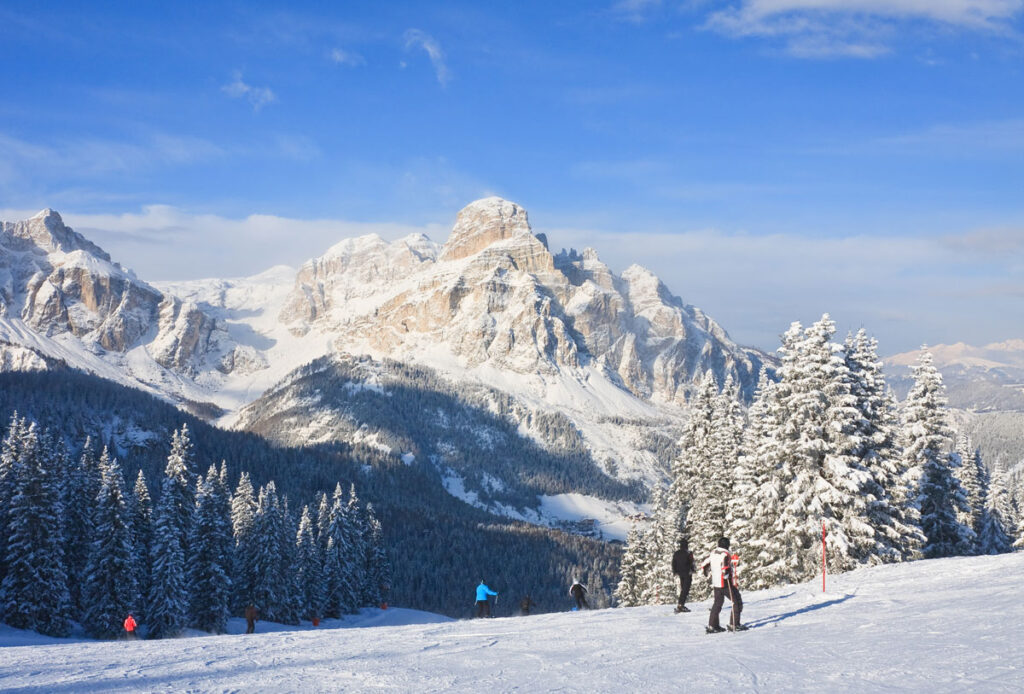
If your brief is simply “give me brilliant Italian linked skiing”, Selva Val Gardena is hard to beat.
Val Gardena links directly with Alpe di Siusi, while Selva also drops you neatly onto the legendary Sellaronda circuit. That means you can leave in the morning, ski through different valleys and villages, and return several hours later feeling satisfyingly smug about how far you’ve travelled.
The Sellaronda loops around the Sella massif, connecting Val Gardena, Alta Badia, Arabba and Val di Fassa. The full circuit is around 44km, split between skiing and lifts.
This is the Dolomites at their most addictive: big views, changing scenery, long ski days and an alarming number of restaurants tempting you to abandon the circuit halfway round.
Ski Demon verdict: Best if you want your ski area to feel like a journey rather than a collection of runs.
Cortina d’Ampezzo: Big Dolomites, Different Shape
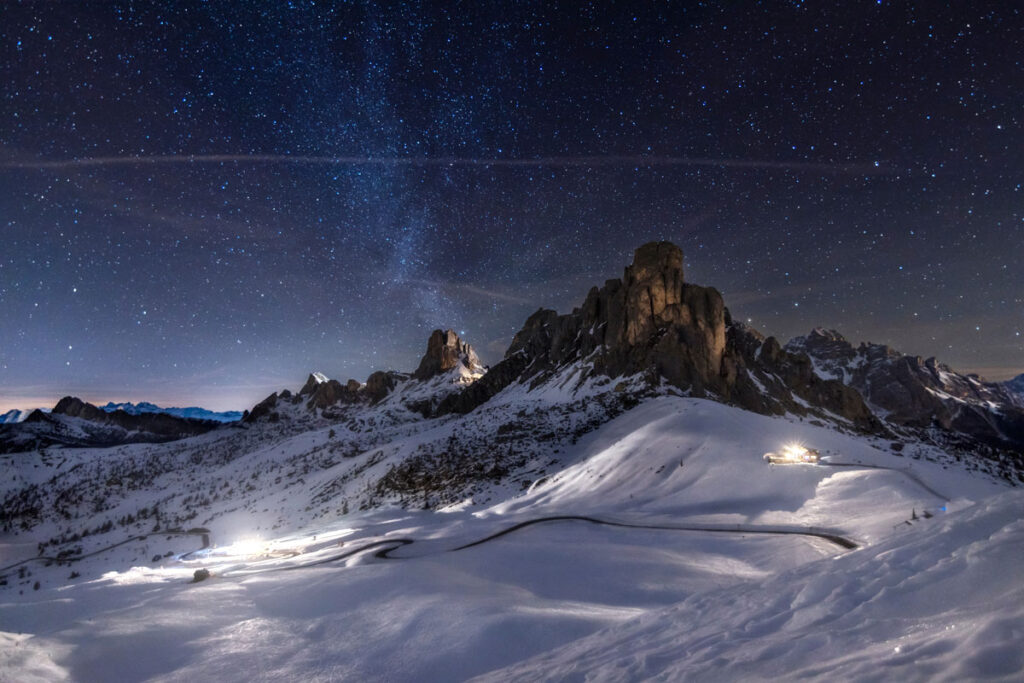
Cortina is also part of Dolomiti Superski, but don’t book it expecting Selva-style door-to-door roaming across the whole 1,200km.
Its local Valle Skipass covers around 120km of pistes, with skiing across Cortina’s different sectors plus areas including San Vito di Cadore and Auronzo-Misurina. The wider Dolomiti Superski pass then gives you access to the full regional network.
The difference is simple. Selva is the stronger pick if linked mileage is the main event. Cortina is the stronger pick if you want excellent skiing wrapped around one of the most stylish mountain towns in the Alps.
And yes, the scenery is every bit as ridiculous as the photographs suggest.
Ski Demon verdict: Pick Cortina for fabulous skiing, serious Dolomite drama and considerably better people-watching.
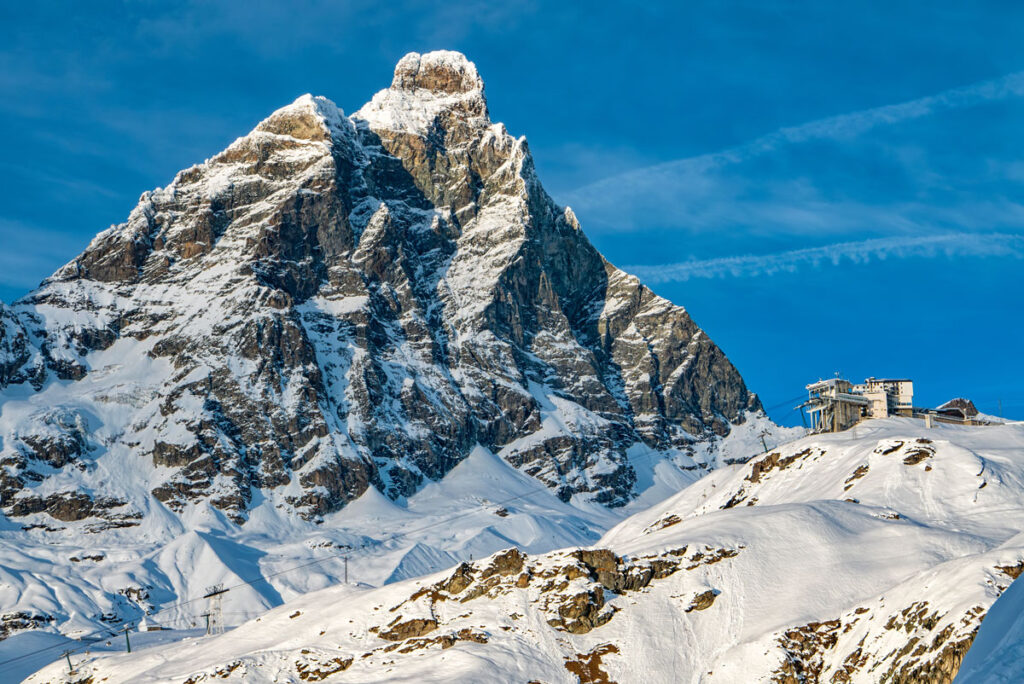
Cervino Ski Paradise: Ski Italy and Switzerland in the Same Day
There is something inherently satisfying about skiing across an international border.
From Cervinia, the Cervino Ski Paradise network links into Valtournenche and Zermatt, creating one huge high-altitude playground beneath the Matterhorn.
The wider network includes Breuil-Cervinia, Valtournenche, Chamois, Torgnon and Zermatt, although the real headline for most visiting skiers is that glorious Italy-to-Switzerland connection.
For confident intermediates in particular, this is cracking territory. The pistes are generally broad, the vertical is huge and you can clock up some properly long ski days without needing an advanced degree in piste-map navigation.
Then there’s the altitude. Cervinia is already high, and the link towards Zermatt takes you onto some of the loftiest lift-served skiing in Europe.
Just keep half an eye on the weather: cross-border links can close in high winds, and an unexpected taxi home from Switzerland is not the après story anyone is hoping to tell.
Ski Demon verdict: One of Italy’s best choices for big, high, cross-border mileage.
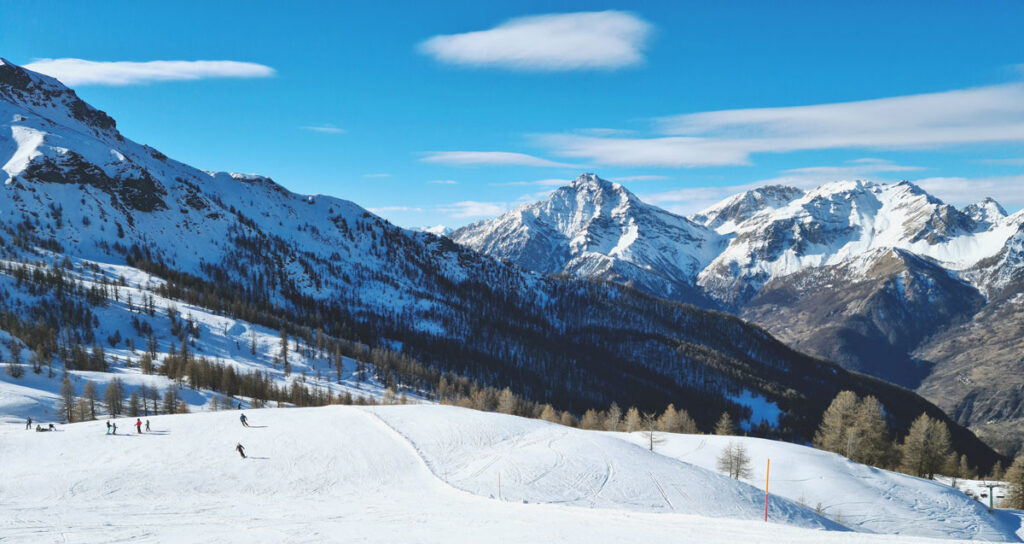
Via Lattea: 400km+ From Sauze d’Oulx and Sestriere
If you want a lot of skiing without paying Three Valleys money, Via Lattea starts looking extremely interesting.
The Via Lattea – or Milky Way – has more than 400km of pistes and around 70 lifts, stretching across Italian resorts including Sestriere, Sauze d’Oulx, Sansicario, Cesana and Claviere, before continuing over the border into Montgenèvre in France.
And importantly, this isn’t just a collection of resorts sharing a lift pass. The area is ski-linked, so covering ground is very much part of the fun.
Sauze d’Oulx or Sestriere?
Same ski area. Quite different holidays.
Sauze d’Oulx has more traditional village atmosphere, tree-lined skiing and a livelier bar scene. Sestriere sits higher, feels more purpose-built and puts you right in the middle of some of Via Lattea’s most famous terrain.
Neither is automatically better. It depends whether your priority is village charm and après or altitude and ski access.
Either way, you’ve got a very big playground outside the door.
Ski Demon verdict: Huge mileage, two very different bases and some seriously good value compared with the biggest French domains.
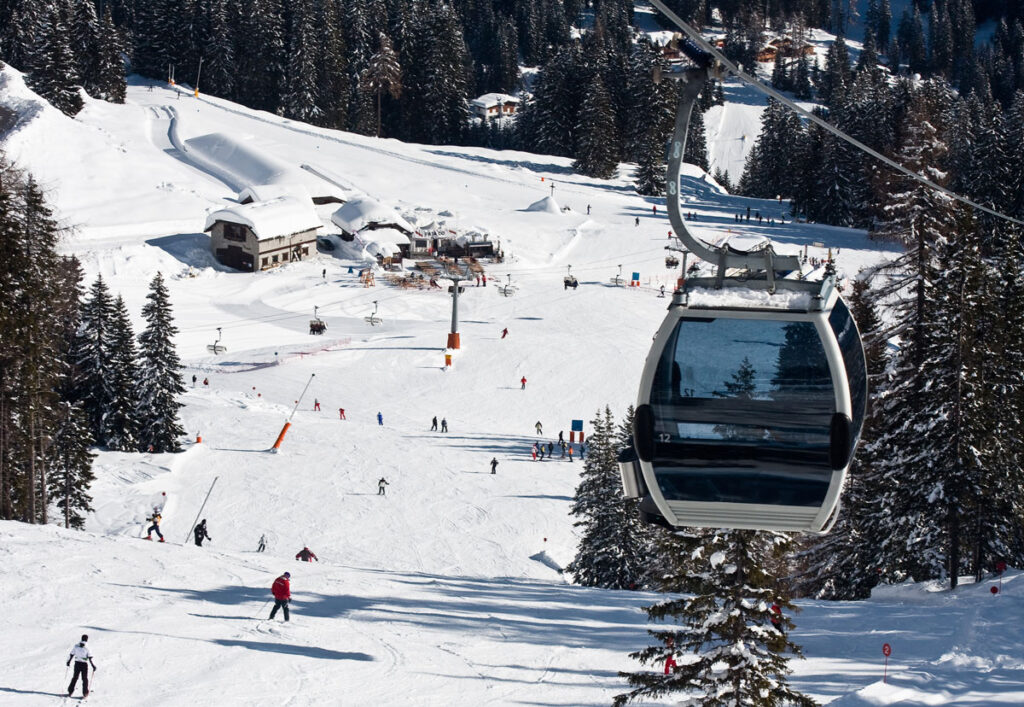
Madonna di Campiglio: Linked Skiing Without the Mega-Domain Madness
Not everybody wants to spend their ski holiday staring anxiously at the piste map wondering whether they’ve accidentally crossed three valleys and now need six chairlifts to get home.
Enter Madonna di Campiglio.
The Skiarea Campiglio Dolomiti di Brenta links Madonna di Campiglio, Pinzolo and Folgarida-Marilleva, creating around 156km of interconnected pistes.
It’s big enough for genuine exploring, varied enough for a full week and compact enough that it rarely feels like you’re undertaking a military operation.
Madonna itself is also one of Italy’s smarter ski towns, so you get the pleasing combination of proper linked skiing, handsome surroundings and somewhere worth wandering around once the boots come off.
It’s particularly strong for intermediates who want plenty of mileage without needing to spend every afternoon racing the lift-closing clock back from another country.
Ski Demon verdict: Linked, polished and very easy to like.
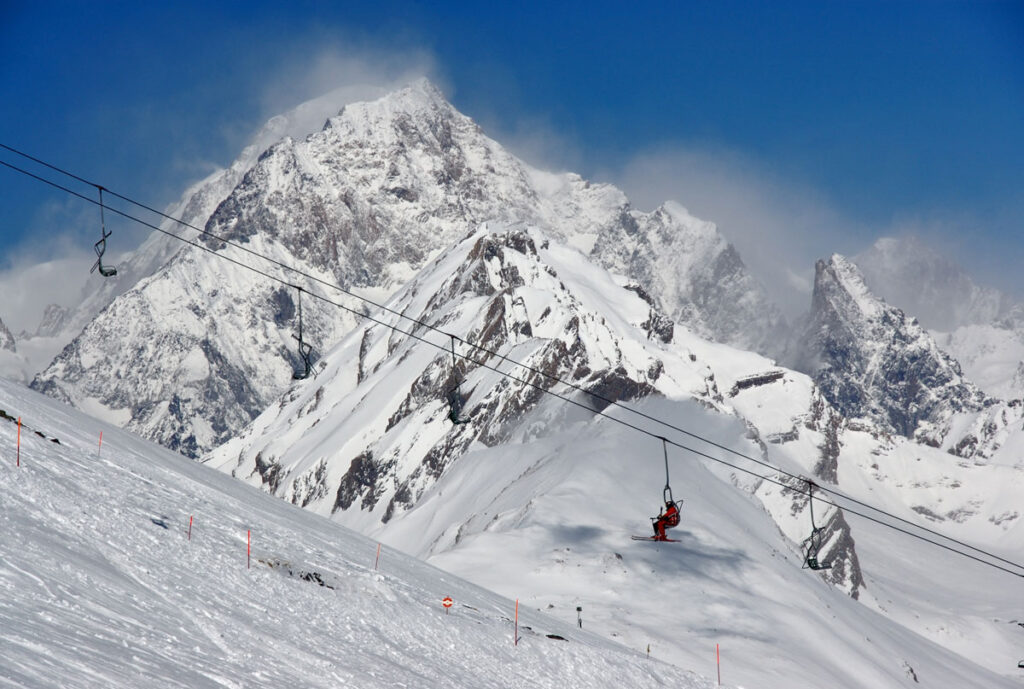
Espace San Bernardo: La Thuile’s Brilliant French Connection
La Thuile deserves considerably more attention than it gets.
Together with La Rosière in France, it forms the Espace San Bernardo, offering around 152km of pistes, 82 runs and 38 lifts across one international ski area.
And unlike some cross-border ski passes where the international bit feels slightly bolted on, this one genuinely feels like a single ski domain.
You can spend the morning cruising Italian pistes, head over the ridge into France and return for an espresso before anyone starts questioning your national loyalty.
La Thuile’s slopes tend to be the quieter, more serious side of the area, while La Rosière brings sunnier terrain and a slightly gentler feel. Put the two together and you’ve got a nicely balanced ski week.
It’s not the biggest area in Italy, but that is almost part of the appeal. You get proper cross-border roaming without needing a laminated map and emergency provisions.
Ski Demon verdict: Underrated, international and an excellent option if 150km-ish sounds plenty.
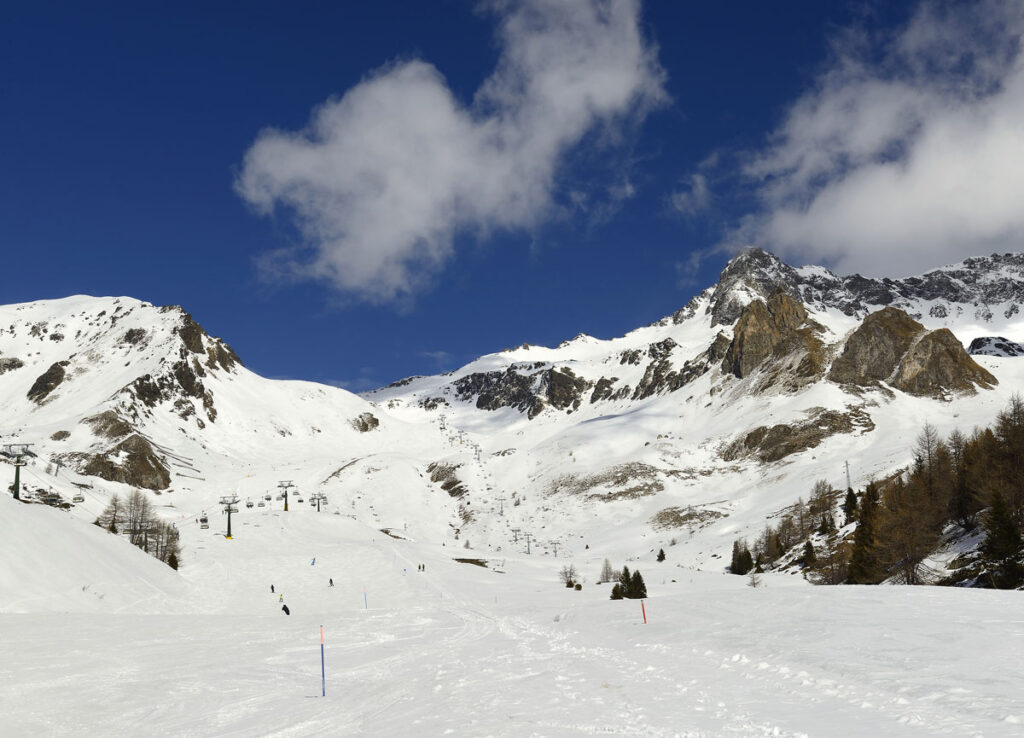
Pontedilegno-Tonale: More Than Just Passo Tonale
Passo Tonale can look fairly straightforward when you first arrive. Big open slopes, high altitude, glacier above.
Then you realise the ski area keeps going.
The wider Pontedilegno-Tonale domain links Passo Tonale, the Presena Glacier, Ponte di Legno and Temù, with 46 pistes and around 30 lifts operating under one ski pass.
What makes it particularly good is the contrast.
Up high, Passo Tonale delivers wide, open, snow-sure terrain and glacier access. Ski down towards Ponte di Legno and Temù and things become steeper, more wooded and altogether more Alpine.
That change in character makes the whole area ski far bigger than a quick glance at Tonale’s main slopes might suggest.
It’s also one of those resorts where practicality wins: easy skiing, good snow reliability and enough terrain to keep most holiday skiers thoroughly entertained.
Ski Demon verdict: Snow-sure, varied and much bigger than Tonale’s first impression suggests.
So, Which Italian Linked Ski Area Should You Choose?
- Want the classic Dolomites ski safari? Go for Selva Val Gardena.
- Want Dolomite scenery with more glamour and less circuit chasing? Cortina.
- Want high-altitude, cross-border cruising beneath the Matterhorn? Cervinia.
- Want 400km+ of terrain, good value and a choice between lively Sauze and high-altitude Sestriere? Via Lattea.
- Want a polished linked area that’s big without being bonkers? Madonna di Campiglio.
- Want an underrated Italy-France crossover? La Thuile.
- And if you’re after snow reliability, glacier skiing and surprisingly varied linked terrain, have a very serious look at Passo Tonale.
The Ski Demon Take
Italy doesn’t really have one standard version of the mega ski area – and that’s exactly why it’s interesting.
You’ve got the enormous Dolomiti Superski network, the Sellaronda’s ski-round-a-mountain madness, international links into France and Switzerland, and compact connected domains that give you plenty to explore without turning every ski day into an endurance event.
So don’t just look at the piste-kilometre number. Look at how the area connects, where you want to stay and how much travelling you actually want to do on skis.
Because 400km sounds impressive.
But only if you actually fancy skiing it.